Archive for the ‘Activism’ Category

Shania Twain on the Discipline of Maintaining Her Health After LD

http://www.etonline.com/shania-twain-on-the-discipline-of-maintaining-her-health-after-lyme-disease-battle-96689

Shania Twain on the ‘Discipline’ of Maintaining Her Health After Lyme Disease Battle

By 
shania_twain_getty840312660

Jamie McCarthy/Getty Images

Almost 15 years after a tick bite threatened her career and health, Shania Twain is opening up about how she has revamped her lifestyle.

The 52-year-old singer contracted Lyme disease, a debilitating tick-borne illness, while on tour in 2003.

Speaking to the Herald Sun while promoting the Australia and New Zealand leg of her upcoming Now tour, the songstress shared how she’s firmly focused on maintaining good health as she prepares to hit the road, beginning May 3 in Tacoma, Washington.

“I take my health seriously,” Twain told the Australian outlet. “There is a lot of discipline involved for me personally, eating properly, getting the right amount of rest, self-care, and self-maintenance.”

“You have to put the performance first, and I take that very seriously,” she added.

Twain’s vocal chords were affected by Lyme, a potentially fatal illness spread by ticks, and at one point she feared she may never be able to sing again. Years of vocal exercises helped her get back on track and she released Now, her first record in 15 years, in September.

“I was sure I would never be able to sing professionally again,” Twain told ET in September. “My voice was so unreliable. It was linked to Lyme disease.”

As well as her Now comeback, the Canadian beauty has also enjoyed a musical residency, Shania Twain: Still the One, at Caesars Palace in Las Vegas, in recent years.

But it was another residency that had Twain hitting the town in Sin City over the weekend — she reunited with her former collaborators, the Backstreet Boys, while checking out the boy band’s Larger Than Life show at Planet Hollywood’s AXIS Theater on Friday night.

The group shared a slideshow on their Instagram account, featuring a backstage shot of Twain with the boys alongside a throwback snap of the band performing “From This Moment” with Twain for a CBS special that aired in 1999.

https://www.instagram.com/p/BfSj2dXFFY1/embed/captioned/?cr=1&v=8&wp=656#%7B%22ci%22%3A0%2C%22os%22%3A9373.700000000099%7D

Band members Howie Dorough and AJ McLean — who once declared Twain the pop star he would take a hall pass for — also shared cute pics with the singer.

“I absolutely adore this woman right here,” McLean captioned his photo. “She’s been a huge inspiration to me and many others. This right here is the definition or a strong woman! Still making music for the masses and touring and loving every minute of it. Thanks @shaniatwain for coming to see us last night. Great memories and more to make.”

https://www.instagram.com/p/BfUFHxKhiko/embed/captioned/?cr=1&v=8&wp=656#%7B%22ci%22%3A1%2C%22os%22%3A9378.800000000183%7D
https://www.instagram.com/p/BfSwZMnl5PX/embed/captioned/?cr=1&v=8&wp=656#%7B%22ci%22%3A2%2C%22os%22%3A9382.399999999961%7D


See more on Twain’s album Now .


Hantavirus & Tularemia Warnings Issued in San Diego County

http://outbreaknewstoday.com/hantavirus-tularemia-warnings-issued-san-diego-county-78987/

Hantavirus, tularemia warnings issued in San Diego County

March 1, 2018

In a follow-up on two infectious disease issues in San Diego County, mice with hantavirus and tularemia positive ticks, San Diego County Vector Control has issued some updated information and warnings for the public.

Image/Thadius856
Image/Thadius856

Vector Control officials said five Western harvest mice caught in routine trapping in open fields in 4S Ranch and in the rural Black Mountain area have tested positive for hantavirus, bringing this year’s total number of rodents to test positive to 17. That is the highest number of rodents to test positive in San Diego County since 2012, when 35 mice and one meadow vole tested positive over the course of the year.

Vector Control officials said the high number was not a cause for alarm. Hantavirus is common in San Diego County, but it is mainly carried by wild mice that do not live around humans so people are rarely exposed to the virus. In addition, the 17 rodents that tested positive represent 4.8 percent of the 351 wild rodents that Vector Control has trapped  and tested this year, a figure within normally-expected ranges.

Still, officials said people should remember to protect themselves from potentially being exposed to hantavirus. The virus can cause deadly infections in people and there is no vaccine or cure for it.

Hantavirus:  An interview with Dr. Paul Ettestad (Approx. 10:30 Min)

In addition, County Vector Control officials said Friday that several more batches of ticks trapped along Lopez Canyon Trail in Sorrento Valley have tested positive for tularemia, a potentially dangerous bacterial disease also known as “rabbit fever.”

County officials are reminding people again to protect themselves and their pets from ticks — which can transmit tularemia and other diseases when they bite people — whenever they are hiking, bicycling or walking in grassy backcountry areas, on trails or in the wild.

Vector Control officials said last week that several batches of ticks trapped in routine monitoring in the area of Lopez Canyon Trail had tested positive for the disease. Because they are small, ticks are “batched” together into larger groups to conduct testing.

County officials said they posted signs warning people to protect themselves from ticks last week and have posted additional signs in the wake of the new find.

______________
**Comment**
While Tularemia is spread by ticks, Hanta virus so far is not:
http://health.gov.on.ca/en/public/publications/disease/hanta.aspx; however, it is interesting that this virus loves mice and well…..ticks love mice.  Time will tell.
https://securitystudiesonline.wordpress.com/2011/08/11/potential-uses-of-the-hantavirus-as-a-biological-weapon/   As it turns out, the hantavirus is not a new disease and is far more widespread than previously suspected in the United States. For example, tissues analysis has revealed that the earliest proven case of hantavirus occurred in Utah in 1959, and has been found in 32 states….From 1993 to 2004, there were 362 cases of HPS diagnosed[1] with 132 fatalities in the US alone.[2] However, HPS is also found throughout Latin America. Panama, Brazil, Bolivia, Chile, Paraguay, Uruguay, and Argentina have had reported cases of HPS.[3] From 1993 to 2004, there have been 1548 cases and 252 deaths throughout Latin America.[4] The hantavirus is newly discovered by modern science, but people have lived with it for years previous…..However, because USAMRIID was involved and conducted the research at Fort Detrick, HTN was grandfathered into the ongoing US bioweapons program. Despite its ability to effect military operations as demonstrated in the field, military studies of hantavirus do not appear to have gone past the research stage.[6]…the hantavirus will enter a host cell and replace itself with a negative strand of messenger RNA (mRNA), so when the mRNA brings the genetic information for reproduction, the virus is reproduced instead of the original host cell’s molecule. As the cell reproduces more hantavirus, the hantavirus kills the host cell and infects others. As this spreads throughout the body, the internal structures fail and can lead to death….It is a virus that does not skip any demographic, is found naturally, and has a 50% mortality rate. These factors frighten some who worry about its use as a bioweapon.
Hantavirus has not been known to be weaponized or used for bioterrorism, but it is recognized by the Centers for Disease Control and Prevention (CDC) as a Category C Agent.2 Its presumed ease of production and dissemination, as well as its high potential for severe morbidity and mortality, raise concern for the possibility that this emerging pathogen could be engineered for future mass exposures.2
Although no cases of human-to-human transmission have been identified in the United States, investigation of an epidemic in Argentina in 1995 provided strong evidence for person-to-person transmission; strict barrier nursing techniques are now recommended for the management of suspected cases.
Prevention – stay away from mice and their droppings.  Since people often catch the virus by breathing it into their lungs, don’t use anything that allows particles from mouse droppings to get into the air (like sweeping with a broom).  Soak droppings down with a good disinfectant for 20 min and then wipe up with a mop.  In Spring, open doors and windows to sheds and allow them to air out well before entering.
Let’s pray ticks and other insects can not transmit Hantavirus and that it’s not been tweaked for biowarfare purposes.
Tularemia:  https://madisonarealymesupportgroup.com/2016/10/25/of-rabbits-and-men/  Tularemia, in aerosol form, is considered a possible bioterrorist agent that if inhaled would cause severe respiratory illness. It was studied in Japan through 1945, the USA through the 60’s, and Russia is believed to have strains resistant to antibiotics and vaccines. An aerosol release in a high population would result in febrile illness in 3-5 days followed by pleuropneumonitis and systemic infection with illness persisting for weeks with relapses. The WHO estimates that an aerosol dispersal of 50 kg of F. tularensis over an area with 5 million people would result in 25,000 incapacitating casualties including 19,000 deaths.
https://www.nwhc.usgs.gov/publications/disease_emergence/Chapter6.pdf  Scroll to page 237 for Table 6.1 which shows Tularemia was used in Europe during WWII.  Debate remains whether massive outbreaks of Tularemia on the Eastern Front was a biowarfare application against German troops or occurred naturally.  Then on page 246 Table 6.3 shows confirmed applications of Tularemia during wartime, by terrorists, and/or as criminal activity.23,33,37,179, as well as it’s an agent produced for weapons use by nations with biowarfare programs.14,22,23,33,52.  It is a category A agent, which is of highest priority and a critical biological agent for public health response activities.
Hantavirus is not listed on page 250 Table 6.5 as a biowarfare agent, but mosquito transmitted Yellow Fever Virus is.


Vermont Lyme Sufferer Fights to Get Disability – Gets Nadda

http://www.mychamplainvalley.com/news/you-ask-we-take-action-lyme-disease-sufferer-fights-to-get-disability-benefits/996245429  (TV News Story Here)

By: Staci DaSilva 

Posted: Feb 27, 2018


BROOKLINE, Vt. – Pat Horrigan, 56, of Brookline, Vt., says he’s too sick to work. The federal government thinks he’s not sick enough to receive disability benefits.

“You don’t want to end up like me,” warned Horrigan.

In 2014, he started feeling ill.

“I was burning up. I had a real bad flu, or at least that’s what I was feeling like,” he said. “Couldn’t get my temperature down, throwing up, couldn’t hardly walk, couldn’t hardly do anything. I was just immobile on the couch.”

It wasn’t normal behavior for a Navy veteran with a lengthy resume of active jobs: from fire chief, to soccer coach to electrician.

“I’m a 110% everything I do, 10-12 hour days,” he said.

Despite never having the typical “bulls eye” rash associated with a tick-borne disease, Horrigan was tested for and diagnosed with lyme disease. He thinks he might have been bit while working on a farm baling hay.

In the four years since, he’s endured a legal battle to get what his doctors and counselors tell him he deserves.

“She said ‘let’s get you started getting disability.’ and I’m like ‘really? I didn’t know I even qualified.’ ‘Are you kidding me? Yea, you qualify and you’re a vet. Let’s see what we can do,” he remembers of a conversation early in his journey.

For the past several years, he has fought to get federal disability benefits.

He and his lawyer have continually been denied, appeal after appeal.

“John said ‘most of my clients are lucky to have one letter for a doctor. You’ve got four or five. This is like a slam dunk. You’ve got everything you need,’” he said of his lawyer’s view.

His latest motion has been pending in U.S. District Court in Vermont since September.

In the meantime, Horrigan’s been out of work and without an income. His wife went back to work as a nurse.

They moved into a corner of their daughter’s house in Brookline, Vt.

He thinks federal judges see the word “lyme” and immediately reject his claims.

“You’re sick. People stub their toes and they get disability. Something’s gotta change. They got to realize lyme is serious if you’ve got it as bad as we have it,” he said.


“To date, there’s just no evidence to suggest people have an ongoing infection like that,” said Bradley Tompkins, infectious disease epidemiologist at the Vermont Department of Health.

He, along with much of the medical community and the Centers for Disease Control and Prevention, says “chronic lyme disease” does not exist, or at least, is up for debate.

Most people diagnosed with lyme disease see their symptoms disappearance after treatment.

There is a recognized, yet rare (10-20% of patients), syndrome called Post Treatment Lyme Disease Syndrome that causes sustained symptoms for months, or up to a few years.

“It could be some sort of autoimmune response to the initial infection,” explained Tompkins. “There’s again, no evidence that there’s live bacteria that’s causing an illness and causing an infection. But there could be debris left over from the bacteria that is triggering your immune system to cause joint pain and joint swelling. So that’s what a lot of researchers are looking into now.”


“The CDC-infectious disease board have real conflicts when it comes to their potential findings on lyme disease,” said Lt. Gov. Dave Zuckerman (P/D – Vt.).

For Lt. Gov. Zuckerman, it’s personal. His wife, Rachel Nevitt, was diagnosed with lyme disease at least 6 years ago.

“She’s still only about half the person she was when I married her,” he said. “It is mentally debilitating. It is physically debilitating. It really changes your ability to function in society.”

He says it’s frustrating to hear health officials deny something he can see with his own eyes.

“Highly respected institutions, research institutions, Johns Hopkins, Stanford and others, have researchers that are really looking into this epidemic and finding that some of the research done and some of the findings done from the 90s and early 2000s is really outdated,” he said. “They’re finding a lot more instances where the lyme bacteria can survive with many of the antibacterial treatments and have ways to survive it and persist.”

Zuckerman says the onus is on the federal government to help people like his wife and Horrigan.

He adds that he pitched an idea to Governor Phil Scott (R – Vt.) last summer.

“Why don’t we work with private donors to endow a research chair at UVM Medical Center. Put UVM Medical Center in there with Johns Hopkins and Stanford, in the lyme research world, really put a bullseye for lack of a better term, on Vermont and say ‘we have a cutting edge, academic medical institution here looking at what the real issues are’ because it’s widespread in Vermont, throughout New England and the northeast,” he said.

But Pat Horrigan doesn’t have time for research. He wants change now.

“I’m blazing a trail for folks behind me because in a way I think that I am. It’s crazy. We’re sick. We need help,” he said.

This comes as lyme disease is on the rise in the region.

According to Tompkins, the Department of Health is still working through its data from 2017.

He says his department did more investigations last year than ever before, so he wouldn’t be surprised if the results show 2017 had the highest number of lyme disease cases, or close to the highest number, ever.

________________

**Comment**

And so it goes, round and round.  Can’t get disability for Lyme because they say there’s no proof of infection.

But there is…..

700 peer-review studies showing persistence:  http://www.ilads.org/ilads_news/wp-content/uploads/2015/09/EvidenceofPersistence-V2.pdf

https://madisonarealymesupportgroup.com/2015/09/19/proof-of-borrelia-persistence/

https://madisonarealymesupportgroup.com/2017/08/25/sleeper-cells-the-stringent-response-and-persistence-in-the-borreliella-burgdorferi-enzootic-cycle/

https://madisonarealymesupportgroup.com/2017/05/10/chronic-lyme-disease-a-case-definition-at-last/  Generation of antibiotic-tolerant “persister cells” in some pathogen populations [116-118].

https://madisonarealymesupportgroup.com/2016/12/21/dr-zhang-on-persisters/

https://madisonarealymesupportgroup.com/2017/12/02/scottish-doctor-gives-insight-on-lyme-msids/ “If you look at major medical microbiology and infectious disease textbooks, they state that after 4 weeks you can’t find the Lyme bacteria anymore. Therefore Lyme is then categorised as ‘post infectious’. But I get back to the point I’ve made before: if you can’t culture it, you cannot know anything about its viability. You do not have a organism specific test (culture or PCR), that guides your ‘test of cure’. How do you say that a bacteria is killed, when you couldn’t grow and measure it in the first place?” “One of the rules of infectious diseases medicine is that once you stop treatment and the patient stays better, they are cured. When they get worse, the infection has returned and they have relapse of infection and need repeat treatment. My ID colleagues live by that rule with most other infections, but not with Lyme.”




FDA Warning on Biaxin

https://www.fda.gov/Drugs/DrugSafety/ucm597289.htm   02-22-2018

The U.S. Food and Drug Administration (FDA) is advising caution before prescribing the antibiotic clarithromycin (Biaxin) to patients with heart disease because of a potential increased risk of heart problems or death that can occur years later. Our recommendation is based on our review of the results of a 10-year follow-up study1 of patients with coronary heart disease from a large clinical trial2 that first observed this safety issue.

As a result, we have added a new warning about this increased risk of death in patients with heart disease, and advised prescribers to consider using other antibiotics in such patients. We have also added the study results to the clarithromycin drug labels. As part of FDA’s usual ongoing safety monitoring of drugs, we are continuing to monitor safety reports in patients taking clarithromycin.

Health care professionals should be aware of these significant risks and weigh the benefits and risks of clarithromycin before prescribing it to any patient, particularly in patients with heart disease and even for short periods, and consider using other available antibiotics. Advise patients with heart disease of the signs and symptoms of cardiovascular problems, regardless of the medical condition for which you are treating them with clarithromycin.

Patients should tell your health care professionals if you have heart disease, especially when you are being prescribed an antibiotic to treat an infection. Talk to them about the benefits and risks of clarithromycin and any alternative treatments. Do not stop taking your heart disease medicine or antibiotic without first talking to your health care professionals. Doing so could be harmful without your health care professionals’ direct supervision. Seek medical attention immediately if you experience symptoms of a heart attack or stroke, such as chest pain, shortness of breath or trouble breathing, pain or weakness in one part or side of your body, or slurred speech.

Like other antibiotics, clarithromycin is used to treat many types of infections affecting the skin, ears, sinuses, lungs, and other parts of the body, including Mycobacterium avium complex (MAC) infection, a type of lung infection that often affects people with human immunodeficiency virus (HIV). Clarithromycin is not approved to treat heart disease. The drug has been used for more than 25 years, and is sold under the brand name Biaxin and as generics by many different drug companies. It works by stopping the growth of bacteria. Without treatment, some infections can spread and lead to serious health problems.

The large clinical trial, called the CLARICOR trial2, observed an unexpected increase in deaths among patients with coronary heart disease who received a two-week course of clarithromycin that became apparent after patients had been followed for one year or longer. There is no clear explanation for how clarithromycin would lead to more deaths than placebo. Some observational studies also found an increase in deaths or other serious heart-related problems, while others did not. All the studies had limitations in how they were designed. Of the six observational studies published to date in patients with or without coronary artery disease, two found evidence of long-term risks from clarithromycin3,4, and four did not5,6,7,8. Overall, results from the prospective, placebo-controlled CLARICOR trial provide the strongest evidence of the increase in risk compared to the observational study results. Based on these studies, we were unable to determine why the risk of death is greater for patients with heart disease.

Furthermore, there are no prospective, randomized, and controlled trials with prespecified long-term safety outcome measures following clarithromycin treatment in patients who do not have heart disease. Because we currently do not have study information in these patients, and observational studies have shown different results, we cannot determine whether results of the CLARICOR trial can be applied to patients who do not have heart disease.

We previously communicated about this safety issue in December 2005, before the 10-year follow-up results were available for CLARICOR.

We urge health care professionals and patients to report side effects involving clarithromycin and other drugs to the FDA MedWatch program, using the information in the “Contact FDA” box at the bottom of the page.

en Español

Drug Safety Communication (PDF – 70KB)

_____________

**Comment**

Biaxin is a common drug used for Lyme/MSIDS.  Please notice an admission is even made that the studies had design limitations as well as the fact that two studies found evidence while four did not.

As always, patients and their doctors must weigh the risks vs benefits with any treatment plan.  While there are other drugs besides Biaxin, it works really well for some.  Make sure to have a conversation with your doctor about this.

It is somewhat amazing to me that this study on sexual transmission of Lyme:  https://f1000research.com/articles/3-309/v3 was declined by two referees but approved by two referees, yet we hear not a word of this study.  It is my firm belief people are being infected sexually with TBI’s (Tick borne illness) as this is being written.


Babesia Tests Approved by FDA for Screening Purposes

Babesia microti tests approved by FDA for screening blood, organ and tissue donors

March 6, 2018

The U.S. Food and Drug Administration today approved the Imugen Babesia microti Arrayed Fluorescent Immunoassay (AFIA), for the detection of antibodies to Babesia microti (B. microti) in human plasma samples, and the Imugen Babesia microti Nucleic Acid Test (NAT), for the detection of B. microti DNA in human whole blood samples. These tests are intended to be used as donor screening tests on samples from individual human donors, including volunteer donors of whole blood and blood components, as well as living organ and tissue donors.

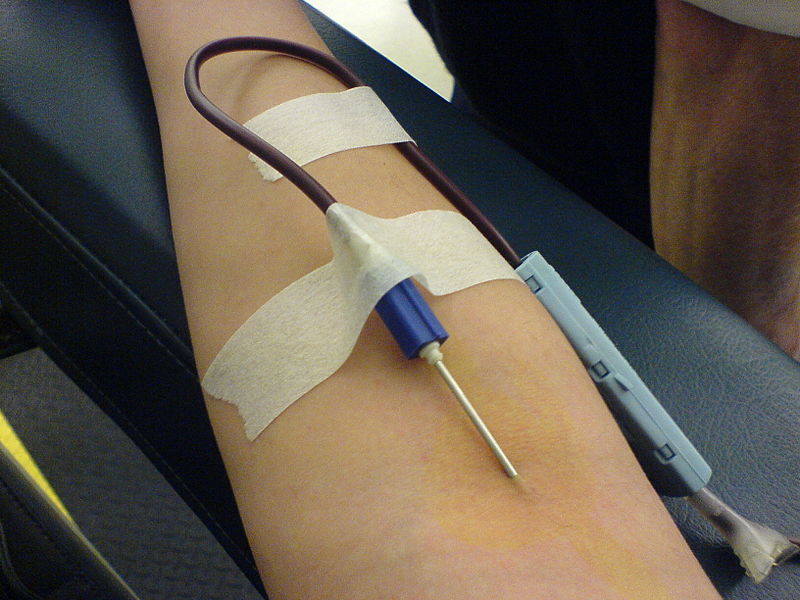
Blood donation Image/ Waldszenen at the wikipedia project
Blood donation
Image/ Waldszenen at the wikipedia project

“The U.S. blood supply remains the safest in the world thanks in part to the FDA’s ongoing work to enforce standards for blood collection and to identify and respond to potential threats to the nation’s blood supply. While babesiosis is both preventable and treatable, until today, there was no way to screen for infections amongst blood donors,” said Peter Marks, M.D., Ph.D., director of the FDA’s Center for Biologics Evaluation and Research. “Today’s actions represent the first approvals of Babesia detection tests for use in screening donors of whole blood and blood components, and other living donors.”

Babesiosis is caused by Babesia parasites that are transmitted by Ixodes scapularis ticks, also known as blacklegged or deer ticks. B. microti is the main species that causes infection in the U.S. There are about 1,000 to 2,000 cases of babesiosis reported in the U.S. each year, with the majority reported from states in the Northeast and upper Midwest. Babesia can also be transmitted by transfusion of blood or blood components collected from an infected donor.

Babesia screening for donor blood: An American Red Cross study

The vast majority of people infected with B. microti do not have symptoms and are never diagnosed. Some people develop flu-like symptoms, such as fever, headache and body aches. The U.S. Centers for Disease Control and Prevention (CDC) warns that for certain people, especially those with a weak immune system, it can be a severe, life-threatening disease and that while bloodborne transmission of babesiosis is thought to be uncommon, it is the most frequently reported transfusion-transmitted parasitic infection in the U.S. and remains an important concern.

We Can Prevent Half of Fatal Infections from Blood Transfusion by Screening for Babesiosis

The investigational use of Babesia donor testing has been in place since August 2012 in selected Babesia endemic areas under investigational new drug applications (INDs). The use of the investigational tests has resulted in the removal of a significant number of infected units from the blood supply. The data collected from this testing and from additional studies performed by the manufacturer prevented the release of hundreds of potentially infectious donations and demonstrated that the tests are effective in screening donors for B. microti infection. The tests approved today are not intended for use in the diagnosis of babesiosis infections.

These applications were granted Priority Review, under which the FDA’s goal is to take action on an application within six months where the agency determines that the product, if approved, would significantly improve the safety or effectiveness of treating, diagnosing or preventing a serious condition.

There currently is no FDA guidance for the testing of donor samples for Babesia. However, the FDA is planning to issue draft guidance with recommendations for reducing the risk of transfusion-transmitted babesiosis later this year.

The approval of the Imugen Babesia microti AFIA and NAT tests was granted to Oxford Immunotec, Inc. Both assays are in-house tests that can only be performed at the Norwood, Massachusetts facility.

_______________

More on Babesia:  https://madisonarealymesupportgroup.com/2018/02/28/lyme-hang-out-with-dr-cameron-3-children-contract-babesia-from-blood-transfusion/

https://madisonarealymesupportgroup.com/2017/09/27/premature-infants-develop-babesia-via-blood-transfusion/

https://madisonarealymesupportgroup.com/2017/11/07/congenital-babesiosis-in-two-infants/

https://madisonarealymesupportgroup.com/2018/02/20/babesia-and-heart-issues/

https://madisonarealymesupportgroup.com/2016/01/16/babesia-treatment/ (Symptom checklist found within this link)