Archive for the ‘Activism’ Category

Financing Tick-Borne Disease

https://globallymealliance.org/financing-tick-borne-disease/

Money and stethoscope/financing Lyme

by Jennifer Crystal

HAVING LYME DISEASE IS EXPENSIVE. IT CAN TAKE A TOLL ON YOU IN MORE WAYS THAN ONE. BELOW ARE SOME RESOURCES AND INSIGHTS TO HELP YOU OR THE PATIENT IN YOUR LIFE.

When I talk to people about Lyme and other tick-borne diseases, I often admit “It’s hard to believe that such a tiny tick can cause so much damage.” I am usually referring to the physical and neurological toll of the diseases, but there is another important toll that people don’t always know about: the financial one.

Lyme is tough on people, and on their finances. Beyond the cost of treating the disease, there are also the resultant emotional costs. In addition to the stress of not feeling well—and often of not yet having an accurate diagnosis—patients often are too sick to work, causing high anxiety coupled with feelings of guilt and inadequacy.

I know this shame vortex well, for I have lived it.

When I first became too sick to work, I was between jobs. At the end of the 2003 school year, I had quit my job teaching high school English and Journalism in Colorado. My plan was to work as a camp counselor that summer, and as a ski instructor come winter. I figured I’d be able to cover my fall expenses with my meager savings and my summer paycheck. My winter ski instructing job was already lined up.

The plan left little margin for error, but at 25 years old, I didn’t consider that. I was young and, I thought, invincible.

Then I got mono. I barely made it to summer camp, slogged through my work there, and returned to bed at the end of the season. The mono slipped in to chronic Epstein Barr virus. I spent the fall in bed, my symptoms worsening and my anxiety rising as the ski season grew closer and closer. By late fall, I was still bedridden, and my doctor told me there was no way I would be able to instruct novice skiers. Unable to care for or support myself, I had no choice but to move back into my parent’s home in Connecticut.

On the one hand, I was very lucky. I had family who could and would support me. They sheltered and fed me, and helped with living and medical expenses when the little money I had ran out. Not every patient has that kind of support.

Still, I struggled. This was in the days before you could stay on your parents’ health insurance until age 26. My plan had been to pay the expensive COBRA fee to keep my Colorado health insurance active through the fall, at which point I would be covered under a new plan by my ski instructing job. But you can’t be covered if you aren’t working. Well, sometimes you can if you take medical leave from a job you already have, but I hadn’t officially started working for the ski resort. Moreover, I was now in Connecticut, so all of the doctors I saw—and there were many—were out-of-network.

I canceled my Colorado plan and purchased private insurance in Connecticut (long before the whole debate over whether someone should be covered for a pre-existing condition). The new insurance covered most of my doctors’ appointments, but at a steep fee.

These costs started to take an emotional toll. Every day I wondered,

“When will I be able to work again? What if I can’t? How long can my family support me? Am I ruining their lives and plans?” 

I felt guilt and shame for not being able to support myself, especially since I’d previously been independent. It’s one thing to be a dependent child, but it’s another entirely to reverse that and move backwards from independence to dependence. Nobody involved expects or wants that to happen. Many families aren’t prepared for it. Everyone feels a financial and emotional strain.

It took two years for me to get an accurate diagnosis of Lyme disease with the co-infections babesia and ehrlichia. By then I’d already racked up big medical bills, and the journey was only just beginning. The best Lyme Literate Medical Doctors (LLMDs) didn’t take insurance, so appointments were very expensive. Then there was the cost of medications and supplements. Luckily, my insurance considered my intravenous antibiotics as emergency medication and covered that treatment in full. I got partial reimbursements for my doctors’ appointments, and found in-network adjunct providers (such as a therapist, a physical therapist, and a sleep doctor).

To help defray living costs, I applied for Social Security Disability benefits. Getting them was a tough uphill battle, one that I didn’t really have the energy or strength to fight. My case was continually denied, until I went before a judge who happened to be Lyme literate. I finally got monthly benefits—which were then taken away the minute I started graduate school. The presumption apparently being that if I could (usually, but not always) attend class for eight hours a week, then I could work a forty hour work week.

Of course, I couldn’t.

But again, I was very fortunate to have had benefits at all, and to have family help, too. Many patients can’t afford to see an LLMD, and they can’t get their insurance companies to cover treatment for tick-borne diseases. Some need PICC lines and can’t get them. Some start treatment and then have to stop when the insurance company baselessly decides they’re done. And still there is always that nagging guilt and anxiety.

So what is a Lyme patient to do?

What can you do if you are not a Lyme patient, but know someone who is?

  • Offer to help them review websites like the ones above and to read through medical and insurance documentation. Many Lyme patients struggle with brain fog and confusion, and reading such documents can be overwhelming.
  • Offer to be the patient’s advocate. When their insurance and disability claims are denied, help them to write appeal letters.
  • Start a fundraiser or meal chain. Funding pages pop up all the time for cancer patients, but many people don’t realize that Lyme patients could use the same financial help. Any funds you can raise to help defray medical costs would be useful, too. Patients need healthy meals but are often too tired to make them or get to the store. Have friends sign up to bring the patient his or her meals.

Tick-borne disease can easily put people out hundreds of thousands of dollars, not to mention the emotional costs. But do not despair— help is available!


jennifer crystal

Opinions expressed by contributors are their own.

Jennifer Crystal is a writer and educator in Boston. She has written a memoir, One Tick Stopped the Clock for which she is seeking representation. Contact her at: 

lymewarriorjennifercrystal@gmail.com. 

_______________________

**For more**

https://madisonarealymesupportgroup.com/2018/09/09/pain-at-the-prescription-counter-how-to-reduce-what-you-pay-for-drugs/  (Read comment at end of article for ways to save)

https://madisonarealymesupportgroup.com/2018/09/12/personal-costs-of-lyme-disease-to-americans/

https://madisonarealymesupportgroup.com/2018/07/22/lyme-costs-may-exceed-75-billion-per-year/
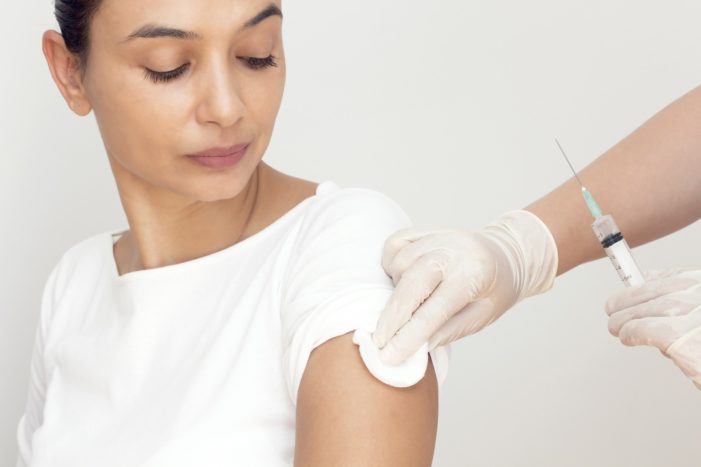


Infections Following Vaccinations

https://thevaccinereaction.org/2019/02/kentucky-investigating-multiple-infections-following-vaccinations/

Kentucky Investigating Multiple Infections Following Vaccinations

Kentucky Investigating Multiple Infections Following Vaccinations


On Feb. 1, 2019, the Department for Public Health (DPH) in Kentucky announced it was investigating “multiple infections associated with vaccinations” administered by a company called Location Vaccination of  Mt. Sterling, Kentucky. The vaccinations were given at various business locations in Kentucky, Ohio and Indiana since Sept. 1, 2018.1

According a press release issued by the Commonwealth of Kentucky Cabinet for Health and Family Services,

“Individuals with vaccination-associated infections related to this provider have experienced redness, pain or tenderness, swelling, and the development of hard lumps, or nodules, at the injection site.”1 It warns, “Symptoms may start from a few days to more than 12 weeks after vaccination. Medical care is advised since infections will likely not get better on their own.”1

DPH commissioner Jeff Howard, MD attributed the cause of the infections to “improper storage and handling” of the vaccine. “It is important that individuals vaccinated by this company seek appropriate medical evaluation and treatment,” Dr. Howard stressed.1He did not specify which vaccine was responsible for the infections or vaccine(s) were thought to be responsible for the infections.

Severe local vaccine reactions, which produce varying degrees of redness, swelling, or pain at the injection site, are frequently reported and acknowledged reactions to vaccination.2 The CDC estimates that local reactions to childhood vaccines occur at the following rates and usually last from one to seven days:

  • 1 in 4 children after diphtheria-tetanus-acellular pertussis (DTaP) shots
  • 1 in 5 to 1 in 16 adolescents after Tdap booster shots
  • 1 in 3 children after pneumococcal (PCV-13) shots
  • 1 in 3 to 9 in 10 adolescents after HPV (Gardasil 9) shots

The World Health Organization (WHO) states that,

“Local and systemic reactions such as pain or fever can occur as part of the immune response. In addition, other vaccine components (e.g. adjuvants, stabilizers, and preservatives) can trigger reactions.”3

Aluminum adjuvants in vaccines have been associated with severe local reactions, including large lumps at the site of the injection.

In 2014, vaccine researchers observed that not enough is known about the biological mechanisms and systemic toxic effects of local reactions:

Adjuvants are necessary components to warrant the efficacy of vaccines, however the overstimulation of the immune system is also associated with adverse effects. Local reactions are the most frequent manifestation of toxicity induced by adjuvanted vaccines and, with the exception of the acute phase response (APR), much less is known about the systemic reactions that follow vaccination.4

There have been reports in the medical literature of abscesses forming at the site of vaccine injections, both sterile abscesses5 and abscesses that involve a bacterial infection because a microbe (such as streptococcus or staphylococcus bacteria) contaminates the vaccine. Multi-dose vaccine vials can become contaminated from use of unsterile needles or pathogenic bacteria can enter the skin at the injection site if the person administering the vaccine does not follow skin disinfection protocols. Bacterial cellulitis (local sepsis) at vaccine injection sites has been reported and usually requires antibiotics.6

On Feb. 2, it was reported that the source of the vaccine “contamination” was traced to one Mt. Sterling doctor, who provided vaccines to businesses located in Alexandria, Butler, Georgetown, Lexington, Louisville, Paris, Maysville, Mt. Sterling and Winchester, and is no longer administering vaccines.  The final words from DPH commissioner Howard to the public was framed as both a warning and an affirmation that more vaccinations are a good idea. He said,

“If you received vaccine from this provider, we strongly encourage you to consider getting another round to ensure you are fully immunized and not at risk for contracting illness.”7

References:

1 Hogan D, Fisher, B. Department for Public Health Investigates Vaccination Associated Infections. Commonwealth of Kentucky Cabinet for Health and Family Services Feb. 1, 2019.
2 Centers for Disease Control and Prevention. Possible Side-effects from Vaccines. CDC.gov. July 12, 2018.
3 World Health Organization. Vaccine Safety Basics: Adverse events following immunization. VaccineSafetyTraining.org 2019.
4 Batista-Duharte A, Portuondo D et al. Systemic immunotoxicity reactions induced by adjuvanted vaccines. Int Immunopharmacology 2014; 20(1): 170-180.
5 Klein NP, Edwards KM et al. Recurrent sterile abscesses following aluminum adjuvant-containing vaccines. BMJ Case Rep Mar. 17, 2009.
6 Cook IF. Best vaccination practice and medically attended injection site events following deltoid intramuscular injections. Human Vaccines & Immunotherapeutics 2015; 11(5): 1184-1191.
7 WKYT. Health department says Kentucky-based vaccine provider caused infections. WSAZ NewsChannel 3 Feb. 2, 2019.

For an example of what this can look like:  https://madisonarealymesupportgroup.com/2019/02/01/cnn-forced-to-correct-piece-on-measles/

This is not the first time vaccine contamination has occurred.  Microbiologist, Judy Mikovitz found retroviruses in vaccines and wrote about it in “Plague, One Scientist’s Intrepid Search For the Truth About Human Retroviruses and Chronic Fatigue.”   https://madisonarealymesupportgroup.com/2018/12/09/vaccines-likely-infected-with-retroviruses-linked-to-chronic-disease/

https://madisonarealymesupportgroup.com/2018/03/01/vaccines-could-contribute-to-disease-epidemics-due-to-retrovirus-contamination/

https://madisonarealymesupportgroup.com/2017/10/15/vaccines-and-retroviruses-a-whistleblower-reveals-what-the-government-is-hiding/

Podcast: Lyme Disease, Tick-borne Disease Working Group & IDSA

https://globallymealliance.org/podcast-outbreak-news-interview-lyme-disease-tbdwg-idsa/?

outbreak-news_podcast_lyme-disease

ROBERT HERRIMAN WITH OUTBREAK NEWS INTERVIEWS GLA’S CHIEF SCIENTIFIC OFFICER TIMOTHY SELLATI, PH.D. TO DISCUSS LYME DISEASE, THE TICK-BORNE DISEASE WORKING GROUP, AND THE IDSA

Read the complete transcript below or listen to the podcast:

 Approx. 15 Min.


Robert Herriman: Well hey everybody, this is Robert, and welcome to Outbreak News Interviews. Now the Federal Tick-Borne Disease Working Group recently released their first report to Congress about one year after the panel first convened. The Infectious Disease Society of America, or the IDSA, responded to the report in a letter that contained some criticisms of the report. So what is the Federal Tick-Borne Disease Working Group, what’s in the report, and what did the IDSA have to say? Well joining me to discuss these issues is Chief Scientific Officer for the Global Lyme Alliance, Timothy Sellati, Ph.D. Dr. Sellati, welcome to the show, sir.

Timothy Sellati: Thank you for having me.

Robert Herriman: You bet. So Dr. Sellati, let’s go ahead and start out with some basics ’cause some people may not be aware of this. What is the Federal Tick-Borne Disease Working Group, what’s their mission, and what’s the personnel composition of this group?

Timothy Sellati: So the Working Group was established as part of the Congress’s passage of the 21st Centuries Act, back in December 2016. The intent of that Act was to promote new healthcare initiatives for addressing array of public health issues, and one in particular was the advancement of research on tick-borne diseases. So with that as a backdrop, the US Department of Health and Human Services established the Federal Advisory Committee, the Tick-Borne Disease Working Group. So the Working Group is comprised of 14 voting members, there were seven public members and seven Federal members, and the composition of the Working Group was really drawn from a diverse group of professions. We had individuals that are world renounced research scientists, and physicians from top tier academic institutions and hospitals, subject matter experts from government agencies, as well as key stakeholders from the public sector including patients, and their advocates from several Lyme and other tick-borne disease nonprofit organizations.

Robert Herriman: Okay. So they recently released their first report, it’s a pretty hefty 108-page document. Dr. Sellati, what did you find good and important in the report?

Timothy Sellati: So I think some of the most important or key recommendations out of the report really related to epidemiology, and ecology, that was one of the subcommittees of the Working Group. And there, it was really driven home, the idea that Lyme disease surveillance criteria, which is a criteria that the CDC the Centers for Disease Control and Prevention, use for calculating the number of Lyme disease cases that occur annually. Those really should be used for surveillance purposes alone, and not for diagnostic purposes. The other important take home message from the prevention subcommittee was a focus on development of anti tick feeding vaccines, and really trying to work with key stakeholders to build trust via transparent mechanism to help examine and discuss the past Lyme disease vaccine activities, what some of the issues were with it, and the potential for adverse events so that that information coming from a number of different sources could help inform future vaccine development in Lyme disease. In terms of diagnosis, the real take home message was the importance of evaluating new technologies or approaches for the diagnosis of Lyme disease and other tick-borne diseases because of the inherent limitations with the current two-tier testing method. And the importance of including children in the process of diagnostic test validation as well, because children are particularly prone to the devastating consequences of dealing with Lyme disease, or other tick-borne diseases.

Timothy Sellati: In terms of treatment, I think conduct of additional clinical trials using appropriate target populations where gaps may exist. And there really, the glaring gap is with respect to patients, that experience, persistent symptoms and disability and diminished quality of life following the current standard of care, which is 10 to 28 days of antibiotics. So it’s really important to understand, this really came through as the overall gestalt of the report, that Lyme disease can be treated with antibiotics, but as many as 10% to 20% of infected individuals do not respond favorably to those antibiotics, so they go on to develop what we call Post Treatment Lyme Disease Syndrome, or in some circles, chronic Lyme disease. And so it’s really important to really address that gap in our understanding of how best to treat that patient population.

Timothy Sellati: And then the one last thing, and this was really a common theme that came out of all of the subcommittees’ reports, was the need to allocate increased funding for tick-borne diseases in the areas of research, treatment, and prevention, and have it really pegged to the burden of illness. So proportionally, there is much less federal funding to tackle tick-borne diseases than there are funding for other infectious diseases where the number of cases per year are considerably smaller.

Robert Herriman: Yeah. Now, were you 100% on board with everything in the report, or were there any issues that you had a problem with?

Timothy Sellati: I didn’t have any issues per se, with the report, as much as a concern about one of the recommendations. And this related to the protection of the rights of license and qualified clinicians to use individual clinical judgment to diagnose and treat patients in accordance with the needs and goals of each individual patient. I’m sort of reading that, verbatim almost, and while I don’t have any concerns about allowing licensed and qualified clinicians to care for their patients as they see fit, I also recognize that as a result of desperation on the part of some patients that have dealt with Lyme and other tick-borne diseases for years, if not decades, they are driven to seek out medical care from clinicians using treatment options that have not been carefully vetted by the scientific research establishment, or the medical research establishment. And so there’s a concern that there are some treatment options out there that really have not been proven to effectively treat the symptoms or the diseases that these desperate patients are dealing with.

Robert Herriman: Not too long after the release of the Working Group’s report, the IDSA sent a letter to DHHS Secretary Alex Azar, and it contained some criticisms of the report. You responded to the letter in a post on the Global Lyme Alliance website. Can you spend some time talking about that?

Timothy Sellati: Sure.

Some of the criticisms leveled by the IDSA that really caught my attention was that they had significant concerns with the Working Group’s lack of transparency, and minimal opportunities for meaningful public input. And I just didn’t understand the basis for that criticism, given that the Working Group was really comprised of so many different subject matter experts, and physicians that are treating patients, and the patients themselves, that I think the greater concern on the part of IDSA is that perhaps they didn’t have as much input into the report, or the content of the report, that came out of the Working Group’s extensive efforts.

Timothy Sellati: The IDSA also suggested that some of the recommendations of the working group would “cause significant harm to patients in public health,” and they really urged Alex Azar to ensure that the Federal government response to tick-borne disease’s fallacy rooted in the best available scientific evidence. And you know, part of the problem is in the controversy surrounding Lyme disease, is that the IDSA takes a strict parochial approach to considering Lyme disease, and the consequences of infection with bacteria that causes Lyme disease. From their perspective, they think Lyme disease, or promulgates this idea that Lyme disease is easily treated, and it’s easily diagnosed, and only very rarely does it result in lasting consequences of infection. But there is more and more well established scientific evidence in the main stream literature that argues against that very narrow understanding or narrative that IDSA wants to push forward.

Robert Herriman: Now, going to your first point, on the Working Group, is there any former or current IDSA members on that Working Group? I mean, do you know that?

Timothy Sellati:  Yes, I believe there are.

Robert Herriman:  Okay.

Timothy Sellati: I believe there are. But on the flip side, there are also, from what I understand, members of the ILADS organization as well. The composition of the subcommittees also was careful to include research scientists and physicians that really span the spectrum from IDSA on one of the end of the spectrum, to ILADS on the other. So I really do think that within the limited, within the capabilities of the Working Group, they were as intent as possible, in terms of hearing the voices of a wide variety of individuals. And again, to some extent, maybe IDSA would like to have had a larger bullhorn in terms of influencing the Working Group’s final report to the Congress.

Robert Herriman: So I just take it from your previous answer, that you don’t think most of the IDSA criticisms really hold a lot of water?

Timothy Sellati: No. No, I really don’t. And that’s what really spurred me to write this rebuttal in the first place. Again, I believe many of IDSA’s criticisms stem from the fact that the overall content of the report doesn’t necessarily fit into their mantra that Lyme disease is easy to diagnose, it’s easy to treat, and only very rarely results in lasting consequences of infection. So when you come into trying to solve a problem with that mindset, it limits how you approach trying to solve that problem.

Robert Herriman: Okay. Well, for the audience if you haven’t seen any of this, I will put up a link to Dr. Sellati’s rebuttal on the website when I publish the podcast, and I’ll also put up a link to the IDSA letter, and you can read it, and you can judge for yourselves. Dr. Sellati, any final thoughts on any of these issues?

Timothy Sellati: Yes, I’m glad you asked. So there is one final thought. As far as the report is concerned, I think there was a very important section in the report titled, “Looking Forward,” and in my opinion, I think one of the most important take home messages from that section was the need to develop and disseminate more comprehensive clinical education that highlights the diversity of symptoms that Lyme and other tick-borne disease patients might present with, expand the geography of infecting tics, and also the limitations of the current testing procedures. So I think if we do a better job of communicating to clinicians, and maybe even at the level of medical school students, the complexity of Lyme disease, and what some of the true limitations are in terms of prevention, diagnosis, and treatment, they will be better prepared to take care of the diversity of patients that they see during their practice.

Robert Herriman: Well very good. Well, I wanted to thank you Dr. Timothy Sellati for joining me to discuss these very important issues, I appreciate it, sir.

Timothy Sellati: Thank you very much.

__________________

For Sellati’s IDSA rebuttal:  https://madisonarealymesupportgroup.com/2018/12/18/gla-counters-idsa-criticisms-of-tbdwg-report/


What’s in the TBDWG Report For Morgellons Patients?

https://www.morgellonssurvey.org/whats-in-the-tbdwg-report-for-morgellons-patients/What’s in the TBDWG Report for Morgellons Patients?

What’s in the TBDWG Report for Morgellons Patients?


In December of 2018, the Tick-Borne Disease Working Group released its first report to Congress regarding the epidemic of emerging disease. This article gives a basic rundown of relevant statements contained in the first of three TBDWG reports to Congress.

What is the Tick-Borne Disease Working Group?

The TBDWG is a fourteen-member panel of infectious disease professionals called together in light of the 21st Century Cures Act and organized by the Department of Health and Human Services. This group is tasked with reviewing the current science and treatment progress of the various tick-borne diseases and reporting their findings to Congress every two years in December. December 2018 saw the first report, there will be a second report in December 2020 followed by final recommendations at the end of 2022.

So what does this first report detail regarding Morgellons disease? Let’s dive in and find out!
Chronic Lyme Disease

At the start of the first TBDWG report it is stated,

“While most Lyme disease patients who are diagnosed and treated early can fully recover, 10 to 20% of patients suffer from persistent symptoms, which for some are chronic and disabling. Studies indicate that Lyme disease costs approximately $1.3 billion each year in direct medical costs alone in the United States.”

Sounds promising, but what about the insensitive testing methods? What does the report say about early diagnosis and why there are so many false negatives? Amazingly the report addresses these concerns directly, “Today, available diagnostic tests can be inaccurate and complex to interpret, especially during the earliest stage of infection when treatment is most effective. Unlike in other infectious disease settings, tests to directly measure the presence of the infecting organism, such as cultures or tissue biopsies, are not available for some tick-borne diseases such as Lyme disease. This leaves physicians without the tools needed to diagnose; and without an accurate diagnosis, it is challenging for physicians to provide early treatment.”

Wow! With that kind of admission about standard Lyme testing, you would expect similar honesty regarding other controversial aspects of Lyme disease. What about congenital transmission then, what does this report state about Lyme infecting unborn children?

Lyme Congenital Transmission

From the report, the sole instance of recognition appears on page 53 in the chapter titled “Treatment”. It states,

“Pregnancy: Transplacental infection of the human fetus has been recognized for relapsing fever borreliosis, as well as Lyme disease, babesiosis, and certain arthropodborne flaviviruses. Pregnancy poses particular challenges for treatment because few antimicrobials have been approved and are safe to use during pregnancy. Additional research into appropriate treatment options are needed.”

It’s right there in black and white and from the red, white and blue state of American Freedom and Democracy! Why then would the World Health Organization remove such an apparent consideration from its medical coding system?

But what about Morgellons specifically? What does this report elicit about those afflicted with this particular skin manifestation that’s been thoroughly associated with tick-borne disease?

What’s in the report for Morgellons?

Keyword analysis of the report reveals seventeen instances of the term “skin” speckled throughout. The first instance is regarding frequent skin lesions that occur early in the infectious process. It continues to state that with early treatment the better prognosis can be achieved. While that’s great and everything, what else does it say about skin lesions that may be particularly relevant?

Morgellons Disease

The next two instances of “skin” in the report occur regarding utilizing skin agents to deter ticks from attaching to the skin. The following six instances regard the characteristic erythema migrans bullseye rash and that relates to early diagnosis. This section is interesting in that it elaborates on the many kinds of erythema migrans that can occur and gives a visual presentation of each. Still, none of these erythema migrans look anything at all like Morgellons ulcerations.

The tenth and eleventh occurrence of the term “skin” in the first of three TBDWG reports to Congress are of interest as they describe Figure 10 in the report, “Skin Rashes of Tick-Borne Diseases”. Figure 10.a depicts Tularemia which is a Tick-Borne Infection (TBI) that produces lesions in the skin. The difference between Tularemia and Morgellons, however, is Tularemia does not produce collagenous fibers, which are the defining characteristic of Morgellons disease.

Tularemia Lesion

Occurrence twelve describes how skin rashes present early in dissemination and appears alongside a figure that demonstrates how the IgM response falls off over time, leaving a patient with primarily elevated IgG antibodies.

“Skin” appears for the thirteenth and fourteenth time in the report regarding the challenges of diagnosing skin rashes in individuals with darker skin tone. This section stresses the importance of TBI education in areas where Lyme is not considered endemic, as a lapse in diagnosis can result in severe patient complications.

The fifteenth and sixteenth use of the term “skin” appear alongside information regarding how the disease disseminates from the skin to other organs of the body in the sixth chapter which details treatment. This section is completely fascinating, eliciting how infected patients are more susceptible to re-infection and how mice vaccinated against influenza produced a suppressed immune response to the flu in light of their infection with Borrelia burgdorferi.

If Lyme disease can suppress the immune response for diseases other than itself, what else can it accomplish?

The final instance of the term “skin” in the TBDWG report to Congress is alongside recognition of NIAMS, the National Institute of Arthritis and Musculoskeletal and Skin Diseases. We went to the NIAMS website and was not at all surprised to produce a lack of search results for the term “Morgellons“.

Is the TBDWG Report Good?
Canines Ticks Diseases https://www.maxpixel.net/Canines-Ticks-Diseases-185885

The first TBDWG Report is surprising. It’s not at all littered with propaganda and falsehoods that plague our esteemed medical establishments. Besides not directly addressing Morgellons the report does reveal several controversial facts about Lyme disease that many in official health agencies currently disagree about. This is a refreshing move in what could be considered a positive direction.

This report did not try to appease the establishment, but at the same time, it doesn’t explore the full extent of the Lyme pandemic. The fact is the fourteen members of the TBDWG have two more reports to produce, and we know for certain many of them are aware of the significance Morgellons has relating to their efforts.

If a grade was to be applied to the first report it feels like this initial effort deserves a solid B+.

https://www.hhs.gov/ash/advisory-committees/tickbornedisease/index.html


UH Study Shows Hawaii Kids More Vulnerable to Bartonella

http://www.hawaiinewsnow.com/2019/01/17/uh-study-cat-scratch-disease-three-times-more-prevalent-hawaii-keiki-than-mainland-kids/

Cat scratch disease: It’s rare, but a UH study says Hawaii kids are more vulnerable

Cat scratch disease: It’s rare, but a UH study says Hawaii kids are more vulnerable
UH and Kapiolani doctors are warning about cat scratch disease.

Symptoms include fever and swollen lymph nodes. UH and Kapiolani Medical Center doctors studied 18 children who got severe reactions.

“These were children who had infections of their spleen, liver, meningitis, encephalitis. involvement of their eye. Some even developed bone lesions so it was a significant illness in these children,” said Dr. Jessica Kosut, a pediatric hospitalist.

Sarah Pacheco got a mild form of the illness years ago when her new kitten, Kipling, scratched her arm.

“I had just gotten a kitten and they play and you are bound to get scratched, but I noticed I lost my voice completely,” she said.

Cat scratch disease is still rare. Doctors think Hawaii’s humid climate, outdoor lifestyle and higher feral cat population could be partly to blame.

“I don’t think it’s cats that are in people’s homes, but it can be, but a couple of the children that we took care of described playing with cats that were out in the neighborhood and one child was hiding cats in his closet to keep them a secret from his mother,” said Dr. Kosut.

Doctors say cat scratch disease is treatable. Just make sure your cat doesn’t have fleas and doesn’t play with feral cats, and you don’t have to kick out your kitty.

“I’m definitely a fan of cats and I wouldn’t say that this should discourage anyone from getting cats or adopting cats. I just want providers to be aware of it,” said Dr. Johnson.

__________________
**Comment**
Cat Scratch Disease (CSD) or Bartonella IS NOT RARE!  And while some develop fever and swollen lymph nodes, it presents in a million different ways – some purely psychological.
And cats aren’t the only things transmitting it.

http://townsendletter.com/July2015/bartonellosis0715_3.html
Mode of Transmission: Arthropod vectors including fleas and flea feces, biting flies such as sand flies and horn flies, the human body louse, mosquitoes, and ticks; through bites and scratches of reservoir hosts; and potentially from needles and syringes in the drug addicted. Needle stick transmission to veterinarians has been reported. There is documentation that cats have received it through blood transfusion. 3.2% of blood donors in Brazil were found to carry Bartonella in their blood. Bartonella DNA has been found in dust mites. Those with arthropod exposure have an increased risk, as well as those working and living with pets that have arthropod exposure. 28% of veterinarians tested positively for Bartonella compared with 0% of controls. About half of all cats may be infected with Bartonella – as high as 80% in feral cats and near 40% of domestic cats. In various studies dogs have close to a 50% rate as well. Evidence now suggests it may be transmitted congenitally from mother to child – potentially leading to birth defects.

I’m glad they mentioned:
  • infections of their spleen & liver
  • meningitis
  • encephalitis
  • involvement of the eye
  • bone lesions
Because, these are the things crossing my desk on a daily basis.
Bartonella is prolific, tenacious, and can cause severe illness, and many LLMD’s consider it a major coinfection of Lyme.
To read more about the organism and successful treatments:  https://madisonarealymesupportgroup.com/2016/01/03/bartonella-treatment/
For more:  
  • Heart involvement –
  • Eye involvement –
  • Neurological involvement –
https://madisonarealymesupportgroup.com/2019/02/04/from-cat-scratch-disease-to-bartonellosis/  A table within this article states Bart can cause hallucinations.
  • Skull & bone infections –
https://www.ncbi.nlm.nih.gov/pubmed/19303175  Besides the case report of a woman with osteomyelitis, the study states a literature review identified 51 other cases of osteomyelitis associated with cat scratch disease, 14 of those confirmed by PCR.
  • Thoracic involvement –
  • Cancer

https://madisonarealymesupportgroup.com/2019/01/02/bartonella-langerhans-cell-histiocytosis-cancer/

  • Chronic abdominal pain, esophageal heartburn, purpuric skin rash, mesenteric adenitis (swollen lymph nodes inside the abdomen)   

https://www.lymediseaseassociation.org/images/NewDirectory/Studies-Papers/Fried_Bartonella-2002.pdf

  • Granulomas & bony lesions

https://madisonarealymesupportgroup.com/2018/07/05/cat-scratch-disease-in-a-1-5-year-old-girl-case-report/

  • Rheumatological involvement –

https://madisonarealymesupportgroup.com/2018/05/09/rheumatological-presentation-of-bartonella-koehlerae-henselae-a-case-report-chiropractors-please-read/   Please note the joint popping with each articulation and continual joint subluxation issue.

  • Can turn off antibodies to Lyme, Babesia, Ehrlichia, Anaplasma, and even itself –

http://www.townsendletter.com/July2009/ed_lyme0709.html  Dr. Shaller feels that due to this, Bartonella should be considered in ALL initial consults.

I’m going to stop at this point as I’m growing weary.  The question begs to be asked:
Does this look rare to you?