
https://wmcresearch.substack.com/p/the-spike-protein-and-the-spirochete?
Just like the Lyme Disease pathogen, the Spike Protein invades organs through – the endothelium – with remarkably similar results.
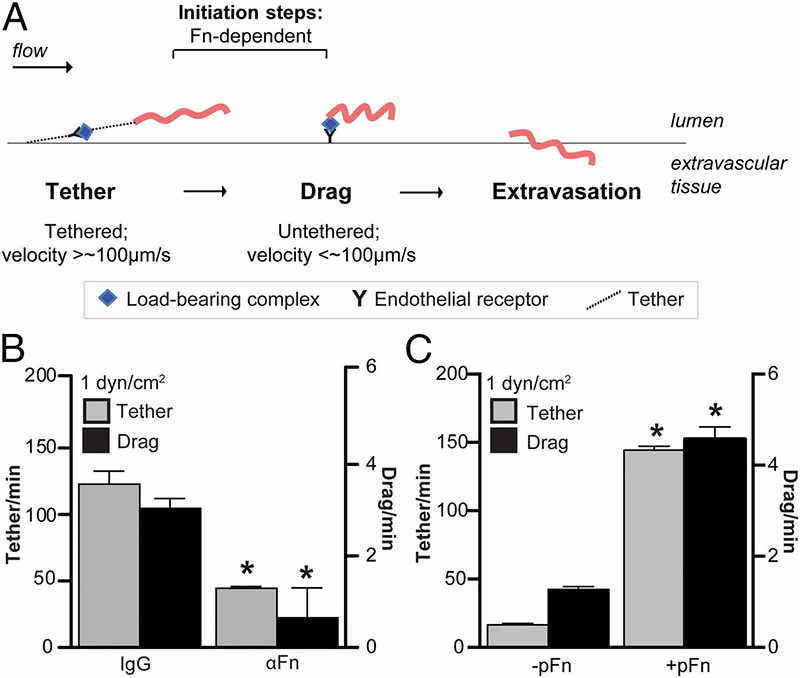
Dependence of B. burgdorferi–endothelial interactions under physiological shear stress on pFn. (A) Schematic illustrating initiation steps (tethering, dragging) of the B. burgdorferi–endothelial interaction cascade leading to bacterial transmigration across endothelial barriers into extravascular tissues. Tethering bacteria anchor to endothelial surfaces via tethers, pause repeatedly as they move over endothelial surfaces, but move faster than 100 μm⋅s−1. Dragging bacteria move more slowly (<100 μm⋅s−1) and are untethered. Both tethering and dragging are Fn-dependent in mouse PCVs (18). There are reduced numbers of B. burgdorferi tethering and dragging on primary human endothelial monolayers in flow chambers at typical PCV shear stress (1 dyn/cm2) following treatment with polyclonal anti-Fn antiserum (B) and depletion of pFn from serum in bacterial cultivation medium (C). Numbers of tethering and dragging GFP-expressing B. burgdorferi (strain GCB966) in the presence of nonspecific IgGs or polyclonal αFn IgGs were measured by manual counting. In B, GCB966 was cultivated in the presence of mouse blood before imaging. In C, bacteria were cultivated without mouse blood to eliminate all sources of pFn. In C, −pFn indicates pFn-depleted growth conditions; for +pFn samples, bacteria grown under pFn-depleted conditions were supplemented with human pFn (+pFn) to the concentration present in blood (0.3 mg/mL) before imaging. Summary values: mean ± SEM. Statistics: two-way ANOVA, Holm–Sidak posttest (n = 3 independent bacterial and endothelial cultures per group). *P < 0.05 vs. IgG (B) or −pFn (C) within the same interaction type.
We can learn much about the Spike Protein by studying Lyme Disease. It is remarkable how much commonality Spike Protein-related disease and Lyme Disease share. Let’s start with infection. For Lyme Disease, it is through a tick bite. For the Spike Protein, it is through the respiratory tract (directly into the bloodstream, too, unfortunately). For example, we can edit Lyme Disease pathogenesis to mirror the Spike Protein’s. (See link for article)
______________
**Comment**
This is the first time I’ve seen Lyme compared to the spike protein; however, when you study how both disseminate in the body, there are similarities – not to mention how ‘the powers that be’ have treated both diseases (censorship, denial of effective treatment, the push for a ‘vaccine,’ etc.)
Just today, a study came out stating:
Our findings reveal that the first contact of B. burgdorferi and blood vessels is not random but involves close interactions with pericytes. We also capture the infiltration of immune cells in the skin and their interactions with invading bacteria. Altogether, these observations suggest that Borrelia strategically targets vascular regions with lower mechanical resistance to breach the endothelial barrier, thereby enhancing its dissemination.
In other words, Bb has tricks up its sleeve. But we always knew that.
In the Discussion section the authors admit:
Due to the wave-like morphology and typically low abundance of pathogenic spirochetes in tissues, it is challenging to accurately identify the bacteria from random 2D electron microscopy projections. To reliably confirm the presence of Bb, one must either employ a correlative approach35 or conduct a complete 3D reconstruction of the spirochete.
And herein lies the problem: researchers are not using advanced enough techniques to find these elusive organisms causing so much damage.
The authors also state they found Bb in collagen bundles which provide natural pathways for migration through connective tissue which then gets degraded in later disease stages, but that by:
avoiding overt destruction of host tissues, Bb may reduce the likelihood of triggering host defense mechanisms that could thwart its spread.
So, no, you are not going nuts.
You are infected with a sneaky organism with an affinity for skin, bones, tissues, and tendons and yes, you will painfully feel it.
Further, the study demonstrates a sort of intelligence to Bb:
The initial phase likely represents a “probing” stage during which the bacteria survey the microenvironment. At this stage, Bb interacts with the vasculature using a smaller area of its cell body, without penetrating either the PCs, ECs, or the surrounding BM (Fig. 2). This is followed by a second phase characterized by a gradual increase in the number of endothelial contact sites, suggesting a transition from transient adhesion to a more stable interaction prior to traversal.
You can read my comments to the top article by going to the top link.
 Madison Area Lyme Support Group