
https://www.lymedisease.org/nasem-takes-on-lyme-iaci/
The thorny question of persistent Lyme, or rather “Lyme IACI”
July 18, 2024
By Dorothy Kupcha Leland
The National Academies of Sciences, Engineering, and Medicine (known collectively as NASEM) are private, nonprofit institutions that examine challenging issues and offer advice to the nation.
Academy members are elected based on their outstanding achievements and contributions to their fields. They are considered the cream of the cream.
NASEM works by convening committees of experts from various fields to study specific topics. Sometimes, these committees organize workshops to bring together experts, policymakers, and the public to share knowledge and explore solutions.
That’s what happened July 11, in Washington DC. A NASEM committee held a workshop examining the question of what they called “Lyme infection-associated chronic illness”—or “Lyme IACI.” (Pronounced “Lyme eye-ACK-ee” by most participants, it doesn’t exactly roll off the tongue, does it?)
Apparently, Lyme IACI is the label the committee landed on to avoid the polarizing effects of such terms as “chronic Lyme” or “post-treatment Lyme disease syndrome.”
Based on input from this public workshop as well as a review of medical literature, the committee will develop a report of its findings. This document will put forth recommendations for how to bring about better treatments for people with Lyme IACI.
You may remember that NASEM held a groundbreaking workshop last year that focused on the commonalities of several “long haul” diseases—long COVID, persistent Lyme disease, multiple sclerosis and ME/CFS (chronic fatigue). Read more about last year’s event here: “Words matter.” A new way of thinking about long-haul diseases.
The 2024 conference continued in that vein, but this time focused only on Lyme IACI. The event was significant on several fronts.
Why this matters
For starters, you had important scientists exploring the question of why some people with Lyme disease continue to have symptoms despite treatment. This major change comes after decades of “Lyme denialism,” when medical professionals, health officials, researchers, the NIH, and the CDC, all told us that what we call “chronic Lyme” didn’t even exist. So, just the fact that you have a NASEM committee considering the issue is a huge step forward.
Furthermore, the Lyme community actively participated in the event.
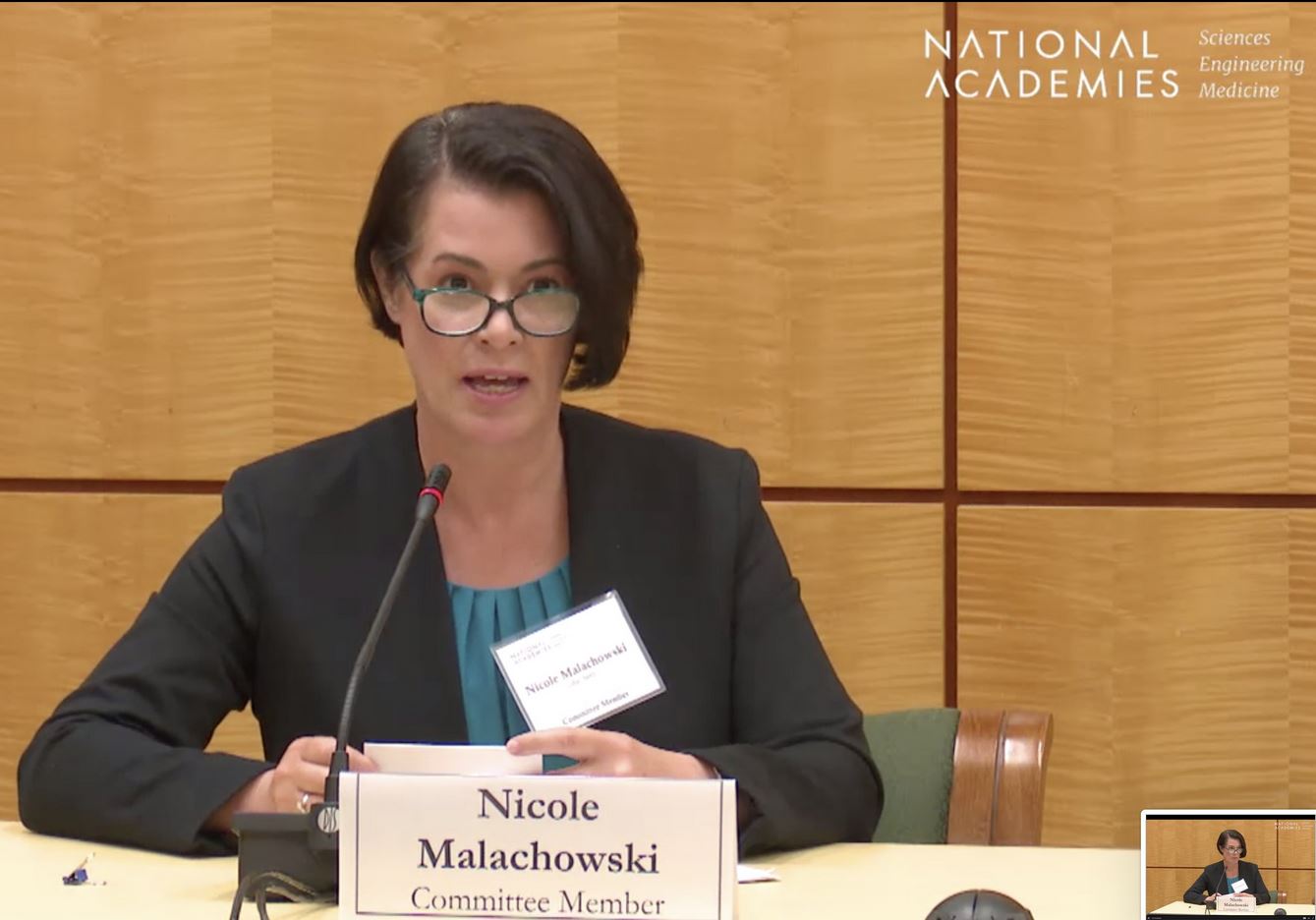 Retired US Air Force Col. Nicole Malachowski—a prominent advocate for those with tick-borne disease—served on the workshop’s planning committee.

Rhisa Parera
Rhisa Parera, the writer/director/producer of the Lyme film “Your Labs are Normal,” delivered a keynote address on the patient perspective.
Read what she told the panel: Patient tells scientists “Lyme is a literal emergency. Help us.”
The committee lined up an impressive array of researchers from prominent academic centers to shed light on the following questions:
- Describe the current state of Lyme IACI research for treatments and diagnostics to clarify barriers in development of new, effective therapeutic interventions;
- Explore recent advancements from other biomedical research fields with the potential to address these barriers by catalyzing scientific breakthroughs or translation of discoveries to treatments;
- Understand patient-defined priorities for research and discuss potential opportunities for engaging this perspective in developing a biomedical research agenda; and
- Discuss research strategies and infrastructure that could facilitate the application of innovations from other fields into the Lyme IACI research context.
See the list of speakers here.
Patient priorities
LymeDisease.org CEO Lorraine Johnson, principal investigator of the MyLymeData project, spoke on a panel about patient-defined priorities for research.
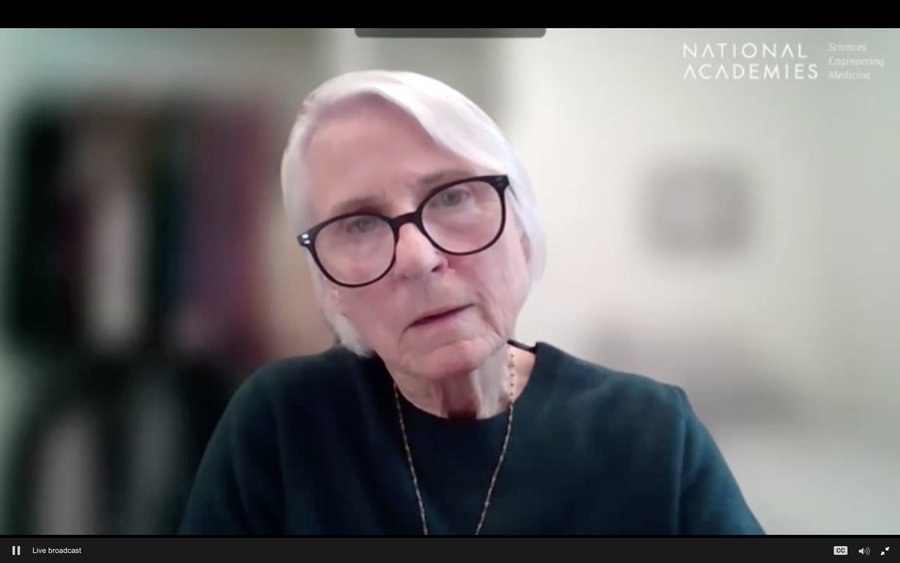
Lorraine Johnson, Principal Investigator of MyLymeData
She emphasized the importance of outcomes that patients themselves care about—namely, getting their health back and being able to return to work and other activities.
But that’s often not the way clinical trials are structured. For example, many are geared to evaluating something called the SF-36 score.
“However, a change in the SF-36 score is not inherently meaningful or important to patients,” Lorraine noted. “This is obvious on its face. If you ask any patient what they want in healthcare – none of them will say, ‘I want to improve my SF-36 score.’”
Videos from the workshop should be available soon. When they are, I strongly recommend you watch Lorraine’s presentation. I think you’ll find it riveting.
More on this event still to come. Stay tuned.
TOUCHED BY LYME is written by Dorothy Kupcha Leland, President of LymeDisease.org. She is co-author of Finding Resilience: A Teen’s Journey Through Lyme Disease and of When Your Child Has Lyme Disease: A Parent’s Survival Guide. Contact her at dleland@lymedisease.org.
_______________
**Comment**
I have a far dimmer view of this gathering of the ‘cream of the cream.’
Until Lyme literate doctors and independent researchers are equally represented within these groups, I hold little hope for much change.
First off, this group proudly deploys the climate, health, and equity propaganda pushed by globalists.
The sponsors of the organization are none other than:
AstraZeneca
Burroughs Wellcome Fund
Grantham Foundation
JPB Foundation
McCall MacBain Foundation
Rockefeller Foundation
Go here for more.
Are you getting this yet?
Now, this elitist group with Big Pharma ties has developed yet another acronym instead of just stating what it is: a complex, polymorphic, polymicrobial, chronic infection that has destroyed lives for over 40 years and shows no sign of slowing down.
The fact this group will “not make recommendations on specific approaches to diagnosis and treatment when it issues a report in early 2025, but will instead present ‘consensus findings’ on treatment for chronic illness associated with Lyme disease, including recommendations for advancing treatment,” does not comfort me much.
I can tell you right now what ‘consensus’ states since Lyme literate doctors have been persecuted for stepping outside this rigidly defined box. It will simply regurgitate 40 year old dogma created at Dearborn, MI when they took the most sensitive band for borrelia out of testing so it wouldn’t conflict with the highly lucrative, but deadly Lymerix vaccine.
Nothing’s changed – but has only become more entrenched.
 Madison Area Lyme Support Group