Archive for April, 2019

Amended Complaint in Lyme Lawsuit; Battle Lines Are Drawn

https://www.lymedisease.org/lyme-lawsuit-pfeiffer-4/

Amended complaint in Lyme lawsuit; battle lines are drawn

 

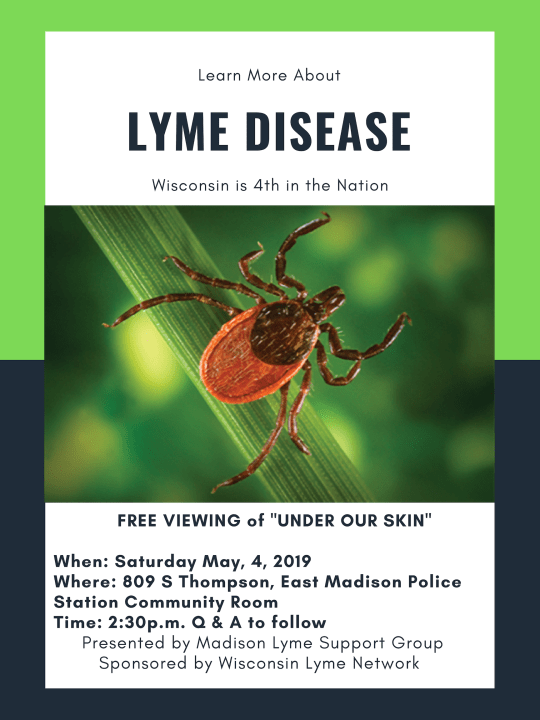
May Is Lyme Awareness Month: FREE Event For the Public

unnamed

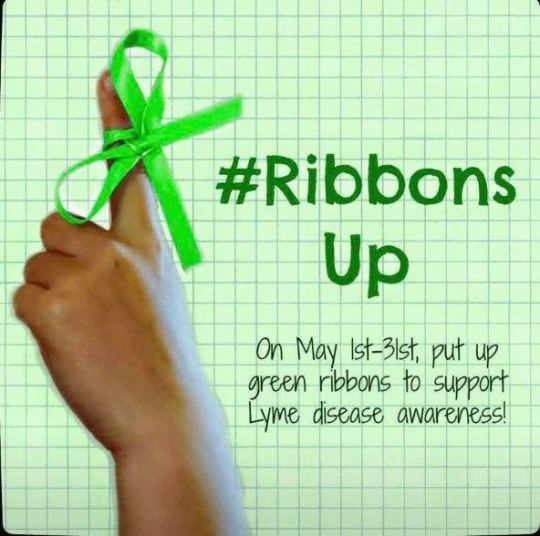
Put Green ribbons up for Lyme awareness in the month of May
In efforts of promoting awareness, education, and support, the following FREE event will be held Saturday, May 4, 2019 for the public.  Please spread the word!

Mark Jason Lim

Parkinson’s Results Beyond Researchers’ Wildest Dreams

https://www.bbc.com/news/health-47803496  (VIDEO HERE)

Parkinson’s Results Beyond Researchers’ Wildest Dreams

Written by Pallab Ghosh

Media caption Gail Jardine: “I can walk, I can turn… it’s really helped me”

A treatment that has restored the movement of patients with chronic Parkinson’s disease has been developed by Canadian researchers. Previously housebound patients are now able to walk more freely as a result of electrical stimulation to their spines.

A quarter of patients have difficulty walking as the disease wears on, often freezing on the spot and falling.

Parkinson’s UK hailed its potential impact on an aspect of the disease where there is currently no treatment.

Prof Mandar Jog, of Western University and associate scientific director, Lawson Health Research Institute in London, Ontario, told BBC News the scale of benefit to patients of his new treatment was “beyond his wildest dreams”.

Gail being testedImage copyright AFP  Image caption Scientists monitor their patients’ improvement using sensors on a specially made suit.

“Most of our patients have had the disease for 15 years and have not walked with any confidence for several years,” he said.

“For them to go from being home-bound, with the risk of falling, to being able to go on trips to the mall and have vacations is remarkable for me to see.”

Normal walking involves the brain sending instructions to the legs to move. It then receives signals back when the movement has been completed before sending instructions for the next step.

Brain ScansImage copyright BBC NEWS/WESTERN UNIVERSITY  Image caption The parts of the brain involved with movement (red on the left-hand scan) are not working properly, but three months into the trial those areas are now functioning

Prof Jog believes Parkinson’s disease reduces the signals coming back to the brain – breaking the loop and causing the patient to freeze.

The implant his team has developed boosts that signal, enabling the patient to walk normally.

However, Prof Jog was surprised that the treatment was long-lasting and worked even when the implant was turned off.

He believes the electrical stimulus reawakens the feedback mechanism from legs to brain that is damaged by the disease.

“This is a completely different rehabilitation therapy,” he said. “We had thought that the movement problems occurred in Parkinson’s patients because signals from the brain to the legs were not getting through.

“But it seems that it’s the signals getting back to the brain that are degraded.”

Countryside Walks

Brain scans showed that before patients received the electrical treatment, the areas that control movement were not working properly. But a few months into the treatment those areas were restored.

Gail Jardine, 66, is among the patients who has benefited from the treatment.

Before she received the implant two months ago, Gail kept freezing on the spot, and she would fall over two or three times a day.

She lost her confidence and stopped walking in the countryside in Kitchener, Ontario – something she loved doing with her husband, Stan.

Now she can walk with Stan in the park for the first time in more than two years.

“I can walk a lot better,” she said. “I haven’t fallen since I started the treatment. It’s given me more confidence and I’m looking forward to taking more walks with Stan and maybe even go on my own”.

Guy and Barb Alden

Image copyright GUY ALDEN  Image caption Guy Alden used to rely on a wheelchair but after his treatment he had his first holiday in seven years with his wife, Barb

Another beneficiary is Guy Alden, 70, a deacon at a catholic church in London, Ontario. He was forced to retire in 2012 because of his Parkinson’s disease.

His greatest regret was that it curtailed his work in the community, such as his prison visits.

“I was freezing a lot when I was in a crowd or crossing a threshold in a mall. Everyone would be looking at me. It was very embarrassing,” he told me.

“Now I can walk in crowds. My wife and I even went on holiday to Maui and I didn’t need to use my wheelchair at any point. There were a lot of narrow roads and a lot of (slopes) and I did all of that pretty well.”

Dr Beckie Port, research manager at Parkinson’s UK, said: “The results seen in this small-scale pilot study are very promising and the therapy certainly warrants further investigation.

“Should future studies show the same level of promise, it has the potential to dramatically improve quality of life, giving people with Parkinson’s the freedom to enjoy everyday activities.”

Read more at www.bbc.co.uk

____________________

For more:

Dr. Kinghardt has gone on record stating he has not had ONE single MS, ALS, or Parkinson’s patient in the past 5 years who didn’t test positive for Lyme:  https://madisonarealymesupportgroup.com/2019/01/23/never-had-a-single-ms-als-or-parkinsons-patient-in-past-5-years-who-didnt-test-positive-for-lyme-dr-klinghardt/

https://madisonarealymesupportgroup.com/2017/11/24/dr-frid-lyme-parkinsons-autoimmunity/

https://madisonarealymesupportgroup.com/2018/08/18/the-eyes-may-have-it-an-early-sign-of-parkinsons-disease/


FDA Approves Ketamine Nasal Spray For Depression

https://www.psychologytoday.com/us/blog/when-your-adult-child-breaks-your-heart/201903/fda-approves-ketamine-nasal-spray-treat

FDA Approves Ketamine Nasal Spray to Treat Depression

New hope for treatment-resistant depression.

Posted Mar 08, 2019

In the popular imagination, depression may feel unbearable, but it’s often fleeting. All it takes is a quick visit to a therapist or psychiatrist, a magic pill, and a few therapy sessions. The majority of depression patients, however, report significant side effects. These side effects are often severe enough to cause a person to stop taking the drug. For about a quarter of depression patients, symptoms don’t improve at all. That leaves millions of Americans without adequate treatment for their depression.

For years, anecdotal data and preliminary research have suggested that ketamine might act as a rapid depression cure. Thanks to more advanced recent clinical trials, we now know this to be the case. And now, ketamine could soon enter the market, helping millions of people who have either treatment-resistant depression or who cannot tolerate the side effects of traditional SSRIs.

The U.S. Food and Drug Administration (FDA) this week approved a new treatment developed by Janssen Pharmaceuticals, Inc. Esketamine will be marketed under the brand name Spravato as a nasal spray. This ketamine-based treatment has shown significant benefits in clinical trials, though researchers still do not understand how it works.

Ketamine for Depression: What the Research Says

Ketamine is an anesthetic often used in veterinary practice. It has also been abused as a club drug. When the drug is used appropriately and under close observation in a psychiatric setting, it can alleviate depression. Clinical trials on the new version of the drug, a nasal spray, point to similar results.

The new drug, esketamine, is a close chemical cousin of ketamine. Available as a nasal spray, the FDA has approved it for use in a doctor’s office. A patient takes the dose at a clinic, where they are then monitored for two hours. Depending on the severity of the depression, patients then receive doses once or twice weekly.

The Rochester Center for Behavioral Medicine was one of the sites in the national trial, which found that Spravato lowered depression scores on a depression inventory by an average of 21 points, compared to 17 points for a placebo. Another found that just a quarter of Spravato users relapsed, compared to 45 percent of people who received a placebo.

Preliminary research suggests that ketamine may be especially effective at eliminating suicidal thoughts and feelings, which are the most dangerous component of depression.

How Does Ketamine Work?

Esketamine is a glutamate receptor modulator, thought to help restore deficits in the brain cells of people affected by major depression. The precise mechanisms through which this drug works will be the subject of further research.

One of the most common side effects of ketamine use is hallucinations. Some doctors believe these hallucinations may actually play a key role in the drug’s efficacy. Some users report out of body experiences, or profound spiritual realizations that change their perspectives on life. It could be that these experiences alter a person’s way of thinking, or even act as a sort of brain reset.

It’s also unclear whether any of the branded forms of ketamine are more effective than the original anesthetic. Early research primarily used the anesthetic, but newer studies use branded forms, including the recently approved nasal spray. Both versions appear to work.

Ketamine’s manufacturers say its cost will be consistent with that of other mental health specialty drugs—probably between $500 to $800 per dose, which is a figure that does not take into account pre-negotiated insurance discounts or patient copays. It’s not yet clear how much a typical patient can expect to pay. When compared to the typical costs of life with depression—lost productivity, potentially years of therapy or failed antidepressants—a few hundred dollars could actually be a bargain.

Do We Really Need Another Antidepressant?

To those not well-versed in the world of psychiatric care, it might seem like antidepressants are overused, too readily available, and the cause of far too many unpleasant side effects. The data suggest otherwise. While antidepressants can and do save lives, many patients with depression don’t get better. Others have to try multiple drugs or drug cocktails before they get relief.

The U.S. is experiencing a suicide epidemic. Suicide claimed 45,000 lives in 2016 alone. In more than half of U.S. states, suicide has increased by 30 percent or more over the last two decades. Many people with depression don’t seek help because they don’t believe it is available. Others turn to the mental health system only to be let down, further propelling them into despair.

Spravato offers real hope to suffering people. What’s more, future treatments may be on the horizon. Preliminary data suggests that ketamine may also offer rapid relief of PTSD symptoms. As research continues, we may get closer not only to unraveling depression, but also better understanding the roots of psychological suffering.

References

Cartwright, C., Gibson, K., Read, J., Cowan, O., & Dehar, T. (2016). Long-term antidepressant use: Patient perspectives of benefits and adverse effects. Patient Preference and Adherence, 10, 1401-1407. doi:10.2147/ppa.s110632

Greenfieldboyce, N. (2018, June 07). CDC: U.S. suicide rates have climbed dramatically. Retrieved from https://www.npr.org/sections/health-shots/2018/06/07/617897261/cdc-u-s-suicide-rates-have-climbed-dramatically

Ketamine as a rapid treatment for post-traumatic stress disorder (PTSD). (n.d.). Retrieved from https://clinicaltrials.gov/ct2/show/NCT00749203

_________________

**Comment**

Ketamine is used for starting and maintaining anesthesia and induces a trance-like state while providing pain relief, sedation, and memory loss. It can cause confusion and hallucinations as it wears off.  Discovered in 1962 it was used in the Vietnam War due to its safety and is on the WHO’s list of essential medicines.  It’s also used as a recreational drug in raves and as a club drug.  Due to this, it’s a schedule III substance in the U.S.

That said, it’s been shown to limit borrelia (Lyme) in vitro:  https://madisonarealymesupportgroup.com/2018/03/10/ketamine-limits-bb-in-vitro/

It’s also been shown to relieve chronic pain, improve quality of life, reduce depression and suicidal ideation, and reduce opioid consumption:  https://madisonarealymesupportgroup.com/2017/09/14/iv-ketamine-in-ptls/

5 Things Your Doctor Should Know About Healing Lyme Disease

Jay-Davidson-5-Things-Your-Doctor-Should-Know-About-Healing-Lyme-Disease

By Dr. Jay Davidson

5 Things Your Doctor Should Know About Healing Lyme Disease

1. NOT JUST A TICK

Lyme disease can be transmitted by more than just a tick bite…

Which is technically a tick sting. Most individuals that contract Lyme disease don’t get it from a tick sting. Spiders, fleas, mosquitoes, deer flies, black flies, horse flies and other insects can transmit Lyme disease. Deer, birds, cows, horses, other mammals, and rodents can also be carriers of Lyme. Lyme disease can be spread during intercourse. Moms can pass it onto babies in utero and through mother’s milk to the baby. What I find to be the most frightening fact about Lyme disease is that it can be contracted via dead fragments of the spirochete.

2. BEWARE OF ANTIBIOTICS

The typical ‘antibiotic bug bomb’ is not the complete solution…

I believe you cannot just treat the “bug” to get someone completely healed of chronic Lyme disease. Often those struggling have multiple issues going on in addition to Lyme disease. These may include: heavy metal toxicity, mold toxicity, emotional stressors, trauma, leaky gut, etc. When you take antibiotics, the Lyme spirochete changes form to protect itself. When Lyme bacteria are stressed, they form into cysts. Technically, the spirochete will open up and morph itself into a ball. When the stress is removed, the cysts convert back into spirochetes. Antibiotics damage mitochondria, which is the basis of cellular energy, and they also don’t cross the blood-brain barrier very well so those with Lyme in the brain could be left suffering.

3. IT’S EVERYWHERE

Lyme doesn’t know a state border…

It has been detected in all 50 states in America. Experts like Dr. Ray Stricker say that migratory birds are a big contributor to the worldwide spread of Lyme disease. This explains why Lyme disease is found on every continent except Antarctica.

4. OFTEN FORGOTTEN

Lyme disease is commonly misdiagnosed…

With over a 150 possible symptoms, it can have many different presentations. If you have any of the following conditions or symptoms, it’s important to rule Lyme disease out. These include: an autoimmune condition, fibromyalgia, lupus, chronic fatigue syndrome, depression, rheumatoid arthritis (RA), ALS, mental illness, ADHD, multiple sclerosis (MS), hypochondria, migraine headaches, anxiety, insomnia, food allergies, Parkinson’s, Alzheimer’s disease, and Tourette’s syndrome.

5. THE GREAT MIMICKER

Only 30% of cases get a bull’s eye rash…

An important question to ask is why doesn’t everyone get a rash? Two factors explain it. The first factor is most don’t get Lyme disease from a tick. The second factor is that Lyme disease is pleomorphic. This means it takes on different shapes at different stages and even adjusts as a result of changes in its environment. This is why Lyme disease is referred to as the “New Great Imitator” or the “Great Mimicker.” There are three different forms of Lyme bacteria: spirochete (spiral) form, intracellular form, and round body (cyst) form. If the Lyme bacteria is not in a spirochete form during transmission, there will be no bull’s- eye rash. Think of the spirochete form as the classic form of Lyme disease that weaves through joints and tissues instead of just floating in the blood.

References

  1. Cisak, Ewa E; Chmielewska, Jolanta J; Rajtar, Barbara B; Zwolinski, Jacek J; Jablonski, Leon L; Dutkiewicz, Jacek K. Study on the Occurrence of Borrelia Burgdorferi Sense Lato and Tick-Borne Encephalitis Virus (TBEV) in Ticks Collected in Lublin Region (Eastern Poland). Annals of Agricultural and Environmental Medicine [Internet]; 2002 [cited 2015 March 6]; 9: 105-110. Available from: http://aaem.pl/abstracted.php?level=5&ICID=4513
  2. Ten Basic Lyme Disease Facts. Lyme and Cancer Services. Database [Internet]. [cited 2015 March 6]; [about 1 screen]. Available from: http://lymeandcancerservices.com/lyme/lyme-facts/
  3. Burgess, EC. Borrelia Burgdorferi Infection in Wisconsin Horses and Cows. Annals of the New York Academy of Sciences [Internet]. 1988 [cited 2015 March 6]; 539(1): 235-43. Available from: http://www.ncbi.nlm.nih.gov/pubmed/3190095
  4. Klatt, Edward C. MD; Kumar, Vinay MBBS MD FRCPath. Robbins and Cotran Review of Pthology (Robbins Pathology), 4th Edition. Saunders; 2014 Oct 10.
  5. Weintraub, Pamela. Cure Unknown: Inside the Lyme Epidemic (Temp Group 02/17/2015 3:25:11 PM). St. Martin’s Griffin; 2013 Jun 25.
  6. Stricker, Ray MD. The Treatment of Lyme Disease:: A Medical legal Assessment. Exper tReviews in Anti- Infecttiive Therrapy. In: LYme Disease Association Conference (CALDA); 2014; California. [unpublished] [cited 2015 March 6].
  7. Stricker, RB; Phillips SE. Lyme Disease Without Erythema Migraines: Cause for Concern? American Journal of Medicine [Internet]. 2003 Jul [cited 2015 February 20]; 115(1): 72-3. Available from: http://www.ncbi.nlm.nih.gov/pubmed/12867241? dopt=Abstract
  8. Centers for Disease Control and Prevention (US). Lyme Disease – United States, 2001-2002. Morbidity and Morality Weekly Report (MMWR) [Internet]. 2004 May 7 [cited 2015 February 20]; 53(17): 365-69. Available from: http://www.cdc.gov/mmwr/preview/ mmwrhtml/mm5317a4.htm

__________________

**Comment**

While Dr. Jay and many others will come right out and state that Lyme can be transmitted through many means beside ticks, why hasn’t more work been done in this area to nail it down for completely accurate information?  For 40 years there has been disagreement on this radically important issue. Animal studies have borne it out completely, with our own UW researcher Dr. Burgess listed in his reference section (#3), and Minnesota’s Dr. Lida Mattman stating it almost as a joke in 2005:  https://madisonarealymesupportgroup.com/2019/04/02/transmission-of-lyme-disease-lida-mattman-phd/ Having written the book on spirochetes (literally), this is what she states:

“I laugh at all this stuff about looking for the Woodtick. That’s so ridiculous because most of the people who get Lyme disease have never heard or seen a tick. We know now it’s in tears and people wipe their eyes and then you shake hands with them. Or we don’t laugh so hard about the physician we had in the hospital who wouldn’t touch the doorknobs in the hospital without taking his white coat and handling the doorknob through a coat. Maybe he wasn’t so insane after all.

So we think this is spread by what is called fomites (an inanimate objector substance that is capable of transmitting infectious organisms fromone individual to another) which is the pencil in the bag as you pick up a pen to write a check or anything you handle. So it’s in urine and in tears and it’s also spread by mosquitoes and who hasn’t had a mosquito bite?  We’ve tested the mosquitoes in Michigan and sure enough they can carry the Lyme spirochete.”  

Those of you up on tick facts caught that Mattman was incorrect about the wood tick, aka American dog tick or just plain dog tick, as to date it has not been found to transmit Lyme, however, it does transmit Rocky Mountain spotted fever, tularemia (Rabbit Fever), and tick paralysis. In 2017, cases of wood tick transmitted Powassan were reported in Minnesota & Wisconsin:  https://bismarcktribune.com/news/state-and-regional/new-scary-wood-tick-disease-surfacing-in-region/article_606edd80-1b27-596b-8140-6957ab0497a1.html  That’s kind of a big deal as 15% of those people do not survive. Those who do have a 50-50 chance of suffering long-term neurological damage.

The point is these women sounded the alarm on borrelia transmission and they were ignored.

Research is screaming to be done on so many issues in Lyme-land.

My last comment is – don’t let the “Beware of antibiotics” schpeel frighten you. People feel compelled to warn, but there is solid research about the ability of antibiotics to kill pathogens. While it’s true there are many other aspects of this illness that need addressing, antibiotics have been the most effective modality for me, my husband, and thousands of others. That’s not to say they don’t have their problems and concerns, but the last thing you need is fear going forth in this journey.

Best advice:
  • get to a Lyme literate doctor experienced in the nuances of treatment
  • eat a whole-food diet
  • take probiotics (the good refrigerated kind with lots of strains)
  • get your sleep (talk to your doctor if you need help)
  • exercise if you can with the goal of building up your immune system (T-cells) – that means at a level that doesn’t wipe you out.
  • find out your imbalances/deficiencies and supplement
  • get psychiatric help if you need it from at least a “Lyme-friendly” practitioner who won’t abuse you with, “It’s all in your head.”
  • learn as much as you are able so you can be your own advocate – there will be phases in this journey were this will be nearly impossible.  Don’t fret – just learn when you can
  • blow off the people who don’t believe you or discount you. “Don’t let the turkey’s get you down!”  
  • get support – typically from others who are on this same albeit different journey