Archive for April, 2019

Red Cross Didn’t Want ‘Chronic Lyme’ Blood a Decade Ago

https://www.facebook.com/lymebook/photos/a.685927581612624/969609259911120/?type=3&theater

56527814_969609263244453_7613922386588467200_n

Screenshot from the American Red Cross taken by a savvy patient one decade ago. Evidently they didn’t want your blood if you had CHRONIC LYME (something that supposedly doesn’ even exist). They also didn’t blood from treated patients for up to a year afterwards.

The men in black must have paid them a visit to change their minds.


iu-9


Three Alternative Strategies That Can Address Severe Chronic Pain

https://articles.mercola.com/sites/articles/archive/2019/04/07/essential-oils-for-chronic-pain.aspx?

Three Alternative Strategies That Can Address Severe Chronic Pain

 Approx. 1 Hour

Written by Dr. Joseph Mercola

STORY AT-A-GLANCE

  • Dr. Mark DeBrincat, a chiropractor also known as the “Good News Doctor,” recovered from severe injuries that kept him in severe chronic pain for 15 years using neurofeedback, essential oils and pulsed electromagnetic field (PEMF) treatments
  • With the use of eight essential oils, DeBrincat was able to remodel the tissue in his spine, reducing his pain from a 10 to a 5, and then to zero
  • The neurofeedback device consists of a cap with 19 leads hooked to a computer that register neural activity, giving you a three-dimensional map of your neurology
  • Once dysregulated areas of your brain have been identified, they can be targeted to increase neuroplasticity. Once neuroplasticity kicks in, you start growing new tissue
  • Essential oils are volatile compounds found in grasses, trees, roots, bark, leaves and flowers. Essential oils in general are about 50 to 70 times more powerful than herbs, and should be used sparingly

Dr. Mark DeBrincat, a chiropractor and natural health physician also known as “The Good News Doctor,” has a most amazing story of recovery from one of the worst chronic debilitating pain syndromes that I’ve ever heard of, so I asked him to share his journey with you, in the hopes it may motivate you to seek natural approaches to pain.

Many see opiates as the only option for severe pain, which can have severe health consequences. Opioids are extremely addictive and 130 Americans die from opioid overdoses each and every day.1The death toll from opioids is so great it has actually contributed to lowered life expectancy in the U.S.

A Terrible Accident

Twenty-one years ago, traveling from Georgia to Florida to attend a chiropractic conference, DeBrincat and his wife were in a terrible car accident. That they both survived was a miracle in itself. His wife ended up with whiplash and fractured C3 through 5.

“I remember laying in the hospital and threatening her doctor that if he didn’t put a perfect curve into her neck or if he fused all her bones together, he’d never hear the end of my name,” DeBrincat says.

“He literally took the titanium plate home and pounded in a nice curve for me. Here, 21 years later, she’s got a beautiful cervical lateral curve and she still has her joint below a fusion, which is just amazing.

She healed in just a few months and then took care of me for years. I was a hot mess. Bracing my legs on the dashboard on impact saved my life, but also literally split my pelvis in half. The pubic bone snapped in the front, and my sacrum cracked top to bottom in the back.

I ripped the muscles off most of my legs [on] both sides … Then I lost my sigmoid and descending colon in all of that, amongst many other injuries. I spent months confined to a hospital bed. It took me several years to be able to go back to work again as a chiropractor. I had to become my own patient …

By 2010, I was permanently disabled and confined to a wheelchair. I had stabbing pain from my neck, all the way to my tailbone. I had no feeling in my arms or legs, but my hands and feet felt like burning broken glass all the time. I was trying everything.”

Remembering the Body’s Self-Healing Capacity

Raised by holistic parents, DeBrincat was determined to heal from his injuries without drugs, but after seven back surgeries and years of pain, he succumbed to Oxy, Soma and Xanax.

“I let them just throw any medication at me that would take my pain level from a 10 down,” he says. “We found the combination of narcotics, muscle relaxers and anti-anxiety pills that would take me from a 10 to an 8. That was survivable; 10 was just — you cannot live in that environment for the rest of your life.”

Eventually, he also had a computer implanted in his spinal cord at T10, which when turned on would numb his entire spine. “It was basically radar-jamming the pain so that I could move my limbs and actually start to be a little bit independent. That was a big breakthrough,” he says. Still, even this device was not enough to get him off the narcotics. It signified a turning point though. Fifteen years after the accident, he had an epiphany.

“I remembered back in school we talked about healing, getting better and overcoming anything. It’s always innate. We heal from the inside out. We get harmed from the outside in. I really started studying more epigenetics.

In studying the health of our cells, something clicked one day and I thought to myself, ‘You know, every cell has a turnover rate. If I can just simply make the next version of my cells be better than this one, I think I might actually be able to overcome this problem …

Our eyes only take two days. Our gums take two weeks. All the cells are replaced. Our throat takes two months. The lining in our lungs takes eight days. I started having hope, [thinking] ‘I can start doing more things now to impact the health of the cell. The new versions of these cells are going to be better than the last.’”

Step 1: Aggressive Neurofeedback Training

One of the strategies he used was neurofeedback, which is also recommended for people recovering from traumatic brain injuries. For years, he’d been doing quantitative electroencephalography (qEEGs) and neurofeedback training, but only for 30 minutes, two to three times a week. “We were told that you could never do more than that because your brain can’t handle it. You’ll fatigue and it’ll cause more problems,” he says.

During the time he was wheelchair bound, his brain map indicated neural overactivity, and the neurofeedback training wasn’t correcting that. He then heard a lecture in which it was stated that patients addicted to narcotics for pain need very aggressive neurofeedback training. DeBrincat immediately began doing hours of neurofeedback each day.

“In a few short months, my ability to feel more in my legs, to do more for myself and get myself dressed, was amazing. It was like I’d had the answer all along. I didn’t know I could be tapping into that. With my newfound freedom of, ‘I’m growing new cells, now I can grow new cells in my brain and spine where I have all this damage,’ that was super exciting.”

Discovering Essential Oils

Shortly after that, he met a woman who gave him a bottle of an essential oil. “She says, ‘Honey, just put this wherever it hurts and all your pain is going to go away’ … I remember putting it in my bag and rolling away thinking, ‘Come on. I’ve got the best doctors in the world who get me the best, strongest medications. And your little oil, it’s kind of a joke to me,’” DeBrincat says.

He admits he knew nothing about essential oils, and the oil sat in his bag, untouched, for five weeks. During a vacation, his wife ended up using it while giving him a massage one day. Remarkably, it eased his pain. That was five years ago, and for the first time, he felt no pain anywhere.

“I just sat bawling and crying,” he says. He’d been in pain for so long, he’d forgotten what it felt like to be pain free. With the computer in his spine, he could normally walk 20 to 30 steps max at a time. If he pushed further, he’d be bedridden for days.

That day, he set the pedometer on his watch and started walking. “I walked 5,700 steps,” he says. “I could not believe it.” The next morning, he was still pain free. From there, he went on to study essential oils.

“I found eight different oils that remodeled all the tissue in my spine. I put them on and it would bring me to a pain level 5 from a 10,” he says. “Then somebody who knew a whole lot more about oils looked at my list and goes, ‘You know what? Just turn your list upside down and do it in the other order. When you do it that way, it’s going to have a much greater effect on you.’

I did that and, oh my goodness, it went to pain level zero. Now, I could be pain-free completely for literally 12 hours before any pain came back. I would do it twice a day …

The body is remodeling itself. The oils that are helping remodel tissue are literally getting in there with the DNA when it makes 3 billion copies of itself before it finds the cleanest one to go into the new cell. It helps take out debris, damage, toxins, scars … so that you can give back to your root cell, which is the purest form before you had all your problems …

I did this back protocol for 90 days, then stopped. Within 24 hours, I was right back in this horrible pain again … I went another 90 days and then stopped, and made it four days before any pain came back. Now, this was a second epiphany, because now I really, honest to God, believed I was getting better … [I did] another 90 days and then stopped. That was August 2014. I’ve never had to do that protocol for my back since.”

He used peppermint, Siberian fir, and cypress for his essential oils, Remarkably, the stenosis in his neck and low back is now gone, herniations throughout his spine are gone, as is his arthritis. Even the scars on his back have radically improved.

“I got my life back. I was so passionate. I could teach again. Anybody who saw me walking was like, ‘This is an absolute true miracle. I can’t believe what I’m seeing. Are you a twin brother?’ I taught continuing education in a wheelchair for a lot of years. For them to see me walking was astonishing.”

PEMF — Another Breakthrough

He still had limitations though. He couldn’t exercise, lift weights or stretch, for example, and his feet would go numb when walking. His next breakthrough came when he discovered pulsed electromagnetic field (PEMF) therapy. After five weeks of PEMF treatments, his blood circulation dramatically improved, resolving the remaining limitations.

“My kids grew up with me in a wheelchair most of the years, especially during all their middle school years, and that was so crucial. To be able to have this amazing abundant life with them now and to be able to mountain bike, snow ski, dirt bike, snowmobile, hike and all the wonderful fun things we love doing, it’s just a dream come true.

We’re always looking for products and things that impact us, that give us hope again. That’s why I’ve been known as the ‘Good News Doctor.’ People say, ‘You know what? I always get bad news from my doctor. You’re the first one who’s given me hope again.’

When you’ve been through any major health crisis and you come out the other end, your purpose kind of changes. It evolves into, I guess, how God wants to use you to help people. From being in a wheelchair for so many years and coming out, our main passion is helping people with neurofeedback.

We do the brain mapping … in the privacy of their own home … We can literally give [patients] two years of care in one month, aggressively, and then make those breakthroughs happen over and over again. That’s so exciting.”

While DeBrincat’s story may sound too good to be true, it’s important to realize he did a lot of work on himself throughout. He juiced every day, ate whole food, avoided toxins, and would do his own physical therapy for three to four hours a day for all those years. Still, his recovery is astounding, considering the extent of his injuries and the time spent in disability.

Neurofeedback Explained

The neurofeedback device basically consists of a cap with 19 leads that hook to a computer. The leads can be likened to very sensitive microphones that register neural activity. Placed around the head, you end up with a three-dimensional image or map of your neurology.

Once the dysregulated areas of your brain have been identified, those areas can be targeted to increase neuroplasticity in that region. Once neuroplasticity kicks in, you start growing new tissue.

“This is inspiring for those who are stuck in pain, because you have what’s called a pain network. When that network is not functioning right, you are experiencing pain through your nervous system and you can’t just turn it off …

Knowing there’s technology that can pinpoint a specific network and grow tissue to help that network, this has given us so much hope to help people who are needlessly suffering in pain, because honestly, there’s no drug that’s going to heal them …

I think doctors who don’t either refer out to this or don’t have [neurofeedback] in their practice have a big black hole in trying to help people, because there’s so much information that we’re getting from the brain …

It really should be the foundation, and part of the initial examination … We need to see how well your brain’s functioning, because that’s controlling everything … A great starting point is to get everything back online, then everything else you’re doing after that will work better.”

Essential Oil Benefits

Essential oils are volatile compounds found in grasses, trees, roots, bark, leaves and flowers. Essential oils in general are about 50 to 70 times more powerful than herbs, so must be used sparingly. Quality and purity are of the utmost importance when seeking medicinal benefits, so it’s important to do your homework.

“Some of them help wake you up, like peppermint oil. One drop of peppermint on your hand, rub your hands together, hold it in front of your nose; in 15 seconds, you’re going to have about 20 percent more oxygen in your brain.

Some of these oils are so small they can go right through your blood-brain barrier and actually enhance your mood and change the way you’re feeling. That’s phenomenal as far as people who are depressed and have anxiety and so forth.”

DeBrincat found there’s a definite synergy between the brain mapping and the oils. Using qEEG, he could see the effect of an essential oil on the brain, often in as little as 30 seconds, either calming down an overexcited area or waking up a low-functioning region.

Essential oils also work as adaptogens. For example, the same oil that works to calm anxiety will work to ease depression, which are two poles on the spectrum. Helichrysum is a blood adaptogen. “I put that over my heart every day,” DeBrincat says.

“If my blood’s too thick, it’s going to thin it. If my blood’s too thin, it’s going to help thicken it. Oils are very intuitive in nature to know what properties you need. The way it does that is by using different vibrations on both sides of the active ingredient to be able to illicit different responses with the same oil.”

More Information

You can get more information about DeBrincat and his practice on TheGoodNewsDr.com. He takes care of patients all across the U.S. In closing, he stresses the importance of neurofeedback for getting more rapid results when you’re trying to address severe pain. You have a number of options for that. You can try doing an online search for local doctors that provide the service. Some will offer home units for rent, which is the most ideal option if you’re going to use it daily.

_____________________

For more on pain relief:

CBD: https://madisonarealymesupportgroup.com/2018/10/08/thc-vs-cbd-for-pain-the-differences-interactions/

Medical marijuana: https://madisonarealymesupportgroup.com/2018/01/24/medical-marijuana-for-lyme-a-doctors-perspective/

https://madisonarealymesupportgroup.com/2018/11/30/medical-cannabis-superior-to-opioids-for-chronic-pain-study-finds/

DMSO/MSM: https://madisonarealymesupportgroup.com/2018/03/02/dmso-msm-for-lyme-msids/

LDN: https://madisonarealymesupportgroup.com/2016/12/18/ldn/, https://madisonarealymesupportgroup.com/2017/06/12/ldn-reduced-pro-inflammatory-cytokines-in-fm-after-eight-weeks/

Magnetic Fields:https://madisonarealymesupportgroup.com/2018/08/15/treating-pain-with-magnetic-fields/

Laser Therapy: https://madisonarealymesupportgroup.com/2018/02/27/march-2018-support-group-laser-therapy/, https://madisonarealymesupportgroup.com/2018/04/08/class-iv-laser-therapy/

Heat: https://madisonarealymesupportgroup.com/2018/09/28/hotter-bodies-better-at-fighting-disease/

Enzymes:  https://madisonarealymesupportgroup.com/2018/03/05/how-proteolytic-enzymes-may-help-lyme-msids/

 Acupuncture:  https://madisonarealymesupportgroup.com/2018/11/06/acupuncture-beats-injected-morphine-for-pain-groundbreaking-study/

Essential Oils:  https://www.healthyandnaturalworld.com/essential-oils-to-relieve-pain/  Studies are given for the following oils helping pain: chamomile, lavender, sweet marjoram, eucalyptus, peppermint, rosemary, thyme, clary sage, sandalwood, juniper, ginger, frankincense, yarrow, wintergreen, vetiver, helichrysum, black pepper oil, lemongrass, rose geranium, bergamot.  Directions are given for making massage oils, bath soaks, compresses, & inhalation techniques.

PEMF:  https://pulsedenergytech.com/pemf/

https://blog.bulletproof.com/pemf-therapy/

https://www.drpawluk.com

https://www.drpawluk.com/category/education/pemf-information/


Missing Links? Connect the Dots Between Lyme & Mental Health

https://www.enaturalawakenings.com/FAIR/April-2019/Missing-Links/

Missing Links?

Connect the Dots Between Lyme and Mental Health

Is it possible that a tiny little tick could assault the brain and body and cause lingering mental health issues in its wake? Yes. But even with decades of research that demonstrates a causal link between infectious disease and psychiatric issues, our healthcare system still isn’t appropriately identifying and treating those afflicted with Lyme disease. The real question is: why are we missing these individuals?

It isn’t an easy answer. Ultimately the complexity of how the disease impacts the brain and body and how uniquely the symptoms can present is a major factor, as some show symptoms right away and delete others not until months or years later. A lack of definitive diagnostics is another factor in accurate identification. Lastly, a lack of acceptance of the disease and not enough Lyme-literate medical and mental health professionals is a hurdle in both diagnosis and treatment.

Research on Lyme Disease and Mental Health

Since the early 1990s, research has demonstrated a clear link between psychiatric conditions and Lyme disease, and continues to signify a connection. In 2002, Tomáš Hájek, MD and colleagues found that 33 percent of screened psychiatric patients showed signs of an infection with the Lyme spirochete, Borrelia burgdorferi. Many mental health issues have been linked to tick-borne bacteria, including: depression, mood lability, bipolar disorder, irritability, anxiety, panic attacks, obsessive compulsive disorder, attention and executive functioning problems, memory issues, word finding difficulties and even psychosis.

A 2018 study by Shreya Doshi, MA and colleagues found that in patients with post-treatment Lyme symptoms, they had depression symptoms 8 to 45 percent of the time, and suicidal ideation was reported by 19.8 percent of these patients. In 2017, Dr. Rosalie Greenberg’s study found that 89 percent of participants diagnosed with Pediatric Bipolar Disorder tested positive to one or more pathogens, including tick-borne Babesia, Bartonella and Lyme, as well as Mycoplasma pneumoniae.

Even with many research studies over decades that demonstrate a causal link between infectious disease and mental health, the average person sees between five and seven doctors before a diagnosis of Lyme disease.

Lyme’s Effect on the Brain

When Lyme disease affects the brain, it is frequently referred to as Lyme neuroborreliosis or Lyme encephalopathy. Neuroborreliosis is an infection within the brain that can mimic virtually any type of encephalopathy or psychiatric disorder and is often compared to neurosyphilis. Both are caused by spirochetes, are multi-systemic and can affect a patient neurologically, producing cognitive dysfunction (memory, word finding, attention problems) and organic psychiatric illness (anxiety, depression, OCD).

The causative agent of Lyme disease, Borrelia burgdorferi, is a highly neurotropic organism that not only can produce neurologic disease, but also can exist dormant within the central nervous system (CNS) for long periods—even months or years. It is an evolved pathogen that uses several strategies to survive in both human and animal hosts, including using a screw-like mechanism that allows the bacteria to embed in the cell’s membrane.

There are multiple ways in which Lyme disease affects the brain and body and produces changes in the CNS that leads to mental health issues. The Lyme spirochete can burrow into the brain and nervous system, causing damage within the brain that leads to long-term issues. It causes brain swelling or inflammation that leads to psychiatric issues, causes immune reactions to the bacteria and impacts the endocrine system and hormones. Lyme can impact any area of the brain, including the emotional center of the brain: the limbic system. The bacteria in Lyme releases toxins in the brain and body, and these exotoxins are continuously released as waste material that may cause symptoms.

Why is Lyme Disease Hard to Identify?

Lyme disease is known as the great imitator because its symptoms mimic and overlap with so many other diseases that it can be hard to diagnose. It is a multi-systemic illness that can affect the CNS, causing a wide array of neurologic and psychiatric symptoms. In 1994, Fallon and Nields noted up to 40 percent of patients with Lyme disease develop neurologic involvement of either the peripheral or central nervous system.

Most people don’t realize that there are three stages of Lyme disease: early with dermatological symptoms, disseminated, and late stage. Late stage Lyme is when there is a dissemination of the bacteria to the CNS, which can occur within as little as two weeks. Lyme disease may lie dormant for months to years before symptoms of late infection emerge when something (head injury, toxins, EMF) causes the bacteria to cross the blood-brain barrier into the brain.

Patients with late stage Lyme disease present with a variety of neurological and psychiatric problems, ranging from mild to severe, which makes it very hard to connect to infectious disease. Most patients have no recollection of tick bite or falsely believe that a tick has to be engorged to carry bacteria and parasites that can be transmitted. Moreover, they are often told that their prior Lyme disease was “cured” and can’t be related to their current symptoms. These problems delay treatment and make it more likely to have late stage Lyme with a neurocognitive or neuropsychiatric impact.

Common Features of Psychiatric Issues Due to Lyme

Since tick-borne bacteria affects the CNS as noted previously, a multitude of symptoms can present. Afflicted individuals can show symptoms immediately or months later and can show a combination of physical, cognitive or psychiatric issues.

Common symptoms of tick-borne disease include: chronic fatigue, sleep problems, brain fog, cognitive and memory impairments, slowed cognitive processing, attention or executive functioning deficits, depression or mood dysregulation, anxiety, OCD, sensory sensitivity, irritability, anger and headaches.

It is important to note that one can have a pre-existing condition prior to Lyme disease that can exacerbate with infectious disease, which further complicates proper diagnosis and treatment. Lyme and tick-borne disease is co-morbid with ADHD, autism, sleep disorders, depression, anxiety disorder, pain and migraines, and can be a source of Pediatric Acute-onset Neuropsychiatric Syndrome (PANS).

What Should You Do? 

If you or your child has a history of unexplained medical and mental health symptoms or haven’t gotten better with traditional therapies and psychotherapy, consider that infectious disease might be the source of your mental health issue. It is important to note that infectious disease takes many forms and that one may have a single illness, but it is more likely that one is affected by more than one infection, including strep, virus, other bacteria or environmental contaminants such as mold.

The first step is to find a Lyme-literate medical or mental health professional for proper diagnosis and treatment. The best way to do that is to seek a referral from a trusted friend or from Lyme organizations at the regional or national level, such as ILADS, your state Lyme organization or PANDAS.org. As many a patient who has taken this path can attest, you waste your time and may cause further damage to your health by going to an untrained professional. 

Dr. Roseann Capanna-Hodge is an integrative psychologist, certified neurofeedback practitioner and director of wellness centers in Ridgefield and Newtown. She is a member of ILADS and is a co-author of Brain Under Attack: A Resource Guide for Parents and Caregivers of Children with PANS, PANDAS, and Autoimmune Encephalitis for the nonprofit organization Epidemic Answers. Connect at 203-438-4848, Info@DrRoseann.com or DrRoseann.com

_______________

**Comment**

So thankful for mental health professionals who understand what’s happening in Lyme-land.  Her advice about finding a Lyme literate professional was also spot on as you will waste a lot of money if you see mainstream medicine for this.

For more on what Lyme/MSIDS can do to the brain:  https://madisonarealymesupportgroup.com/2015/10/18/psychiatric-lymemsids/

https://madisonarealymesupportgroup.com/?s=psychiatric+lyme

https://madisonarealymesupportgroup.com/2010/08/09/tom-grier-lyme-lecture-outline/

https://madisonarealymesupportgroup.com/2010/08/18/lyme-on-the-brain-part-2-by-tom-grier/

https://madisonarealymesupportgroup.com/2010/08/27/lyme-on-the-brain-by-tom-grier-part-3-a-lecture-notes/

https://madisonarealymesupportgroup.com/2010/08/29/lyme-on-the-brain-by-tom-grier-part-3-b-lecture-notes/

https://madisonarealymesupportgroup.com/2010/08/30/lyme-on-the-brain-by-tom-grier-part-4-lecture-notes/


Human Ehrlichiosis: Clinical Associations & Outcomes of Transplant Patients & Patients With Hemophagocytic Lymphohistiocytosis

https://www.ncbi.nlm.nih.gov/pubmed/30913447

Human ehrlichiosis at a tertiary-care academic medical center: Clinical associations and outcomes of transplant patients and patients with hemophagocytic lymphohistiocytosis.

Abstract

BACKGROUND:

Ehrlichiosis is an acute febrile tick-borne disease which can rarely be a trigger for secondary hemophagocytic lymphohistiocytosis (HLH).

METHODS:

We reviewed our experience with Ehrlichia infections at a tertiary-care academic medical center.

RESULTS:

Over 10  years, 157 cases of ehrlichiosis were identified. Ten patients (6.4%) had infection with E. ewingii, 7(4.5%) of whom were transplant patients as compared to 3(1.9%) non-transplant patients (p = .035). Transplant patients were more likely to have leukopenia and elevated creatinine compared to immunocompetent patients; length of hospital stay and early mortality were not different between the two groups. Ten patients met the HLH-2004 diagnosis criteria, which could be an underestimation of HLH occurrence as most patients were not completely evaluated for these criteria. We calculated the H-Score to find the probability of HLH; 25 patients scored high making the occurrence rate of HLH at least 16%. Ehrlichia-induced HLH patients (N = 25) had more anemia, thrombocytopenia, elevated creatinine and AST. Moreover, they had a significantly longer hospital stay (median 9 days) compared to patients without HLH (median 4 days) (p = .006).

CONCLUSIONS:

Ehrlichia-induced HLH is a potential serious complication with relatively high occurrence rate; patients manifest severe disease with end-organ damage requiring longer hospital stay.

________________

For more:  https://madisonarealymesupportgroup.com/?s=ehrlichiosis+


Toxoplasmosis Outbreak Due to Undercooked Deer Meat From Illinois

http://outbreaknewstoday.com/toxoplasmosis-outbreak-reported-quebec-hunters-74794/

Toxoplasmosis outbreak reported in Quebec hunters

April 1, 2019

Quebec health officials reported an outbreak of the parasitic infection, toxoplasmosis, in a at least six hunters who consumed the deer meat they killed during a hunting trip to the United States last November-December.

Fawn whitetail deer. Image/Lynn Betts, USDA Natural Resources Conservation Service.

According to their Mar. 2019 health bulletin (computer translated), in December 2018, they received a report of a person presenting with severe headache, fever, myalgia and arthralgia, and who was coming back from the deer hunt. He required hospitalization for a few days

This hunter had left with nine other hunters, including five others who have also presented with symptoms. The similarity of symptoms and clinical signs of  the six sick hunters exhibited a common etiology.


The source of the contamination was identified to be undercooked meat from white-tailed deer harvested in Illinois.

Testing was performed for leptospirosis, hepatitis E, brucellosis, tularemia and toxoplasmosis. The results of the serologies were compatible with an acute Toxoplasma gondii infection in all cases (presence of IgM antibodies or seroconversion of antibodies IgG negative to positive; the avidity of IgG, when tested, was low, indicating a recent infection).

This is the first case of toxoplasmosis outbreak in Quebec associated with the consumption of deer meat.

__________________________

More on Toxoplasmosis:  https://madisonarealymesupportgroup.com/2016/05/21/toxoplasmosis/  In 2009 it was found in Ixodes ricinus ticks (endemic in Europe, also called the castor bean tick). Fact sheet:  https://ecdc.europa.eu/en/disease-vectors/facts/tick-factsheets/ixodes-ricinus

https://madisonarealymesupportgroup.com/2018/06/20/brazil-569-confirmed-cases-of-toxoplasmosis-of-which-50-are-pregnant-women/

https://madisonarealymesupportgroup.com/2018/08/01/risky-business-linking-t-gondii-entrepreneurship-behaviors/

So this is frightening for Wisconsinites as infection can be obtained by eating undercooked deer meat as well as it’s been found in Castor bean ticks which can potentially be spread here by migrating birds.

Furthermore, this study on the castor bean tick found “Borrelia lusitaniae, Borrelia spielmaniiBorrelia garinii, Anaplasma phagocytophilum,and Rickettsia helvetica in both midgut and salivary glands with Rickettsia felis only detected in salivary glands suggesting that the migration of these pathogens between these two organs might not be triggered by the blood meal.  https://parasitesandvectors.biomedcentral.com/articles/10.1186/s13071-019-3418-7.

Plain English – transmission could happen much more quickly.

This pdf explains transmission:  http://www.cfsph.iastate.edu/Factsheets/pdfs/ixodes_ricinus.pdf

I. ricinus can also transmit a number of pathogens including Babesia divergens (babesiosis), louping ill virus, tick-borne encephalitis virus, Borrelia burgdorferi (Lyme disease) and Anaplasma phagocytophila (tick-borne fever of ruminants, human granulocytic anaplasmosis).

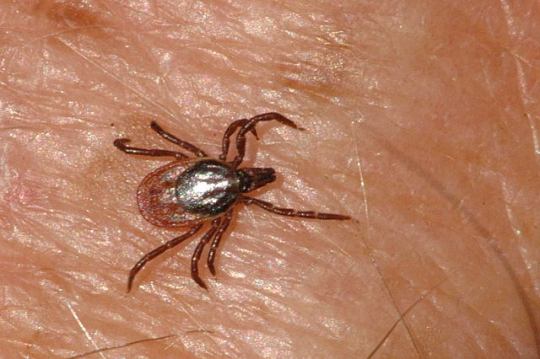
Castor Bean TickIxodes.ricinus.searchingJames Lindsey at Ecology of Commanster, CC BY-SA 3.0, https://commons.wikimedia.org/w/index.php?curid=1669738