
http://dermagicexpress.blogspot.com/2017/06/new-vaccine-vl15-for-lyme-disease-nueva.html?m=1 by Dr. Jose Lapenta
The vaccine resulted in the death of at least 229 people, of whom 43 were SUICIDATED 7 months after receiving the 2nd dose.The main side effect was ARTHRITIS, especially the patients with HISTOCOMPATIBILITY ANTIGEN CLASS II, HLA DR4, the laboratory omitted this data in the vaccination, ALSO THE VACCINE DETERIORATED the health of the carriers of the DISEASE. The laboratory also omitted this fact.

2.) REJECTION OF THE POPULATION TO THE VACCINE.
3.) DEMANDS TO THE LABORATORY.

 “… Valneva’s vaccine candidate is based on OspA, one of the most dominant surface proteins expressed by the bacteria when present in a tick. The target indication for Valneva’s vaccine candidate is the prophylactic active immunization against Lyme disease in children and adults. Valneva’s program is the only active vaccined evelopment program for Lyme disease in the pharmaceutical industry. Valneva intends to initiate a Phase I trial in the US and Europe in 2016 with the primary objectives of evaluating safety and tolerability. Immunogenicity for six OspA serotypes will also be monitored for different dose groups and formulations. Pre-clinical results indicated that Valneva’s vaccine candidate can provide protection against the majority of Borrelia species…”
Excellent project hopefully ALL what they propose and the vaccine be a SUCCESS, but NOW…
========================================================================
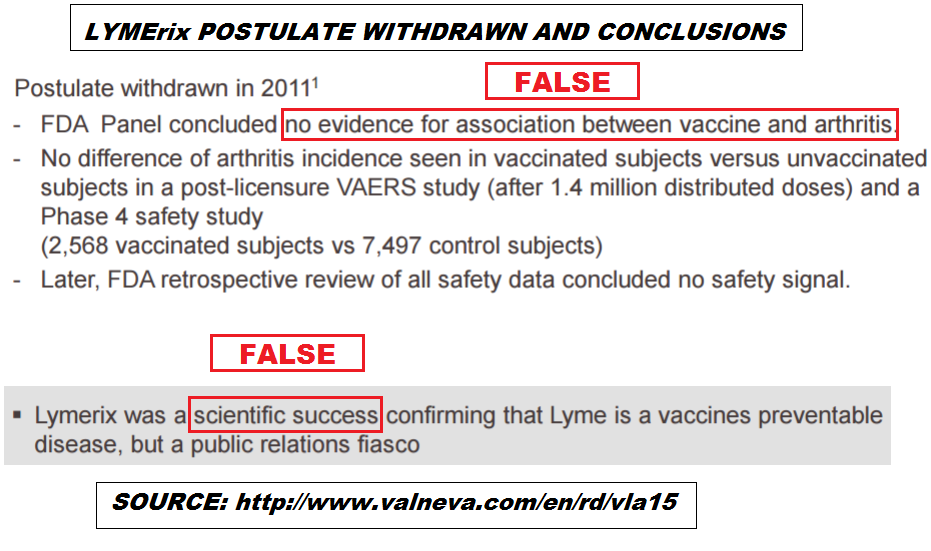


2.) A PREVENTIVE VACCINE IS BETTER, THAN SPENDING MONEY IN LONG TREATMENTS.
Did you know that in your immunological composition are HISTOCOMPATIBILITY ANTIGENS, (HLA) that by a simple incidence can “TRIGGER” unknow disease?
========================================================================
2.) Associations of HLA DR and DQ molecules with Lyme borreliosis in Latvian patients.
3.) The genospecies B. burgdorferi s.l., isolated from ticks and from neurological patients with suspected Lyme borreliosis.
4.) [Critical analysis of reference studies on aluminium-based adjuvants toxicokinetics].
5.) Human-leukocyte antigen class II genes in early-onset obsessive-compulsive disorder.
6.) Differential diagnoses of suspected Lyme borreliosis or post-Lyme-disease syndrome.
7.) HLA-B27-associated reactive arthritis: pathogenetic and clinical considerations.
8.) Searching for Lyme borreliosis in Australia: results of a canine sentinel study.
9.) Canine infection with Borrelia burgdorferi, Dirofilaria immitis, Anaplasma spp. and Ehrlichia spp. In Canada, 2013-2014.
10.) Aluminum vaccine adjuvants: are they safe?
11.) Lyme Disease Testing by Large Commercial Laboratories in the United States
========================================================================
1.) Immunogenetic Markers Definition in Latvian Patients with Lyme Borreliosis and Lyme Neuroborreliosis.
========================================================================
Kovalchuka L1, Cvetkova S2, Trofimova J3, Eglite J4, Gintere S5, Lucenko I6, Oczko-Grzesik B7, Viksna L8, Krumina A9,10.
Author information
1
Institute of Food Safety, Animal Health and Environment BIOR, Riga LV-1076, Latvia. Lilija.Kovalcuka@bior.lv.
2
Institute of Food Safety, Animal Health and Environment BIOR, Riga LV-1076, Latvia. Svetlana.Cvetkova@bior.lv.
3
Institute of Food Safety, Animal Health and Environment BIOR, Riga LV-1076, Latvia. Julija.Trofimova@bior.lv.
4
Laboratory of Clinical Immunology and Immunogenetic, Riga Stradiņš University, Riga LV-1067, Latvia. Jelena.Eglite@rsu.lv.
5
Department of Family Medicine, Riga Stradiņš University, Riga LV-1067, Latvia. Sandra.Gintere@rsu.lv.
6
Centre for Disease Prevention and Control of Latvia, Riga LV-1005, Latvia. Irina.lucenko@spkc.gov.lv.
7
Department of Infectious Diseases, Medical University of Silesia, 40-055 Katowice, Poland. bgrzesik@hoga.pl.
8
Department of Infectology and Dermatology, Riga Stradiņš University, Riga LV-1006, Latvia. Ludmila.Viksna@rsu.lv.
9
Institute of Food Safety, Animal Health and Environment BIOR, Riga LV-1076, Latvia. Krumina.Angelika@inbox.lv.
10
Department of Infectology and Dermatology, Riga Stradiņš University, Riga LV-1006, Latvia. Krumina.Angelika@inbox.lv.
Abstract
The aim of this study was to determine the human leukocyte antigen (HLA)-DRB1 alleles in two groups of patients in Latvia: patients with Lyme borreliosis and patients with Lyme neuroborreliosis. The study included 216 patients with Lyme borreliosis, 29 patients with Lyme neuroborreliosis and 282 control persons. All surveyed persons were residents of Latvia. The HLA-DR genotyping was performed by polymerase chain reaction- sequence specific primer (PCR-SSP). The predisposition to the Lyme borreliosis is associated with the HLA-DRB1*07, -DRB1*17(03), -DRB1*04, -DRB1*15(02) alleles. The allele -DRB1*11(05), -DRB1*14(06) and -DRB1*13(06) were significantly more frequent in controls. In-group with Lyme neuroborreliosis differences were found for the -DRB1*07 and -DRB1*04 alleles, but only HLA-DRB1*07 allele was statistically significant after Bonferroni correction and associated with Lyme neuroborreliosis in Latvian patients.
========================================================================
2.) Associations of HLA DR and DQ molecules with Lyme borreliosis in Latvian patients.
========================================================================
Kovalchuka L1, Eglite J, Lucenko I, Zalite M, Viksna L, Krumiņa A.
Author information
1
Riga Stradiņš University, Clinical Immunology and Immunogenetic laboratory, Kronvalda Str 9, Riga, Latvia. Lilija.Kovalcuka@rsu.lv
Abstract
BACKGROUND:
Many autoimmune diseases are associated with variants of HLA genes such as those encoding the MHC complex. This correlation is not absolute, but may help in understanding of the molecular mechanism of disease. The purpose of this study was to determine HLA-DR,-DQ alleles in Latvian patients with Lyme borreliosis and control (healthy) persons. Case patients and control subjects were similar in age, gender and ethnic heritage and differed only as regards the presence of Borrelia burgdorferi infection. The study included 25 patients with clinical stage – erythema migrans and 30 control (healthy) persons. HLA genotyping was performed by PCR with sequence-specific primers.
RESULTS:
The results show difference in HLA-DRB1 alleles distribution between patients and control subjects. The frequencies of HLA-DRB1 *04 (OR 11.24; p < 0.007) and HLA-DRB1 *17 (03) (OR 8.05; p < 0.033) were increased in the Lyme disease patients. And the frequency of allele DRB1*13 (OR 0.12; p < 0.017) was lower in Borreliosis patients and higher in control group. But, significant differences in frequencies of HLA-DQ alleles we did not detect.
CONCLUSIONS:
HLA predisposition to Lyme borreliosis appears not to be limited to HLA molecules, but some HLA-DR alleles also have a significant influence, and, may have implications in our understanding of pathogenesis of this disease. In particular, HLA-DRB1*04 and DRB1 *17 (03) may contribute to the Lyme borreliosis development in Latvian population.
========================================================================
3.) The genospecies B. burgdorferi s.l., isolated from ticks and from neurological patients with suspected Lyme borreliosis.
========================================================================
Neuro Endocrinol Lett. 2011;32(4):491-5.
Bazovska S1, Durovska J, Derdakova M, Taragelova V, Pancak J, Zaborska M, Traubner P.
Author information
1
Institute of Epidemiology, Comenius University, Bratislava, Slovakia. sylvia.bazovska@fmed.uniba.sk
Abstract
OBJECTIVE:
Lyme borreliosis (LB) is the most disseminated tick-borne disease in the Northern hemisphere, and infestation with ticks is one of the essential factors influencing transmission of the disease to humans. This work intends to compare the occurrence of borrelia circulating in indigenous ticks and in patients suffering from neurological diseases.
MATERIALS & METHODS:
The total of 660 nymphs and 567 adult ticks from the Bratislava and Košice areas was examined over the years 2001-2004, and the cerebrospinal fluid (CSF) of 82 neurological patients suffering from suspected Lyme borreliosis infection was investigated in the 2007-2009 period, using the polymerase chain reaction method (PCR).
RESULTS:
PCR investigation proved presence of borrelia in 23.3% of the total 1227 ticks; of these, co-infection was found in 2.7% of all ticks. Borrelia garinii (9.9%) and B. valaisaina (9.2%) were the prevalent types. PCR investigation of the CSF samples of 32 patients with clinically diagnosed Lyme borreliosis showed the presence of B. burgdorferi s.l. in 17 cases. Positive results were found also in patients with unclear or different diagnoses. In cases where the genospecies could be identified, B. garinii was most frequently found (8x), followed with B. burgdorferi s.s. (4×) and B. afzelii (3×).
CONCLUSIONS:
The high infestation level of ticks with borrelia, mainly with B. garinii which is the most-often documented borrelia species identified in neurological patients, is indicative of a high risk of this contamination in Slovakia. B. garinii were found also in our neuroborreliosis patients, whereas their proof in the CSF of patients with suspected neuroborreliosis or with a different clinical diagnosis pointed upon their persistence after an infectious experience. However, knowledge of not only the genospecies but also of the genotypes capable of eliciting an invasive disorder would be necessary for better clarification of the relationship between borrelia and their peccant capacity. Identification of the invasive borrelia types circulating in nature, and clarification of the vector vs. human infection incidence relationship is of importance from the aspect of detailed knowledge of the epidemiology of this disease.
========================================================================
4.) [Critical analysis of reference studies on aluminium-based adjuvants toxicokinetics].
========================================================================
Ann Pharm Fr. 2017 May 30. pii: S0003-4509(17)30033-0. doi: 10.1016/j.pharma.2017.04.004. [Epub ahead of print]
[Article in French]
Masson JD1, Crépeaux G2, Authier FJ1, Exley C3, Gherardi RK4.
Author information
1
Inserm U955 E10, centre expert de pathologie neuromusculaire, « Biologie du système neuromusculaire », hôpital Henri-Mondor, faculté de médecine, université Paris-Est-Créteil, 94010 Créteil, France.
2
Inserm U955 E10, centre expert de pathologie neuromusculaire, « Biologie du système neuromusculaire », hôpital Henri-Mondor, faculté de médecine, université Paris-Est-Créteil, 94010 Créteil, France; École nationale vétérinaire d’Alfort, 7, avenue du Général-de-Gaulle, 94700 Maisons-Alfort, France.
3
Aluminium and Silicon Research Group, The Birchall Centre, Lennard-Jones Laboratories, Keele University, ST5 5BG, Staffordshire, Royaume-Uni.
4
Inserm U955 E10, centre expert de pathologie neuromusculaire, « Biologie du système neuromusculaire », hôpital Henri-Mondor, faculté de médecine, université Paris-Est-Créteil, 94010 Créteil, France. Electronic address: romain.gherardi@aphp.fr.
Abstract
We reviewed the three reference toxicokinetic studies commonly used to suggest innocuity of aluminum (Al)-based adjuvants. A single experimental study was carried out using isotopic 26Al (Flarend et al., 1997). This study ignored adjuvant cell capture. It was conducted over a short period of time (28 days) and used only two rabbits per adjuvant. At the endpoint, Al retention was 78% for aluminum phosphate and 94% for aluminum hydroxide, both results being incompatible with quick elimination of vaccine-derived Al in urines. Tissue distribution analysis omitted three important retention sites: the injected muscle, the draining lymph node and bone. Two theoretical studies have evaluated the potential risk of vaccine Al in infants, by reference to the oral Minimal Risk Level (MRL) extrapolated from animal studies. Keith et al., 2002 used a too high MRL (2mg/kg/d), an erroneous model of 100% immediate absorption of vaccine Al, and did not consider renal and blood-brain barrier immaturity. Mitkus et al. (2011) only considered absorbed Al, with erroneous calculations of absorption duration. They ignored particulate Al captured by immune cells, which play a role in systemic diffusion and the neuro-inflammatory potential of the adjuvant. MRL they used was both inappropriate (oral Al vs injected adjuvant) and far too high (1mg/kg/d) with regard to experimental studies of Al-induced memory and behavioral changes. Both paucity and serious weaknesses of these studies strongly suggest that novel experimental studies of Al adjuvants toxicokinetics should be performed on the long-term, including post-natal and adult exposures, to ensure innocuity and restore population confidence in Al-containing vaccines.
========================================================================
5.) Human-leukocyte antigen class II genes in early-onset obsessive-compulsive disorder.
========================================================================
Rodriguez N1,2,3, Morer A2,3,4, González-Navarro EA3,5, Gassó P1,3, Boloc D1, Serra-Pagès C3,5,6, Lafuente A1,2,3, Lazaro L2,3,4,7, Mas S1,2,3.
Author information
1
a Dept. Anatomic Pathology, Pharmacology and Microbiology , University of Barcelona , Barcelona , Spain.
2
b Centro de Investigación Biomédica en Red de Salud Mental (CIBERSAM) , Barcelona , Spain.
3
c Institut d’Investigacions Biomèdiques August Pi i Sunyer (IDIBAPS) , Barcelona , Spain.
4
d Department of Child and Adolescent Psychiatry and Psychology, Institute of Neurosciences , Hospital Clinic de Barcelona , Barcelona , Spain.
5
e Immunology Service , Centre de Diagnostic Biomèdic, Hospital Clínic Dept , Barcelona , Spain.
6
f Dept. Biomedicine , University of Barcelona , Barcelona , Spain.
7
g Psychiatry and Clinical Psychobiology , University of Barcelona , Barcelona , Spain.
Abstract
OBJECTIVE:
The exact aetiology of obsessive-compulsive disorder (OCD) is unknown, although there is evidence to suggest a gene-environment interaction model. Several lines of evidence support a possible role of the immune system in this model.
METHODS:
The present study explores the allele variability in HLA genes of class II (HLA-DRB1, HLA-DQB1) in a sample of 144 early-onset OCD compared with reference samples of general population in the same geographical area.
RESULTS:
None of the 39 alleles identified (allele frequency >1%) showed significant differences between OCD and reference populations. Pooling the different alleles that comprised HLA-DR4 (including DRB1*04:01, DRB1*04:04 and DRB1*04:05 alleles) we observed a significantly higher frequency (X21 = 5.53, P = 0.018; OR = 1.64, 95% CI 1.08-2.48) of these alleles in the early-onset OCD sample (10.8%) than in the reference population (6.8%).
CONCLUSIONS:
Taking into account the role of HLA class II genes in the central nervous system, the results presented here support a role of the immune system in the pathophysiological model of OCD.
========================================================================
6.) Differential diagnoses of suspected Lyme borreliosis or post-Lyme-disease syndrome.
========================================================================
Eur J Clin Microbiol Infect Dis. 2007 Sep;26(9):611-7.
Seidel MF1, Domene AB, Vetter H.
Author information
Abstract
The symptoms of Lyme borreliosis are similar to those of a variety of autoimmune musculoskeletal diseases. Persistence of complaints is frequently interpreted as unsuccessful antibiotic treatment of Borrelia-associated infections. However, such refractory cases are rare, and re-evaluation of differential diagnoses helps to avoid the substantial risk of long-term antibiotic therapy. In this study, we analyzed patients who presented to our rheumatology unit with previous suspected or diagnosed Lyme borreliosis. Eighty-six patients from a 3.5-year period were evaluated. The mean age of patients was 49.2 +/- 17.2 years; 60% (n = 52) reported a tick bite and 33% (n = 28) an erythema. Forty-seven percent (n = 39) had positive enzyme-linked immunoassay results and Western blots (Mikrogen, Martinsried, Germany). All but 12 patients had already received antibiotic treatment previously. Nine percent (n = 8) had ongoing or recent Lyme borreliosis. Twenty-nine percent (n = 25) showed clinical symptoms and radiographic changes compatible with degenerative disorders of the cervical and/or lumbar spine. These patients were significantly older when compared to the other patients (59.3 +/- 13.7 years vs 46.1 +/- 17.2 years, p = 0.001). Seventeen percent (n = 16) had arthropathies related to psoriasis or rheumatoid arthritis. Twelve percent (n = 10) were positive for the HLA B27 antigen. Other diseases were less frequent. Six patients (7%) could not be diagnosed conclusively, and four of these patients had negative Borrelia immunoassay results. In conclusion, Borrelia-associated diseases were rare in this study. Differential diagnoses helped to initiate a successful disease-specific therapeutic strategy.
========================================================================
7.) HLA-B27-associated reactive arthritis: pathogenetic and clinical considerations.
========================================================================
Clin Microbiol Rev. 2004 Apr;17(2):348-69.
Colmegna I1, Cuchacovich R, Espinoza LR.
Author information
1
Section of Rheumatology, Department of Medicine, LSU Health Science Center, New Orleans, Louisiana 70112, USA.
Abstract
Current evidence supports the concept that reactive arthritis (ReA) is an immune-mediated synovitis resulting from slow bacterial infections and showing intra-articular persistence of viable, non-culturable bacteria and/or immunogenetic bacterial antigens synthesized by metabolically active bacteria residing in the joint and/or elsewhere in the body. The mechanisms that lead to the development of ReA are complex and basically involve an interaction between an arthritogenic agent and a predisposed host. The way in which a host accommodates to invasive facultative intracellular bacteria is the key to the development of ReA. The details of the molecular pathways that explain the articular and extra-articular manifestations of the disease are still under investigation. Several studies have been done to gain a better understanding of the pathogenesis of ReA; these constitute the basis for a more rational therapeutic approach to this disease.
Reactive arthritis (ReA) is defined as a sterile synovitis developing after a distant infection, usually in the genitourinary or gastrointestinal tract. The detection of microbial components (microbial DNA and RNA) in the joints of patients with ReA has led to the reconsideration of this definition (59). Currently, ReA is better defined as an immune-mediated synovitis resulting from slow bacterial infections and showing intra-articular persistence of viable nonculturable bacteria and/or immunogenetic bacterial antigens synthesized by metabolically active bacteria residing in the joint and/or elsewhere in the body. A classification into HLA-B27-associated and nonassociated forms has also been proposed. Post-streptococcal, Lyme, and viral arthritis are HLA-B27 nonassociated and should be described as distinct entities under the general heading of “infection-related arthritides.”
This article focuses on HLA-B27-associated ReA. This form of ReA belongs to the group of spondyloarthropathies (SpA), is triggered by bacteria (which enter the body through the mucosal surfaces) from the genera Campylobacter, Chlamydia, Salmonella, Shigella, and Yersinia, and is clinically associated with oligoarthritis of the lower limbs and sometimes with urethritis and conjunctivitis.
========================================================================
8.) Searching for Lyme borreliosis in Australia: results of a canine sentinel study.
========================================================================
Parasit Vectors. 2017 Mar 13;10(1):114. doi: 10.1186/s13071-017-2058-z.
Irwin PJ1,2, Robertson ID3, Westman ME4, Perkins M5, Straubinger RK6.
Author information
1
Vector and Water-Borne Pathogen Research Group, School of Veterinary and Life Sciences, Murdoch University, Murdoch, Western Australia, 6150, Australia. P.Irwin@murdoch.edu.au.
2
College of Veterinary Medicine, School of Veterinary and Life Sciences, Murdoch University, Murdoch, Western Australia, 6150, Australia. P.Irwin@murdoch.edu.au.
3
College of Veterinary Medicine, School of Veterinary and Life Sciences, Murdoch University, Murdoch, Western Australia, 6150, Australia.
4
Sydney School of Veterinary Science, University of Sydney, Sydney, New South Wales, 2006, Australia.
5
Pymble Veterinary Clinic, Philip Mall, Kendall Street, West Pymble, New South Wales, 2073, Australia.
6
Department of Infectious Diseases and Zoonoses, Bacteriology and Mycology, Ludwig-Maximilians-University Munich, 80539, Munich, Germany.
Abstract
BACKGROUND:
Lyme borreliosis is a common tick-borne disease of the northern hemisphere that is caused by bacterial spirochaetes of the Borrelia burgdorferi (sensu lato) (Bbsl) complex. To date, there has been no convincing evidence for locally-acquired Lyme borreliosis on the Australian continent and there is currently a national debate concerning the nature and distributions of zoonotic tick-transmitted infectious disease in Australia. In studies conducted in Europe and the United States, dogs have been used as sentinels for tick-associated illness in people since they readily contact ticks that may harbour zoonotic pathogens. Applying this principle, we used a combination of serological assays to test dogs living in tick ‘hot spots’ and exposed to the Australian paralysis tick, Ixodes holocyclus, for evidence of exposure to B. burgdorferi (s.l.) antigens and other vector-borne pathogens.
RESULTS:
Altogether, 555 dogs from four demographic groups were recruited into this study. One dog had evidence of exposure to Anaplasma spp. but no other dog was positive in screening tests. A total of 122 dogs (22.0%) had a kinetic ELISA (KELA) unit value > 100, and one dog with a high titre (399.9 KELA units) had been vaccinated against B. burgdorferi (sensu stricto) before travelling to Australia. Older dogs and those with a history of tick paralysis were significantly more likely to have a KELA unit value > 100. Line immunoassay analysis revealed moderate-to-weak (equivocal) bands in 27 (4.9%) dogs.
CONCLUSIONS:
Except for a single dog presumed to have been exposed to Anaplasma platys, infection with Anaplasma spp. B. burgdorferi (s.l.), Ehrlichia spp., and Dirofilaria immitis, was not detected in the cohort of Australian dogs evaluated in this study. These results provide further evidence that Lyme borreliosis does not exist in Australia but that cross-reacting antibodies (false positive results) are common and may be caused by the transmission of other tick-associated organisms.
========================================================================
9.) Canine infection with Borrelia burgdorferi, Dirofilaria immitis, Anaplasma spp. and Ehrlichia spp. In Canada, 2013-2014.
========================================================================
Parasit Vectors. 2017 May 19;10(1):244. doi: 10.1186/s13071-017-2184-7.
Herrin BH1, Peregrine AS2, Goring J3, Beall MJ3, Little SE4.
Author information
1
Department of Veterinary Pathobiology, Center for Veterinary Health Sciences, Oklahoma State University, Stillwater, OK, USA. brian.h.herrin@okstate.edu.
2
Department of Pathobiology, Ontario Veterinary College, University of Guelph, Guelph, ON, Canada.
3
IDEXX Laboratories, Inc, Westbrook, ME, USA.
4
Department of Veterinary Pathobiology, Center for Veterinary Health Sciences, Oklahoma State University, Stillwater, OK, USA.
Abstract
BACKGROUND:
Canine test results generated by veterinarians throughout Canada from 2013-2014 were evaluated to assess the geographical distribution of canine infection with Borrelia burgdorferi, Dirofilaria immitis, Ehrlichia spp., and Anaplasma spp.
METHODS:
The percent positive test results of 115,636 SNAP® 4Dx® Plus tests from dogs tested were collated by province and municipality to determine the distribution of these vector-borne infections in Canada.
RESULTS:
A total of 2,844/115,636 (2.5%) dogs tested positive for antibody to B. burgdorferi. In contrast, positive test results for D. immitis antigen and antibodies to Ehrlichia spp. and Anaplasma spp. were low, with less than 0.5% of dogs testing positive for any one of these three agents nationwide. Provincial seroprevalence for antibodies to B. burgdorferi ranged from 0.5% (Saskatchewan)-15.7% (Nova Scotia); the areas of highest percent positive test results were in proximity to regions in the USA considered endemic for Lyme borreliosis, including Nova Scotia (15.7%) and Eastern Ontario (5.1%). These high endemic foci, which had significantly higher percent positive test results than the rest of the nation (P < 0.0001), were surrounded by areas of moderate to low seroprevalence in New Brunswick (3.7%), Quebec (2.8%), and the rest of Ontario (0.9%), as well as northward and westward through Manitoba (2.4%) and Saskatchewan (0.5%). Insufficient results were available from the westernmost provinces, including Alberta and British Columbia, to allow analysis.
========================================================================
10.) Aluminum vaccine adjuvants: are they safe?
========================================================================
Curr Med Chem. 2011;18(17):2630-7.
Tomljenovic L1, Shaw CA.
Author information
1
Neural Dynamics Research Group, Department of Ophthalmology and Visual Sciences, University of British Columbia, Vancouver, BC, V5Z 1L8, Canada. lucijat77@gmail.com
Abstract
Aluminum is an experimentally demonstrated neurotoxin and the most commonly used vaccine adjuvant. Despite almost 90 years of widespread use of aluminum adjuvants, medical science’s understanding about their mechanisms of action is still remarkably poor. There is also a concerning scarcity of data on toxicology and pharmacokinetics of these compounds. In spite of this, the notion that aluminum in vaccines is safe appears to be widely accepted. Experimental research, however, clearly shows that aluminum adjuvants have a potential to induce serious immunological disorders in humans. In particular, aluminum in adjuvant form carries a risk for autoimmunity, long-term brain inflammation and associated neurological complications and may thus have profound and widespread adverse health consequences. In our opinion, the possibility that vaccine benefits may have been overrated and the risk of potential adverse effects underestimated, has not been rigorously evaluated in the medical and scientific community. We hope that the present paper will provide a framework for a much needed and long overdue assessment of this highly contentious medical issue.
========================================================================
11.) Lyme Disease Testing by Large Commercial Laboratories in the United States
========================================================================
source: academic.oup.com/cid/article-lookup/doi/10.1093/cid/ciu397(www)
Alison F. Hinckley Neeta P. Connally James I. Meek Barbara J. Johnson Melissa M. Kemperman Katherine A. Feldman Jennifer L. White Paul S. Mead
Clin Infect Dis (2014) 59 (5): 676-681.
Published: 30 May 2014
Large commercial laboratories in the United States were surveyed to determine Lyme disease testing frequency, practices, and results. Approximately 3.4 million tests were conducted in 2008; 62% in accordance with recommendations. We estimate that 288 000 infections occurred among 2.4 million patients from whom samples were submitted.
Background. Laboratory testing is helpful when evaluating patients with suspected Lyme disease (LD). A 2-tiered antibody testing approach is recommended, but single-tier and nonvalidated tests are also used. We conducted a survey of large commercial laboratories in the United States to assess laboratory practices. We used these data to estimate the cost of testing and number of infections among patients from whom specimens were submitted.
Methods. Large commercial laboratories were asked to report the type and volume of testing conducted nationwide in 2008, as well as the percentage of positive tests for 4 LD-endemic states. The total direct cost of testing was calculated for each test type. These data and test-specific performance parameters available in published literature were used to estimate the number of infections among source patients.
Results. Seven participating laboratories performed approximately 3.4 million LD tests on approximately 2.4 million specimens nationwide at an estimated cost of $492 million. Two-tiered testing accounted for at least 62% of assays performed; alternative testing accounted for <3% of assays. The estimated frequency of infection among patients from whom specimens were submitted ranged from 10% to 18.5%. Applied to the total numbers of specimens, this yielded an estimated 240 000 to 444 000 infected source patients in 2008.
Discussion. LD testing is common and costly, with most testing in accordance with diagnostic recommendations. These results highlight the importance of considering clinical and exposure history when interpreting laboratory results for diagnostic and surveillance purposes.
________________
For more:
https://madisonarealymesupportgroup.com/2017/09/07/20268/ So …in 1994, the CDC hosted a consensus conference in Dearborn, MI, along with a dozen labs across the country and together they falsified the very definition of Lyme disease by eliminating the neurological, immunosuppressive type which account for 85% of the cases.
If they conveniently ‘determined’ that the 85% group – those with an immunosuppression neurological outcome––simply did NOT exist, then they could claim that their vaccine was 85% effective. With no immunosuppressive, neurological disease to find, then the vaccine would be a hit with the remaining 15% who presented with an arthritic, bad-knee type only. A brilliant marketing scheme at the expense of millions worldwide for the years to come.
You see, you CANNOT create a vaccine for an OspA fungal antigen — the TRUE definition of chronic Lyme. It can’t be done. And the OspA vaccination known as LYMErix caused the same disease from a syringe as it does when you get Lyme disease from a tick bite. LYMErix victim’s immune systems were destroyed by the vaccine because OspA is an endotoxin that causes immunosuppression and subsequent severe neurologic multi-system disease.
So by narrowing the definition and by claiming that only one type of the disease (the bad knee arthritic type) exists, then they could sell a vaccine. Not only that. They were also able to profit by limiting the number of labs that were sanctioned and thereby cornering the market on the patents of a variety of tick borne diseases.
THE FIRST LYME VACCINE WAS A COMPLETE BUST.
https://madisonarealymesupportgroup.com/2017/07/01/pbs-lyme-vaccine/ In a vile cesspool of conflicts of interest are university patent holders, drug companies, and the FDA itself as another patent holder. It generated 40 million dollars before it was yanked. (2008, Drymon)
http://www.yourlawyer.com/topics/overview/lymerix One doctor stated that 21 patients developed severe arthritis after receiving the LYMERIX vaccine. https://madisonarealymesupportgroup.com/2017/01/26/lyme-vaccine-to-be-tested-on-humans/ The biological mechanism hypothesis was that the outer surface protein A (OspA), which was the antigenic component of the LYMErix vaccine, induced autoimmunity in genetically susceptible individuals, including high levels of autoantibody to OspA in their synovial fluid.
Dr. Stricker states:
Another Lyme OspA Vaccine Whitewash
The meta-analysis by Zhao and colleagues comes to the conclusion that “the OspA vaccine against Lyme disease is safe and its immunogenicity and efficacy have been verified.” The authors arrive at this sunny conclusion by excluding 99.6% of published articles that demonstrate potential problems with the OspA vaccine.Furthermore, the authors ignore peer-reviewed studies, FDA regulatory meetings and legal proceedings that point to major problems with OspA vaccine safety (1-3). This whitewash bodes ill for future Lyme vaccine candidates because it fosters disregard for vaccine safety among Lyme vaccine manufacturers and mistrust among potential Lyme vaccinees.
Also, I find it highly intriguing that the push here, and always, is for a vaccine; not a cure, not helping patients with pain, not making care accessible and affordable. Just in creating a new cash-cow for a select few. Patients be damned.
 Madison Area Lyme Support Group