Archive for February, 2018

Free 10-Part Video Essential Oils Masterclass

Detox Your Home, Get Better Sleep, Heal Your Gut, Balance Hormones. Stop Inflammation, Boost Energy, Fight Cancer & Improve Your Family’s Health!

Made possible by Dr. Z & Mama Z

Essential Oils Are Nature’s Most Powerful Medicine & Can Help Completely Transform Your Life!

Gain the Confidence That You Need to Make Natural Recipes & Healing Remedies with Essential Oils Today!

Watch Our 10-Part Video Masterclass for FREE from Feb 20 – March 1!

Fill out the Form to Sign Up Today!  https://drericz.com/essential-oils-abundant-living-course/

Feb 20 – March 1

Watch all 10 video lessons for FREE. Bonus workbook for group or individual study included with registration.


Here’s what you can expect to enjoy the FREE screening of the Masterclass…

Each video lesson will be available to watch on-demand for 24 hours starting at 9:00 p.m. EST on February 20. So…

Lesson 1 will be available to watch for 24 hours starting Tuesday, February 20 at 9:00 p.m. EST.
Lesson 2 will be available to watch for 24 hours starting Wednesday, February 21 at 9:00 p.m EST.
And so on through the entire series, which ends March 1.
* Each video lesson has a special access link that we will email you so be sure to keep an eye on your inbox!

What We Will Cover

Setting the Foundation

  • Feb 20 – Lesson 1: Aromatherapy Quick-Start Guide
  • Feb 21 – Lesson 2: Inhalation Guide & Safety Tips
  • Feb 22 – Lesson 3: Topical Application Guide & Safety Tips
  • Feb 23 – Lesson 4: Internal Use Guide & Safety Tips

Natural Solutions for a Toxic-Free Home

  • Feb 24 – Lesson 5: DIY Body Care Products
  • Feb 25 – Lesson 6: DIY Cleaning Products
  • Feb 26 – Lesson 7: Cooking with Essential Oils

Regaining Control of Your Health

  • Feb 27 – Lesson 8: Preventing Disease with Essential Oils
  • Feb 28 – Lesson 9: Treating Disease with Essential Oils
  • March 1 – Lesson 10: Advanced Strategies & Protocols

The answer to your health problems can be found in nature, and we have seen thousands of lives changed by the healing power of essential oils. It’s our privilege to show you how to make them part of your daily life!


As always, our hope & prayer is that you enjoy the abundant life!

~ Dr. Z & Mama Z

Finally – RT-PCR Detected Bartonella Henselae DNA on Tissue Valve

https://www.ncbi.nlm.nih.gov/m/pubmed/29390335/

Fever of unknown origin and splenomegaly: A case report of blood culture negative endocarditis.

Burzo ML, et al. Medicine (Baltimore). 2017.

Abstract

RATIONALE: Fever of unknown origin (FUO) can be determined by different conditions among which infectious diseases represent the main cause.

PATIENT CONCERNS: A young woman, with a history of aortic stenosis, was admitted to our unit for a month of intermittent fever associated with a new diastolic heart murmur and splenomegaly. Laboratory tests were negative for infectious screening. The total body computed tomography (CT) scan excluded abscesses, occulted neoplasia, or lymphadenopathy.

DIAGNOSES: The transthoracic and transesophageal echocardiogram showed an aortic valve vegetation. Three sets of blood cultures were negative for all microorganisms tested. According to these findings, Bartonella endocarditis was suspected and the serology tests performed were positive. Finally, real-time polymerase chain reaction (RT-PCR) detected Bartonella henselae DNA on tissue valve.

INTERVENTIONS: The patient underwent heart valve surgery and a treatment of Ampicillin, Gentamicin, and oral Doxycycline was prescribed for 16 days and, successively, with Doxycycline and Ceftriaxone for 6 weeks.

OUTCOMES: After surgery and antibiotic therapy, patient continued to do well.

LESSONS: Bartonella species are frequently the cause of negative blood culture endocarditis. Molecular biology techniques are the only useful tool for diagnosis. Valvular replacement is often necessary and antibiotic regimen with Gentamicin and either Ceftriaxone or Doxycycline is suggested as treatment.Echocardiogram and blood cultures must be performed in all cases of FUO. When blood cultures are negative and echocardiographic tools are indicative, early use of Bartonella serology is recommended.

________________
**Comment**
Great information regarding how difficult it is to pick up microorganisms through testing and the importance of the right test.  This has been the thorn in Lyme/MSIDS patients sides for decades and why so many continue to fall through the cracks.
The Cabal continues to rely on old studies and testing methods which are extremely flawed to make emphatic statements on all things Tick borne illness related.
New tests must be accepted & used.  If it weren’t for the dedicated sleuthing of a doctor, this woman might be dead, and many have succumbed to that outcome due to poor testing, lack of diagnosis, and treatment.
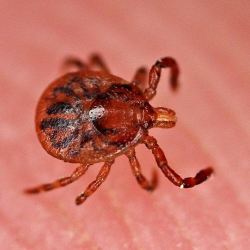
Ticks that transmit Bartonella include Ixodes Scapularis (also called the blacklegged tick or deer tick) and Ixodes Pacificus (western black legged tick), both of which also transmit Lyme disease. More than one co-infection can be transmitted from the same tick bite. A paper by Martin Fried and Aswine Bal, both MD’s, https://www.lymediseaseassociation.org/images/NewDirectory/Studies-Papers/Fried_Bartonella-2002.pdf, found it to cause heartburn, abdominal pain, skin rash, gastritis (inflammation of the stomach lining) and duodentis (inflammation of 1st portion of the small intestine) in children and adolescents, as well as mesenteric adenitis (inflammation in abdominal lymph nodes).

Cranial Neuropathy & Severe Pain Due to Bb Infection

http://casereports.bmj.com/content/2018/bcr-2017-223307.abstract

BMJ Case Reports 2018; doi:10.1136/bcr-2017-223307
  • Unusual presentation of more common disease/injury
  • CASE REPORT

Cranial neuropathy and severe pain due to early disseminated Borrelia burgdorferi infection

Summary

A 61-year-old man presented to the emergency department in the summer with a right seventh cranial nerve lower motor neuron palsy and worsening paraesthesias for 6 weeks. He had debilitating pain at the scalp and spine. Prior work up was unrevealing. The patient resided in the upper Midwest region of the USA and worked outdoors, optimising the landscape for white tailed deer. Repeat cerebrospinal fluid testing revealed a lymphocytic pleocytosis and positive IgM Lyme serology. Brain MRI demonstrated enhancement of multiple cranial nerves bilaterally. He was diagnosed with early Lyme neuroborreliosis and treated with 28 days of intravenous ceftriaxone. While the painful meningoradiculitis, also known as Bannwarth syndrome, is more commonly seen in Europe, facial palsy is more frequently encountered in the USA. Clinical manifestations of neuroborreliosis are important to recognise as the classic presentation varies by geography and on occasion repeat serological testing may be necessary.

_____________

**Comment**

Another article falsely stating Bannwarth syndrome is rare in the U.S.:  https://madisonarealymesupportgroup.com/2018/02/07/cluster-of-lyme-cases-manifesting-as-bannwarth-syndrome/

Again, it’s an unreportable illness so numbers are pure conjecture.

Again for the smorgasbord of symptomology:  https://madisonarealymesupportgroup.com/wp-content/uploads/2016/01/symptomlist.pdf

Regarding Lyme/MSIDS, researchers really need to use the word rare sparingly.


Cluster of Lyme Cases Manifesting as Bannwarth Syndrome

https://www.acsh.org/news/2018/01/26/cluster-startling-lyme-disease-cases-upper-midwest-12473

A Cluster Of Startling Lyme Disease Cases In The Upper Midwest

There are thought to be approximately 300,000 cases of Lyme disease annually in the United States (although the actual number of cases reported to Centers for Disease Control (CDC) is approximately 30,000 per year.)

Most of them consist of fever, headache and fatigue. They are frequently identified by the characteristic skin rash that looks like a bull’s eye called an erythema migrans – a telltale sign of the presence of the bacteria that cause Lyme disease, Borrelia burgdorferi. 

Rarely, Lyme disease manifests as a neuroinvasive condition called Garin-Bujadoux-Bannwarth syndrome or, more frequently, just Bannwarth syndrome. This complicated version of Lyme Disease is characterized by a few telltale signs. They are, painful meningoradiculoneuritis (inflammation of one or more roots of the spinal nerve) that leads to motor weakness, facial nerve palsy and neuropathy usually in the hands and feet. The other is lymphocytic pleocytosis (an abnormally large number of lymphocytes) in the cerebrospinal fluid (CSF). 

Never heard of Bannwarth syndrome? Neither had we. So, when a cluster of five cases of Bannwarth syndrome were seen during three weeks of July and August last summer, all in the upper midwest, it raised some red flags. The patients were identified at Mayo Clinic campuses in Minnesota and Wisconsin. (1)

Bannwarth syndrome associated with Lyme Disease is not a reportable disease, so data regarding the numbers of cases is scant. This cluster, however, sparked the medical professionals who treated the cases to share the information about the cluster by publishing a case report in Open Forum Infectious Diseases. This way, if there are other clusters elsewhere, people may start drawing some links and uncovering the mystery.

In the paper, they report on the five cases of Bannwarth syndrome. A small snapshot of each person follows (taken from the paper).

Patient 1: 61-year-old male with daily tick exposure presented with progressive back pain, upper torso and extremity paresthesias, right-sided facial droop, and blurry vision in the right eye. Four weeks prior, the patient observed an erythema migrans (EM) rash, treated with 5 days of twice-daily doxycycline.

Patient 2: 62-year-old female presented with subacute onset of lower extremity weakness, progressing to flaccid paralysis over a 3-week period, alongside radiating low back and abdominal pain with associated numbness. 

Patient 3: 65-year-old female presented with subacute progressive ascending weakness and lower extremity paresthesias. 

Patient 4: 29-year-old male developed fever, myalgias, chills, headache, fatigue, and a transient erythematous rash on his trunk in mid-June 2017. Two weeks thereafter, he developed right foot drop, Trendeleberg gait, lower extremity radiculopathy, and painful L5-S1 paresthesias. 

Patient 5: 69-year-old male presented with low-grade fevers, nausea, vomiting, diffuse arthralgias, headache, loss of smell, and blurry vision in the right eye. These symptoms were accompanied by neck and right upper extremity pain in a radicular pattern. 

Because it is not a reportable disease, it is not well understood how much of the disease is popping up across the country. That said, five cases in the same few weeks seemed strange enough for these authors to report it. Is Bannwarth syndrome more prevalent than previously thought? Or, is there something going on in the midwest that could be leading to more Bannwarth syndrome? Now that it is on people’s radar, perhaps we will find out more answers to this strange occurrence.

Notes: (1) There were actually six patients identified with Lyme neuroborreliosis (LNB)

Source: Aditya Shah An Unusual Cluster of Neuroinvasive Lyme Disease Cases Presenting With Bannwarth Syndrome in the Midwest United States. Open Forum Infectious Diseases, Volume 5, Issue 1, 1 January 2018  ofx276,https://doi.org/10.1093/ofid/ofx276

______________

**Comment**

This is a perfect example of the type of journalism that is propagating myths.  Busy doctors will quickly scan this and other articles like it and surmise that Bannwarth Syndrome is rare.  Embedded within the article the journalist even mentions it’s not a reportable illness.  How can they even know numbers?  She even reports it as “complicated form of Lyme Disease.”  

Everyone I deal with has a complicated form of Lyme Disease!  

Dr. Horowitz states Lyme’s been around Europe since the late 1800’s (if not before) and was diagnosed as “acrodermatitis chronic atrophicans” or Bannwarth Syndrome accompanied by painful radiculitis (pain along a nerve), which often had an accompanying skin lesion, Bell’s Palsy, and meningitis.  


So, this is not new.

While the symptoms in Europe varied somewhat from the 1970’s outbreak in Lyme, Connecticut, they are in fact the one and same disease.  Steere’s myopic vision only allowed him to see rheumatologic manifestations and we’ve been stuck in that paradigm since.

To see the wild and varied symptoms:  https://madisonarealymesupportgroup.com/wp-content/uploads/2016/01/symptomlist.pdf  When you throw the numerous coinfections in the mix, it’s a smorgasbord of symptoms.


QB’s Wife Has Lyme & POTS

https://heavy.com/news/2018/02/nick-foles-wife-sick-tori-lyme-disease-health/

Nick Foles’ Wife Tori, Sick With Lyme Disease, Cites Faith

nick foles wife, tori folesGetty
Nick and Tori Foles.

Nick Foles’ wife, Tori Foles, is sick with a dual diagnosis of Postural Orthostatic Tachycardia Syndrome and Lyme disease. What are these illnesses and what problems do they cause the spouse of the Philadelphia Eagles starting quarterback?

Tori Foles wrote a lengthy blog post about the ailments for a site called The Increase Women. Although she described some of the challenges caused by the health problems, she also credited them with reinforcing her family’s faith. Tori, and the couple’s only daughter, Lily, who was born in June 2017, were captured on camera at Super Bowl 2018 cheering Nick Foles on.

After the Eagles won, Nick Foles held Lily in his arms as he addressed the crowd.

lily foles, nick foles

“My life was altered in 2013 when I was diagnosed with an unexpected illness. A year after working at Nike Inc. and living an active lifestyle in Portland, OR, everything changed. I suddenly became ill and had no idea why. I was diagnosed with Postural Orthostatic Tachycardia Syndrome (POTS),” Tori wrote. “Eventually, this would lead to an underlying diagnosis of Lyme Disease.” Tori described the illness as something that brought her and husband, Nick, closer to God. Nick Foles has been very open about his faith, even saying that he hopes to become a pastor after leaving the NFL.

According to the Gwinnett Daily Post, Tori and Nick “were married during a time Tori was undergoing tests at Mayo Clinic in Rochester, Minn., which is around the time Foles felt his focus and priorities shift from football. In 2013, Tori was diagnosed with Postural Orthostatic Tachycardia Syndrome (POTS) and later diagnosed with Lyme disease. Her heart rate could raise 30 beats per minute just from sitting and standing.”

nick foles, wife, tori foles, family, kids

The Post quoted Nick Foles as saying of his wife’s illness: “We never had a wedding ceremony. We never had a honeymoon. Just the journey we’ve gone on and gone through this and just to see her strength and to see her determination and to see her health continue to improve. And she still deals with it. It’s amazing. It gives me strength because I know she deals with it every single day.”


Postural Orthostatis Tachycardia Syndrome, often called POTS, is “a malfunction of the patient’s autonomic nervous system” that affects patients differently. “Some patients have fairly mild symptoms and can continue with normal work, school, social and recreational activities. For others, symptoms may be so severe that normal life activities, such as bathing, housework, eating, sitting upright, walking or standing can be significantly limited,” reports Dysautonomia International.

According to the Centers for Disease Control and Prevention, “Lyme disease is caused by the bacterium Borrelia burgdorferi and is transmitted to humans through the bite of infected blacklegged ticks. Typical symptoms include fever, headache, fatigue, and a characteristic skin rash called erythema migrans.”

Tori filled the blog post with statements of faith. “For me, this illness has been a journey of faith, hope, and trust in the process that God has set out for me. Through my writing and my blog, I hope to be able to give some perspective on how to view difficult situations and help inspire people to find purpose in what they are going through. Most of all, I hope to lead people closer to the source of my hope and strength, Jesus Christ,” she wrote.

nick foles, wife, family, kids, tori foles

Tori and Nick married in 2014. In June 2017, Tori gave birth to the couple’s first child, Lily James Foles. Nick grew emotional when speaking about his wife and daughter before Super Bowl 2018. “That’s the most important thing,” Foles said. “When I think about this journey and everything, I get home and I, uh … I get to see her. I get to see my wife. I see her and my wife, just in her face and in her mannerisms, that’s what it’s about. I know that every time I step on the field, every single thing I do, there’s going to be some days she looks and wants to know who her daddy was and what he did.”

You can watch the emotional moment here:

Nick Foles tears up when talking about playing well for his daughter and setting an example

In one cute moment, Lily tried to grab the microphone after her dad was speaking following his big victory.

Learn more about Nick Foles’ faith here.

Nick Foles’ Religion: The Eagles’ QB Wants to Be Pastor

Read More

_____________

**Commment**

Dr. Horowitz writes about POTS in his book, Why Can’t I Get Better?  Solving the Mystery of Lyme & Chronic Disease.  He states that it is a common disease process that is often missed and that it can mimic Lyme/MSIDS and if not dealt with can lead to a poor treatment response. He describes numerous Lyme patients he’s treated with POTS.

POTS is in a long line of disorders that can keep folks from getting better.  It is a form of autonomic nervous system dysfunction (ANS) or dysautonomia that causes a malfunction in the nerves controlling blood pressure, heart rate, sweat glands, and bladder and bowel function.  He cites a 2007 Mayo POTS study and the ironic fact that many of the participants also had common Lyme/MSIDS symptoms.  

One of his patients complained of becoming light headed when standing up. Her blood pressure dropped to the low eighties over fifties with an accompanying increase in heart rate.  He explained she was chronically running low blood pressure – which can be a reason for dizziness, fatigue, and concentration problems.

The definitive test for POTS is the head-up tilt-table test (HUT).  It is done in the hospital and the patient lies flat on a special table while the heart rate is monitored and blood pressure checked.  The special table is then put in a 60-80 degree position and the variables are measured again.  If the HR increases more than 30 beats or to more than 120 beats per minute even within 10 minutes of the test, and a significant drop in blood pressure with dizziness and/or fainting, POTS is the cause.

Evidently POTS patients feel better with increased salt and fluids in their diet and another of his patients upon the POTS diagnosis was prescribed Florinef, a high-salt diet, and told to drink 2-3 Liters of fluid a day to increase blood pressure.  Another drug he’s used with success is Catapres. Others in the literature include Diamox, Mestinon, and IV Procrit therapy.