Archive for February, 2018

$41 Million Verdict Upheld in Tick Bite Case

http://www.courant.com/news/connecticut/hc-tick-bite-verdict-stands-20180209-story.html  by Edmund H. Mahony, Contact Reporter

Court Upholds $41 Million Verdict In Tick Bite Case
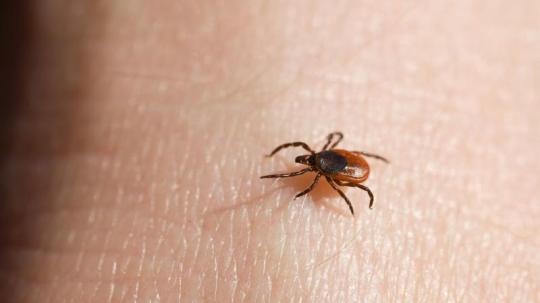
hc-1518201066-z9tit7vaqh-snap-image-2Numerous locations in the United States are home to a number of tick species, with the best known being the deer tick. (Aleksei Ruzhin/Dreamstime / TNS)

A federal appeals court has upheld a $41.7 million jury verdict for a Connecticut private school student who was severely and permanently disabled after developing encephalitis from a tick bite while on a class trip to China.

The case, which has been litigated for nine years, established that schools in Connecticut are obligated to protect children in their care, a conclusion that insurers, schools and other groups have warned could reduce educational travel opportunities for students.

The suit was brought in federal court in Bridgeport in 2009 by the parents of Cara Munn of New York, who at age 15 and at the conclusion of her freshman year at the private Hotchkiss School in Salisbury, was bitten by a tick and developed encephalitis while hiking in a remote, mountainous area of China during a school study program.

“She is gratified that the justice system worked,” her lawyer, Antonio Ponvert said Friday. “She is also happy and proud that her case might encourage custodians of minor children to be more careful.”

As a result of the insect bite, Munn suffered permanent brain damage and became seriously disabled. She has lost control over some movement, has lost problem-solving ability and is unable to speak. Her condition is expected to worsen with age.

She and her family sued the school for negligence and her jury returned the staggering verdict in 2013, ordering the school to pay her and her family $10.25 million in economic damages and $31.5 million for pain and suffering.

Lawyers for Hotchkiss argued that the school had no duty to warn Munn and her parents against contracting tick-borne encephalitis on 2007 trip because such an event could not have been foreseen.

The U.S. Court of appeals for the Second Circuit, which took the appeal, sent the case the the state Supreme Court for the resolution of two, central questions: Are Connecticut schools obligated by state policy and law to warn of the danger of contracting an insect-borne illness on field trips? And was a $41.7 million verdict excessive?

The state’s high court said last summer there is an “affirmative duty” to warn and upheld the verdict.

The case returned to the second circuit, where a panel of three judges published an unsigned summary order Tuesday dismissing the school’s remaining appellate claims and affirming the verdict.

The Hotchkiss lawyers were not immediately available Friday. If the school chooses to press its appeal further, it could ask the entire second circuit bench to hear the case or petition the U.S. Supreme Court.

For more:  https://madisonarealymesupportgroup.com/2017/04/02/lyme-court-case-41-7-million/



Third TBD Working Group Meeting – Feb. 12, 2018

https://www.hhs.gov/ash/advisory-committees/tickbornedisease/meetings/2018-02-12/index.html

February 12, 2018 – Public Meeting

The Third Meeting of the Tick-borne Disease Working Group will be from from 12 pm to 4pm (Eastern).

This is an ONLINE meeting that is open to the public. It will be recorded. You must be registered to participate in the meeting and download or run the free Adobe Connect software:  https://events.kauffmaninc.com/events/tbdworkinggroup/register/?t=16

The focus of this meeting will be the work of the six subcommittees that will inform the writing of the Working Group’s Report to Congress and the Secretary of Health and Human Services. A full agenda will be posted on the website prior to the meeting.

The Working Group invites public comment on issues related to its charge. You will be asked if you would like to provide public comment when you register for this meeting.

Public comment may be provided verbally (by phone) or in writing. Thirty minutes has been set aside for verbal comments. Each speaker will be limited to 3 minutes. If more requests are received than can be accommodated, speakers will be randomly selected. Written comments should be no more than 2,000 words or 4 pages. Please send your written comments to the Tick-Borne Disease Working Group at tickbornedisease@hhs.gov. (subject line: written public comment)

Written comments and requests to make verbal comments must be received by February 7, 2018. Additional guidance will be sent by email to everyone who signs up for public comment.

For additional information, please visit the Tick-Borne Disease Working Group website or email us at tickbornedisease@hhs.gov.

Agenda

Noon – 12:05 pm
Call to Order and Welcome

John Aucott, Kristen Honey, and Rich Wolitski
12:05 pm -12:10 pm
Recap of Meetings One and Two
Purpose and Goals of Today’s meeting

John
12:10 pm – 12:20 pm
Report to Congress and the HHS Secretary: Overview

Rich
12:20 pm – 12:40 pm
Vote: Mission/Vision/Values of the TBDWG

Kristen
12:40 pm – 12:55 pm
Report on the Internal HHS Staff TBDWG
– Anna Perea, CDC Division of Vector-Borne Disease

Anna Perea
12:55 pm – 1:10 pm
Report on One State’s Experience: What was learned in Virginia – example of a successful collaboration
– Michael Farris, JD, LLM, President, CEO and General Council Alliance Defending Freedom

Michael Farris
1:10 pm – 1:30 pm
Review of roles and tasks of subcommittees and subcommittee members, including Town Hall

John, Kristen, and Rich
1:30 pm – 2:00 pm
Public Comment

Operator Assisted
2:00 pm – 2:05 pm
Break/Transition to Subcommittee Sessions

2:05 pm – 3:05 pm
Individual Subcommittees Meet—Members of the public are welcome to observe

1. Introductions

2. Inventory of Federal Actions
a, Does anything need to be changed or added this year to address important subcommittee issues?

3. Town Hall
a. What are the 2-3 key issues that the subcommittee would like to receive input in the form of public comment?

Subcommittee Co-Chairs
3:05 pm – 3:10 pm
Break to allow transition back to main webinar

3:10 pm – 3:40 pm Subcommittees Report Back
John and Kristen
Subcommittee Co-Chairs

3:40 pm – 4:00 pm
Meeting Recap and Next Steps

John and Kristen

Ticks & Salt – Atypical Neuroborreliosis Case

Ticks and salt: an atypical case of neuroborreliosis
Siddiqui N, St Peter DM, Marur S.
Journal of Community Hospital Internal Medicine Perspectives, 7(6):358-362.

https://doi.org/10.1080/20009666.2017.1407209

Abstract

It is well documented that central nervous system (CNS) infections may lead to syndrome of inappropriate anti-diuretic hormone secretion (SIADH), but diagnosing these can prove difficult in patients with atypical presentations. We present a case of SIADH and muscle weakness in a patient without typical signs of CNS infection who was tested and diagnosed with neuroborreliosis based largely on her likelihood of exposure. This case indicates the need for Lyme testing in patients with unexplained SIADH who live in endemic areas.

The patient was an 83-year-old female with a history of type 2 diabetes and hypertension, who presented from her primary care physician’s office when her sodium was found to be 123 mEq/L (normal range is 135-145mEq/L). Her sole symptom was proximal muscle weakness. The diagnosis of SIADH was reached based on laboratory data.

A trial of fluid restriction was initiated, but neither her sodium nor her muscle weakness improved. Lyme testing was performed as the patient lived in an endemic area and was positive. Lumbar puncture showed evidence of neurologic involvement.

After realizing the appropriate treatment for hyponatremia (low sodium) in this case, intravenous ceftriaxone was started, and patient’s sodium levels improved and muscle weakness resolved. Studies show that SIADH is associated with CNS infections, likely related to the inflammatory cascade. However, the atypical presentation of neuroborreliosis for our patient delayed the appropriate diagnosis and treatment.

Our case demonstrates the need to screen for Lyme disease in endemic areas in patients presenting with neurologic symptoms and SIADH.

____________

**Comment**

Again, researchers need to be extremely cautious in reporting anything regarding tick borne illness as “rare,” or “atypical.”  The truth of the matter is nobody’s keeping score.  The medical profession at large has denied the connection between TBI’s and the myriad of symptoms they can mimic.

I’ve posted so many articles this year on “rare” manifestations that I’ve lost count.

One of the most experienced Lyme docs in Wisconsin states,

“Not everything is Lyme, but Lyme CAN be anything.”  

Truer words were never spoken.

And, of course, there’s a whole lot more at play than Lyme.  The coinfections aren’t on anyone’s radar except Lyme literate medical professionals and veterinarians.  These coinfections are so wide and variable in how they present that coupled with Lyme, it’s a one, two, punch and you are out.

A lot of educating on TBI’s needs to start happening in medical schools!

For more rare manifestations:  https://madisonarealymesupportgroup.com/2017/11/24/dr-frid-lyme-parkinsons-autoimmunity/

https://madisonarealymesupportgroup.com/2017/10/10/lyme-or-fibromyalgia/

https://madisonarealymesupportgroup.com/2017/06/10/the-coming-pandemic-of-lyme-dementia/

https://madisonarealymesupportgroup.com/2018/02/07/cluster-of-lyme-cases-manifesting-as-bannwarth-syndrome/

https://madisonarealymesupportgroup.com/2017/07/16/mycoplasma-and-other-intracellular-bacterial-infections-in-rheumatic-diseases-comorbid-condition-or-cause/

https://madisonarealymesupportgroup.com/2017/08/26/interstitial-cystitis-and-lyme-disease/

https://madisonarealymesupportgroup.com/2017/10/23/opthalmic-manifestations-of-bartonella-infection/

https://madisonarealymesupportgroup.com/2017/05/20/bartonella-endocarditis-opportunistic-infection-in-cancer-patients-and-eye-inflammation/

https://madisonarealymesupportgroup.com/2018/02/08/anemic-dog-found-to-have-bartonella-resolved-with-prolonged-antibiotics/

https://madisonarealymesupportgroup.com/2017/05/11/bartonella-henselae-in-children-with-congenital-heart-disease/

https://madisonarealymesupportgroup.com/2017/01/04/endocarditis-consider-bartonella/

https://madisonarealymesupportgroup.com/2017/11/07/congenital-babesiosis-in-two-infants/

https://madisonarealymesupportgroup.com/2017/08/06/transfusion-transmitted-babesiosis-leading-to-severe-hemolysis-in-sickle-cell-anemia-patients/


I literally could go on and on to infinity……


Killer Green The Musical

Killer Green Flyer

Killer Green follows the lives of two pivotal couples in different stages of life as the two lead female characters battle a widely ignored chronic illness.  Based on biographical accounts, this musical attempts to uncover the dark truth behind how Lyme Disease affects its victims, educate viewers on the reality of these stories, and expose the widespread ignorance of the medical community.  This show has been graciously funded by The Wisconsin Lyme Network, a nonprofit organization dedicated to raising awareness for this cause.  https://wisconsinlymenetwork.org

Warning:  Killer Green depicts the reality of suicide, depression, and topics viewers might find disturbing but Lyme patients live with daily.

21106491_1954156331496223_114314959545893674_n

Audra Cashman is a student graduating in Musical Theater at Peck School of the Arts at the University of Wisconsin Milwaukee.  Killer Green is her Senior Honors Project.

Ms. Cashman’s parents both have Tick borne illness and her mother heads a local support group for patients.  Killer Green draws upon personal experience and the experiences of many local Wisconsin patients.


Canadian Consortium to Confront Escalating Lyme Crisis

https://www.lymedisease.org/canadian-lyme-consortium/

Canadian Lyme Consortium to confront escalating health crisis

Letter from the newly forming Canadian Lyme Consortium:

On behalf of a growing team of scientists, advocates, and clinicians, we wanted to let you know about a national research network that is taking shape to confront the escalating Lyme disease crisis.

The Canadian Lyme Consortium has evolved from the urgent need to accelerate progress in the understanding, detection, and treatment of Lyme disease, and to do so by meaningfully engaging patients in all levels of this process. The network unites advocates, established Lyme research groups including the Mount Allison Lyme Disease Research Network, The G. Magnotta Lyme Disease Research Lab at the University of Guelph, the Tick Microbiome Initiative at the University of Alberta, and other leaders in the fields of microbiology (Institut de Biologie Intégrative et des Systèmes (IBIS), Université Laval) and human and animal health who are eager to apply their skills to this challenging disease.

Together, we are committed to blazing a fresh trail informed by modern technologies, highly ethical research standards, and new approaches. As the Consortium develops, you can expect to see more visibility (website coming soon) as well as opportunities to contribute and participate. We look forward to working with you toward a brighter future.

Sincerely,

Vett Lloyd, Professor, Department of Biology, Mount Allison Lyme Research Network

Brenda Sterling-Goodwin, Patient representative

Roger C. Levesque, Full professor microbiology, Faculty of Medicine, Research Scholar of Exceptional Merit FRQS, IBIS, Université Laval

Melanie K. B. Wills, Adjunct Professor, Director, G. Magnotta Lyme Disease Research Lab, University of Guelph

Cezar Khursigara, Associate Professor, Department of Molecular and Cellular Biology, University of Guelph

George Harauz, Professor, Canada Research Chair, Department of Molecular and Cellular Biology, University of Guelph

Vladimir Bamm, Postdoctoral Research Associate, Department of Molecular and Cellular Biology, University of Guelph