Lyme Community Loses Three Friends

The Lyme community has recently lost three trail blazers: Dr. Alan B. MacDonald (pathologist), Dr. Alex Shikhman (rheumatologist & advocate), and Dr. Charles Crist (physician & advocate).

RIP – you will all be greatly missed.


https://spectator.com/article/how-ticks-became-bioweapons/

How ticks became bioweapons

By Kris Newby

1/19/26

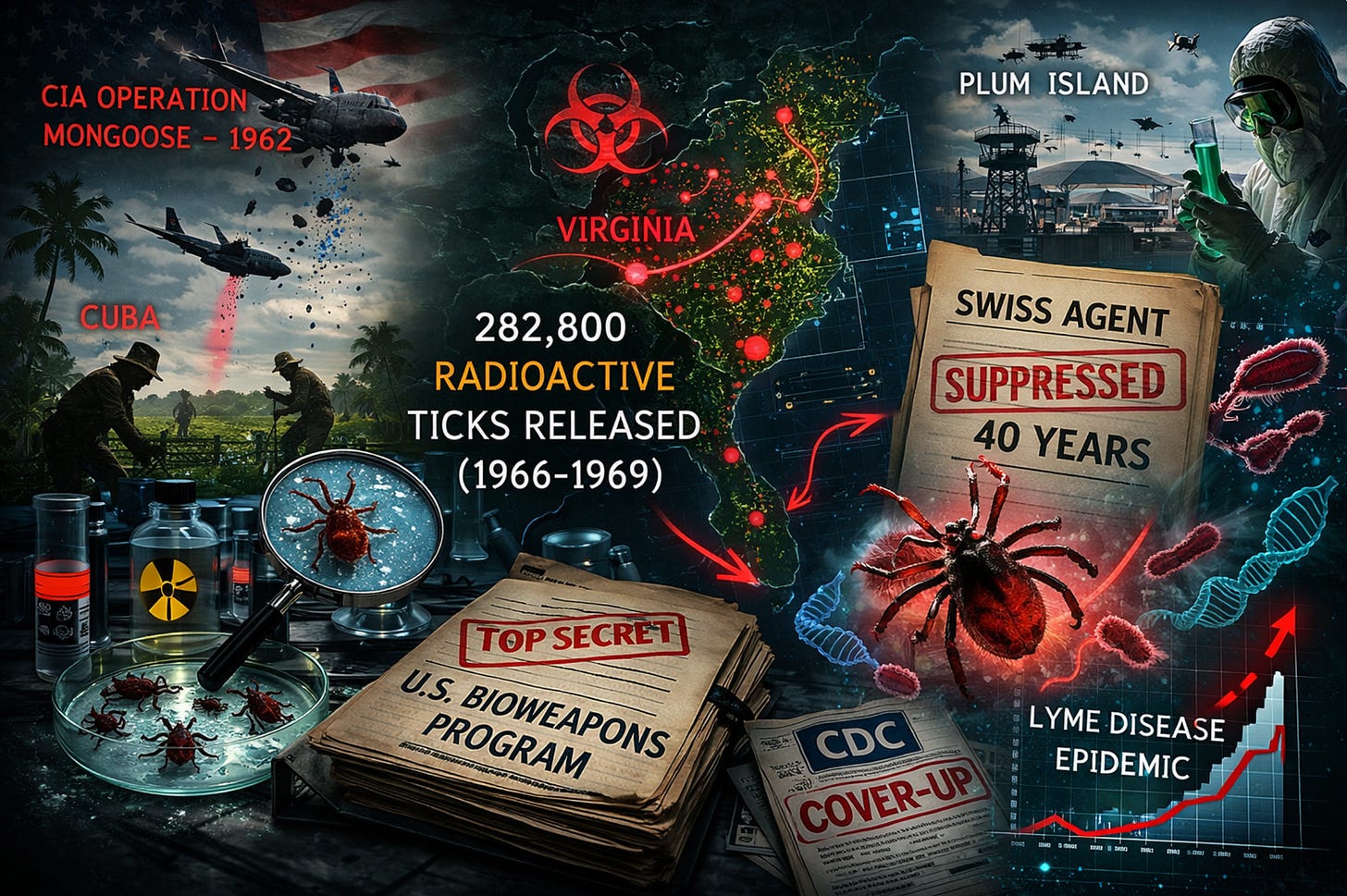
On December 18 last year, Donald Trump signed into law an order to “review and report on biological weapons experiments on and in relation to ticks [and] tick-borne diseases.” The investigation is long overdue but even so, the facts it uncovers will come as a shock to many. A growing body of evidence shows that during the Cold War ticks were tinkered with and used as delivery mechanisms for biological warfare agents. And these weaponized ticks may have been released both intentionally and unintentionally on an unsuspecting public by the US military.

Ticks and the diseases they transmit (such as Lyme) pose a growing threat to Americans, the military and to agriculture. Record numbers of tick bites have been reported in New York (in 2024), Maine (in 2024), and Wisconsin (in 2023). The Centers for Disease Control and Prevention estimates approximately 500,000 new cases of Lyme disease annually. About one-third of patients do not respond to recommended treatment protocols.

Bioweapons specialists infected ticks with pathogens to cause disabilityand death to potential enemies

If these microbes have been genetically altered, we need to know. If the military harmed civilians through irresponsible experiments, the government has an obligation to acknowledge and remedy those harms. And if the original outbreak near Lyme, Connecticut, in the 1970s resulted from a hostile foreign act, future biosecurity protections must be strengthened. Knowing the root cause of an epidemic is vital in developing treatment strategies, containing the outbreaks and preventing future ones. And then there’s the issue of what else ticks may be carrying. (See link for article)

____________

**Comment**

Sadly, Newby propitiates the ‘climate change’ myth regarding tick and disease proliferation.  This is a key point as there are only so many research dollars which are highly sought after.  By perpetuating a myth, we purposely limit those funds even further by funding research that has already been proven false.

The article does, however, go through the chronology of tick research as well as the fact researchers dropped these infected ticks on unsuspecting populations (Operation Mongoose, etc.)

Important excerpt:

….documents obtained by the CIA during the Cold War showed that the Soviets were conducting bioweapons-related experiments on ticks, including exploring ways to get ticks to reproduce more rapidly, selectively crossbreeding tick species so they could carry disease agents that caused tick-borne encephalitis and dropping infected ticks from aircraft and balloons. Intelligence reports on “entomological warfare” stoked fear and paranoia in the Pentagon, and the Cold War bug-borne weapons race began.

For more:


https://www.thefocalpoints.com/p/america-officially-withdraws-from

America Officially Withdraws from the World Health Organization

With the Pandemic Treaty in place, the Gates Foundation and GAVI now fill the power vacuum as top funders — putting WHO member states in danger.

by Nicolas Hulscher, MPH

On January 20, 2025, President Donald Trump signed an executive order initiating the U.S. withdrawal from the WHO, citing its COVID-19 failures, lack of reforms, and disproportionate U.S. funding.

Today, that one-year notice period has officially expired — and the United States has formally withdrawn from the WHO, leaving the Gates Foundation and GAVI to fill the power vacuum as top funders:

My heart goes out to all remaining WHO member states… now answering directly to the vaccine cartel.

It’s important to remember that in May 2025, the WHO officially approved the WHO Pandemic Agreement — setting the stage for fast-tracked experimental vaccines, top-down emergency mandates, digital vaccine passports, expanded cross-border surveillance, and coordinated censorship of dissenting scientists and physicians under the banner of “misinformation.”

Last month, the WHO exposed just how degraded it has become by releasing an embarrassingly weak autism-vaccine report. The McCullough Foundation — with ~0.007% of the WHO’s budget — produced a far more comprehensive and scientifically grounded analysis.

We can chalk up this official withdrawal as a major win for the public health of America.

For more:

https://www.thefocalpoints.com/p/breaking-american-academy-of-pediatrics?

BREAKING: American Academy of Pediatrics Hit With Federal RICO Lawsuit for Vaccine Safety Fraud

AAP accused of operating a decades-long racketeering scheme that deceived America about vaccine safety for maximum profit.

by Nicolas Hulscher, MPH

For decades, the American Academy of Pediatrics (AAP) has been treated like an untouchable authority on child health — the gold standard that parents, doctors, schools, and lawmakers were told to trust without question. But today, that image collapses. Children’s Health Defense (CHD) and multiple plaintiffs just filed a federal lawsuit alleging the AAP spent decades running a racketeering operation that sold parents false safety assurances about the childhood vaccine schedule.

This isn’t another “vaccine debate” lawsuit. It’s a RICO fraud case—the same legal weapon used against organized crime and the tobacco industry. The allegation is blunt and devastating: the AAP allegedly manufactured false certainty around vaccine schedule safety, shut down legitimate scientific scrutiny, and promoted sweeping assurances that were never validated through rigorous real-world safety testing—while operating within a system shaped by vaccine-manufacturer funding and financial incentives tied to high pediatric vaccination rates.

One of the most explosive points in the complaint is what it forces into the open. The cumulative childhood schedule has never been safety-tested the way any reasonable parent would assume it has. The lawsuit points to Institute of Medicine findings from 2002 and 2013 calling for more research and acknowledging the lack of proper vaccinated vs. unvaccinated comparisons. Yet the AAP continued portraying the schedule as thoroughly tested and unquestionably safe, shaping pediatric care nationwide through repetition, authority, and pressure—not proof.

The complaint also describes what parents have learned the hard way. This system doesn’t merely recommend vaccines. It demands compliance. Physicians who questioned the schedule or deviated from AAP protocols were professionally targeted, disciplined, and financially crushed. The message was clear: follow the script, or lose your career.

The lawsuit further argues that the AAP’s public reassurances were built on “theoretical” talking points that became institutional doctrine, including the infamous claim that infants could tolerate an extreme number of vaccines at once. According to the plaintiffs, this wasn’t evidence—it was marketing disguised as medical authority, repeated in clinics to silence questions and keep the assembly line moving.

Then there’s the part that makes it all make sense: money. The complaint highlights conflicts of interest and financial entanglements with vaccine manufacturers and aligned institutions. The AAP presents itself as independent and science-first, while operating in a world of corporate sponsorships, incentives, and industry relationships that would be unacceptable in any genuinely transparent public health organization.

This is why the lawsuit matters. It’s not about a single product. It challenges the entire protection racket that has propped up the pediatric vaccine industry for decades. AAP’s model has relied on one rule: the schedule is safe because we say it’s safe—and anyone who demands real proof gets smeared, censored, or destroyed.

The lawsuit seeks financial damages for the families and physicians harmed, demands disclosure of the lack of comprehensive safety testing behind the cumulative schedule, and aims to stop the AAP from making blanket, unqualified claims that the schedule is “safe and effective” as if that question has already been settled.

If this case advances, discovery alone could expose what the public has been denied for decades—and that would be a historic victory for medical transparency, informed consent, and accountability in pediatrics. For years, parents were told to “trust the experts,” while legitimate safety questions were mocked, censored, or punished. Now those questions are headed to the one place the system can’t silence them with talking points: federal court.  (See link for article)

____________

For more:

https://danielcameronmd.com/babesia-feels-like-youre-dying/

Babesia Autonomic Dysfunction: Air Hunger and Severe Symptoms

1/15/26

Babesia Autonomic Dysfunction: Why Symptoms Feel Life-Threatening

Babesia autonomic dysfunction causes some of the most severe and frightening symptoms in tick-borne illness. Air hunger, crushing fatigue, night sweats, and a terrifying sense of impending collapse stem from disruption of the autonomic nervous system—the body’s automatic control system for breathing, heart rate, and temperature regulation. Understanding why Babesia autonomic dysfunction produces such severe symptoms even when standard tests appear normal is critical for proper diagnosis and treatment.

When You Can’t Catch Your Breath but Tests Are Normal

Note: Patient details have been modified to protect privacy. This case represents a composite of typical Babesia presentations I have observed in clinical practice.

A 45-year-old man presented to the ER for the third time in two weeks with overwhelming air hunger. His breathing felt manual rather than automatic. He was yawning constantly, feeling chest pressure, and convinced something was catastrophically wrong.

Each time, his oxygen saturation was normal. Chest X-ray was clear. He was told he was having panic attacks.

But the episodes kept happening—often without emotional triggers, frequently during exertion. He had also developed drenching night sweats, profound fatigue, and dizziness when standing.

A clinician took a different approach. History revealed a tick bite three months earlier. Babesia testing—initially overlooked—came back positive. Treatment began, and over several weeks, the air hunger episodes decreased.

What changed was recognizing that Babesia can cause terrifying respiratory and autonomic symptoms even when standard tests appear completely normal.

Understanding Babesia Autonomic Dysfunction

Babesia is a malaria-like parasitic infection that invades red blood cells and is one of several tick-borne infections that can trigger autonomic dysfunction—disrupting the body’s automatic regulation systems. While anemia from red blood cell destruction can occur, the most distressing symptoms often result from Babesia autonomic dysfunction—disruption of the nervous system that normally controls automatic bodily functions.

The autonomic nervous system regulates breathing, heart rate, blood pressure, temperature, and other vital functions without conscious effort. When Babesia infection disrupts this system, patients experience symptoms that feel life-threatening even when objective measures appear normal.

How Babesia Autonomic Dysfunction Affects the Body

Air hunger – Inability to get a satisfying breath, repeated yawning, chest tightness. Breathing feels manual rather than automatic.

Sense of impending collapse – Powerful feeling that something is catastrophically wrong despite stable vital signs.

Crushing fatigue – Exhaustion disproportionate to exertion, reflecting dysregulated energy systems.

Autonomic instability – Palpitations, dizziness when standing, temperature dysregulation.

Night sweats – Drenching sweats that soak bedding, caused by disrupted temperature control.

Many patients say Babesia autonomic dysfunction makes them feel sicker than Lyme disease itself. The fear is rational. The symptoms are real.

Why Babesia Disrupts Breathing Control

Air hunger from Babesia autonomic dysfunction is not respiratory failure—it is dysregulation of breathing control.

Normally, breathing is automatic. The brainstem monitors carbon dioxide and oxygen, adjusting breathing without conscious effort. In Babesia infection, this autonomic regulation becomes impaired, producing altered carbon dioxide sensing and disrupted respiratory pacing where breathing feels manual.

The disconnect between how sick patients feel and what tests show is destabilizing. Oxygen saturation is often normal, imaging unremarkable, lung exams clear—yet patients feel as though their breathing system has failed.

Standard tests measure gas exchange, not autonomic regulation. Being told “your oxygen is fine” does not address the underlying dysregulation caused by Babesia autonomic dysfunction.

This is not simply anxiety—it reflects physiologic autonomic disturbance triggered by parasitic infection.

What Actually Helps

While symptoms of Babesia autonomic dysfunction can be terrifying, most patients are not dying—even when it feels that way. The sensation reflects nervous system dysregulation, not imminent collapse.

Severe symptoms warrant comprehensive evaluation and should never be dismissed as anxiety alone.

When Babesia is accurately identified, antimicrobial treatment targeting the parasite can reduce symptom severity over weeks to months. As the infection is treated, autonomic function often gradually improves. Response is typically gradual rather than immediate.

Co-infections are common with Babesia and may need concurrent treatment. Persistent symptoms don’t always mean treatment failure—they may indicate additional untreated infections.

Managing Babesia autonomic dysfunction may also include hydration support, gradual reconditioning, and recognition that symptoms are real and physiologic, not psychological.

As one patient described: “Once I knew this feeling had a name and a cause, it stopped controlling me.”

Why These Symptoms Are Often Missed

Standard testing has significant limitations. Babesia antibody tests may be negative even when infection is present. Direct parasite detection requires specific timing and expertise.

When air hunger, night sweats, and autonomic symptoms appear alongside tick-borne illness, clinicians familiar with these infections consider Babesia autonomic dysfunction even when initial testing is negative.The dismissal of these symptoms as anxiety is part of a broader pattern of medical misconceptions about tick-borne illness.

If you are experiencing these symptoms, you are not imagining them. You deserve comprehensive evaluation—not dismissal. With recognition and appropriate care, many patients improve as autonomic function gradually recovers.

Frequently Asked Questions

What is Babesia autonomic dysfunction?

Babesia autonomic dysfunction occurs when Babesia parasitic infection disrupts the autonomic nervous system—the system controlling automatic functions like breathing, heart rate, and temperature regulation.

Why does Babesia cause air hunger if oxygen levels are normal?

Babesia disrupts autonomic regulation of breathing control in the brainstem. Air hunger reflects dysregulated respiratory pacing—not actual hypoxia.

Can Babesia autonomic dysfunction be severe without anemia?

Yes. Autonomic nervous system disruption alone can produce life-altering symptoms even with normal blood counts. Anemia worsens symptoms but is not required for severe manifestations.

How is Babesia air hunger different from a panic attack?

Babesia autonomic dysfunction often occurs without emotional triggers, worsens with physical exertion, and doesn’t consistently improve with reassurance. It’s accompanied by other autonomic symptoms like night sweats and temperature dysregulation.

How is Babesia diagnosed?

Diagnosis combines antibody testing, direct parasite detection (blood smear or PCR), and clinical assessment. No single test is perfectly sensitive, so diagnosis often relies on clinical suspicion.

Can you have Babesia without Lyme disease?

Yes, though co-infection is common. Babesia can be transmitted alone or alongside other tick-borne pathogens.

Resources
  1. Centers for Disease Control and Prevention. Babesiosis.
  2. Clinical overview of BabesiosisClinical Care of Babesiosis.
  3. New England Journal of Medicine – Human Babesiosis Vannier E, Krause PJ.
  4. Circulation – Postural Tachycardia Syndrome (POTS) Raj SR. Postural tachycardia syndrome (POTS)
  5. Dr. Daniel Cameron: Lyme Science Blog. Babesia and Lyme — it’s worse than you think
  6. Dr. Daniel Cameron: Lyme Science Blog. Night Sweats: An Overlooked Symptom of Babesia

For more: