http://www.pnas.org/content/115/5/1081

Infectious virus in exhaled breath of symptomatic seasonal influenza cases from a college community

Jing Yan, Michael Grantham, Jovan Pantelic, P. Jacob Bueno de Mesquita, Barbara Albert, Fengjie Liu, Sheryl Ehrman, Donald K. Milton and EMIT Consortium
  1. Edited by Peter Palese, Icahn School of Medicine at Mount Sinai, New York, NY, and approved December 15, 2017 (received for review September 19, 2017)

Significance

Lack of human data on influenza virus aerosol shedding fuels debate over the importance of airborne transmission. We provide overwhelming evidence that humans generate infectious aerosols and quantitative data to improve mathematical models of transmission and public health interventions. We show that sneezing is rare and not important for—and that coughing is not required for—influenza virus aerosolization. Our findings, that upper and lower airway infection are independent and that fine-particle exhaled aerosols reflect infection in the lung, opened a pathway for a deeper understanding of the human biology of influenza infection and transmission. Our observation of an association between repeated vaccination and increased viral aerosol generation demonstrated the power of our method, but needs confirmation.

Abstract

Little is known about the amount and infectiousness of influenza virus shed into exhaled breath. This contributes to uncertainty about the importance of airborne influenza transmission. We screened 355 symptomatic volunteers with acute respiratory illness and report 142 cases with confirmed influenza infection who provided 218 paired nasopharyngeal (NP) and 30-minute breath samples (coarse >5-µm and fine ≤5-µm fractions) on days 1–3 after symptom onset. We assessed viral RNA copy number for all samples and cultured NP swabs and fine aerosols. We recovered infectious virus from 52 (39%) of the fine aerosols and 150 (89%) of the NP swabs with valid cultures. The geometric mean RNA copy numbers were 3.8 × 10⁴/30-minutes fine-, 1.2 × 10⁴/30-minutes coarse-aerosol sample, and 8.2 × 10⁸ per NP swab. Fine- and coarse-aerosol viral RNA were positively associated with body mass index and number of coughs and negatively associated with increasing days since symptom onset in adjusted models. Fine-aerosol viral RNA was also positively associated with having influenza vaccination for both the current and prior season. NP swab viral RNA was positively associated with upper respiratory symptoms and negatively associated with age but was not significantly associated with fine- or coarse-aerosol viral RNA or their predictors. Sneezing was rare, and sneezing and coughing were not necessary for infectious aerosol generation. Our observations suggest that influenza infection in the upper and lower airways are compartmentalized and independent.

The association of current and prior year vaccination with increased shedding of influenza A might lead one to speculate that certain types of prior immunity promote lung inflammation, airway closure, and aerosol generation. This first observation of the phenomenon needs confirmation. If confirmed, this observation, together with recent literature suggesting reduced protection with annual vaccination, would have implications for influenza vaccination recommendations and policies.

___________

https://jameslyonsweiler.com/2018/02/02/a-message-to-ethical-mds-the-problem-with-the-2017-8-flu-vaccine-is-the-2016-7-flu-vaccine/  (Please read entire article here by James Lyons Weiler)

Letter to ethical MD’s (snippets below):

The last time the flu vaccine was 60-70% effective was eight years ago.
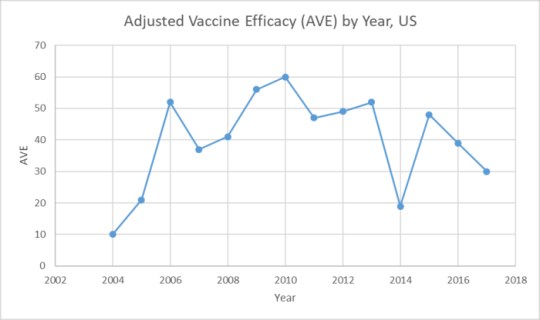
fluave

“This is the CDC’s data  https://www.cdc.gov/flu/professionals/vaccination/effectiveness-studies.htm  Clearly, Gupta’s “Years” is, in immunological memory, a singular “Year”. Only once out of the last 14 years was the flu vaccine above 59% – that the value was not 60-70%, it was 60%.

This type of misrepresentation is a consistent penchant within the media and of course from the CDC to exaggerate and highly emphasize only positive views and diminish, dismiss, or ignore any negative views on the safety and efficacy of vaccines.

The Jury is In: The Flu Vaccine Reduces its Own Efficacy

Too many studies now exist that have independently come to the same conclusion: increases in the uptake of flu vaccine reduces that vaccine’s effectiveness in the following year – and some studies show the negative effects of mass influenza vaccination last two years.

The studies reporting those results are reviewed in my article, “Diseases with Unknown Etiology Trace Back to Mass Vaccination Against Influenza in 1976“, and they are extensive and damning. https://jameslyonsweiler.com/2018/01/31/diseases-with-unknown-etiology-trace-back-to-mass-vaccination-against-influenza-in-1976/

Patients have a right to know the specific nature of their infections, and survivors in families of those who die from respiratory infections deserve an accurate cause of death. Coroners should certainly be required to provide an accurate cause of death in so-called “flu” mortalities. Health departments should be required to count only deaths due to confirmed influenza infection as “flu” – otherwise their numbers perpetuate misperception on the risk of influenza infection, and cause fear leading to increased vaccination. How is this seen as a good thing? The population deserves good and honest doctors and stewards of public health.

HHS could demand swab results for all suspected cases of “flu deaths” with a press release and enforce them with random audits. This annual ritual of fear-mongering over “flu-deaths” hides the fact that as long as thimerosal is injected into patients, they are at increased risk of other infections. And due to heterologous immunity, even without thimerosal, flu vaccines can confuse the immune system and muddle up ineffective immune response by trying to re-purpose B-cells trained on the wrong virus, hobbling the immune system making it unresponsive to similar viruses. Such as next year’s flu strain.

We do need objectivity to arise immediately throughout the public health system in the US, starting with HHS, then to CDC and to all Health Departments around the country. Many studies have also found problems with Tamiflu. But no emergency epidemiological study is addressing the question – why are so many young people dying from “flu”? Many of the reports I’ve seen include mention that they person had not only been vaccinated, they also had taken Tamiflu. And many had taken Tylenol. It’s time to ask the tough questions. The science is there on problems with Tylenol for vaccine-induced fever, and it must be taken into consideration. Fever due to respiratory infections after flu vaccination is still vaccine-induced.

A look at the issues with Tamiflu (see primary scientific literature reviewed here) shows that we cannot ignore the possibility that the human immune system is not infinitely resilient, and that medicine’s approaches to tackling “the flu” is imprecise, not evidence-based, and self-defeating. I’m not talking about the number of antigens the human body can take; I’m talking about the amount of tweaking it can tolerate, especially given the aluminum-dense childhood vaccination schedule. The allopathic medical community would do very well to heed the studies that show that Vitamin D helps alleviate both vaccine injury and severity of viral infections. It helps resolve the unfolded protein response without killing the cells. And the science of ER stress (endoplasmic reticulum stress) shows that Thimerosal is, after all, not safe for human use. Same for aluminum.

Real Reform is Coming – It’s a Mathematical Certainty

Vaccines injure people every day, and kill people every week. Each injury and death informs family members, co-workers, and schoolmates. The flaws in vaccines, combined with misinformation campaigns on safety, fuel the fire and build the vaccine risk aware army. It’s a peaceful army, filled with individuals who are hurt so badly, they do not want others to suffer the same fate. They are altruistic. And under informed, ethical and distributed leadership, they are finding their momentum.

Vaccine safety science reform means removing those in the CDC and HHS that perpetuated the debacle as it grew to proportions that even they could no longer easily deny it. And that’s fine. Let them go. There are many excellent professionals capable of replacing them – people who have not been involved in cooking studies to alter the public’s perception of vaccine risk. People who have withstood unwarranted and unfair criticism by those who live in cowardice of reality. People who now no longer afraid to publish their views. An important question is who among my colleagues in Academic Public Health, and which doctors in Pediatric medicine are willing to #bebrave and take on a debacle as huge as a failed national immunization program? Who will stand up to the AAP and tell them they are wrong?

If you are that type of doctor, it will be easier if you trust those who have worked at this for years. Read Dr. Paul Thomas’ book, The Vaccine Friendly Plan. After the resignations, have him come and teach the entire CDC and HHS what he knows. Consider Dr. Alvin Moss’s wisdom – ask him to create a Conflicts of Interest Policy for CDC and HHS, as he has done for the rest of academic medicine. Bring in Dr. Bob Sears from California, who was willing to stare down threats of the loss of his license to practice medicine because he dared to continue to practice medicine in the face of wanton misinformation and pressure from the AAP. Consider Dr. Richard Frye, and Dr. Chris Exley from the UK, who care first and foremost about the truths that impact total health. Dr. Frye would be great as the new NIH Director, in my opinion. Let these people form a new national public health direction that overrides existing contracts. There are others. Like Dr. Judy Mikovits whose character stands much taller than those who tried – and failed – to silence her – on the issue of adventitious agents in viral vaccines (specifically and quite problematic: retroviruses). Ask Dr. Ted Fogarty about Ethical Vaccinomics, and testing for vaccine injuries. Bring in Dr. John Piesse from Australia and end his persecution there, and put his good will toward safety to work here. We would be lucky to have him.

Create a Manhattan Project focused on reducing vaccine injuries, not on making currently licensed vaccines safer. They are old, and stale, and tired, and they, too, need to go. Bring in exciting new developments in artificial immunization like microneedle patches. Bring in Dr. Kanduc to screen epitopes that are unsafe. Drop aluminum, as many have now called for, and bring in calcium carbonate – if needed at all. Let those pharmaceutical companies who created the disaster make good on their promises to stop making their vaccines. Then we will see new approaches to artificial immunization that compete on the platform of safety.

Don’t just end COIs at ACIP: End ACIP. Create a Vaccine Safety Commission that enforces Science Integrity. Open up the markets. Let ideas thrive. Let consumers choose. Let the FDA do its job. Let the people’s experiences be heard. Establish a paradigm in which the end consumer has a say in the quality of the product. Strip the CDC of the ability to hold patents. End the CDC Foundation. End the differences between drugs and biologics and require randomized clinical trials – with proper placebos, not aluminum hydroxide – for vaccines. Repeal the 1986 Act that protects drug companies from liability for faulty vaccines. Perform random spot checks of vaccines in practices for contamination. The total sum of policies in the National Immunization Program, and the burden of morbidity on the population is a serious threat to our National Security.

Let some new faces and voices drive this reform. Bring in Dr. Dan Neides who had to escape the Cleveland Clinic after speaking his conscience. Let him oversee the transition. Bring in Dr. Brian Hooker to personally issue the pink slips to those who must now go from the CDC. Let all of those named here share his or her experience with Congress. Have Dr. Thompson testify. We need truth and reconciliation. And we need it 42 years ago.

There are MDs who sit in the shadows, silent, and afraid of job loss, sanction, ridicule. Step up. Let your views be known to the current Administration. Join Physicians for Informed Consent. You are not alone. You can help be part of the solution. Attend Health Department meetings and speak up for Informed Consent. Speak up for vaccine exclusions for kids in homes with high lead levels. Speak up for spacing out vaccines and skipping them. Speak up for tolerance and understanding of the pain and anguish parents of kids with autism experience when they are told it’s genetic, they know it’s environmental, and they are told they have to vaccinate their other babies. Speak up against calling CPS for parents who want to take the time they have under the law to consider vaccinations. And, of course, do right by your patients. Listen to their concerns. Inform them of both risks and benefits, as required by Federal Regulations. Let them know they are enrolling themselves or their children (and unborn baby) in post-licensure vaccine safety clinical trials (as required by Federal Regulations). Provide medical and philosophical exemptions for school waivers as required by the laws of your state and the rule of your own conscience. The AAP does not represent the rights and will of the people of the United States of America. Our legislation does.

Let’s aim to not make 2020 vaccination look anything like 2019. We have solutions. We’re now aiming for Healthy People 2050, and the current vaccines have very little to do with our vision. By the way, these ideas don’t come (exclusively) from me. They are shared by hundreds of thousands of American citizens, many of whom have been made sick or lost loved ones to vaccines. #werenotgoingaway #releasetheothermemos #hearthiswell #notmine #Vaxxed #cdctruth #saveourbabies #bebrave #ipak #cdcwhistleblower #rfkcommission #educatebeforeyouvaccinate #vaxxed #learntherisk #wedid #cdclied #stopmandatoryvaccination #learntherisk.”

____________

**Comment**

More just keeps popping out of Pandora’s Box regarding vaccines.

This recent talk shows how vaccines are causing Lyme/MSIDS patients to relapse as well as worsen:  https://madisonarealymesupportgroup.com/2018/02/04/dr-muth-immune-issues-and-lyme-msids/

https://madisonarealymesupportgroup.com/2017/12/02/scottish-doctor-gives-insight-on-lyme-msids/  Scottish doctor treating a number of young women who fell ill after their HPV vaccination, which seems to have stimulated a latent Lyme infection to reactivate.

https://madisonarealymesupportgroup.com/2016/04/24/gardasil-and-bartonella/  Asymptomatic girls after receiving Gardasil activated dormant Bartonella which was confirmed by testing.

Great video on the flu vaccine’s ineffectiveness:  https://madisonarealymesupportgroup.com/2015/11/08/flu-vaccine-causes-the-flu/

I could go on and on to infinity.  Something must be done.  Be a part of the solution.


Published January, 2018

Dr. Debra Muth, ND, WHNP, BSNH, MSNH, ARNP, BAAHP spoke at the Madison Area Lyme Support Group  She discusses various bacterial, viral and immunological effects that activate the immune system and cause symptoms to increase, as an over active immune system can mimic Lyme/MSIDS symptoms. She believes it’s important to look at all angles of the immune system and how it affects patients.

She reviews how Marcon’s, Viruses, Heavy Metals and vaccines activate the immune system and cause increased brain inflammation. She discusses treatment options available to date, including the RK protocol and how it can assist with Lyme treatment, as well as how it fits in with treatment successes in her practice.

Vaccne and inlammation Madison Support Group 2018  Accompanying pdf

http://online.liebertpub.com/doi/10.1089/vbz.2017.2132

Understanding Q Fever Risk to Humans in Minnesota Through the Analysis of Spatiotemporal Trends

Alvarez Julio, Whitten Tory, Branscum Adam J., Garcia-Seco Teresa, Bender Jeff B., Scheftel Joni, and Perez Andres. Vector-Borne and Zoonotic Diseases. February 2018, 18(2): 89-95.  Published in Volume: 18 Issue 2: February 1, 2018

Understanding Q Fever Risk to Humans in Minnesota Through the Analysis of Spatiotemporal Trends

ABSTRACT
Q fever is a widely distributed, yet, neglected zoonotic disease, for which domestic ruminants are considered the main reservoirs in some countries. There are still many gaps in our knowledge of its epidemiology, and the source of sporadic cases is often not determined. In this study, we show how Q fever surveillance data in combination with information routinely collected by government agencies in Minnesota during 1997 to 2015 can be used to characterize patterns of occurrence of Q fever illnesses and detect variables potentially associated with increased human illness. Cluster analysis and Bayesian spatial regression modeling revealed the presence of areas in Southern Minnesota at higher risk of Q fever. The number of sheep flocks at the county level helped to explain the observed number of human cases, while no association with the cattle or goat population was observed. Our results provide information about the heterogeneous spatial distribution of risk of Q fever in Minnesota.

____________

1280px-Coxiella_burnetii_01Image credit: en:Rocky Mountain Laboratories, NIAID, NIH

**Comment**

The causative agent of Q Fever, Coxiella burnetii, is a small Gram-negative bacterium morphologically similar to Rickettsia, but with genetic and physiological differences.  It has been isolated from approximately 40 species of ticks with possible tick borne transmission reported.  The most common mode of transmission is inhalation of infectious aerosols from fluids of infected animals.  It can become airborne and travel for miles causing outbreaks.  Person to person transmission is possible as well. It can survive standard disinfectants, and is resistant to many other environmental changes like those presented in the phagolysosome.  The CDC reports that 60% of cases are in patients without livestock contact (CDC unpublished data, 2010) and the need for health-care professionals to consider Q fever in the differential diagnosis in patients with a compatible illness, even in the absence of occupational risk or history of direct contact with animal reservoirs.

Supposedly, he United States ended its biological warfare program in 1969. When it did, C. burnetii was one of seven agents it had standardized as biological weapons.  https://en.wikipedia.org/wiki/Coxiella_burnetii

Q Fever can cause acute or chronic illness.

https://www.medscape.com/viewarticle/803800
Excellent video by Alicia Anderson, DVM, MPH on new CDC guidelines for Q Fever

Excerpts below:

https://www.cdc.gov/mmwr/preview/mmwrhtml/rr6203a1.htm

Summary of Acute Q Fever
Prolonged fever (>10 days) with a normal leukocyte count, thrombocytopenia, and increased liver enzymes is suggestive of acute Q fever infection.
Children with Q fever generally have a milder acute illness than adults.
Children are more likely to have a rash than adults. Rash has been reported in up to 50% of children with acute Q fever.
Women infected with Q fever during pregnancy are at increased risk for miscarriage and preterm delivery.
Women of child-bearing age who receive a diagnosis of Q fever can benefit from pregnancy screening and counseling to guide health-care management decisions

Treatment: Symptomatic patients with confirmed or suspected acute Q fever, including children with severe infections, should be treated with doxycycline, which is most effective if given within the first 3 days of symptoms.  Other antibiotic regimens that can be used if doxycycline is contraindicated because of allergies include moxifloxacin, clarithromycin, trimethoprim/sulfamethoxazole, and rifampin.  Patients with acute Q fever should undergo a careful clinical assessment to determine whether they might be at risk for progression to chronic Q fever because patients at high risk require closer observation during the convalescent period.

Summary of Chronic Q Fever
Persons who are at high risk for development of chronic Q fever include persons with preexisting valvular heart disease, vascular grafts, or arterial aneurysms.
Infection during pregnancy and immunosuppression (e.g., from chemotherapy) are both conditions that have been linked to chronic Q fever development.
Endocarditis and infections of aneurysms or vascular prostheses are the most common forms of chronic Q fever and generally are fatal if untreated.
Chronic Q fever is rarely reported in children.
In contrast with adults, osteomyelitis is one of the most common findings in children with pediatric chronic Q fever.

Treatment:  Adults who receive a diagnosis of chronic Q fever should receive a treatment regimen of doxycycline and hydroxychloroquine (100 mg of doxycycline twice daily with 200 mg of hydroxychloroquine three times daily); duration of treatment might vary by the site of infection. A combination regimen is necessary to eradicate the organism because hydroxychloroquine raises the pH in the acidified phagosomal compartment and, in combination with doxycycline, has been shown to have in vitro bactericidal activity against C. burnetii. Because of potential retinal toxicity from long-term use of hydroxychloroquine, a baseline ophthalmic examination should be performed before treatment and every 6 months thereafter. Both doxycycline and hydroxychloroquine can cause photohypersensitivity, and hypersensitivity to sunlight is a potential complication with acute and chronic treatment regimens. Hydroxychloroquine is contraindicated in persons with glucose-6-phosphate dehydrogenase deficiency and persons with retinal or visual field deficits.

During treatment for chronic Q fever, patients should receive monthly serologic testing for C. burnetii phase I and II IgG and IgM antibodies and monthly clinical evaluations. If an appropriate treatment response is not achieved, monthly monitoring for hydroxychloroquine plasma levels (which should be maintained at 0.8–1.2 µg/mL) and doxycycline plasma levels (which should be maintained at ≥5 µg/mL) should also be performed during the treatment (145,146). Treatment should continue for at least 18 months for native valve infections and at least 24 months for prosthetic valve infections.

Rather than rely on indiscriminate application of predetermined cutoff titers, health-care providers should use serologic testing as a tool to ensure that the phase I IgG is decreasing during treatment in conjunction with recovery from clinical symptoms. A patient who has been treated appropriately for ≥18 months and has recovered from clinical symptoms but whose phase I IgG remains ≥1:1024 might not benefit from continued treatment.

See CDC link for treatment for pregnant women and children.

Q Fever is a notifiable disease in the U.S.


https://vitalplan.com/blog/is-your-diet-making-you-nutrient-deficient?

EmptyPlate (1)

Do These Popular Diets Make You Nutrient Deficient?

by Carin Gorrell | Posted February 2nd, 2018

Eating well and meeting all of the daily nutritional recommendations is hard enough when you have no dietary restrictions. But if you’re on any kind of diet that eliminates specific ingredients or entire categories of foods—whether it’s for health purposes, to lose weight, to align with your ethical beliefs, or any other reason—there’s a good chance you’re falling short on certain key nutrients, says nutrition counselor Stephanie Clarke, M.S., R.D., cofounder of C&J Nutrition.

That doesn’t mean, however, that you have to break your diet rules in order to meet your nutritional needs. Which is especially reassuring news if you’re someone with a serious condition like Celiac disease who simply can’t start eating whole grains without some very real health consequences.

We asked Clarke to help identify possible deficiencies you should be thinking about if you’re following a Paleo, Keto, gluten-free, strict elimination, or vegan diet. Keep reading to discover the most common deficiencies, plus what you can add to your plate that’s within your dietary restrictions to help replace those missing nutrients.

The Paleo Diet

The basic premise of the Paleo Diet is that you can eat anything a caveman (or cavewoman) could hunt or gather back in the Paleolithic era, more than 2 million years ago. That means yes to meat, fish, nuts, leafy greens, regional produce, and seeds, and no to modern foods—namely grains, dairy, and legumes.

You might be missing: Calcium, folate, and fiber

Smart fixes: It’s hard to get enough calcium from natural sources other than dairy, so Clarke suggests looking for a Paleo-friendly non-dairy milk like coconut or almond milk that’s fortified with calcium. If you’re eating plenty of vegetables, you’re likely getting enough fiber and folate, a B vitamin that’s essential for heart health, preventing birth defects, and more. But if your diet is pretty meat heavy, start piling more vegetables like broccoli, asparagus, and dark leafy greens on your plate.

The Keto Diet

This diet was originally developed for use in hospitals to help control seizures in children with epilepsy, says Clarke, but has recently become popular for weight loss. The very low-carb, high-fat plan requires you get only 10% of your calories from carbohydrates and 20% from protein; the remaining 70% should come from fat—think tons of meat, fish, nuts, and oils. Even fruits and vegetables are limited because of their carbohydrates, and so is dairy thanks to its lactose (a natural sugar).

You might be missing: Fiber, B vitamins, vitamins A and C, and calcium

Smart fixes: Eat more green leafy vegetables like spinach, chard, and kale, which are low in carbs but high in B vitamins, A, C, and fiber. These greens also contain some calcium, but not enough, so Clarke recommends taking a daily multivitamin and mineral supplement that includes 100% of your daily value of key vitamins and minerals.

Gluten-Free Diet

Only a small percentage of people have Celiac or a true intolerance to gluten, a protein in wheat (and wheat varieties and derivatives like farro and spelt), rye, barley, triticale, malt, brewer’s yeast, and wheat starch. But many more people have a sensitivity to gluten, and nixing it from their diet can relieve symptoms such as GI distress, brain fog, and joint pain.

You might be missing: Folate and fiber

Smart fixes: Falling short on B vitamins and fiber is really only a concern if you don’t eat a lot of vegetables and you’re entirely grain-free (meaning you don’t eat gluten-free grains like brown rice, quinoa, and amaranth), explains Clarke. If that’s you, time to load up on leafy greens for folate, and beans and produce like raspberries, apples, and pears for fiber. Note that many gluten-free packaged products such as breads and cereals are not fortified with folic acid (the synthetic version of folate), so don’t count on those to meet your folate needs unless the label says otherwise.

Elimination Diet

These diets can vary depending on your individual needs, but it involves eliminating all foods that are suspected of disrupting digestive function and health due to allergies, sensitivities, chronic illness, or an otherwise impaired immune system. That can entail nixing all grains (there may be some exceptions, such as white rice), seeds, dairy, eggs, legumes, tree nuts, nightshade and cruciferous vegetables, and most meat (aside from chicken and fish).

You might be missing: Calcium, folate, vitamin D, omega-3 fatty acids, fiber, and enough calories in general

Smart fixes: Remember that most non-dairy milks are fortified with calcium, so choose one that is (check the label) and that works with your plan, such as oat or rice milk. Your folate is likely low because you’re not eating fortified foods or some of the top vegetable sources such as black-eyed peas (legumes) and broccoli (cruciferous), so focus on the high-folate produce you can have such as asparagus, white rice, and avocado. Look to vegetables and fruits on your “yes” list to help pump up your fiber intake as well.

Vegan Diet

Veganism is characterized by no animal products, including all meat, fish, eggs, and dairy. It’s a rapidly growing trend: While only about 6% of Americans are vegan according to one 2017 survey, that’s exponentially higher than the estimated 1% of vegans in 2014.

You might be missing: B12, iron, and protein

Smart fixes: The only reliable vegan source of B12 is fortified foods (non-dairy milks and some tofu, soy, and cereal products), so if you’re not eating fortified foods a few times a day, you should take a B12 supplement, says Clarke.

Iron from non-heme (non-animal) sources is not as easily absorbed by the body. It’s easy to get enough from sources like legumes, blackstrap molasses, nuts, seeds, dried fruits, whole grains, and even dark chocolate, just be sure to pair it with a little vitamin C (strawberries, kiwi, oranges), which aids in iron absorption, says Clarke.

When it comes to protein, most Americans (including vegans) get more than they need, which is 10-20% of their daily calories, says Clarke. But if you suspect you’re falling short, aim to have two or more complementary proteins at every meal—pairing incomplete proteins such as whole wheat, rice, beans, lentils, and peanuts will provide all the essential amino acids you need.

As for vitamin D and omega-3s, two 3-4 ounce servings of salmon a week should be enough to hit your levels, but you might still consider taking a vitamin D supplement—even the healthiest people have trouble getting enough D, says Clarke. And if you’re struggling to meet your caloric needs, lean on high-fat avocado and oils on your approved list (avocado, canola, grapeseed, and olive oils are usually allowed): One gram of fat delivers 9 calories, compared to only 4 calories in a gram of carbohydrate or protein.


As always, talk with your healthcare practitioner if you have any concerns about nutritional deficiencies or starting a new diet or supplement. Have other questions or suggestions about filling in nutritional gaps? Share them with us on Facebook.

______________

**Comment**

Food is important for everyone, but the Lyme/MSIDS patient needs to take it extremely seriously.  This article points out some possible holes in various diets.  Please work with a good nutritionist and figure out your personal imbalances.  It will help you greatly in your journey.

For more:  https://madisonarealymesupportgroup.com/2017/11/24/feel-helplessly-predestined-for-disease-listen-to-this/  Cyndi O’Meara is a nutritionist, film maker – ‘What’s With Wheat?’, best-selling author, international speaker and founder of Changing Habits.  She gives simple and practical steps to change your health.

https://madisonarealymesupportgroup.com/2017/05/20/minding-your-mitochondria/  Diagnosed with MS, Dr. Terry Wahls received the best standard medicine had to offer. After declining to the point of being in a wheel chair, she took matters into her own hands and learned how to properly fuel her body. Using the lessons she learned at the subcellular level, she used diet to cure her MS and get out of her wheelchair.

https://madisonarealymesupportgroup.com/2018/02/02/leaky-gut-free-guide/

https://madisonarealymesupportgroup.com/2018/01/03/the-invisible-universe-of-the-human-microbiome-msm/  Great video explaining how 70-80% of our immune system is in our gut and the importance of eliminating sugar.  I add info about how MSM, a safe, inexpensive supplement can help heal leaky gut.

https://madisonarealymesupportgroup.com/2016/05/25/nutritional-video/  Excellent video that explains many nutritional myths we’ve grown up with including – fat is bad. It also points out a few things that are helpful for weight loss, since many MSIDS patients gain weight while in treatment. It also discusses digestive enzymes with ingredients I cover in the article about systemic enzymes: https://madisonarealymesupportgroup.wordpress.com/2016/04/22/systemic-enzymes/


Upcoming SIBO Webinar

SIBO – The Silent Driver of Neuro-inflammation, Anxiety and Pain

with Dr. Brett Wisniewski, Bs, D.C., DACBN, DABCI

Thursday February 8th at 10 AM PST
Can’t be there live? No worries, when you register you will be sent a link to the recording.
CLICK HERE to REGISTER:  https://mpamedia.webex.com/mw3200/mywebex/default.do?nomenu=true&siteurl=mpamedia&service=6&rnd=0.9108669679642906&main_url=https%3A%2F%2Fmpamedia.webex.com%2Fec3200%2Feventcenter%2Fevent%2FeventAction.do%3FtheAction%3Ddetail%26%26%26EMK%3D4832534b00000004b50ca6a53a98c614c571e162e3f4fafbf6164857bcbd979fa703d9850ed84520%26siteurl%3Dmpamedia%26confViewID%3D83882475460263138%26SourceId%3D111%26encryptTicket%3DSDJTSwAAAASHnBEUt5p3G9I7owmWiL2YfBrmzwZC7A6WptOGLU13xg2%26

Topics will Include

  • Relationship of GI Dysbiosis to Mental Health
  • The Role of Biofilms and LPS in Systemic
  • Inflammation
  • Endotoxins and Pain
  • Using Botanical Medicine in SIBO
  • Nutritional Supplementation and Diet for
  • SIBO

Need Help with Protocols?

Biocidin.com

For additional information, please contact Carla Rubie at carla@mpamedia.com