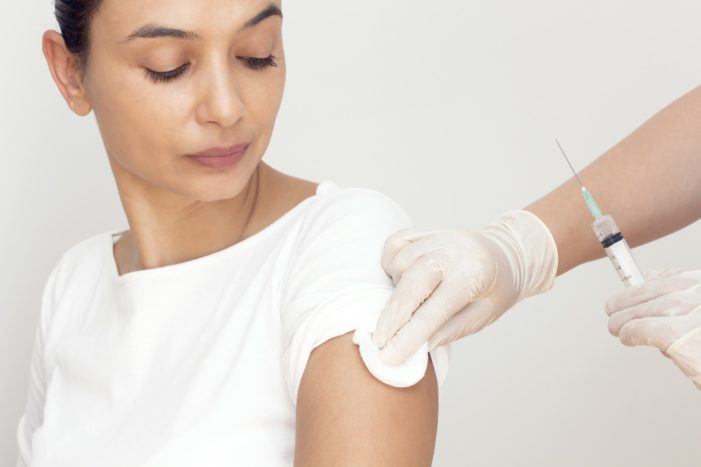
Kentucky Investigating Multiple Infections Following Vaccinations
by Barbara Loe Fisher and Marco Cáceres
Published February 6, 2019
On Feb. 1, 2019, the Department for Public Health (DPH) in Kentucky announced it was investigating “multiple infections associated with vaccinations” administered by a company called Location Vaccination of Mt. Sterling, Kentucky. The vaccinations were given at various business locations in Kentucky, Ohio and Indiana since Sept. 1, 2018.1
According a press release issued by the Commonwealth of Kentucky Cabinet for Health and Family Services,
“Individuals with vaccination-associated infections related to this provider have experienced redness, pain or tenderness, swelling, and the development of hard lumps, or nodules, at the injection site.”1 It warns, “Symptoms may start from a few days to more than 12 weeks after vaccination. Medical care is advised since infections will likely not get better on their own.”1
DPH commissioner Jeff Howard, MD attributed the cause of the infections to “improper storage and handling” of the vaccine. “It is important that individuals vaccinated by this company seek appropriate medical evaluation and treatment,” Dr. Howard stressed.1He did not specify which vaccine was responsible for the infections or vaccine(s) were thought to be responsible for the infections.
Severe local vaccine reactions, which produce varying degrees of redness, swelling, or pain at the injection site, are frequently reported and acknowledged reactions to vaccination.2 The CDC estimates that local reactions to childhood vaccines occur at the following rates and usually last from one to seven days:
1 in 4 children after diphtheria-tetanus-acellular pertussis (DTaP) shots
1 in 5 to 1 in 16 adolescents after Tdap booster shots
1 in 3 children after pneumococcal (PCV-13) shots
1 in 3 to 9 in 10 adolescents after HPV (Gardasil 9) shots
The World Health Organization (WHO) states that,
“Local and systemic reactions such as pain or fever can occur as part of the immune response. In addition, other vaccine components (e.g. adjuvants, stabilizers, and preservatives) can trigger reactions.”3
Aluminum adjuvants in vaccines have been associated with severe local reactions, including large lumps at the site of the injection.
In 2014, vaccine researchers observed that not enough is known about the biological mechanisms and systemic toxic effects of local reactions:
Adjuvants are necessary components to warrant the efficacy of vaccines, however the overstimulation of the immune system is also associated with adverse effects. Local reactions are the most frequent manifestation of toxicity induced by adjuvanted vaccines and, with the exception of the acute phase response (APR), much less is known about the systemic reactions that follow vaccination.4
There have been reports in the medical literature of abscesses forming at the site of vaccine injections, both sterile abscesses5 and abscesses that involve a bacterial infection because a microbe (such as streptococcus or staphylococcus bacteria) contaminates the vaccine. Multi-dose vaccine vials can become contaminated from use of unsterile needles or pathogenic bacteria can enter the skin at the injection site if the person administering the vaccine does not follow skin disinfection protocols. Bacterial cellulitis (local sepsis) at vaccine injection sites has been reported and usually requires antibiotics.6
On Feb. 2, it was reported that the source of the vaccine “contamination” was traced to one Mt. Sterling doctor, who provided vaccines to businesses located in Alexandria, Butler, Georgetown, Lexington, Louisville, Paris, Maysville, Mt. Sterling and Winchester, and is no longer administering vaccines. The final words from DPH commissioner Howard to the public was framed as both a warning and an affirmation that more vaccinations are a good idea. He said,
“If you received vaccine from this provider, we strongly encourage you to consider getting another round to ensure you are fully immunized and not at risk for contracting illness.”7
Many herbal remedies could have anti-inflammatory properties. However, the evidence to support the majority of these claims is lacking. Inflammation is the body’s primary defense mechanism against infections, wounds, and other forms of harm.
However, inflammation itself can be harmful in some cases. For example, many conditions can cause inflammation to remain elevated, resulting in tissue damage.
A range of anti-inflammatory drugs exist to help control inflammation in the body. However, they often have side effects and may not always be effective.
Natural compounds that are present in certain herbal remedies also have the potential to be anti-inflammatory. However, there is much less research in this area.
This article will list herbal remedies with the most evidence for their anti-inflammatory properties.
Turmeric
Eating turmeric can help reduce inflammation in people with arthritis.
Turmeric typically comes in the form of a yellow powder from the root of the turmeric plant.
It contains a chemical called curcumin, which may have anti-inflammatory properties.
Several studies have shown that turmeric can help reduce inflammation and discomfort in people with arthritis.
It works by limiting the production of molecules called cytokines, which cause inflammation.
Researchers continue to investigate how curcumin affects inflammation in a range of other conditions, such as inflammatory bowel disease. Curcumin has the most substantial evidence base for its anti-inflammatory effects compared with other herbal remedies.
Turmeric is available in the form of capsules, tablets, teas, pastes, and extracts. Methods of taking turmeric will vary, depending on the intended use.
Ginger
Ginger, or Zingiber officinale, is a tropical plant that has long had a place in traditional medicines.
Ginger may have anti-inflammatory properties. There is evidence showing that many of ginger’s constituents can limit the production of cytokines and the activity of cyclooxygenase enzymes, which promote inflammation.
Research has found that the anti-inflammatory properties of ginger could be useful in treating several conditions, including arthritis and pain.
Ginger can be fresh or a dried root. It can also come in the form of tablets, capsules, and teas.
Green tea
Green tea has anti-inflammatory properties and may disrupt processes that cause inflammation.
Green tea comes from Camellia sinensis leaves. Research has linked it to a variety of health benefits, such as aiding weight loss.
Green tea has anti-inflammatory properties that could underlie some of these specific health benefits.
For example, there is evidence to suggest that a component of green tea could disrupt processes that cause inflammation in the arthritis.
Other studies have found that green tea can have a positive effect on inflammation in people with metabolic disorders. Researchers suggest that it may drive these anti-inflammatory effects.
Green tea typically comes as a hot or cold drink. It is also possible to buy capsules, tablets, and creams that contain green tea.
Many other herbal remedies may also have anti-inflammatory properties. Examples include:
thyme
white willow bark
frankincense
resveratrol
However, there is not much research available on these remedies. Without this research, it is not possible to say with certainty whether these anti-inflammatory effects exist, or if they are effective treatment options for people with inflammatory conditions.
While a greater evidence base exists for the remedies in this article, the research in this area is still in the early stages.
For example, scientists have conducted many studies into the anti-inflammatory benefits of turmeric. However, the quality of these studies is not high enough to support the claim that turmeric can effectively reduce inflammation in humans.
It is also important to remember that studies in this area tend to use highly concentrated forms of these herbal remedies.
In some cases, certain compounds are isolated. One example of this is curcumin from turmeric. This means that the effects may differ when taking different forms of the remedy.
Risks
A person should discuss taking herbal remedies with a doctor as they can interact with certain medication.
As with taking any drug, there is the potential for side effects and complications to occur when taking herbal remedies.
As the Food and Drug Administration (FDA) do not regulate herbal remedies, the exact ingredients and quality of these products may vary. This also means that there is less reliable information on the safety of these products.
However, according to the National Center for Complementary and Integrative Health, turmeric, ginger, and green tea are generally safe.
It is also possible for these herbal remedies to interact with certain medications. For example, green tea can interact with certain beta-blockers such as nadolol.
It is important to discuss any herbal remedies with a doctor, who can advise further on drug interactions that may occur.
Summary
There is some evidence to support the claim that turmeric, green tea, and ginger have anti-inflammatory properties.
For people with inflammatory health conditions, consuming these herbal remedies could be useful for reducing inflammation.
However, more high-quality research will be necessary to confirm these effects. These herbal remedies are generally safe, but it is important to consult a doctor before taking them in conjunction with other types of medication.
ROBERT HERRIMAN WITH OUTBREAK NEWS INTERVIEWS GLA’S CHIEF SCIENTIFIC OFFICER TIMOTHY SELLATI, PH.D. TO DISCUSS LYME DISEASE, THE TICK-BORNE DISEASE WORKING GROUP, AND THE IDSA
Read the complete transcript below or listen to the podcast:
Approx. 15 Min.
Robert Herriman: Well hey everybody, this is Robert, and welcome to Outbreak News Interviews. Now the Federal Tick-Borne Disease Working Group recently released their first report to Congress about one year after the panel first convened. The Infectious Disease Society of America, or the IDSA, responded to the report in a letter that contained some criticisms of the report. So what is the Federal Tick-Borne Disease Working Group, what’s in the report, and what did the IDSA have to say? Well joining me to discuss these issues is Chief Scientific Officer for the Global Lyme Alliance, Timothy Sellati, Ph.D. Dr. Sellati, welcome to the show, sir.
Timothy Sellati: Thank you for having me.
Robert Herriman: You bet. So Dr. Sellati, let’s go ahead and start out with some basics ’cause some people may not be aware of this. What is the Federal Tick-Borne Disease Working Group, what’s their mission, and what’s the personnel composition of this group?
Timothy Sellati: So the Working Group was established as part of the Congress’s passage of the 21st Centuries Act, back in December 2016. The intent of that Act was to promote new healthcare initiatives for addressing array of public health issues, and one in particular was the advancement of research on tick-borne diseases. So with that as a backdrop, the US Department of Health and Human Services established the Federal Advisory Committee, the Tick-Borne Disease Working Group. So the Working Group is comprised of 14 voting members, there were seven public members and seven Federal members, and the composition of the Working Group was really drawn from a diverse group of professions. We had individuals that are world renounced research scientists, and physicians from top tier academic institutions and hospitals, subject matter experts from government agencies, as well as key stakeholders from the public sector including patients, and their advocates from several Lyme and other tick-borne disease nonprofit organizations.
Robert Herriman: Okay. So they recently released their first report, it’s a pretty hefty 108-page document. Dr. Sellati, what did you find good and important in the report?
Timothy Sellati: So I think some of the most important or key recommendations out of the report really related to epidemiology, and ecology, that was one of the subcommittees of the Working Group. And there, it was really driven home, the idea that Lyme disease surveillance criteria, which is a criteria that the CDC the Centers for Disease Control and Prevention, use for calculating the number of Lyme disease cases that occur annually. Those really should be used for surveillance purposes alone, and not for diagnostic purposes. The other important take home message from the prevention subcommittee was a focus on development of anti tick feeding vaccines, and really trying to work with key stakeholders to build trust via transparent mechanism to help examine and discuss the past Lyme disease vaccine activities, what some of the issues were with it, and the potential for adverse events so that that information coming from a number of different sources could help inform future vaccine development in Lyme disease. In terms of diagnosis, the real take home message was the importance of evaluating new technologies or approaches for the diagnosis of Lyme disease and other tick-borne diseases because of the inherent limitations with the current two-tier testing method. And the importance of including children in the process of diagnostic test validation as well, because children are particularly prone to the devastating consequences of dealing with Lyme disease, or other tick-borne diseases.
Timothy Sellati: In terms of treatment, I think conduct of additional clinical trials using appropriate target populations where gaps may exist. And there really, the glaring gap is with respect to patients, that experience, persistent symptoms and disability and diminished quality of life following the current standard of care, which is 10 to 28 days of antibiotics. So it’s really important to understand, this really came through as the overall gestalt of the report, that Lyme disease can be treated with antibiotics, but as many as 10% to 20% of infected individuals do not respond favorably to those antibiotics, so they go on to develop what we call Post Treatment Lyme Disease Syndrome, or in some circles, chronic Lyme disease. And so it’s really important to really address that gap in our understanding of how best to treat that patient population.
Timothy Sellati: And then the one last thing, and this was really a common theme that came out of all of the subcommittees’ reports, was the need to allocate increased funding for tick-borne diseases in the areas of research, treatment, and prevention, and have it really pegged to the burden of illness. So proportionally, there is much less federal funding to tackle tick-borne diseases than there are funding for other infectious diseases where the number of cases per year are considerably smaller.
Robert Herriman: Yeah. Now, were you 100% on board with everything in the report, or were there any issues that you had a problem with?
Timothy Sellati: I didn’t have any issues per se, with the report, as much as a concern about one of the recommendations. And this related to the protection of the rights of license and qualified clinicians to use individual clinical judgment to diagnose and treat patients in accordance with the needs and goals of each individual patient. I’m sort of reading that, verbatim almost, and while I don’t have any concerns about allowing licensed and qualified clinicians to care for their patients as they see fit, I also recognize that as a result of desperation on the part of some patients that have dealt with Lyme and other tick-borne diseases for years, if not decades, they are driven to seek out medical care from clinicians using treatment options that have not been carefully vetted by the scientific research establishment, or the medical research establishment. And so there’s a concern that there are some treatment options out there that really have not been proven to effectively treat the symptoms or the diseases that these desperate patients are dealing with.
Robert Herriman: Not too long after the release of the Working Group’s report, the IDSA sent a letter to DHHS Secretary Alex Azar, and it contained some criticisms of the report. You responded to the letter in a post on the Global Lyme Alliance website. Can you spend some time talking about that?
Timothy Sellati: Sure.
Some of the criticisms leveled by the IDSA that really caught my attention was that they had significant concerns with the Working Group’s lack of transparency, and minimal opportunities for meaningful public input. And I just didn’t understand the basis for that criticism, given that the Working Group was really comprised of so many different subject matter experts, and physicians that are treating patients, and the patients themselves, that I think the greater concern on the part of IDSA is that perhaps they didn’t have as much input into the report, or the content of the report, that came out of the Working Group’s extensive efforts.
Timothy Sellati: The IDSA also suggested that some of the recommendations of the working group would “cause significant harm to patients in public health,” and they really urged Alex Azar to ensure that the Federal government response to tick-borne disease’s fallacy rooted in the best available scientific evidence. And you know, part of the problem is in the controversy surrounding Lyme disease, is that the IDSA takes a strict parochial approach to considering Lyme disease, and the consequences of infection with bacteria that causes Lyme disease. From their perspective, they think Lyme disease, or promulgates this idea that Lyme disease is easily treated, and it’s easily diagnosed, and only very rarely does it result in lasting consequences of infection. But there is more and more well established scientific evidence in the main stream literature that argues against that very narrow understanding or narrative that IDSA wants to push forward.
Robert Herriman: Now, going to your first point, on the Working Group, is there any former or current IDSA members on that Working Group? I mean, do you know that?
Timothy Sellati: Yes, I believe there are.
Robert Herriman: Okay.
Timothy Sellati: I believe there are. But on the flip side, there are also, from what I understand, members of the ILADS organization as well. The composition of the subcommittees also was careful to include research scientists and physicians that really span the spectrum from IDSA on one of the end of the spectrum, to ILADS on the other. So I really do think that within the limited, within the capabilities of the Working Group, they were as intent as possible, in terms of hearing the voices of a wide variety of individuals. And again, to some extent, maybe IDSA would like to have had a larger bullhorn in terms of influencing the Working Group’s final report to the Congress.
Robert Herriman: So I just take it from your previous answer, that you don’t think most of the IDSA criticisms really hold a lot of water?
Timothy Sellati: No. No, I really don’t. And that’s what really spurred me to write this rebuttal in the first place. Again, I believe many of IDSA’s criticisms stem from the fact that the overall content of the report doesn’t necessarily fit into their mantra that Lyme disease is easy to diagnose, it’s easy to treat, and only very rarely results in lasting consequences of infection. So when you come into trying to solve a problem with that mindset, it limits how you approach trying to solve that problem.
Robert Herriman: Okay. Well, for the audience if you haven’t seen any of this, I will put up a link to Dr. Sellati’s rebuttal on the website when I publish the podcast, and I’ll also put up a link to the IDSA letter, and you can read it, and you can judge for yourselves. Dr. Sellati, any final thoughts on any of these issues?
Timothy Sellati: Yes, I’m glad you asked. So there is one final thought. As far as the report is concerned, I think there was a very important section in the report titled, “Looking Forward,” and in my opinion, I think one of the most important take home messages from that section was the need to develop and disseminate more comprehensive clinical education that highlights the diversity of symptoms that Lyme and other tick-borne disease patients might present with, expand the geography of infecting tics, and also the limitations of the current testing procedures. So I think if we do a better job of communicating to clinicians, and maybe even at the level of medical school students, the complexity of Lyme disease, and what some of the true limitations are in terms of prevention, diagnosis, and treatment, they will be better prepared to take care of the diversity of patients that they see during their practice.
Robert Herriman: Well very good. Well, I wanted to thank you Dr. Timothy Sellati for joining me to discuss these very important issues, I appreciate it, sir.
Borreliosis after sucking ticks is an acute problem in the world. People do not go to doctors after that often, which leads to the development of various complications. Thrombosis of veins of various localization can be one of them. Thrombosis of the portal vein represents a significant problem too with high morbidity and mortality. The risk factors for splanchnic vein thrombosis include infections, but its relationship with borreliosis has not been studied.
А 34-year-old man with chronic helicobacter-associated gastritis and gallstones was hospitalized due to development during the last 11 days of epigastric pain and fever to 38.7 °C after a picnic at the forest without a registered tick bite. The blood leukocytes were increased to 11.2*109/l, lymphocytes 70%, C-reactive protein 34.6 mg/l, procalcitonin 0.195 ng/ml. The multispiral computed tomography of the abdominal cavity revealed thrombosis of portal, lienalis and superior mesenteric veins. D-dimer was 1.98 mcg/ml, antithrombin III 75%. JACK2V617F, oncological, rheumatic, thrombophilia markers, blood and urine cultures were negative. A high concentration of anti-Borrelia burgdorferi IgM 62.2 U/ml and its increasing to 190 U/ml in dynamics was revealed at the immunofluorescence assay. Anti-Borrelia IgM to OspA, p31 and OspC, p25 were detected at the immunoblotting assay.
Anticoagulation, doxycycline, detoxification therapy reduced pain and normalized temperature and inflammation markers. Vein thrombosis was not detected at the control tomography after 2 weeks. Despite that the combination of thrombosis and borreliosis is rare, it is necessary to screen for Borrelia antigens in patients with splanchnic vein thrombosis and fever.
For PVT, doctors recommend anticoagulant drugs — blood thinners such as heparin. If PVT, as in this case, is caused by an infection, antibiotics will also be prescribed to cure the source of the problem.
Interestingly, heparin helps many MSIDS patients:
http://aac.asm.org/content/48/1/236.full.pdf Similarly with Bartonella, some respond miraculously to Heparin, which is a blood thinner. In the above link, heparin was found to inhibit Babesia growth. Horowitz also found it helps clear the parasites from the body.
Heparin helped my husband immensely. His blood looked like snot and continually clotted in catheters.
Interestingly, the authors state that vein thrombosis caused by borreliosis has not been studied, yet emphatically state that the combination of thrombosis and borreliosis is rare.
This is the bizarre disconnect patients live through.
In December of 2018, the Tick-Borne Disease Working Group released its first report to Congress regarding the epidemic of emerging disease. This article gives a basic rundown of relevant statements contained in the first of three TBDWG reports to Congress.
What is the Tick-Borne Disease Working Group?
The TBDWG is a fourteen-member panel of infectious disease professionals called together in light of the 21st Century Cures Act and organized by the Department of Health and Human Services. This group is tasked with reviewing the current science and treatment progress of the various tick-borne diseases and reporting their findings to Congress every two years in December. December 2018 saw the first report, there will be a second report in December 2020 followed by final recommendations at the end of 2022.
So what does this first report detail regarding Morgellons disease? Let’s dive in and find out!
Chronic Lyme Disease
At the start of the first TBDWG report it is stated,
“While most Lyme disease patients who are diagnosed and treated early can fully recover, 10 to 20% of patients suffer from persistent symptoms, which for some are chronic and disabling. Studies indicate that Lyme disease costs approximately $1.3 billion each year in direct medical costs alone in the United States.”
Sounds promising, but what about the insensitive testing methods? What does the report say about early diagnosis and why there are so many false negatives? Amazingly the report addresses these concerns directly, “Today, available diagnostic tests can be inaccurate and complex to interpret, especially during the earliest stage of infection when treatment is most effective. Unlike in other infectious disease settings, tests to directly measure the presence of the infecting organism, such as cultures or tissue biopsies, are not available for some tick-borne diseases such as Lyme disease. This leaves physicians without the tools needed to diagnose; and without an accurate diagnosis, it is challenging for physicians to provide early treatment.”
Wow! With that kind of admission about standard Lyme testing, you would expect similar honesty regarding other controversial aspects of Lyme disease. What about congenital transmission then, what does this report state about Lyme infecting unborn children?
Lyme Congenital Transmission
From the report, the sole instance of recognition appears on page 53 in the chapter titled “Treatment”. It states,
“Pregnancy: Transplacental infection of the human fetus has been recognized for relapsing fever borreliosis, as well as Lyme disease, babesiosis, and certain arthropodborne flaviviruses. Pregnancy poses particular challenges for treatment because few antimicrobials have been approved and are safe to use during pregnancy. Additional research into appropriate treatment options are needed.”
It’s right there in black and white and from the red, white and blue state of American Freedom and Democracy! Why then would the World Health Organization remove such an apparent consideration from its medical coding system?
But what about Morgellons specifically? What does this report elicit about those afflicted with this particular skin manifestation that’s been thoroughly associated with tick-borne disease?
What’s in the report for Morgellons?
Keyword analysis of the report reveals seventeen instances of the term “skin” speckled throughout. The first instance is regarding frequent skin lesions that occur early in the infectious process. It continues to state that with early treatment the better prognosis can be achieved. While that’s great and everything, what else does it say about skin lesions that may be particularly relevant?
Morgellons Disease
The next two instances of “skin” in the report occur regarding utilizing skin agents to deter ticks from attaching to the skin. The following six instances regard the characteristic erythema migrans bullseye rash and that relates to early diagnosis. This section is interesting in that it elaborates on the many kinds of erythema migrans that can occur and gives a visual presentation of each. Still, none of these erythema migrans look anything at all like Morgellons ulcerations.
The tenth and eleventh occurrence of the term “skin” in the first of three TBDWG reports to Congress are of interest as they describe Figure 10 in the report, “Skin Rashes of Tick-Borne Diseases”. Figure 10.a depicts Tularemia which is a Tick-Borne Infection (TBI) that produces lesions in the skin. The difference between Tularemia and Morgellons, however, is Tularemia does not produce collagenous fibers, which are the defining characteristic of Morgellons disease.
Tularemia Lesion
Occurrence twelve describes how skin rashes present early in dissemination and appears alongside a figure that demonstrates how the IgM response falls off over time, leaving a patient with primarily elevated IgG antibodies.
“Skin” appears for the thirteenth and fourteenth time in the report regarding the challenges of diagnosing skin rashes in individuals with darker skin tone. This section stresses the importance of TBI education in areas where Lyme is not considered endemic, as a lapse in diagnosis can result in severe patient complications.
The fifteenth and sixteenth use of the term “skin” appear alongside information regarding how the disease disseminates from the skin to other organs of the body in the sixth chapter which details treatment. This section is completely fascinating, eliciting how infected patients are more susceptible to re-infection and how mice vaccinated against influenza produced a suppressed immune response to the flu in light of their infection with Borrelia burgdorferi.
If Lyme disease can suppress the immune response for diseases other than itself, what else can it accomplish?
The final instance of the term “skin” in the TBDWG report to Congress is alongside recognition of NIAMS, the National Institute of Arthritis and Musculoskeletal and Skin Diseases. We went to the NIAMS website and was not at all surprised to produce a lack of search results for the term “Morgellons“.
The first TBDWG Report is surprising. It’s not at all littered with propaganda and falsehoods that plague our esteemed medical establishments. Besides not directly addressing Morgellons the report does reveal several controversial facts about Lyme disease that many in official health agencies currently disagree about. This is a refreshing move in what could be considered a positive direction.
This report did not try to appease the establishment, but at the same time, it doesn’t explore the full extent of the Lyme pandemic. The fact is the fourteen members of the TBDWG have two more reports to produce, and we know for certain many of them are aware of the significance Morgellons has relating to their efforts.
If a grade was to be applied to the first report it feels like this initial effort deserves a solid B+.