http://lymemd.blogspot.com/2019/06/lyme-alzheimers-enbrel-new-potential.html

Thursday, June 6, 2019

By Dr. Jaller

Lyme, Alzheimer’s, Enbrel — New Potential Treatment

iu

I have learned that most people want a simple sound bite answer or conclusion. The edges of medicine always operate in the grey and nuanced.

It has long been dogma in Lyme circles that immune suppressing drugs, e.g. Enbrel are very dangerous and should not be used.  The same is true with prednisone.

I have patients who get the occasional injection by their rheumatologist; joint pain gets better and they are no worse for the wear.

The drug is used for psoriasis amongst other many other conditions. The drug has serious side effects: its use should not be taken lightly.

A study suppressed by Pfizer, brought to light by the Washington Post, was based on insurance company data considering outcomes of  hundreds of thousands of patients and found those taking Enbrel had a 64% decrease in the incidence of Alzheimer’s disease. 

Enbrel impairs the function of TNF alpha, a master cytokine responsible for trafficking immune cells.

Pfizer did not make the disclosure because: a generic version will be  available.  A shiny new, me-too drug promoted heavily by pharm reps costing obscene amounts of money will take its place. Doctors will be given shiny data, along with lunch, proving equivalency? with the old drug.

The myth that generics are poor (dangerous) and lack quality control may be resurrected.

Watch out for first year generic prices: cute trick. For the first year a single company is given a monopoly and only required to reduce the price by 20%.  “See, the generic is almost as cheap as the brand,” the rep will inform a doctor. This is a bad pro big-pharma rule passed by Congress decades ago I’m sure) by the way. Cheap is a relative term.

The pharmaceutical giant, Pizer has excuses, reasons why it withheld the data, for example, they  claimed the data is wrong because of biological plausibility: the molecule is too large to cross the blood brain barrier.

Really? I care if the molecule gets into the brain; maybe it’s an advantage.  The brain has its own immune system which needs to be tweaked lightly. Ask anyone who has had a brain Herxheimer reaction knows. The Cytokine storm which may make you crazy results from peripheral cytokine reactions/overproduction primarily.  And there is no data the molecule cannot get into the brain. Cytokines get in the brain.

Alzheimer’s is in part motivated by inflammation. Other major factors are: production of amyloid beta protein (AB) (plaques and tangles), genetic factors and multiple external factors.

It is thought that AB protein is a naturally occurring antibiotic which responds to inflammation. Discussed elsewhere. Lyme resides in the brain along with many  bacteria, viruses, protozoans. It is true that spirochetes have been reported to aid in the transportation of AB into the brain.  Infection (or colonization) may be omnipresent and therefore not the whole story — or the most critical piece.

The vast majority of my patients present with cognitive complaints. Many or most Lyme patients, at one time or another fit the criteria for a disorder call MCI, minimal cognitive impairment. The mainstream medical community considers this a pre-Alzheimer’s condition, often.

What’s a Lyme patient to do?

First off, if symptoms completely resolve with usual therapy do nothing.

If you are a patient who has had very aggressive therapy, e.g. months of IV antibiotics and cognitive symptoms persist, look up MCI and consider the following:

Get an AB PET. The tests measures metabolic activity in the brain and the presence of early AB protein deposition. IF the test is positive you are at very high risk for developing Alzheimer’s.

Prednisone and Enbrel have largely been seen as dangerous because patients are misdiagnosed and not also treated for Lyme. Enbrel is likely tolerably safe, in many cases, considering benefit to risk ratio.

A lot of money has been spent searching for an Alzheimer’s cure. To no avail. Nothing very promising in the literature.

I for one am very angry with Pfizer. I suppose it is typical behavior in the industry. We still need big pharma. Don’t throw out the baby with bathwater. Hold them accountable. But, do not  conclude big pharma is corrupt therefore all drugs developed through the system are fruit of a poisoned tree and are therefore inherently untrustworthy and dangerous — in addition to being immorally overpriced.

It’s a bad syllogism. Drug companies are a very necessary evil.

Getting back to Enbrel.  Is this a silver bullet?.  More comment, biostatistics and analysis are required as well as prospective RCT medical studies. Since the drug will be generic soon big pharma will not finance the research. Fortunately, Alzheimer’s, a burgeoning epidemic as our population ages, is well funded through private sources.

Ideal prospective studies, which will likely be done make observations moving forward starting with a baseline current population. The process is slow.

Retrospective, population studies, primarily manipulation of data already there will not take long. These studies are never as good as prospective studies but perhaps good enough.

If you want my  bottom line: don’t run out and get Enbrel– YET.

I am not endorsing the use of the drug for any medical condition, including Alzheimer’s. This site is for informational purposes only. Medical care can only be delivered by a certified medical practioner who properly evaluates your particular issues. Please don’t diagnose or treat yourself. 

http://www.drjaller.com Dr. Jaller’s practice is in Maryland
__________________________
Regarding immune suppressants, many LLMD’s use them IF the patient is also on antimicrobial therapy at the same time. This tandem usage will protect the patient from a worsening infection(s), be it Lyme or any of the coinfections or even a latent infection.
Talk with your doctor about all treatments.

https://thefreethoughtproject.com/flu-vaccine-9-percent-effective-cdc/

flu vaccine

CDC Admits Flu Vaccine Failed 91% of the Time Against Current Flu Strain

The latest numbers from the CDC on the flu vaccine show that this year’s shots were only 9% effective against the current strain that popped up mid-season.

Every year, the Centers for Disease Control releases its data on how effective the flu vaccine has been for the previous season, and nearly every year, the numbers are disappointing. Once again, doctors are now expressing their disappointment over the latest flu vaccine with the release of the CDC’s new data.

This year’s flu vaccine “failed miserably” according to the CDC due to a current flu strain that showed up halfway through the season.

As ABC 7 reports, in fact — the agency rated its effectiveness at just 9% against that strain and the overall effectiveness for the entire season at 29%.

And this is the case nearly every year. Despite this terrible track record of not working, every year, the CDC continues to urge everyone to get the flu shot. What’s more, according to ABC News, vaccines against most infectious diseases are not considered successful unless they are at least 90% effective. Due to the flu virus’ ability to change so quickly, vaccine effectiveness usually averages around 40%.

Since the United States has never seen a 90% effective rate, the flu vaccine has never been considered successful.

In spite of this fact, municipalities across the country enact laws to ban children and adults alike from schools and workplaces unless they receive the flu vaccine.

As TFTP reported earlier this year, Connecticut parents were told that if they cannot prove their child received the flu vaccine, they will not be allowed to return to school.

The new state law is simple: comply or your child cannot go to school.

Lawmakers claim that the laws like these are necessary because every year in the US roughly 20,000 children under 5 are hospitalized because of the flu. But historically, the data shows that these numbers are largely skewed.

The CDC has been telling the public for nearly a decade that there are more than 200,000 estimated hospitalizations and 36,000 estimated deaths from influenza in the U.S. every year.

But these estimates count a lot of people hospitalized – not just with influenza but also with pneumonia, respiratory and circulatory illnesses – which they counted as probably associated with influenza.

What’s more is the fact that the flu shot is a crap shoot every year. It was no secret that like this year, last year’s vaccine was all but entirely ineffective. 

Also, despite reassurance from government officials, the flu vaccine has been documented to cause harm.

As TFTP reported in December, Shane Morgan, like millions of other Americans was vaccinated against the flu virus in November. However, within 36 hours of receiving the shot, he began experiencing symptoms of the flu.

“About 36 hours after he got the flu shot he started to get sick,” said Mr. Morgan’s wife, Monique.

After staying in bed for a week at his house, Morgan did not improve. In fact, things got far worse and he had to be admitted to the emergency room ICU.

Morgan spent the next 3 weeks in the ICU, blinded and paralyzed. He is now home with his family but he is far from back to normal as he’s still partially blind and in a wheelchair.

_________________

**Comment**

So much for being “safe.”

More on the flu-vaccine:

https://madisonarealymesupportgroup.com/2018/10/21/woman-undergoes-extensive-arm-surgery-after-flu-shot/

https://madisonarealymesupportgroup.com/2017/03/30/ty-bollinger-the-truth-about-vaccines-series/

Great read on all aspects of the flu-vaccine:  https://www.nvic.org/Vaccines-and-Diseases/Influenza.aspx

The CDC reported in February 2018 that between 2004/2005 and 2017/2018, the influenza vaccine was less than 50 percent effective in ten out of 14 flu seasons. In the 2014-2015 flu season, the influenza vaccine was only 19 percent effective.4

A 2018 Cochrane Collaboration published a review of medical literature on the effects of the influenza vaccination in the elderly and concluded that:

“The available evidence relating to complications is of poor quality, insufficient, or old and provides no clear guidance for public health regarding the safety, efficacy, or effectiveness of influenza vaccines for people aged 65 years or older.”9

The Cochrane review also concluded that recommendations for routine use of influenza vaccine as a routine public health measure was not supported by the published evidence base and stated,

“The results of this review provide no evidence for the utilisation of vaccination against influenza in healthy adults as a routine public health measure. As healthy adults have a low risk of complications due to respiratory disease, the use of the vaccine may only be advised as an individual protective measure.” 13

https://madisonarealymesupportgroup.com/2018/10/23/influenza-vaccines-dengue-like-disease/  Excerpt:

When a person making anti-H3N2 IgE is infected with H3N2, one can expect the course of the flu to be significantly worse. So the “cytokine storm” being observed in severe cases is likely to be an infection concurrent with an allergic reaction. Death is caused by anaphylactic shock but due to the presence of an infection, it is wrongly classified as septic shock.

I post information about vaccines for many reasons – but one of the largest reasons is because they have caused relapses in Lyme/MSIDS patients as well as activated latent infections: https://madisonarealymesupportgroup.com/2017/12/02/scottish-doctor-gives-insight-on-lyme-msids/

https://madisonarealymesupportgroup.com/2016/04/24/gardasil-and-bartonella/Excerpt: 

There is further damning evidence that Gardasil can produce life-threatening reactions in those who have been close to a cat, fleas, or ticks, since many of these animals are infected with Bartonella, Babesia, or Lyme (borrelia). Also, since many MSIDS patients (multi systemic infectious disease syndrome) also struggle with viruses such as Mono or active EBV, a cytokine storm can resultwith mucus being over manufactured in lungs and airways and well as wide-spread inflammation.

Asymptomatic girls after receiving Gardasil activated dormant Bartonella which was confirmed by testing.

“Gardasil contains aluminum adjuvant nano-prticle substrates, bound to HPV16-L1 protein fragments, that appear to have mutated at binding sites, possibly resulting in excessive inflammation. The mutation attaches to the endothelial lining of blood vessels and organs, including the brain, if the host lacks sufficient active glutathione, or similar complimentary attractant, or does not readily clear toxins. Inflammatory HPV16-L1 DNA protein particles were found in autopsy tissue samples from two different teenage girls, six months after receiving her last vaccination, in the case of one deceased girl. Our findings indicate that if the blood brain barrier is open, commonly due to allergies or the common cold, these man-made inflammatory vaccine nano-particles may enter the brain, and cause additional damage, and possible demyelination.”

Statistics indicate that 50% of domestic cats in the US are infected with Bartonella, and humans can contract Bartonella and have no symptoms at all. It can lie dormant until a stressor, such as a vaccine, triggers an active infection.

https://www.news-medical.net/news/20190605/Chronic-inflammation-removes-motivation-by-reducing-dopamine-in-the-brain.aspx

Chronic inflammation removes motivation by reducing dopamine in the brain

June 5, 2109

Written by Dr. Liji Thomas

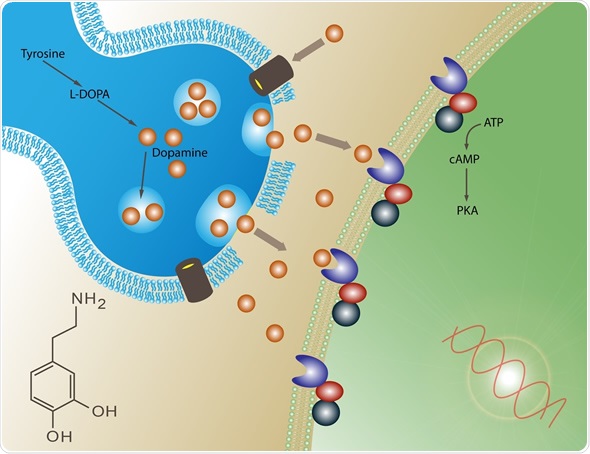
Why do we feel listless when we are recovering from an illness? The answer is, apparently, that low-grade chronic inflammation interferes with the dopaminergic signaling system in the brain that motivates us to do things.

This was reported in a new paper published in the journal Trends in Cognitive Sciences.

The research carried out at Emory University explains the links between the reduced release of dopamine in the brain, the motivation to do things, and the presence of an inflammatory reaction in the body. It also presents the possibility that this is part of the body’s effort to optimize its energy expenditure during such inflammatory episodes, citing evidence gathered during their study.

The authors also published an experimental framework based on computational tools, devised to test the theory.

The underlying hypothesis is that the body needs more energy to heal a wound or overcome an infection, for instance, both of which are associated with low-grade inflammation. To ensure that energy is available, the brain uses an adaptive technique to reduce the natural drive to perform other tasks which could potentially drain away the energy needed for healing. This is essentially a recalibration of the specialized reward neurons in the motivation center of the brain, so that ordinary tasks no longer feel like they’re worth doing.

According to the new study, the mechanism of this recalibration is immune-mediated disruption of the dopamine pathway, reducing dopamine release.

The computational technique published by the scientists is designed to allow experimental measurements of the extent to which low-grade inflammation affects the amount of energy available, and the decision to do something based on the effort needed. This could allow us to better understand why and how chronic inflammatory states cause a lack of motivation in other disease conditions as well, including schizophrenia and depression.

Andrew Miller, co-author of the study, says,

“If our theory is correct, then it could have a tremendous impact on treating cases of depression and other behavioral disorders that may be driven by inflammation. It would open up opportunities for the development of therapies that target energy utilization by immune cells, which would be something completely new in our field.”

It is already known that immune cells release cellular signaling molecules called cytokines, which affect the functioning of the dopamine-releasing neurons in the area of the brain called the mesolimbic system. This area enhances our willingness to work hard for the sake of a reward.

Dopamine

Image Copyright: Meletios, Image ID: 71648629 via shutterstock.com
Recently, it was discovered that immune cells also enjoy a unique capability to shift between various metabolic states, unlike other cells. This could affect cytokine release patterns in such a way as to signal the brain to conserve available energy for the use of the immune system.
These facts were the foundation of the new hypothesis, which explains it in terms of evolutionary adaptation. In the hypothetical early environment, the immune system, faced with abundant microbial and predatory challenges, needed tremendous amounts of energy. It therefore had its own mechanism to signal other body systems, via the mesolimbic dopamine system, to control the use of energy resources during periods when the organism was undergoing severe or sudden stress.
Modern life is relatively soft and less challenging. With less physical activity, low-grade inflammation is chiefly due to factors such as obesity, chronic stress, metabolic syndrome, aging and other lifestyle illnesses. This could mistakenly cause the mesolimbic dopamine neurons to produce less dopamine. Lower dopamine levels in turn decrease the motivation for work, by reducing the perception of reward while increasing the perception of effort involved. This ultimately conserves energy for use by the immune system.
Previous studies by Miller as well as other scientists have shown that a high level of immune functioning in association with low levels of dopamine and reduced motivation characterizes some cases of schizophrenia, depression and certain other mental health conditions.
The scientists do not think these disorders are caused by the low-grade inflammation, but that some people who have these illnesses are hypersensitive to immune cytokines. This could in turn cause them to lose motivation for daily living.
The scientists are currently performing a clinical trial on people with depression, to test the theory using the computational framework.


Source: Treadway M. T. et al., (2019). Can’t or Won’t? Immunometabolic Constraints on Dopaminergic Drive. Trends in Cognitive Sciences. https://doi.org/10.1016/j.tics.2019.03.003

________________

**Comment**
Interestingly,
2017 May;3(3). doi: 10.15761/JSIN.1000163. Epub 2017 May 11.

Lyme and Dopaminergic Function: Hypothesizing Reduced Reward Deficiency Symptomatology by Regulating Dopamine Transmission.

Abstract

The principal vector of Lyme disease in the United States is Ixodes scapularis: black legged or deer ticks. There is increased evidence that those infected may be plagued by anxiety or depression as well. Researchers have identified transcripts coding for two putative cytosolic sulfotransferases in these ticks, which recognized phenolic monoamines as their substrates. It is hypothesized that protracted Lyme disease sequelae may be due to impairment of dopaminergic function of the brain reward circuitry. The subsequent recombinant proteins exhibited sulfotransferase function against two neurotransmitters: dopamine and octopamine. This, in itself, can reduce dopamine function leading to many Reward Deficiency Syndrome behaviors, including depression and possibly, anxiety. In fact, it was shown that activity of Ixosc Sult 1 and Sult 2 in the Ixodid tick salivary glands might contain inactivation of the salivation signal through sulfonation of either dopamine or octopamine. This infraction results in a number of clinically observed mood changes, such as anxiety and depression. In fact, there are common symptoms observed for both Parkinson and Lyme diseases. The importance of understanding the mechanistic and neurobiological effects of Lyme on the central nervous system (CNS) provides the basis for pro-dopamine regulation as a treatment. WC 195.

Great article on dopamine:  https://suzycohen.com/articles/depression_low_dopamine/ Excerpt:

Dopamine deficiency will cause you to wake up sluggish in the morning, usually with brain fog, but you might feel happier and suddenly more enthusiastic with a “hit” of some sort, perhaps a cup of coffee.  Low dopamine (as opposed to low serotonin) causes a different kind of depression, one that is hallmarked by a lack of pleasure.


https://globallymealliance.org/not-all-lyme-rashes-are-created-equal/

Copy-of-MyLymeLife_2-5

by Jennifer Crystal

Lyme disease: that’s the illness you get when you find a bulls-eye rash, right?

It very well could be, but here’s the catch. The bulls-eye rash isn’t the only sign of Lyme disease. Nor does every Lyme rash (Erythema Migrans or EM) present as a target with red rings around it. To assume that Lyme always comes with a bulls-eye rash is, in fact, to be way off target and—worse—poorly informed when it comes to diagnosing the disease.

In fact, less than 50% of Lyme patients ever find a bulls-eye rash, or any rash at all. But that doesn’t mean they don’t have Lyme. It means they, and their doctors, will need to look a little further.

I found a rash on my forearm in the summer of 1997 while working at a camp in Maine. It wasn’t a bulls-eye shape. It was a series of red dots, sort of stippled, that extended from my wrist almost to my elbow. It wasn’t raised and it didn’t itch.

“It’s probably from your sleeping bag or something,” the camp nurse said. In 1997 Lyme disease was not on the public health radar or mine, which is ironic since I grew up in Connecticut where the disease was first discovered.

That same summer I developed hypoglycemia, which I later learned is a common symptom of the tick-borne disease babesia, a co-infection of Lyme. That fall I was bedridden with flu-like symptoms. Had I presented these symptoms, and my rash, to medical professionals today, they might have seen a pattern and tested me for tick-borne illnesses. Lyme literacy is improving, but not all doctors look at individual symptoms in a big picture way—and that pesky myth of the bulls-eye rash, especially if you don’t have one, still persists, which is why I continue to share my story.

Sample Em-RashEM rashes present in many different ways. Some are small. Some are big and blotchy. Some are spotted. Some are pink and some are bright red. If these sentences are starting to sound like a Dr. Seuss book, it’s because the lesson they contain is simple. If you find any type of rash at all, especially during the summer months, and if you subsequently experience symptoms of tick-borne illness, do not assume your rash is nothing. Show it to a Lyme Literate Medical Doctor (LLMD), who you can find here.

If you, your children, or your pets spend time outdoors, it’s important to do nightly tick checks of everyone exposed. As you are looking for culprits, also keep your eye out for rashes of all kinds. They don’t always appear in obvious places. A rash could be on your back—have someone else look!—in your groin, between your toes, behind your ears, or on your scalp.

And a rash might not be there at all, but you can have Lyme disease without ever getting one. Therefore, in addition to checking yourself for ticks and rashes, it’s important that you keep an eye out for typical Lyme symptoms. If you experience flu-like symptoms such as fatigue, joint aches, headaches, neuropathy, Bell’s palsy, or any other unusual symptom, do not brush it off as a summer flu.

Maybe you’ll get lucky, and that’s all it will be, the summer flu. But it’s better to be safe than sorry; let an LLMD make that call. You will also want to keep an eye out for symptoms of co-infections, like the hypoglycemia which I experienced.

Of course, if you are lucky enough to find a bulls-eye rash, take it as an unequivocal sign: you have Lyme disease. Do not wait to see if you develop symptoms.That can take months. By which time the disease, and possibly co-infections, will have spread further into your system and may cross the blood-brain barrier. Then the disease(s) will be much harder to treat.

In a way, finding a bulls-eye rash is like winning the lottery. If you’re smart, you have a ticket to immediate diagnosis and treatment. Moreover, it’s unlikely that you won’t have to deal with chronic symptoms and long-term treatments. If you aren’t so lucky as to win a bulls-eye, keep looking for ticks, atypical rashes, and symptoms of tick-borne disease.

I wish you all a Lyme-free summer!


Opinions expressed by contributors are their own.

Jennifer Crystal is a writer and educator in Boston. She has written a memoir, One Tick Stopped the Clock, for which she is seeking representation. Contact her at: lymewarriorjennifercrystal@gmail.com. 

______________________

**Comment**

Those getting the Bull’s Eye rash vary considerably – 25-80%. I never got one, my husband never got one, and hardly anyone I work with gets one….makes you wonder who on earth is lucky enough to get it!  https://madisonarealymesupportgroup.com/2019/02/22/why-mainstream-lyme-msids-research-remains-in-the-dark-ages/

The EM rash criteria is often required for entrance into research studies as well as positive test results on blood serology that misses over half of all cases.  https://madisonarealymesupportgroup.com/2018/09/12/lyme-testing-problems-solutions/

Time to move on from these antiquated parameters cutting out a huge subset of patients in research without the rash and who sometimes NEVER test positive on the CDC 2-tiered testing. Who’s studying these people? Nobody….


https://www.ncbi.nlm.nih.gov/pubmed/31231971

Seroepidemiological and molecular investigation of spotted fever group rickettsiae and Coxiella burnetii in Sao Tome Island: A One Health approach.

Abstract

Spotted fever group rickettsiae (SFGR) and Coxiella burnetii are intracellular bacteria that cause potentially life-threatening tick-borne rickettsioses and Q fever respectively. Sao Tome and Principe (STP), small islands located in the Gulf of Guinea, recently experienced a dramatic reduction in the incidence of malaria owing to international collaborative efforts. However, unexplained febrile illnesses persist. A One Health approach was adopted to investigate exposure to SFGR and C. burnetii in humans and examine the diversity of these bacteria in ticks parasitizing domestic ruminants. A cross-sectional human serological study was conducted in Agua Grande district in Sao Tome Island from January to March 2016, and ticks were collected from farmed domestic ruminants in 2012 and 2016. In total, 240 individuals varying in age were randomly screened for exposure to SFGR and C. burnetii by indirect immunofluorescence assay. Twenty of 240 individuals (8.3%) were seropositive for SFGR (4 for Rickettsia africae and 16 for R. conorii) and 16 (6.7%) were seropositive for C. burnetii. Amblyomma astrion were collected exclusively in 2012, as were A. variegatum in 2016 and Rickettsia spp. were detected in 22/42 (52.4%) and 49/60 (81.7%) respectively. Sequence analysis of multiple gene targets from Rickettsia spp. detected in ticks suggests the presence of a single divergent R. africae strain (Sao Tome). While no ticks were found positive for C. burnetii, Coxiella-like endosymbionts were detected in nearly all ticks.

This is the first study in STP to provide serological evidence in humans of SFGR and C. burnetii and additional molecular evidence in ticks for SFGR, which may be responsible for some of the unexplained febrile illnesses that persist despite the control of malaria. Future epidemiological studies are needed to confirm the occurrence and risk factors associated with SFG rickettsioses and Q fever in both humans and animals.

____________________

For more:  https://madisonarealymesupportgroup.com/2019/03/20/rocky-mountain-spotted-fever-is-not-the-only-rickettsiosis/

Great article on SFGR: https://www.galaxydx.com/rickettsia-spp/

C. burnetii:  https://madisonarealymesupportgroup.com/2019/03/28/human-tick-borne-diseases-in-australia/

https://madisonarealymesupportgroup.com/2018/10/18/study-finds-q-fever-rickettsia-typhus-in-australian-ticks-and-people/

https://madisonarealymesupportgroup.com/2018/02/03/understanding-q-fever-risk-to-minnesotans/  Excerpt: 

The CDC reports that 60% of cases are in patients without livestock contact (CDC unpublished data, 2010) and the need for health-care professionals to consider Q fever in the differential diagnosis in patients with a compatible illness, even in the absence of occupational risk or history of direct contact with animal reservoirs.

Supposedly, he United States ended its biological warfare program in 1969. When it did, C. burnetii was one of seven agents it had standardized as biological weapons.  https://en.wikipedia.org/wiki/Coxiella_burnetii

Q Fever can cause acute or chronic illness.

https://www.medscape.com/viewarticle/803800
Excellent video by Alicia Anderson, DVM, MPH on new CDC guidelines for Q Fever

https://madisonarealymesupportgroup.com/2019/06/24/other-arthropod-borne-bacteria-causing-nonmalarial-fever-in-ethiopia/  African patients presenting with fever but testing negative for malaria had DNA for these pathogens: Borrelia spp., Francisella spp. Rickettsia spp. and Bartonella. Thus, in this rural area of Africa, febrile symptoms could be due to bacteria transmitted by arthropods.