Archive for the ‘Uncategorized’ Category

HHS Not to Be Trusted With Lyme

https://www.change.org/p/1120418/u/23024031?utm_medium=email&utm_source=petition_update&utm_campaign=380451&sfmc_tk

Lawsuit initiated by Robert F. Kennedy, Jr. against Health and Human Services (HHS)

Carl Tuttle
Hudson, NH
JUL 18, 2018 — Please see the following email addressed to representatives Smith and Peterson who are proposing additional Lyme disease legislation. (Cc: Tick Borne Disease Working Group)

This is not meant to be disrespectful in any way but is an eye opener for the HHS track record.

Legislation over thirty years has not resolved the Lyme crisis here in the United States as there is tight control over Lyme disease policy refusing to recognize that Lyme disease can cause horrific disability and death. Until Lyme is upgraded to a life-altering/life-threatening infection like AIDS we will see continued health and disability claim rejections stemming from the racketeering scheme associating Lyme to the “aches and pains of daily living.”

Anyone wishing to contact the Lyme Disease Working Group can send an email to:

tickbornedisease@hhs.gov

——— Original Message ———-
From: Carl Tuttle
To: tickbornedisease@hhs.gov, chris.smith@mail.house.gov, collin.peterson@mail.house.gov
Cc: mark.dayton@state.mn.us, daniel.tillson@mail.house.gov, kvf1@comcast.net, iturko@umd.edu, allen.l.richards.civ@mail.mil, richard.wolitski@hhs.gov, scott.cooper@cms.hhs.gov, khoney@stanford.edu, ddutko@hanszenlaporte.com, kalachakra108@aol.com, adam.durand@mail.house.gov, info@smith4nj.com, marisa.kovacs@mail.house.gov, ddiallo@sisterlove.org, tamir.elnabarawy@mail.house.gov, matt.hadro@mail.house.gov, cbb0@cdc.gov, smithr@mmc.org, dennis.dixon1@nih.hhs.gov, estella.jones@fda.hhs.gov, mary.noonan@mail.house.gov, james.berger@hhs.gov, vanila.singh@hhs.gov, lise.nigrovic@childrens.harvard.edu, sdonta@comcast.net, wendyadams1@gmail.com, ptourad1@jhmi.edu, don.wright@hhs.gov, jaucott2@jhmi.edu, olx1@cdc.gov, kbechto1@jhmi.edu

Date: July 17, 2018 at 3:34 PM
Subject: Lawsuit initiated by Robert F. Kennedy, Jr. against Health and Human Services (HHS)

July 17, 2018
The Honorable Chris Smith and Collin Peterson
United States House of Representatives
2373 Rayburn House Office Building
Washington, D.C. 20515
Dear Representatives Smith and Peterson,

I would like to call attention to a recent lawsuit initiated by Robert F. Kennedy, Jr. against Health and Human Services (HHS) regarding their refusal to respond to a Freedom of Information Act request.

In 1986 President Ronald Regan passed the Vaccine Injury Compensation Act known as VICA to protect the vaccine manufacturers from lawsuits as a result of injury or death.

HHS was required to put a task force together to oversee the safety of childhood vaccines and report to congress every two years.

Informed Consent Action Network (ICAN) submitted a FOIA request looking for records relating to the required HHS task force and reporting to congress asking for each two year report.

After a year and a half of no response Robert F. Kennedy, Jr was instrumental in obtaining a court ordered stipulation.

Here is what was revealed from that lawsuit per the following article:
http://bolenreport.com/robert-f-kennedy-jr-and-an-amazing-vaccine-legal-victory/

“The department’s search for records did not locate any records responsive to your request. The Department of Health and Human Services (HHS), Immediate Office of the Secretary (IOS) conducted a thorough search of its document tracking system and the Department also conducted a comprehensive review of all relevant indexes of HHS Secretarial correspondence records maintained at federal record centers that remain in the custody of HHS. These searches did not locate records responsive to your request, or indicate that records responsive to your request and in the custody of HHS are located at federal records center.”

So basically, no one has been performing the vaccine safety testing since 1986. Thirty-two years!
_______________________________________

Congressman Smith and Peterson,

You are looking to pass Lyme disease legislation requiring Health and Human Services to report to Congress:

Excerpt From the following link: https://chrissmith.house.gov/news/documentsingle.aspx?DocumentID=401130

“The legislation also calls for a new national strategy on tick-borne diseases, and requires the HHS Secretary to report to Congress on federal efforts to diagnose and treat Lyme and on how best to foster collaboration between federal tick-borne disease programs.”

Also taken from that link:

“So many patients suffer from the debilitating effects of this disease that persist for years, especially if not detected early, while being told that their illness does not exist,” Rep. Smith, the author of the bill, said.

You have identified the injustice outlined in the SHRADER & ASSOCIATES, LLP racketeering lawsuit in which the Centers for Disease Control has played an integral role as they have aligned themselves with the seven defendants named in this RICO lawsuit.

You are counting on Health and Human Services to correct this injustice? Seriously?

If we are to resolve the Lyme disease crisis here in the U.S. any agency/individual who has been involved in setting Lyme disease policy has to be removed from that position of authority.

The only way to do this is to initiate a congressional investigation of the CDC, IDSA and American Lyme disease Foundation through subpoena power requiring testimony under oath. It is also time to request the full contents of the 3000 pages of emails from CDC employees Barbara Johnson, Paul Mead and David Dennis. As previously mentioned, 50% of those FOIA documents were redacted. What has the CDC hidden from the public and our legislators?

FOIA request to CDC took five years to fulfill
https://ire.org/blog/transparency-watch/2013/05/20/foia-request-cdc-took-five-years-fulfill/

Why do we continue to dance around this blatantly obvious offense?

Sincerely,

Carl Tuttle
Lyme Endemic Hudson, NH

________________

**Comment**

Kudos to Mr. Tuttle for speaking the obvious.  Why are we trusting the people behind this fiasco?  They’ve already shown their true colors for long enough.

The Cabal must end.

https://madisonarealymesupportgroup.com/2017/01/13/lyme-science-owned-by-good-ol-boys/

https://madisonarealymesupportgroup.com/2016/11/29/spider-attacks-cdc/

https://madisonarealymesupportgroup.com/2018/04/06/cdcs-troubling-lack-of-research-ethics/

https://madisonarealymesupportgroup.com/2017/09/25/speaking-of-fake-science-fifty-seven-million-anti-trust-lawsuit-against-cdc-lyme-tests/

https://madisonarealymesupportgroup.com/2017/12/13/suppression-of-microscopy-for-lyme-diagnostics-professor-laane/

https://madisonarealymesupportgroup.com/2017/10/06/remembering-dr-masters-the-rebel-for-lyme-patients-who-took-on-the-cdc-single-handedly/

https://madisonarealymesupportgroup.com/2018/01/31/when-als-is-lyme-letter-to-tbi-working-group/

https://madisonarealymesupportgroup.com/2018/06/14/corruption-human-rights-violations-against-lyme-doctors-scientists-and-parents-now-on-united-nations-record/

https://madisonarealymesupportgroup.com/2018/06/21/the-corruption-of-evidence-based-medicine-killing-for-profit/

https://madisonarealymesupportgroup.com/2017/01/28/sit-down-science/

https://madisonarealymesupportgroup.com/2017/01/02/fake-science/
First RMSF Death in Wisconsin

https://www.dhs.wisconsin.gov/news/releases/071018.htm

FOR IMMEDIATE RELEASE
July 10, 2018
CONTACT: Jennifer Miller, 608-266-1683
Elizabeth Goodsitt, 608-266-1683
Jo Foellmi, 608-785-5753

DHS Confirms Death of a La Crosse County Resident from Rocky Mountain Spotted Fever

State and local health departments urge residents to take precautions to protect against tick bites

The Wisconsin Department of Health Services and the La Crosse County Health Department today announced the first documented death from Rocky Mountain spotted fever (RMSF) in the state.

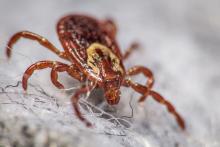
RMSF is rarely reported in Wisconsin and most commonly occurs in the central and southeastern regions of the United States. Most tickborne diseases transmitted in Wisconsin are spread by the blacklegged (or deer) tick; RMSF, however, is spread by the bite of the American dog (or wood) tick (Picture Attached). Early symptoms of RMSF can be mild and typically include fever, headache, nausea, vomiting, rash, and stomach pain. If left untreated, however, a RMSF infection can rapidly develop into a serious illness.

dog-tick-closeup-rocky-mountain-spotted-fever

American dog tick, which can transmit RMSF

“We are saddened to learn of this death and encourage Wisconsin residents to take steps to protect themselves and their families from tick bites while enjoying the outdoors,” said Karen McKeown, State Health Officer.

  • Use an insect repellent with at least 20% DEET or another EPA-registered repellent according to the label instructions.
  • Use 0.5% permethrin products on clothing, socks, and shoes according to label instructions.
  • Stay on trails and avoid walking through tall grasses and brush.
  • Wear long sleeves and pants, and tuck pants into socks and shirts into pants to avoid ticks crawling under clothing.
  • Check your entire body for ticks after being outdoors.
  • Take a shower as soon as possible after coming in from outdoors.
  • Place clothes in the dryer on high heat for 10 minutes to kill any ticks on clothing.
  • Use a veterinarian-prescribed tick prevention treatment on pets.

Of the illnesses spread by ticks in Wisconsin, Lyme disease is the most common, but ticks can also spread anaplasmosis, ehrlichiosis, and more rarely RMSF and Powassan virus. Many people who contract a tickborne disease do not recall a tick bite, so it’s also important to be aware of the common symptoms of tickborne disease such as fever, rash, headache, body aches, and fatigue.

Most diseases spread by ticks in Wisconsin, including Lyme disease, anaplasmosis, ehrlichiosis, and RMSF, can be effectively treated with antibiotics, making early diagnosis critical. If symptoms develop after a tick bite or after possible tick exposure, see a health care provider.

__________________

**Comment**

Story here:  http://amp.wisn.com/article/wisconsin-woman-dies-from-rocky-mountain-spotted-fever/22108466

Jo Foellimi, a La Crosse County public health nurse, said the woman was bit while camping in western Wisconsin in early May.  The woman was diagnosed with RMSF in mid-June and died days later.  Foellimi said the woman was in her late 50s but declined to identify her.

More on RMSF:  https://madisonarealymesupportgroup.com/2018/06/12/georgia-mom-warns-others-after-son-contracts-rocky-mountain-spotted-fever-after-tick-bite/

https://madisonarealymesupportgroup.com/2015/08/13/severe-case-of-rmsf-had-to-remove-patients-arms-and-legs/

https://madisonarealymesupportgroup.com/2017/06/10/two-deaths-from-rmsf-indiana-has-tbis/

Treatment is doxycycline:  https://www.uptodate.com/contents/treatment-of-rocky-mountain-spotted-fever  Empiric therapy with doxycycline should be started if the diagnosis of Rocky Mountain spotted fever (RMSF) is suspected, even if the symptoms are mild.

Insights From the Geographic Spread of the Lyme Disease Epidemic

https://academic.oup.com/cid/advance-article-abstract/doi/10.1093/cid/ciy510/5039131?redirectedFrom=fulltext

Insights from the Geographic Spread of the Lyme Disease Epidemic

Taylor Eddens, Ph.D Daniel J Kaplan, M.D Alyce J M Anderson, Ph.D Andrew J Nowalk, M.D.,Ph.D Brian T Campfield, M.D
Clinical Infectious Diseases, ciy510, https://doi.org/10.1093/cid/ciy510
Published: 16 June 2018

Reproduced by permission of Oxford University Press on behalf of the Infectious Diseases Society of America. 9c) The Author(s) 2018. All rights reserved. For permissions, e-mail: journals.permissions@oup.com. Please visit: https://academic.oup.com/cid/advance-article/doi/10.1093/cid/ciy510/5039131

Abstract
Background
Lyme disease is the most common reportable zoonotic infection in the United States. Recent data suggests spread of the Ixodes tick vector and increasing incidence of Lyme disease in several states, including Pennsylvania. We sought to determine the clinical presentation and healthcare utilization patterns for pediatric Lyme disease in western Pennsylvania.

Methods
The electronic medical records of all patients with an ICD9 diagnosis of Lyme disease between 2003-2013 at Children’s Hospital of Pittsburgh were individually reviewed for cases meeting the 2011 CDC case definition for Lyme disease. 773 patients meeting these criteria were retrospectively analyzed for patient demographics, disease manifestations, and healthcare utilization.

Results
An exponential increase in Lyme disease occurred in the pediatric population of western Pennsylvania. There was a southwestward migration of Lyme cases, with a shift in concentration from rural to non-rural zip codes. Healthcare provider involvement also changed from subspecialists to primary care pediatricians(PCP) and emergency departments(ED). Patients from non-rural zip codes more commonly presented to the ED, while patients from rural zip codes utilized PCPs and EDs similarly.

Conclusions
The current study details the conversion of western Pennsylvania from a Lyme-naïve to a Lyme-epidemic area, highlighting changes in clinical presentation and healthcare utilization as the epidemic evolved. Presenting symptoms and provider-type differed between those from rural and non-rural zip codes. By understanding the temporospatial epidemiology, disease presentation and healthcare utilization of Lyme, the current study may inform future public health initiatives regionally while serving as an archetype for other areas at-risk for Lyme epidemics.


Splenic Rupture From Babesiosis, An Emerging Concern? A Systematic Review of Current Literature

https://www.sciencedirect.com/science/article/pii/S1877959X17303333?via%3Dihub

Splenic rupture from babesiosis, an emerging concern? A systematic review of current literature

Shuo Li, Bobby Goyal, Joseph D.Cooper, Ahmed Abdelbaki, Nishant Gupta, Yogesh Kumara

Abstract
Babesiosis is a relatively common tick-borne parasitic infection of erythrocytes primarily affecting the northeastern United States. Babesiosis’ prevalence and presentation have earned it the monikers “malaria of the northeast” and “Nantucket fever”. Clinical presentation ranges from asymptomatic infection to severe infection including acute respiratory distress syndrome (ARDS) and disseminated intravascular coagulopathy (DIC) or death. Since 2008, there have been a number of reports of splenic rupture in patients with the disease. We seek to provide a further understanding of this process, with the report of a case of splenic rupture followed by a systematic review of the current literature. We found that 87% of splenic rupture secondary to babesiosis occurred in male patients who are otherwise healthy, with an average of 56 years. Computed tomography is a reliable mode of diagnosis, and hemoperitoneum is the most common imaging finding. Patients with splenic rupture due to human babesiosis were successfully treated by various management strategies, such as conservative non-operative approach, splenic artery embolization, and splenectomy. The modality of treatment depends on patient’s clinical course and hemodynamic stability, although spleen conserving strategy should be considered first whenever possible.

______________

For more:  https://madisonarealymesupportgroup.com/2016/01/16/babesia-treatment/

https://madisonarealymesupportgroup.com/2018/01/24/phase-ii-malaria-meds-100-cured-good-for-babesia/

https://madisonarealymesupportgroup.com/2016/12/05/babesia-cure-update/

https://madisonarealymesupportgroup.com/2018/06/08/two-cases-of-babesia/

https://madisonarealymesupportgroup.com/2018/02/20/babesia-and-heart-issues/

https://madisonarealymesupportgroup.com/2018/05/31/widespread-babesiosis-in-canada/

https://madisonarealymesupportgroup.com/2018/03/07/babesia-tests-approved-by-fda-for-screening-purposes/

https://madisonarealymesupportgroup.com/2017/08/08/transfusion-transmitted-babesiosis-in-nonendemic-areas/

July 24, 2018 Next Tick-borne Disease Working Group Meeting

https://www.hhs.gov/ash/advisory-committees/tickbornedisease/meetings/2018-07-24/index.html

The seventh meeting of the Tick-borne Disease Working Group will be held on July 24, 2018, from 10:00 a.m. to 4:00 p.m. EDT. The Working Group will review and vote on the content of the five chapters that will be submitted into the Working Group Congressional Report.

Please Note: If you would like to receive a copy of the draft chapters, please submit a request to tickbornedisease@hhs.gov. The meeting materials will be emailed to you prior to the meeting.

Members of the public can attend the live meeting via webcast.
Instructions for attending this virtual meeting will be posted prior to the meeting.

Public Comment – Information and Instructions

The Working Group invites public comment on issues related to its charge. You have the option of verbal comment, written comment or both. Thus, if you provide verbal comment, you may also submit it as written comment or submit written comment on a different issue.

Verbal (by phone) comments:
  • Requests to provide verbal public comment must be submitted via email by July 19, 2018 EDT to tickbornedisease@hhs.gov.
    In the Subject line please enter: Verbal Public Comment – July 24 Meeting.
  • A total of 30 minutes has been set aside for verbal comments. Each person will be limited to 3 minutes in order to accommodate as many speakers as possible.
  • If more requests are received than can be accommodated, speakers will be randomly selected.
  • Your remarks will be broadcast over a live webcast and will become part of the archived recording and meeting transcripts that will be posted on this website.
Written comments:
  • Written public comments must be submitted via email by July 19, 2018 EDT to tickbornedisease@hhs.gov.
    In the Subject line please enter: Written Public Comment – July 24 Meeting.
  • Written comments will be posted on the Tick-Borne Disease Working Group website and accessible to the public.
    IMPORTANT: When you submit your written comment, please include how you would like to be identified with your comment. That is, you may use your name or request to be anonymous. You may also include your city and/or state. If you are providing comments on behalf of an organization you also may include your name, organization, and organization email address. We do NOT post phone numbers or personal email addresses.
  • Comments should be no more than 4 pages in Calibri or Times New Roman, 11 point font. Text that exceeds the 4 pages will be deleted.
  • Written comments should either be provided in the body of the email, or in an attachment in Word format.
  • Please do not include graphics, images, or text boxes. If included, we will not be able to retain them. Simple tables are acceptable.
  • We can only retain links to “.gov” sites (state or federal). For all other reference sites, please insert the full URL (e.g., https://www.jscimedcentral.com/ClinicalCytology/clinicalcytology-3-1085.pdf).
  • Do not include attachments as supporting documentation to your written comments; instead, please list them as references.