December Meeting

Our only meeting in December will be the 5th at 2:30 at the Pinney Library. We will review Dr. Brown’s talk and share ways to keep holiday stress down.
See you soon!

Our only meeting in December will be the 5th at 2:30 at the Pinney Library. We will review Dr. Brown’s talk and share ways to keep holiday stress down.
See you soon!
http://doi.org/10.1556/1886.2015.00031
Abstract
“Lyme Disease is a tick-bourne multi systemic disease caused by Borrelia burgdorferi (Bb). Administering antibiotics is the primary treatment for this disease; however, relapse often occurs when antibiotic treatment is discontinued. The reason for the relapse remains unknown, but recent studies suggested the possibilities of the presence of antibiotic resistant Borrelia persister cells and biofilms.
In this study, we evaluated the effectiveness of whole leaf Stevia extract against B. burgdorferi spirochetes, persisters, and biofilm forms in vitro. The susceptibility of the different forms was evaluated by various quantitative techniques in addition to different microscopy methods. The effectiveness of Stevia was compared to doxycycline, cefoperazone, daptomycin, and their combinations. Our results demonstrated that Stevia had significant effect in eliminating B. burgdorferi spirochetes and persisters. Subculture experiments with Stevia and antibiotics treated cells were established for 1 and 14 days yielding, no and 10% viable cells, respectively compared to the above-mentioned antibiotics and antibiotic combination. When Stevia and the three antibiotics were tested against attached biofilms, Stevia significantly reduced B. burgdorferi forms. Results from this study suggest that a natural product such as Stevia leaf extract could be considered as an effective agent against B. burgdorferi.”
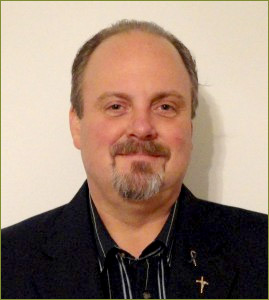
Dr. Brown, LLMD, will be speaking at 2:30 Sat. Nov. 21, 2015 at the Pinney Library in Madison, WI.
Brown is the medical director for Serenity Health Center in Waukesha, WI, and is a board certified Internist who has been in practice since 1988 with extensive experience in Internal and Emergency Medicine.
Since 2006, he has been practicing functional medicine with a focus on the integrative medical treatment of Autism Spectrum Disorders, Attention Deficit Disorder, Attention Deficit Hyperactivity Disorder and many immune, infectious, gastrointestinal, and systemic problems. His practice has grown to include chronic infectious disease particularly Lyme Disease (MSIDS), PANDAS (Pediatric autoimmune neuropsychiatric disorders associated with Streptococcal infections), and PANS (Pediatric Acute Neuropsychiatric Syndrome), and the behavior and functional impairments these infections can cause.
PANDAS was initially proposed as a disease entity in the mid-1990’s to describe children who developed the sudden onset of obsessive compulsive disorder and/or tics in temporal correlation with “strep throat” infection. Over time it became clear that the PANDAS model is too restrictive and it has been reformulated to PANS.
Dr. Brown also holds certifications in:
*Medical chelation
*Biomedical therapy in Autism spectrum disorder
*Hyperbaric Medicine
*Lyme Disease therapy by ILADS
*Defeat Autism Now! Practitioner and was part of an expert panel reviewing treatments for seizures in Autism Spectrum Disorder.
This will be a talk you won’t want to miss as there are few LLMD’s in Wisconsin who treat children. He will speak on MSIDS, PANDAS, PANS, and Autism.
For one girl’s struggle through psych wards before Stanford doctors make a bold diagnosis and treatment, go to:
http://www.mercurynews.com/health/ci_25600426/misdiagnosed-bipolar-one-girls-struggle-through-psych-wards?source=pkg#ooid=Rub3JicTqJviXwSCTLI_ySrpb5_3fCIR
https://www.lymedisease.org/ldo-launches-mylymedata/
Please consider taking part in the mylymedata project – a large-scale study of chronic Lyme Disease, as it’s been over 15 years since the NIH has funded a treatment trial for chronic Lyme.
The MyLymeData registry allows patients to pool their health information through a secure website. “Big data” projects use advanced technology to gather and analyze huge amounts of patient data, which can assist researchers in studying disease patterns and answering important questions such as Why do some people recover from Lyme disease, while others remain ill?
“Patients have more at stake in the diagnosis and treatment of Lyme disease than anyone else involved in their healthcare,” says Lorraine Johnson, JD, MBA, Chief Executive Officer of LymeDisease.org. “Analyzing large amounts of data can provide insight into how the disease progresses and how effective certain treatments are.”
Big data projects look at the actual care ordinary patients are prescribed by their treating physicians. “This is real-world research. We need to find out what treatments are the most effective in actual clinical practice and what factors affect treatment response,” says Dr. Raphael Stricker, a Lyme disease specialist in San Francisco.
In addition to analyzing disease patterns, MyLymeData hopes to attract researchers interested in launching clinical trials. Patient privacy is critical. To ensure data is protected and secure, LymeDisease.org has partnered with PatientCrossroads, the leading provider of patient registries for the National Institutes of Health.
A new Lyme Center has opened at Spaulding Rehabilitation Hospital in Boston and offers free mental health counseling due to the generosity of Brandi and Chris Dean. Dean, herself diagnosed with Lyme Disease, went through the many cognitive issues common to many and intimately experienced grief as a support group leader due to Lyme-driven suicides.
The Center will also support research including a pilot study to test whether a mild electrical current in the brain, now used for stroke and brain injured patients, might improve the many cognitive issues Lyme patients have.
The center has occupational therapists, infectious disease experts, mental health counselors, brain researchers and other professionals to treat patients whose illness persists despite antibiotic treatment.
The two specialists who direct the center are “pushing past the debate” of the schism of belief in the medical community because they’ve “encountered too many patients who simply need help.”
So far, health insurance companies have covered most services at Spaulding.