Archive for the ‘Prevention’ Category

Video Showing Questing Ticks in the Middle of the Sidewalk

https://www.facebook.com/BayAreaLymeFoundation/videos/1796606113818173/?t=45

May 10 at 11:13 AM

Please click on link above to watch a short video.  This PSA from Lia Gaertner & Shanti the dog show questing ticks in the middle of the sidewalk, demonstrating the need to be diligent with tick checks as well as spraying clothes/shoes with permethrin when out doors.

Ticks are being found in wide-open spaces now.  No need to go deep in the woods or shrubby areas to find them.

For more on prevention:  https://madisonarealymesupportgroup.com/2019/04/12/tick-prevention-2019/

https://madisonarealymesupportgroup.com/2017/05/11/tick-prevention-and-removal-2017/

https://madisonarealymesupportgroup.com/2018/10/01/tickology-video-series-everything-you-want-to-know-about-ticks-prevention/

And remember, it’s highly likely that the black legged tick isn’t the sole perp:  https://madisonarealymesupportgroup.com/2019/04/02/transmission-of-lyme-disease-lida-mattman-phd/


Tick Population Soaring As Local Vets See Lyme Disease Cases in Dogs Quadruple

https://www.wdtv.com/content/news/Tick-population-soaring-as-local-vets-treat–509346101.html  News Video here

Tick population soaring as local vets see Lyme Disease cases in dogs quadruple

FAIRMONT, W.Va. (WDTV) — The CDC says there is an accelerating trend of tickborne diseases in the U.S. as we begin National Lyme Disease Awareness Month.

Scott Moore is a Veterinarian at the Fairmont Veterinary Hospital. He’s one of the hundreds of vets in West Virginia and the Northeast that are treating more and more dogs for Lyme Disease every year.

“In the last five years, we’ve seen a dramatic rise in Lyme Disease cases,” Moore said.

According to data from the nonprofit Pets and Parasites, about 1 out of every 20 dogs tested for the disease in West Virginia were positive in 2014. Last year, it was 1 of 10.

Medical professionals aren’t quite sure what is causing the increase, which is progressively worse further up the East Coast. But Moore is seeing some trends.

“We’re seeing a lot more ticks that carry the Lyme disease in our area opposed to the common wood tick,” Moore said.

The CDC also warns that the U.S. isn’t fully prepared to control the threat of increasing tick populations.

“Local and state health departments and vector control organizations face increasing demands to respond to ticks and tickborne diseases,” a 2018 CDC report said. “Proven and publicly accepted methods are needed to better prevent tick bites and to control ticks and tickborne diseases.”

Lyme Disease isn’t contagious. But it can be deadly if not treated early.

“Sometimes the dogs won’t be able to move well. In some cases, it can progress to kidney failure,” Moore said. “When Lyme Disease hits the kidney, it’s almost 100 percent fatal.”

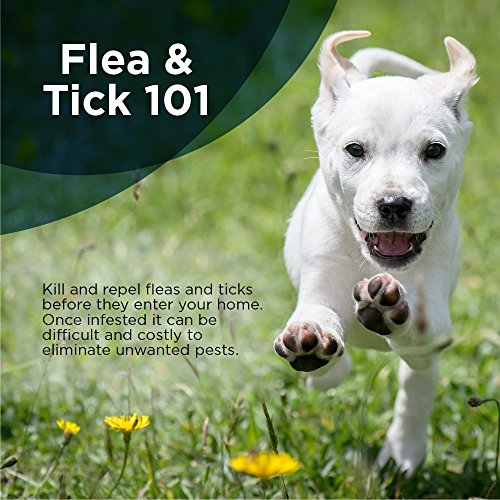
He recommends getting good flea and tick prevention for dogs or investing in a flea and tick collar.

The CDC suggests checking yourself for ticks and showering within two hours of coming inside including from your own backyard.

“We need to be careful,” Moore said. “Check yourself, check your dogs, use the preventions that are available. Lyme vaccines are available and good flea and tick preventions are available.”

Only 45 Days to Raise Money for Tick Project

How about getting inspired and excited to join an EXPERIMENT! Here’s the deal. The crowdfunding platform EXPERIMENT.com is being used to raise a modest sum ($8,000) that will help pay the costs to answer this important prevention question:

Do people who connect with a tick expert and learn more specifics about the tick that bit them or a family member, then more readily adopt what we call TickSmart actions and behaviors to protect themselves in the future?

More concisely — Does personalized prevention education work?

The Tick Encounter group plans to harness the “power of the crowd” to identify tick bite victim test subjects. To this end, TickSpotters, America’s Crowdsourced Tick Survey, is about to receive a face-lift including partnering with Neuraflash and Salesforce to upgrade the technology, meaning that we can now respond faster to a larger volume of tick submissions, track data in real-time, and make the TickSpotters platform scalable so that it can even be used by collaborating TickExperts to assimilate even more data. It sounds ambitious for such a small sum, but read on…

Even with a gift from a generous donor to start our technology upgrade, $8,000 is still needed for the new system. These funds are being sought through Experiment.com, a scientific crowdfunding site similar to GoFundMe or KickStarter. This is a high-stakes, all-or-nothing campaign, meaning there are just 45 days to hit the goal, or the money pledged gets returned, and the project gets nothing.

Unlike Kickstarter or GoFundMe where donors usually get a copy of what’s being produced, with Experiment your “benefit” is in the science discovery you help imagine and inspire with your gift. Of course, after clicking the link and reading more about our TickSpotters project on the Experiment website (link below), you’ll also know with confidence that if you ever need it, you’ll have quick access to a TickExpert whenever and wherever you might need one. In our “ticks in more places” world, consider a donation to this Experiment, and show that peace of mind has real value to you.

Crowdfunding, just like crowdsourced science, is all about a lot of people each giving a little to make a big impact. Even if you are unable to financially contribute, please share this link within your networks and with your endorsement (that means a lot). Attached is a campaign letter for you to edit and send out. Check out our Experiment page at the link below.

Project link –>  https://experiment.com/tickspotters (This link has a short video)

Please join the TickEncounter team of Dr. Tom Mather, Steve Engborg, Roland Duhaime, Heather Kopsco in changing the face of tick surveillance and tick bite prevention!

Thanks in advance for your consideration and circulation of this important opportunity!

Proclamation: May is Lyme Awareness Month in Wisconsin

http://docs.legis.wisconsin.gov/raw/proposal/2019/-2392

2019 SENATE JOINT RESOLUTION 28

April 30, 2019 – Introduced by Senators TIFFANY, BEWLEY, COWLES, DARLING, LARSON, MARKLEIN, OLSEN, RINGHAND, RISSER, SCHACHTNER and L. TAYLOR, cosponsored by Representatives OTT, ANDERSON, BALLWEG, DUCHOW, EDMING, FELZKOWSKI, HEBL, HORLACHER, KULP, KURTZ, LOUDENBECK, MAGNAFICI, MURPHY, MURSAU, MYERS, PLUMER, PRONSCHINSKE, ROHRKASTE, SARGENT, SINICKI, SHANKLAND, SPIROS, SPREITZER, STUBBS, TAUCHEN, THIESFELDT, TUSLERand VRUWINK. Referred to Committee on Senate Organization.

Relating to: proclaiming May 2019 as Lyme Disease Awareness Month. Whereas, Lyme disease is a bacterial disease transmitted to humans by an infected tick commonly known as the black-legged or deer tick; and

Whereas, according to the Wisconsin Department of Health Services, the disease was first recognized in the United States in 1975 in Lyme, Connecticut; and Whereas, Lyme disease is the most commonly reported vector-borne illness in the United States, with an estimated 300,000 Americans diagnosed each year, and it is also the highest reported tick-borne disease in Wisconsin, with more than 45,000 cases reported between 1980 and 2017; and

Whereas, signs and symptoms generally set in after 3-30 days and commonly include a fever, headache, fatigue, and a circular skin rash called erythema migrans (“EM”); and

Whereas, if left untreated, the infection may spread to other parts of the body, producing symptoms that include additional EM lesions, facial or Bell’s palsy, severe headaches and neck stiffness, pain and swelling in large joints, fatigue, cognitive decline, shooting pains, and heart palpitations; and

Whereas, although Lyme disease is often difficult to diagnose, the disease can be treated successfully with oral antibiotics or injectable antibiotics if it is detected early; and

Whereas, the best ways to prevent Lyme disease are to avoid wooded and bushy areas with high grass, use repellants with 20 to 30 percent DEET, wear light-colored clothing to cover exposed skin, and check skin thoroughly after being in areas where ticks may be present; and

Whereas, according to the Centers for Disease Control and Prevention, in 2017, nearly 94 percent of the over 29,513 Lyme disease cases in the United States were reported from only 14 states, with over 1,794 of them reported from the state of Wisconsin; and

Whereas, it is important to provide information and raise public awareness of Lyme disease causes, effects, and treatments and to emphasize important education and research efforts surrounding Lyme disease and other tick-borne diseases; now, therefore, be it

Resolved by the senate, the assembly concurring, That the legislature recognizes May 2019 as Lyme Disease Awareness Month in Wisconsin and commends this observance to all residents; and, be it further

Resolved, That the legislature calls upon all residents to learn about the importance of tick avoidance and personal protection, tick detection and removal, the signs and symptoms of tick-borne illnesses, and the need for prompt diagnosis and treatment of Lyme disease.

_________________

More on tick prevention:  https://madisonarealymesupportgroup.com/2019/04/12/tick-prevention-2019/

The most effective thing not listed in this is permethrin on your clothing. Research has shown it to be very effective.  Details in link.

Tick Prevention 2019

Tick Prevention 2019

It’s that time.  

Similar to Lyme/MSIDS treatment, tick prevention is a multi-pronged effort and includes protecting yourself, your yard, and your pets.  

How to protect yourself

iu-10

Dress for success:  Research has shown permethrin treated clothing causes ticks to drop off or renders them unable to bite: https://madisonarealymesupportgroup.com/2018/05/27/study-conforms-permethrin-causes-ticks-to-drop-off-clothing/.

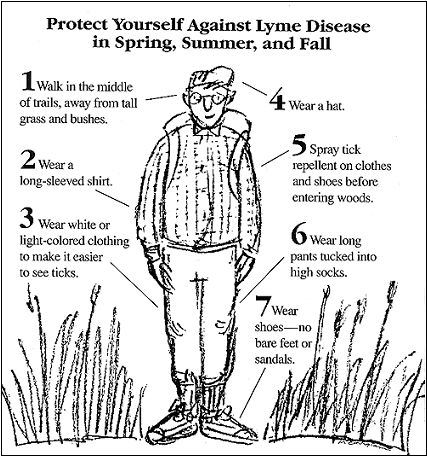
  • wear light colored clothing
  • tuck pants into socks
  • wear a long-sleeved shirt and tuck into pants
  • wear a hat
  • wear shoes & socks
  • spray or soak all of it with permethrin. Permethrin is not recommended for the skin. You can also purchase pre-treated clothing. Wisconsin Lyme Network (WLN) is selling socks. Proceeds go toward training WI doctors: https://wisconsinlymenetwork.z2systems.com/np/clients/wisconsinlymenetwork/giftstore.jsp
  • Spray exposed skin with DEET or picaridin. Picaridin is less toxic and approved for kids. For instance the top 3 scores for repelling deer ticks was: pump spray Sawyer Picaridin 20% which lasted 8.5 hours, aerosol Ben’s 30% Deet Tick and Insect Wilderness which also lasted 8.5 hours, and pump spray Repel Lemon Eucalyptus which lasted 7 hours. Please know that “natural” products using things like essential oils have NOT been proven to repel ticks.  Go here to learn more:  https://www.cdc.gov/lyme/prev/natural-repellents.html
  • An FDA-approved organic compound found in grapefruit skin and Alaska yellow cedar trees that is a natural deterrent for many insects including the deer tick is being worked on by LSU researchers. Nootkatone has already proven to be both safer and more effective than existing commercial repellents, but is too expensive for consumer insect repellents.
  • stay in the middle of trails
  • when returning indoors, dry clothing on high heat for at least 10 min. Washing clothes will not kill ticks. High heat will.
  • take a shower and do a tick check. Have someone else look on your back and back of head.
  • If an embedded tick is found, remove it promptly by using a pointy tick removal tweezer. Get as close to the mouthpart as possible and pull steadily straight up without squeezing or twisting. Do not touch the tick with bare hands. Put in ziplock freezer bag and put in freezer you plan on having it tested. Remember; however, testing isn’t 100% accurate and you will not want to wait for results if you’ve been bitten. Your doctor should treat you prophylactially. It’s not worth the risk of infection. http://
  • be vigilant and educate others
  • For a video put out by Wisconsin DHS:  http://
  • Great video on how to educate kids on how to be tick smart http://

How to protect your yard

baseyardSOURCE: TickEncounter Resource Center. For an interactive map: https://tickencounter.org/faq/tick_habitat

  • Do not invite wildlife: There are numerous things you can do to discourage wildlife from your yard. Don’t put food outside, including bird feeders. Birds are probably the #1 transporters of ticks. Plant undesirable plants. Install fencing. Apply deer repellents. Clean up brush and leaves, and move woodpiles away from daily activity.
  • Spray your yard or use granules: Target areas where ticks live as well as perennial beds and along trails and paths in wooded areas. Normally, treatment is not needed in open and sunny lawns with short grass (although there are exceptions!).  http://
  • Eliminate Tick Habitat: ticks love wooded, shady areas that are humid. Rake leaves, trim shrubs and trees, and treat border areas, stone walls, sheds, and wood piles. Creating borders of wood chips or stone will remind you of tick-risky areas and danger zones. They particularly like Japanese Barberry, honeysuckle, and buckthorn: https://madisonarealymesupportgroup.com/2018/01/20/manage-barberry-lower-ticks/. From experience I’ve learned not to use natural stone for landscape walls. Chipmunks burrow into the crevices bringing loads of ticks with them. I will only use interlocking stone now.     

5456904Remove Japanese Barberry, honeysuckle, and buckthorns

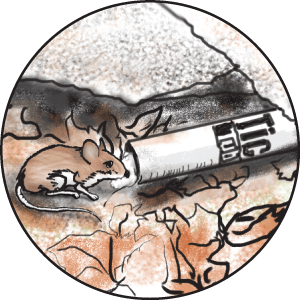
  • Target mice & rodents: Since ticks become infected by feeding on reservoir animals such as mice, chipmunks, squirrels, and deer, targeting these animals will help reduce the tick population. Ticktubes are tubes filled with permethrin treated cotton balls you place in rodent accessible areas so they will take the cotton back to their nests and they will rub their bodies against the treated cotton. Ticks feeding on the mice are then killed by the insecticide. Studies have shown risk to be reduced by 97% when using tick tubes. More info on how many you need for the size of your yard, etc.:http://www.ticktubes.com/facts.html

ticktube

How to Protect your pets

iu-12

  • Contain your pets: The easiest way to protect your pets is to keep them away from ticks, by create a safe zone. This can be done by using fencing (solid or invisible) and or putting them on a chain where they can only go in certain areas.
  • Groom pets:  Keep hair short to be able to identify ticks quickly. Brush hair and remove any ticks before bringing pets into the house.
  • Keep pets off all furniture and never let them into your bed.
  • Apply Tick control products on pets.  For an excellent example of products:  https://tickencounter.org/prevention/tick_control#top. There is a Lyme vaccine for dogs; however, it can cause Lyme disease symptoms just as the failed Lymerix vaccine did on humans. Cats also need tick protectionMake sure to discuss options with you veterinarian as they are educated with current information. Read all labels from products carefully.
  • Some tick facts: http://
  • More tick facts: http://

Resources:

https://madisonarealymesupportgroup.com/2017/05/11/tick-prevention-and-removal-2017/

https://tickencounter.org

https://www.dogsnaturallymagazine.com/lyme-vaccine-dogs/

https://www.petmd.com/cat/parasites/evr_ct_10_ways_to_stop_ticks_from_biting_your_cat