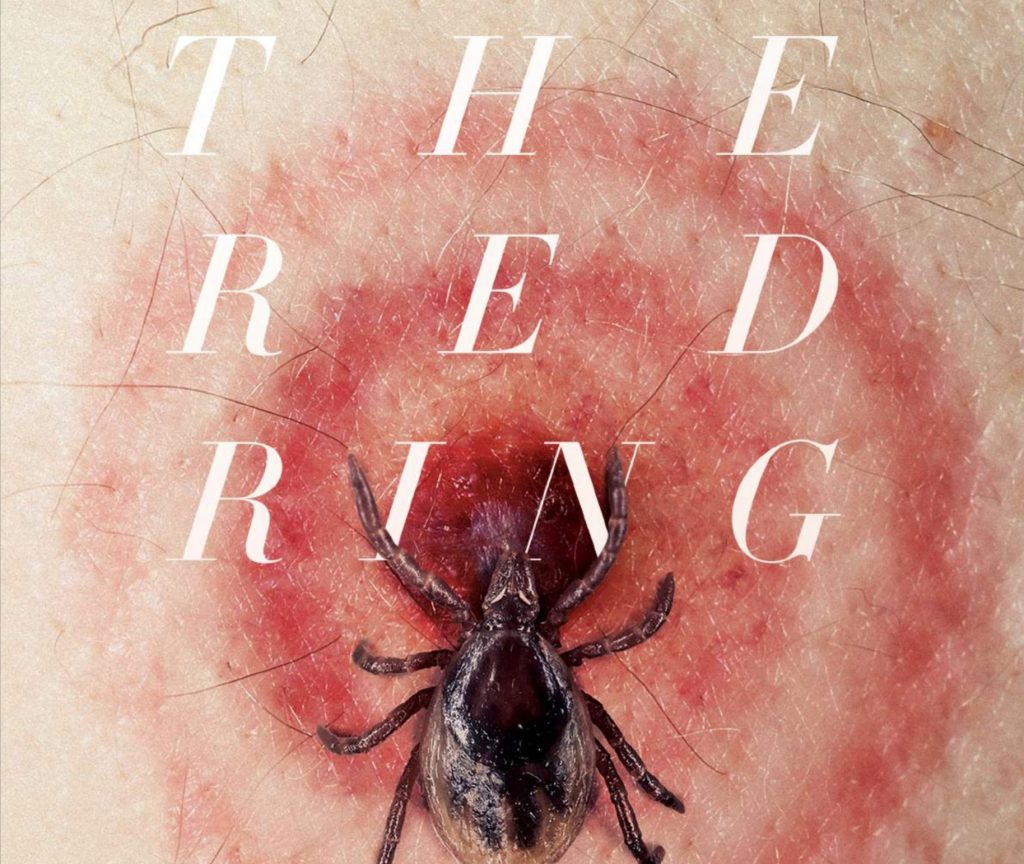
Archive for the ‘Lyme’ Category

Wildlife Borrelia Infection in Atlantic Canada

Wildlife Borrelia infection in Atlantic Canada:

Assessing the prevalence of Borrelia in wildlife hosts

Christopher Zinck

Mount Allison University

Lyme Research Network

Wildlife-Borrelia-infection-in-Atlantic-Canada-Assessing-the-prevalence-of-Borrelia-in-wildlife-hosts-Christopher-Zinck(1)  Slides Here

_____________________

Important findings:

  • Reservoir species are abundant
  • There are more Borrelia out there than B. burgdorferi (testing will miss all of them)
  • Different Borrelia species show different tissue tropisms (cells and tissues of a host which support growth of bacteria) in the body – B. miyamotoi is much more widely dispersed in the body in wild mice than Bb

Can You Get Lyme More Than Once?

https://danielcameronmd.com/can-you-get-lyme-disease-more-than-once/

CAN YOU GET LYME DISEASE MORE THAN ONCE? ASK THE LYME DOC.

Can-you-get-Lyme-disease-more-than-once

Patients often ask whether a person can become immune to Lyme disease or whether you can get Lyme disease more than once.

In 2014, a small study found that some people may, in fact, develop strain-specific immunity to Borrelia burgdorferi, the bacteria causing Lyme disease. “Once infected with a particular strain of the disease-causing bacteria, humans appear to develop immunity against that strain that can last six to nine years,” the authors wrote. [1] Ask the Lyme doc.

However, they also pointed out that at least 16 different strains of the Lyme disease bacterium have been shown to infect humans in the United States, so being bitten by a tick carrying a different strain of the disease is entirely possible.

Whether a person can develop immunity to Lyme disease is still unknown. Further studies are needed. There are certainly many instances of people contracting the infection more than once or redeveloping symptoms.

Re-infected through a new tick bite

There may be several reasons for this. A person can become re-infected with a new tick bite. Nadelman and colleagues described 17 patients who were re-infected multiple times with Lyme disease. [1]

Persistent infection 

Lyme disease symptoms can resurface in a person who has already been treated for the infection. Findings from both animal and human studies suggest that B. burgdorferi can cause a persistent infection. [2,3] Some doctors, however, dismiss the idea of a persistent infection. [4]

Lyme disease co-infections

Lastly, Lyme disease symptoms may return due to untreated co-infections. As of 2020, scientists have discovered 15 other diseases transmitted by ticks. [5] The list consists of viral, bacterial and parasitic infections and includes:

  1. Anaplasmosis
  2. Babesiosis
  3. Borrelia mayonii
  4. Borrelia miyamotoi
  5. Bourbon virus
  6. Colorado tick fever
  7. Ehrlichiosis
  8. Heartland virus
  9. Powassan disease
  10. Rickettsia parkeri rickettsiosis
  11. Rocky Mountain Spotted Fever (RMSF)
  12. STARI (Southern Tick-Associated Rash Illness)
  13. Tick-borne relapsing fever (TBRF)
  14. Tularemia
  15. 364D Rickettsiosis

Editor’s note: This is part of a Asl the Lyme doc series.  For the purposes of transparency, I’m an author on the International Lyme and Associated Diseases Society (ILADS) treatment guidelines, and I believe that symptoms can be due to a persistent infection in some patients. [6,7]

References:
  1. C. E. Khatchikian, R. B. Nadelman, J. Nowakowski, I. Schwartz, G. P. Wormser, D. Brisson. Evidence for Strain-Specific Immunity in Patients Treated for Early Lyme Disease. Infection and Immunity, 2014; 82 (4): 1408 DOI: 10.1128/IAI.01451-13
  2. Sapi E, Kasliwala RS, Ismail H, et al. The Long-Term Persistence of Borrelia burgdorferi Antigens and DNA in the Tissues of a Patient with Lyme Disease. Antibiotics (Basel). 2019;8(4).
  3. Middelveen MJ, Sapi E, Burke J, et al. Persistent Borrelia Infection in Patients with Ongoing Symptoms of Lyme Disease. Healthcare (Basel). 2018;6(2).
  4. Shapiro ED. Repeat or persistent Lyme disease: persistence, recrudescence or reinfection with Borrelia Burgdorferi? F1000Prime Rep. 2015;7:11.
  5. Diseases Transmitted by Ticks. Centers for Disease Control and Prevention. https://www.cdc.gov/ticks/diseases/index.html Last accessed 12/12/20.
  6. Cameron D, Gaito A, Harris N, et al. Evidence-based guidelines for the management of Lyme disease. Expert Rev Anti Infect Ther. 2004;2(1 Suppl):S1-13.
  7. Cameron DJ, Johnson LB, Maloney EL. Evidence assessments and guideline recommendations in Lyme disease: the clinical management of known tick bites, erythema migrans rashes and persistent disease. Expert Rev Anti Infect Ther. 2014;12(9):1103-1135.

Dermatological & Genital Manifestations of Lyme Disease Including Morgellons Disease

https://www.dovepress.com/dermatological-and-genital-manifestations-of-lyme-disease-including-mo-peer-reviewed-fulltext-article-CCID

Dermatological and Genital Manifestations of Lyme Disease Including Morgellons Disease

Authors Middelveen MJ, Haggblad JS, Lewis J, Robichaud GA, Martinez RM, Shah JS, Du Cruz I, Fesler MC, Stricker RB

Received 5 January 2021

Accepted for publication 9 April 2021

Published 6 May 2021 Volume 2021:14 Pages 425—436

DOI https://doi.org/10.2147/CCID.S299526

Article has an altmetric score of 23

Download Article [PDF] 

Abstract: Although the erythema migrans (EM) skin rash is traditionally considered a hallmark of Lyme disease, other dermatological manifestations of the tickborne disease are less well known. We describe a 49-year-old woman with erosive genital ulcerations, secondary EM rashes and jagged skin lesions associated with Lyme disease. The skin rashes exhibited fibers characteristic of Morgellons disease. Molecular testing confirmed the presence of Borrelia DNA in both vaginal culture and serum specimens. In further studies on a secondary EM lesion containing filaments, Gömöri trichrome staining revealed the presence of collagen in the filaments, while Dieterle and anti-Borrelia immunostaining revealed intracellular and extracellular Borrelia organisms. Intracellular staining for Borrelia was also observed in lymphocytic infiltrates. Lyme disease may present with a variety of genital lesions and dermatological manifestations including Morgellons disease. Careful evaluation is required to determine the presence of Borreliaorganisms associated with these dermopathies.

____________________

**Comment**

Morgellons patients in many ways suffer worse than Lyme patients.  Most doctors still believe Morgellons is a figment of the imagination, while Lyme is getting some air-time and recognition – which unfortunately, doesn’t mean things are changing for the better.

This new case study is reminiscent of previous work done by some of the same study researchers:

  • https://madisonarealymesupportgroup.com/2019/05/20/vaginal-lesion-associated-with-lyme/  This 57-year-old woman previously diagnosed with Lyme disease had a painful erosive genital lesion. At the time of the outbreak, she was being treated with oral antibiotics, and she tested serologically positive for B burgdorferi and serologically negative for syphilis. Dieterle-stained biopsy sections revealed visible spirochetes throughout the stratum spinosum and stratum basale, and anti-B burgdorferi immunostaining was positive. Motile spirochetes were observed by darkfield microscopy and cultured in Barbour-Stoner-Kelly-complete medium inoculated with skin scrapings from the lesion. Cultured spirochetes were identified genetically as B burgdorferi sensu stricto by polymerase chain reaction, while polymerase chain reaction amplification of treponemal gene targets was negative. The condition resolved after treatment with additional systemic antibiotic therapy and topical antibiotics. 
  • https://f1000research.com/articles/3-309/v3  Culture and identification of Borrelia spirochetes in human vaginal and seminal secretions.  This study has gone through 3 versions dating from December, 2014-April 2015.  Only 2 of 4 reviewers approved it.  Results:  Control subjects who were asymptomatic and seronegative for Bb had no detectable spirochetes in genital secretions by PCR analysis. In contrast, spirochetes were observed in cultures of genital secretions from 11 of 13 subjects diagnosed with Lyme disease, and motile spirochetes were detected in genital culture concentrates from 12 of 13 Lyme disease patients using light and darkfield microscopy. Morphological features of spirochetes were confirmed by Dieterle silver staining and immunohistochemical staining of culture concentrates. Molecular hybridization and PCR testing confirmed that the spirochetes isolated from semen and vaginal secretions were strains of Borrelia, and all cultures were negative for treponemal spirochetes. PCR sequencing of cultured spirochetes from three couples having unprotected sex indicated that two couples had identical strains of Bb sensu stricto in their semen and vaginal secretions, while the third couple had identical strains of B. hermsii detected in their genital secretions.  Conclusions: The culture of viable Borrelia spirochetes in genital secretions suggests that Lyme disease could be transmitted by intimate contact from person to person. Further studies are needed to evaluate this hypothesis.  
  • Lida Mattman has isolated Bb from many sources, including semen, urine, blood, plasma, and CSF:  https://madisonarealymesupportgroup.com/2019/04/02/transmission-of-lyme-disease-lida-mattman-phd/
  • Lyme advocate Carl Tuttle points out that 45 lab acquired infections with Borrelia burgdorferi are on record, all of which were NOT vector-borne (didn’t come from a tick bite). How did these workers get infected?   https://madisonarealymesupportgroup.com/2019/04/14/lab-acquired-infections-lyme/

More on Morgellons:

Kidney Failure & Disseminated Rashes Associated With Lyme Disease

https://danielcameronmd.com/kidney-failure-associated-with-lyme-disease/  Podcast Here

KIDNEY FAILURE AND DISSEMINATED RASHES ASSOCIATED WITH LYME DISEASE

kidney-failure-lyme-disease

Hello, and welcome to another Inside Lyme Podcast. I am your host Dr. Daniel Cameron. In this episode, I will be discussing the case of a 66-year-old woman who ignored a Bull’s eye rash, indicative of Lyme disease, and later developed acute renal failure, also referred to as kidney failure.

Mishra and colleagues described this case, entitled “Disseminated Erythema Migrans,” in the American Journal of Medicine. [1]

CASE REPORT: Kidney failure, disseminated rashes associated with Lyme disease

Over a two-week period, a 66-year-old woman with a history of obesity, hypertension, and hyperlipidemia, developed fever and malaise.

One month earlier, she reportedly had a tick bite on her right groin. “A few days later she noticed a bull’s eye lesion over the same area which she ignored,” the authors explain.

READ MORE: Doctors recognize Lyme disease in a patient with kidney disease

I can’t tell you how many patients I have had in my practice who ignore the importance of a tick bite or a rash.

The woman developed clear findings of disseminated Lyme disease. She had “high grade, intermittent fever, malaise, and fatigability,” along with “multiple, painless, red color skin lesions involving her arms, legs and lower back,” the authors write.

Early disseminated Lyme disease typically occurs shortly after a tick bite when the infection has spread throughout the body.  

The patient was hospitalized and found to have unexplained acute renal failure (or kidney failure) with a creatinine of 4.49 mg/dl.  Normal levels are closer to 1. (Dialysis is typically necessary if the creatinine were to stay over 5.)

The woman’s IgM Western blot test was positive which is expected in early Lyme disease.

She was treated clinically with IV ceftriaxone and oral doxycycline. “Her renal functions improved following hydration, antibiotics, and discontinuation of her losartan and non-steroidal anti-inflammatory drugs,” the authors explain.

The following questions are addressed in this podcast episode:

  1. What is the importance of the rash in this case?
  2. When does an EM rash typically appear?
  3. A rash will fade after a few days? Does this mean that Lyme disease is no longer a concern?
  4. This patient had multiple disseminated rashes. How common is this and what does it indicate?
  5. Does a rash always appear at the site of the tick bite?
  6. What is the risk of Lyme disease from a tick?
  7. What is the risk of Lyme disease once a rash is identified?
  8. How often are there treatment delays, even when a rash is present?
  9. What types of treatment delays have you seen?
  10. What are the consequences of delayed treatment?
  11. Have you seen kidney failure associated with Lyme disease?
  12. Could this patient’s hospitalization and kidney failure have been prevented?
  13. Have you seen kidney failure in dogs associated with Lyme disease?
  14. Do you feel treatment was appropriate in this case?
  15. What can we learn from this case?
    Thanks for listening to another Inside Lyme Podcast. You can read more about these cases in my show notes and on my website @DanielCameronMD.com. As always, it is your likes, comments, reviews, and shares that help spread the word about Lyme disease. Until next time on Inside Lyme.

Please remember that the advice given is general and not intended as specific advice as to any particular patient. If you require specific advice, then please seek that advice from an experienced professional.

Inside Lyme Podcast Series

This Inside Lyme case series will be discussed on my Facebook and made available on podcast and YouTube.  As always, it is your likes, comments, and shares that help spread the word about this series and our work. If you can, please leave a review on iTunes or wherever else you get your podcasts.

Long Haul COVID & Persistent Lyme; Is There a Silver Lining?


http://  Approx. 1 Hour

May 13, 2021

Long Haul COVID & Persistent Lyme; is There a Silver Lining?

About This Event:

National experts and patients come together to explore how these two diseases may be confused and address the ongoing health repercussions they each represent – particularly as outdoor activities increase and Lyme disease continues to be widely misdiagnosed. Both organizations are well positioned to host this event.

As early responders to the pandemic, Project Lyme provided professionally managed patient support to the Lyme community through the Lyme & COVID Facebook group. In addition, during its educational outreach to the community, Dr. Richard Horowitz correctly predicted the overlap between these diseases over a year ago.

For its part, Bay Area Lyme Foundation, a renowned as a leading sponsor of Lyme disease research in the U.S., is also a supporter of the Resilience Project, which seeks to identify people who, despite high risk of exposure to COVID-19, Lyme disease or other illnesses, do not exhibit any symptoms.

Featuring:

  • Dr. Richard Horowitz — a board certified internist, medical director of the Hudson Valley Healing Arts Center, scientific advisor to Bay Area Lyme Foundation and author of How Can I Get Better?
  • Dr. Christine Green — a practicing physician who has been treating Lyme disease since 1989 and has seen more than 100 patients with COVID-19 including those who have both Lyme and COVID-19. Dr. Green also serves on the boards of the International Lyme and Associated Disease Society (ILADS), LymeDisease.org and Bay Area Lyme Foundation.
  • Dr. Steven Phillips — Yale-educated expert on zoonotic infections, co-author of the newly-released and highly-acclaimed book Chronic, and scientific advisor to Bay Area Lyme Foundation.
  • David Roth — Lyme disease and COVID-19 patient. Executive Committee Chair, Project Lyme.
  • Laure Woods — Lyme disease and COVID-19 patient. Founder and Co-Chair, Bay Area Lyme Foundation.

_____________________

For more: