Archive for the ‘Alpha Gal Meat Allergy’ Category

Study Shows Most Common Cause of Anaphylaxis is Alpha Gal

https://www.news-medical.net/news/20180730/Study-finds-tick-bite-meat-allergy-as-most-common-cause-of-anaphylaxis.aspx

Study finds tick bite meat allergy as most common cause of anaphylaxis

An increase in the Lone Star tick population since 2006, and the ability to recognize the ticks as the source of “alpha gal” allergy to red meat has meant significantly more cases of anaphylaxis being properly identified.

A new study in Annals of Allergy, Asthma and Immunology, the scientific publication of the American College of Allergy, Asthma and Immunology (ACAAI) showed that at the University of Tennessee Health Science Center, alpha-gal ( a complex sugar found in red meat from beef, pork, venison, etc.) was the most common known cause of anaphylaxis. In previous studies of anaphylaxis, researchers were often unable to identify the source of the severe allergic reaction.

“Of the 218 cases of anaphylaxis we reviewed, 33 percent were from alpha gal,” says Debendra Pattanaik, MD, lead author of the study. “When we did the same review in 1993, and again in 2006, we had a great many cases where the cause of the anaphylaxis couldn’t be identified. That number of unidentified cases dropped from 59 percent in 2006 to 35 percent in this report – probably from the number of identified alpha gal cases. Our research clearly identified alpha gal as the cause of anaphylaxis in the majority of cases where the cause was detected. Food allergies were the second leading cause, accounting for 24 percent.”

The people in the study were seen between 2006 and 2016. The study notes that alpha gal allergy was first identified in 2008, so previous reviews wouldn’t have taken it into consideration. Due to increased awareness of red meat allergy, and more diagnostic testing available, alpha gal allergy went from an unknown entity to the most commonly identified cause of anaphylaxis at this center.

“We understand that Tennessee is a state with a big population of Lone Star ticks, and that might have influenced the large number of alpha gal cases we identified,” says allergist Jay Lieberman, MD, vice chair of the ACAAI Food Allergy Committee and a study co-author. “The Lone Star tick is predominantly found in the southeastern United States and we would expect a higher frequency of anaphylaxis cases in this region would be due to alpha gal. However, the tick can be found in many states outside this region and there are already more cases being reported nationwide.”

The remainder of the cases of anaphylaxis in the study were attributed to insect venom (18 percent) exercise (6 percent) systemic mastocystosis (6 percent) medications (4 percent) and other (3 percent).

A bite from the Lone Star tick can cause people to develop an allergy to red meat, including beef, pork and venison. The allergy is best diagnosed with a blood test. Although allergic reactions to foods typically occur rapidly, within 60 minutes of eating the food, in the case of allergic reactions to alpha-gal, symptoms often take several hours to develop. Because of the significant delay between eating red meat and the appearance of an allergic reaction, it can be a challenge to connect the culprit foods to symptoms. Therefore, an expert evaluation from an allergist familiar with the condition is recommended.

Allergists are specially trained to test for, diagnose and treat allergies. To find an allergist near you who can help create a personal plan to deal with your allergies and asthma, use the ACAAI allergist locator.

__________________

For more on Alpha Gal:  https://madisonarealymesupportgroup.com/2017/01/12/tick-related-red-meat-allergy-found-in-minnesota-wisconsin/  Yes, Martha, it’s here in Wisconsin.

https://madisonarealymesupportgroup.com/2018/07/28/what-the-mystery-of-the-tick-borne-meat-allergy-could-reveal/

https://madisonarealymesupportgroup.com/2018/06/27/alpha-gal-perioperative-management/

https://madisonarealymesupportgroup.com/2018/01/16/a-strange-itch-trouble-breathing-then-anaphylactic-shock/

https://madisonarealymesupportgroup.com/2018/05/04/arkansas-woman-develops-deadly-meat-allergy-after-tick-bite/  As Meritt points out on the Allergy & Asthma Clinic of Northwest Arkansas’ website, the alpha-gal allergy extends to beef, pork, gelatin and products that contain mammalian ingredients.  “That includes dairy products,” Burton said. “Mammal biproducts are in everything — daily vitamin supplements, shampoo, conditioners, hand and body lotions … all those things were keeping my system agitated. Pork or beef would just put it over the edge.”
A lot of vaccines are either made with animal products or have gelatin in it.

Tickology Video Series – Everything You Want to Know About Ticks & Prevention

Entomologist Larry Dapsis, Deer Tick Project Coordinator, of Cape Cod Cooperative Extension presents information about numerous types of ticks and the diseases they carry in the following Tickology video series.

Tickology

 Approx. 9 Min

Tick Identification & Ecology

Take aways:

  1. Female American Dog Tick is easy to spot as she has a creamy white wide spot up by the head.
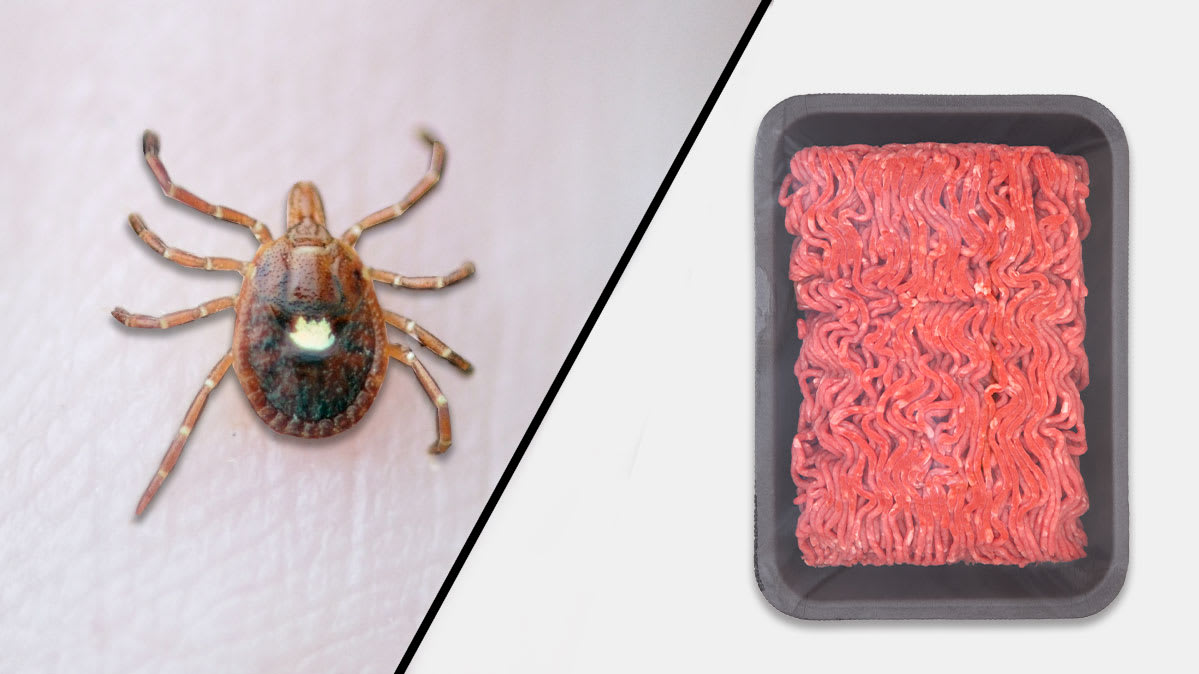
  2. Female Lone Star tick has a bright white spot in the center of her back.
  3. Female Deer Tick has a bright red abdomen.
  4. A lot of this info is shared again in part 3 below where I have more notes.

 Approx. 12:30 Min.

Tick Borne Diseases

Take aways:

  1. He considers the American Dog Tick more of a nuisance than a threat.  I disagree.  Just ask anyone who’s ever had RMSF or Tularemia, both of which can kill you.
  2. The Deer Tick (Black legged tick) is endemic in 80 countries and has been here for thousands of years.
  3. Lyme is found in 49 out of 50 states in the U.S. (absent only in Hawaii)
  4. In 2016 the CDC adjusted Lyme prevalence to 300,000 new cases of Lyme a year.
  5. Martha’s Vineyard has more cases than anywhere in the universe.
  6. Risk of infection is year round.
  7. Largest risk is from the nymph as they are smaller and the bite is difficult to detect.   He is finding about 25% to be infected with Lyme.  50% of adults are infected.
  8. In Massachusetts, children ages 5-9 have the highest rates of infection.  Adults aged 50-70 has a surge of infection as well.
  9. Babesiosis, similar to Malaria, can be passed via blood transfusion with 50% of Massachusetts cases found in the south eastern part of the state and virtually found in some degree in every county in the state.
  10. Anaplasmosis (HGA) can look similar to Lyme and is more broadly distributed in Mass.
  11. All these diseases are steadily increasing.  95% of cases are aged 65 and older.
  12. Borrelia miyamotoi, related to Lyme, is a relapsing fever.  3% of Cape Cod ticks have it but is expected to increase.
  13. Powassan can put you in the hospital with brain swelling.  They did surveillance and found Powassan in 4 out of 6 site sites with infection rates as high as 10% in the tick population.  In reading the literature, he feels it has been on Cape Cod for thousands of years but it hasn’t been on medical radar.

  Approx. 8 Min.

Lone Star Tick – The New Tick in Town

Part 3 of the Tickology video project.

Take aways:

  1. The Lone Star Tick, normally considered a Southern tick, is in Cape Cod, and has moved North, and yes, is in Wisconsin.
  2. The adult female has a white dot on her back
  3. These ticks can run and are aggressive, fast & will actually chase you.  
  4. While he mentions a warming climate, independent Canadian tick researcher, John Scott, states emphatically temperature has nothing to do with tick expansion:  https://madisonarealymesupportgroup.com/2018/08/13/study-shows-lyme-not-propelled-by-climate-change/
  5. He claims Lone Star ticks have been established in Sandy Neck Beach Park and Shining Sea Bike Trail for a long time – it’s just nobody was looking for them.  I suspect this to be true for many other areas as well.
  6. He claims these areas are “perfect flyways” for migratory birds for transporting ticks.
  7. Lone Star ticks prefer intermediate size hosts.  He put out video surveillance and picked up wild turkeys in areas where these ticks were established.  Rabbits & coyotes are good hosts as well
  8. The adult female lays a cluster of 4,000-5,000 eggs,  which leaves a high concentration of larvae in late summer.  He claims when you find one, it could be a matter of minutes and you could have 200-300 bites.
  9. He claims Lone Star tick larvae do not transmit pathogens.
  10. The adults; however, can transmit Erlichiosis, STARI, Tularemia and Alpha Gal or meat allergy (all animal products).
  11. He claims you will not find deer ticks in an open lawn.  I was told otherwise by Susan Paskewitz, chair of the Department of Entomology at UW–Madison, whose crew is finding them in fields where kids are playing sports, and it’s here as well: https://newyork.cbslocal.com/2018/05/07/ticks-lyme-disease-cdc-putnam-county/
  12. He is finding Lone Star ticks in open spaces.  They don’t mind the heat.  Deer ticks will seek out leaf litter and/or snow when conditions are harsh.

 Approx. 13:22 Min

Permethrin Treated Clothing & Footwear

Take aways:

  1. Natural Pyrethrum is from the Aster Family, & is an extract from a type of chrysanthemum.  It has quick knockdown against insects but no residual control.  Breaks down in sunlight quickly.
  2. They manipulated it so now it has 4 weeks of residual control.
  3. You only use it on clothing and footwear.  He feels treating footwear to be crucial.  If a tick is on a treated surface with permethrin for 60 seconds it will die.  He feels strongly that using this product will reduce your exposure tick bites by upwards of 90%.  It is active thru 6 washings or 45 days which ever comes first.
  4. Pre-treated tick repellent clothing is also available.  EPA testing has shown it is active through 70 washings.  You can also send your clothing to “Insect Shield,” and they will treat your clothing and send it back with the 70 washing claim.  He says it’s about $10 per clothing item.
  5. It’s not the molecule that makes the poison, it’s the dosage.  As far as permethrin goes, there is low mammal toxicity except for cats.  It is 2,250 times more toxic to ticks than to humans.  According to the EPA, permethrin-treated clothing poses no harm to infants, children, pregnant women, or nursing mothers.
  6. Permethrin has low skin absorption and is metabolized quickly.
  7. National Research Council looked at long term exposure on the military wearing permethrin saturated clothing from head to foot for 18 hours a day for 10 years and found no reason for an adverse effect.
  8. The active ingredient is the same ingredient used for treating scabies and head lice and parents smear it on their kids from head to toe.
  9. He demonstrates how to apply it onto clothing and footwear.  Scroll to 10:00.  Make sure to wash these treated cloths away from other clothes.  Remember sunlight breaks it down so it lasts through 6 washings for 45 days, which ever comes first.
  10. He sprays the inside of the legs in case a tick gets underneath.  I tuck my pants into my white sprayed socks so ticks can not get inside.

 Approx. 6 Min

Skin Repellents

Take aways:

  1. The big distinction between repellents is the EPA registration.  Deet, Picaridan, IR 3535, and Oil of Lemon Eucalyptus have EPA registration with data on file for any claim being made.
  2. Go here for the EPA selection guide:  https://www.epa.gov/insect-repellents/find-repellent-right-you  (Fill in the questionnaire)
  3. Go to www.npic.orst.edu for pesticide information.
  4. Go to capecodextension.org for short factual answers on products.
  5. Naturals are not EPA registered so there is no data proving effectiveness.  Not all repel ticks.  Buyer beware.

__________________

For more on tick prevention:  https://madisonarealymesupportgroup.com/2017/05/11/tick-prevention-and-removal-2017/

https://madisonarealymesupportgroup.com/2018/06/06/mc-bugg-z/

https://madisonarealymesupportgroup.com/2018/05/27/study-conforms-permethrin-causes-ticks-to-drop-off-clothing/  “All tested tick species and life stages experienced the ‘hot-foot’ effect after coming into contact with permethrin-treated clothing,” Eisen said. 

https://madisonarealymesupportgroup.com/2018/04/03/fire-good-news-for-tick-reduction/  Study found a 78-98% reduction in ticks.
http://journals.plos.org/plosone/article?id=10.1371/journal.pone.0112174 These data indicate that regular prescribed burning is an effective tool for reducing tick populations and ultimately may reduce risk of tick-borne disease.


What the Mystery of the Tick-Borne Meat Allergy Could Reveal

https://www.nytimes.com/2018/07/24/magazine/what-the-mystery-of-the-tick-borne-meat-allergy-could-reveal.html

His wife wasn’t home, so he drove himself to the university hospital emergency room near where he lived in Chapel Hill, N.C. As he explained his symptoms at the check-in counter, he began to feel faint, then fell to one knee. An orderly offered a wheelchair. He sat down — and promptly lost consciousness.  (See link for article)

______________

**Comment**

I find it interesting that no one is mentioning the fact ticks have been tweaked in a lab for biowarfare purposes.  

https://madisonarealymesupportgroup.com/2018/03/07/hantavirus-tularemia-warnings-issued-in-san-diego-county/  Tularemia, brucella, certain Rickettsia’s, numerous viruses, some chlamydia’s, and of course mycoplasma have all been weaponized.  https://madisonarealymesupportgroup.com/2015/08/12/connecting-dots-mycoplasma/

http://www.immed.org/infectious%20disease%20reports/InfectDiseaseReport06.11.09update/PHA_Nicolson_0709_v4.07.pdf

“According to Dr. Nicolson, some of the experiments used Mycoplasma while others utilized various “cocktails of microbial agents” such as Mycoplasma, Brucella, and DNA viruses such as Parvovirus B19. This project later become the topic of a book by Dr. Nicolson entitled Project Day Lily.

Dr. Nicolson believes that Mycoplasma fermentans is a naturally occurring microbe. However, some of the strains that exist today have been weaponized. Dr. Nicolson’s research found unusual genes in M. fermentans incognitus that were consistent with a weaponized form of the organism. Weaponzing of an organism is done in an attempt to make a germ more pathogenic, immunosuppressive, resistant to heat and dryness, and to increase its survival rate such that the germ could be used in various types of weapons. Genes which were part of the HIV‐1 envelope gene were found in these Mycoplasma. This means that the infection may not give someone HIV, but that it may result in some of the debilitating symptoms of the HIV disease.”

Regarding the weaponization of tick pathogens:  https://www.lymedisease.org/lymepolicywonk-questioning-governments-role-lyme-disease-make-conspiracy-theorist/  (Go here to read excerpts of an interview with a biologist who acknowledged doing biowarfare work on ticks and mosquitoes.  He admits every time he has a strange illness his physician says it’s probably a rickettsia – an idiopathic condition that never tests positive but symptoms indicate it.)

‘The interview suggests to me that the reason we have such a large problem with our tick population today may be related to military experiments in the 50s. They were part of a biological warfare effort against the Russians. One goal was to figure out how to get ticks to reproduce quickly and abundantly, as well as how to distribute ticks to targeted areas.”

For a lengthy but informative read on the Lyme-Biowarfare connections:  CitizensAlert_Bob13  (Scroll to page 44 to see an executive summary.  Please notice the names of Steere, Barbour, Shapiro, Klempner, and Wormser, the first four are affiliated with the CDC Epidemic Intelligence Service (EIS).  Wormser, lead author of the fraudulent Lyme treatment guidelines, lectures as an expert on biowarefare agents and treatments).  The author of the pdf believes borrelia (Lyme) has been bioweaponized due to (excerpt from pdf footnote):

226 An article was put out by the Associated Press mentioning the study of Lyme disease at a new biowarfare lab at the University of Texas, San Antonio. The article was quickly retracted and mention of Lyme disease was scrubbed from the article. Here is the text of the original article: “A new research lab for bioterrorism opened Monday at the University of Texas at San Antonio. The $10.6 million Margaret Batts Tobin Laboratory Building will provide a 22,000-square-foot facility to study such diseases as anthrax, tularemia, cholera, lyme disease, desert valley fever and other parasitic and fungal diseases. The Centers for Disease Control and Prevention identified these diseases as potential bioterrorism agents.” MSNBC, 11/21/2005. For a comparison of the censored and uncensored articles, see: http://members.iconn.net/~marlae/lyme/featurearticle02.htm

So you tell me.  Could all this lab tweaking have something to do with tick borne illness and allergies?

We Have No Idea How Bad the US Tick Problem Is

https://www.wired.com/story/we-have-no-idea-how-bad-the-us-tick-problem-is/
AUTHOR: MEGAN MOLTENIMEGAN MOLTENI
SCIENCE
7.04.18

WE HAVE NO IDEA HOW BAD THE US TICK PROBLEM IS

WHEN RICK OSTFELD gets bitten by a tick, he knows right away. After decades studying tick-borne diseases as an ecologist at the Cary Institute of Ecosystem Studies in Millbrook, New York, Ostfeld has been bitten more than 100 times, and his body now reacts to tick saliva with an intense burning sensation. He’s an exception. Most people don’t even notice that they’ve been bitten until after the pest has had time to suck up a blood meal and transfer any infections it has circulating in its spit.

Around the world, diseases spread by ticks are on the rise. Reported cases of Lyme, the most common US tick-borne illness, have quadrupled since the 1990s. Other life-threatening infections like anaplasmosis, babesiosis, and Rocky Mountain spotted fever are increasing in incidence even more quickly than Lyme. Meat allergies caused by tick bites have skyrocketed from a few dozen a decade ago to more than 5,000 in the US alone, according to experts. And new tick-borne pathogens are emerging at a troubling clip; since 2004, seven new viruses and bugs transmitted through tick bite have shown up in humans in the US.

Scientists don’t know exactly which combination of factors—shifting climate patterns, human sprawl, deforestation—is leading to more ticks in more places. But there’s no denying the recent population explosion, especially of the species that carries Lyme disease: the black-legged tick.

“Whole new communities are being engulfed by this tick every year,” says Ostfeld. “And that means more people getting sick.

Tick science, surveillance, and management efforts have so far not kept pace. But the country’s increasingly dire tick-borne disease burden has begun to galvanize a groundswell of research interest and funding.

In 1942, Congress established the CDC specifically to prevent malaria, a public health crisis spreading through mosquitoes. Which is why many US states and counties today still have active surveillance programs for skeeters. The Centers for Disease Control and Prevention uses data from these government entities to regularly update distribution maps, track emerging threats (like Zika), and coordinate control efforts. No such system exists for ticks.

Public health departments are required to report back to the CDC on Lyme and six other tick-borne infections. Those cases combined with county-level surveys and some published academic studies make up the bulk of what the agency knows about national tick distribution. But this data, patchy and stuck in time, doesn’t do a lot to help public health officials on the ground.

“We’ve got national maps, but we don’t have detailed local information about where the worst areas for ticks are located,” says Ben Beard, chief of the CDC’s bacterial diseases branch in the division of vector-borne diseases. “The reason for that is there has never been public funding to support systematic tick surveillance efforts.

That’s something Beard is trying to change. He says the CDC is currently in the process of organizing a nationwide surveillance program, which could launch within the year. It will pull data collected by state health departments and the CDC’s five regional centers about tick prevalence and the pathogens they’re carrying to build a better picture of where outbreaks and hot spots are developing, especially on the expanding edge of tick populations.

The CDC is also a few years into a massive nationwide study it’s conducting with the Mayo Clinic, which will eventually enroll 30,000 people who’ve been bitten by ticks. Each one will be tested for known tick diseases, and next-generation sequencing conducted at CDC will screen for any other pathogens that might be present. Together with patient data, it should provide a more detailed picture of exactly what’s out there.

Together, these efforts are helping to change the way people and government agencies think about ticks as a public health threat.

“Responsibility for tick control has always fallen to individuals and homeowners,” says Beard. “It’s not been seen as an official civic duty, but we think it’s time whole communities got engaged. And getting better tick surveillance data will help us define risk for these communities in areas where people aren’t used to looking for tick-borne diseases.”

The trouble is that scientists also know very little about which interventions actually reduce those risks.

“There’s no shortage of products to control ticks,” says Ostfeld. “But it’s never been demonstrated that they do a good enough job, deployed in the right places, to prevent any cases of tick-borne disease.”

In a double-blind trial published in 2016, CDC researchers treated some yards with insecticides and others with a placebo. The treated yards knocked back tick numbers by 63 percent, but families living in the treated homes were still just as likely to be diagnosed with Lyme.

Ostfeld and his wife and research partner Felicia Keesing are in the middle of a four-year study to evaluate the efficacy of two tick-control methods in their home territory of Dutchess County, an area with one of the country’s highest rates of Lyme disease. It’s a private-public partnership between their academic institutions, the CDC, and the Steven and Alexandra Cohen Foundation, which provided a $5 million grant.

Ostfeld and Keesing are blanketing entire neighborhoods in either a natural fungus-based spray or tick boxes, or both. The tick boxes attract small mammal hosts, which get a splash of tick-killing chemicals when they venture inside. They check with all the human participants every two weeks for 10 months of the year to see if anyone’s gotten sick. By the end of 2020 the study should be able to tell them how well these methods, used together or separately on a neighborhood-wide scale, can reduce the risk of Lyme.

“If we get a definitive answer that these work the next task would be to figure out how to make such a program more broadly available. Who’s going to pay for it, who’s going to coordinate it?” says Ostfeld. “If it doesn’t work then perhaps the conclusion is maybe environmental control just can’t be done.”

In that case, people would be stuck with pretty much the same options they have today: protective clothing, repellants, and daily partner tick-checks. It’s better than nothing. But with more and more people getting sick, the US will need better solutions soon.

________________

**Comment**

Great article pointing out the scary fact that only 6 pathogens transmitted by ticks are being reported on.  There are currently 18 pathogens and counting…..so the numbers are woefully inadequate.

Here’s the list so far:  https://madisonarealymesupportgroup.com/2017/07/01/one-tick-bite-could-put-you-at-risk-for-at-least-6-different-diseases/

Babesiosis
Bartonellosis
Borrelia miyamotoi
Bourbon Virus
Colorado Tick Fever
Crimean-Congo hemorrhagic Fever
Ehrlichiosis/Anaplasmosis
Heartland Virus
Meat Allergy/Alpha Gal
Pacific Coast Tick Fever: Richettsia philipii
Powassan Encephalitis
Q Fever
Rickettsia parkeri Richettsiosis
Rocky Mountain Spotted Fever
STARI: Southern Tick-Associated Rash Illness
Tickborne meningoencephalitis
Tick Paralysis
Tularemia

And the number keeps growing…..but nobody’s keeping score.

New UVA Study Tentatively Links Ticks to Heart Disease

https://news.virginia.edu/content/new-uva-study-tentatively-links-ticks-heart-disease?utm_source=DailyReport&utm_medium=email&utm_campaign=news

NEW UVA STUDY TENTATIVELY LINKS TICKS TO HEART DISEASE

The bite of the lone star tick had previously been shown to cause an allergy to red meat. Now it is linked with an increased risk of heart disease.

June 14, 2018 Josh Barney, jdb9a@virginia.edu

University of Virginia School of Medicine researchers have linked sensitivity to an allergen in red meat – a sensitivity spread by tick bites – with a buildup of fatty plaque in the arteries of the heart. This buildup may increase the risk of heart attacks and stroke.

The bite of the lone star tick can cause people to develop an allergic reaction to red meat. However, many people who do not exhibit symptoms of the allergy are still sensitive to the allergen found in meat. UVA’s new study linked sensitivity to the allergen with the increased plaque buildup, as measured by a blood test.

The researchers emphasize that their findings are preliminary, but say further research is warranted.

tick_story_da_inline_01
The research team drew from both allergists and cardiologists, and included, from left, Dr. Thomas Platts-Mills, Dr. Coleen McNamara, Dr. Jeff Wilson and Anh Nguyen. (Photo by Dan Addison, University Communications)

“This novel finding from a small group of subjects examined at the University of Virginia raises the intriguing possibility that asymptomatic allergy to red meat may be an under-recognized factor in heart disease,” said study leader Dr. Coleen McNamara of UVA’s Robert M. Berne Cardiovascular Research Center and UVA’s Division of Cardiovascular Medicine. “These preliminary findings underscore the need for further clinical studies in larger populations from diverse geographic regions.”

Allergens and Clogged Arteries

Looking at 118 patients, the researchers determined that those sensitive to the meat allergen had 30 percent more plaque accumulation inside their arteries than those without the sensitivity. Further, a higher percentage of the plaques had features characteristic of unstable plaques that are more likely to cause heart attacks.

With the meat allergy, people become sensitized to alpha-gal, a type of sugar found in red meat. People with the symptomatic form of the allergy can develop hives, stomach upset, have trouble breathing or exhibit other symptoms three to eight hours after consuming meat from mammals. (Poultry and fish do not trigger a reaction.)

What’s it like to develop a meat allergy?   https://makingofmedicine.virginia.edu/2018/03/29/the-meat-allergy-whats-it-like/

Other people can be sensitive to alpha-gal and not develop symptoms. In fact, far more people are thought to be in this latter group. For example, up to 20 percent of people in Central Virginia and other parts of the Southeast may be sensitized to alpha-gal, but not show symptoms.

The allergy to alpha-gal was first reported in 2009 by Dr. Thomas Platts-Mills, who heads UVA’s Division of Allergy and Clinical Immunology, and his colleague Dr. Scott Commins. Since then, there have been increasing numbers of cases of the meat allergy reported across the U.S., especially as the lone star tick’s territory grows. Previously found predominantly in the Southeast, the tick has now spread west and north, all the way into Canada.

UVA’s new study suggests that doctors could develop a blood test to benefit people sensitive to the allergen.

“This work raises the possibility that in the future a blood test could help predict individuals, even those without symptoms of red meat allergy, who might benefit from avoiding red meat. However, at the moment, red meat avoidance is only indicated for those with allergic symptoms,” said researcher Dr. Jeff Wilson of UVA’s allergy division.

Findings Published

The work represents a significant collaboration between allergy and cardiology experts at UVA. The researchers have published their findings in Arteriosclerosis, Thrombosis and Vascular Biology, a journal of the American Heart Association. The research team consisted of Wilson, Anh Nguyen, Alexander Schuyler, Commins, Angela Taylor, Platts-Mills and McNamara.

The work was supported by the National Institutes of Health, grants KO8-AI085190, K23-HL093118, RO1-AI 20565, PO1-HL55798, RO1-HL136098-01 and RO1-HL107490.

MEDIA CONTACT

Josh Barney
UVA Health System
jdb9a@virginia.edu 434-243-1988

________________

For more:  https://madisonarealymesupportgroup.com/2018/05/04/arkansas-woman-develops-deadly-meat-allergy-after-tick-bite/

https://madisonarealymesupportgroup.com/2017/01/12/tick-related-red-meat-allergy-found-in-minnesota-wisconsin/

https://madisonarealymesupportgroup.com/2018/06/27/alpha-gal-perioperative-management/

https://madisonarealymesupportgroup.com/2018/01/16/a-strange-itch-trouble-breathing-then-anaphylactic-shock/