Archive for the ‘Activism’ Category

TBDWG on Surveillance in Humans

https://www.galaxydx.com/uncategorized/tbdwg_human-surveillance/  By Galaxy Diagnostics

In their recent report to congress, the Tick-Borne Disease Working Group (TBDWG) emphasizes the importance of tick-borne disease surveillance, specifically for Lyme Disease. In this post, we will explore what Lyme disease and co-infection surveillance looks like now and what an improved surveillance system might look like.

As mentioned in our recent Bartonella prevalence post, it is difficult for public health professionals and researchers to determine how many people suffer just from bartonellosis. When expanded to all tick-borne diseases and co-infections, the identification process becomes even more complicated. The CDC currently only recognizes 13 unique human tick-borne illnesses caused by 18 different pathogens in the United States.

The current human surveillance system does not interact with current tick surveillance efforts. As ticks expand their range, even crossing national borders, tick surveillance efforts focused on limited species become even more disconnected from human health. Tick-borne diseases are transmitted by a range of ticks, with unfamiliar species, such as Haemaphysalis longicornis (Asian longhorned tick), regularly being identified.

Federal agencies currently do not have a standardized method for systematically collecting tick-borne disease surveillance data and sharing the information in a public, accessible way. Disease surveillance is a state responsibility led by the Council of State and Territorial Epidemiologists (CSTE) in conjunction with the CDC. This traditional method is passive and involves clinicians or laboratories reporting positive diagnoses or results for notifiable conditions.

For a Lyme disease case to be included in surveillance data, a positive result on the CDC-recommended two-tier testing is required, unless it is early in the disease and the classic EM rash is apparent. However, this surveillance method does not capture all cases and not all reported cases are reflected back in the reported data with regional specificity in order to protect patient privacy. This may lead physicians in regions with few reported cases to believe Lyme disease is not a concern.

Reports of animal cases of Lyme disease can be reported with specific locations even when the number is very small, and tick surveillance can provide even more information. However, each of these pieces of surveillance is pursued piece-meal, and there is no system in place to give a holistic picture, reflecting a true One Health understanding of the bacteria.

Surveillance isn’t just about knowing how many people get sick. It exists in a cycle of health activity in which the number of people who are sick affects disease funding, and funding affects the quality of surveillance. In the case of federal funding for Lyme disease in the US, funding per surveillance case is a fraction of other diseases, such as HIV/AIDS, despite having almost the same number of reported cases in 2016.

The TBDWG report includes five recommendations that suggest ways of improving surveillance of Lyme disease and other tick-borne diseases. Each recommendation is listed below along with discussion of the recommendation.

3.1 Fund studies and activities on tick biology and tick-borne disease ecology, including systematic tick surveillance efforts, particularly in regions beyond the Northeast and Upper Midwest.

The risk of exposure to ticks carrying harmful pathogens for people living in the United States is poorly understood, especially outside of the Northeast and Midwest. Researchers generally agree that geographic distributions of the most important vectors, such as the Lone-Star Tick and American Dog Tick, have expanded since these distributions were first published in 1945. However, there is not enough Federal funding to fully understand how these ticks, along with new or exotic species, distribution and behavior are changing in the face of climate and landscape changes. The TBDWG recommends systematic, standardized tick surveys at the federal level to help understand how these ecological factors drive the increasing risk of tick-borne disease for individuals at the state or local levels.

3.2 Fund systematic studies and activities to identify and characterize novel tick-borne disease agents in the United States.

Ticks can transmit a cocktail of harmful bacterial and viral pathogens when they bite their prey. Despite this fact, the scope of pathogens (bacteria, viruses, etc.) that can be found across tick species is not well understood. In 2004 alone, seven new tick-borne co-infections causing human disease were discovered, but only after they had already caused human disease. The TBDWG recommends that the microbiome of each tick species be studied using new and powerful molecular methods, such as metagenomics. Understanding what pathogens, novel or well-known, each tick species can potentially transmit will help communities evaluate their risk of tick-borne disease.

3.3 Support economic studies and activities to estimate the total cost of illness associated with tick-borne diseases in the United States, beginning first with Lyme disease and including both financial and societal impacts.

Currently, Lyme disease and other tick-borne diseases do not have comprehensive cost of illness (COI) studies associated with them. These studies analyze the economic impact a disease has on society using direct, indirect, and intangible factors, such as costs for diagnostics or doctor visits, travel costs, and the impact on emotional well-being. It is estimated that the direct cost of Lyme disease treatment alone in the United States is $1.3 billion. A COI report that fully characterizes Lyme disease could help guide policy makers on the need for more research that focuses on the improved diagnosis and treatment of tick-borne diseases.

3.4 Have public health authorities formally recognize complementary, validated systematic approaches to tick-borne disease human surveillance, such as systematic sampling of tick-borne disease reports for investigation that reduce the burden on tick-borne disease reporting but allow for comparability of surveillance findings across states and over time.

The current surveillance criteria set forth by public health officials limits novel and validated methods of studying tick-borne disease prevalence in humans. The current method is passive and relies heavily on laboratory evidence, resulting in under-reporting of Lyme disease. Therefore, the TBDWG recommends having complementary, creative, and financially sustainable methods for successful surveillance in the future. For example, a mobile app designed by TickReport provides free tick identification for people who find ticks on or around themselves. In addition, routine vector-borne disease testing conducted on companion animals provides regional data that could complement human data. The Companion Animal Parasite Council provides an interactive map that forecasts the prevalence of diseases, such as Lyme disease, for pets.

3.5 The Lyme disease surveillance criteria are not to be used alone for diagnostic purposes; public health authorities shall annually and when opportune (such as during Tick-borne Disease Awareness Month) communicate this and inform doctors, insurers, state and local health departments, the press, and the public through official communication channels, including the CDC’s Morbidity and Mortality Weekly Report (MMWR).

The TBDWG noted that not only is the surveillance case definition problematic for studying Lyme disease prevalence, but physicians and medical insurers will often use it incorrectly. The definition is supposed to be used solely for public health surveillance to establish areas of high or low incidence. However, physicians and insurance companies will often not diagnose a patient and provide reimbursement accordingly unless the criteria are met. The TBDWG recommends that the Federal government, public health authorities, and advocates in the medical community clarify this through methods of communication such as social media and websites. These clarifications should also be prioritized during opportune times, like Tick-borne Disease Awareness Month.

To find out more about what the TBDWG had to say about these recommendations, go to chapter three of their report. It is important to keep these recommendations in mind as we explore the impact the current surveillance methods have on patients’ access to care next week. For the full report, click here.

The graphics in this post can be found in the TBDWG 2018 Report to Congress.

Want to read more of our posts about the TBDWG report? Links below:

  1. Introduction to the TBDWG
  2. Human Surveillance of Tick-borne Diseases
  3. Access to Patient Care
  4. Prevention
**Comment**
Kudos to Galaxy for taking this blog on the TBDWG on.  Fantastic article keeping us abreast of the goings on.  Keep up the great work!


Man Blames Flu Shot for Blindness & Partial Paralysis

https://www.healthnutnews.com/former-wyoming-county-man-hospitalized-after-getting-a-flu-shot/  (News Videos within this link)

Man Blames Flu Shot for Leaving Him Blind and Partially Paralyzed

Posted by Erin Elizabeth | Dec 6, 2018

NBC: Las Vegas man blames flu shot for triggering rare disorder

Monique Morgan says that the flu shot her husband Shane had on November 2nd sent him to the ICU.

Just one day after receiving his flu shot, Las Vegas man Shane Morgan went from perfectly healthy to unable to speak, walk, or breathe on his own. He has been hospitalized for the last 2 weeks.

“At the start of November, Shane and his wife Monique like most couples were planning for the holidays, and with family and young infants coming to town they decided to get the flu shot.

‘About 36-hours after he got the flu shot he started to get sick,’ Monique said as she sat next to her husband in his hospital bed.

Shane started complaining that he couldn’t feel his legs or arms so his wife rushed him to Centennial Hills Hospital, where he spent 4-days on a ventilator in the ICU.”1

Although it pains us to share stories like this we simply must inform the public. We have to continue to get this message out there.

Yes, Guillain-Barre’ Syndrome (GBS) can cause symptoms that last for a few weeks and most recover, but many people have long-term nerve damage. And it can cause death due to breathing difficulty.  While rare, it’s estimated that 3,000 to 6,000 people develop GBS every year in the US. And if they are getting it after getting a totally unnecessary flu shot, they should be informed about their GBS risks

One doctor interviewed was quick to point out that the flu shot can’t give you GBS but that it’s your body’s response to the shot. So, if our body responds this way, why aren’t scientists trying to figure out WHY? (If you take something that gives you a disease, isn’t that thing really just giving you the disease? Isn’t this just semantics?)

“Infection with the bacterium Campylobacter jejuni is one of the most common risk factors for GBS. People also can develop GBS after having the flu or other infections (such as cytomegalovirus and Epstein Barr virus). On very rare occasions, they may develop GBS in the days or weeks after getting a vaccination.”3

The same doctor went on to say that they don’t want people to be afraid of getting a flu shot because they save lives. But I think people are starting to wake up and realize that a shot with an effectiveness rate of 10% some years isn’t really doing much.

Just Remember… There is no Flu Season

Shane has a long road to recovery ahead of himself. But his family is there to help him. And if you are able and can help, the family has set up a GoFundMe account to help with their expenses.

SOURCE:

  1. NBC 3 News Las Vegas
  2. WOAY TV, ABC
  3. WOAY TV, ABC
  4. WOAY TV, ABC

__________________

**Comment**

This is the second news story this week about the perils of the flu vaccine:  https://madisonarealymesupportgroup.com/2018/12/11/ny-senator-passes-away-at-47-after-linking-illness-to-flu-shot-symptoms/   José R. Peralta, a former New York State Senator, complained of a mysterious illness for two weeks prior to his passing. According to an article in the New York Times, Peralta believed the cause of his symptoms to be related to a flu shot he’d recently received.

The New York City’s Medical Examiner’s office allegedly said that Peralta died of “septic shock,” according to the New York Post.  Without the results of the autopsy, this diagnosis remains informal.

According to Dr. Mercola, Sepsis is one of the leading causes of influenza-related deaths which is caused by an aggressive, dysfunctional immune response to an infection in the bloodstream.  The excerpt below shows that the flu vaccine makes you vulnerable to secondary infections.

Excerpt from article:  https://articles.mercola.com/sites/articles/archive/2018/12/11/risks-of-vaccines-vs-benefit.aspx?  While Peralta had recently received an influenza vaccination, research shows the flu vaccine often fails to work, and may actually weaken the immune system, making you more vulnerable to secondary infections and/or more severe disease.23,24,25 In one study,26 influenza vaccination more than quadrupled children’s risk of contracting an upper respiratory infection.  According to the U.S. Centers for Disease Control and Prevention,27 the 2017-2018 seasonal influenza vaccine’s effectiveness against “influenza A and influenza B virus infection associated with medically attended acute respiratory illness” was just 36 percent, meaning there was a 64 percent chance of contracting influenza even if you got the flu shot.

In this vaccine exemption update article, Dr. Mercola also warns that the Flu Vaccine is the Leading Cause for Vaccine Injury Compensation among adults as well as the fact that no well executed clinical trials have proven its safety and efficacy:  https://articles.mercola.com/sites/articles/archive/2015/11/08/vaccine-exemption-

Most of these injuries are in fact GBS.

He goes on to warn that 2013 research shows that getting vaccinated against one strain raises your risk of severe infection from a different strain.

As a Lyme/MSIDS patient, we must weigh benefit with risk as our bodies are already under attack causing immune system dysfunction.

In a way, the irony here is palpable.  Lyme/MSIDS patients with chronic symptoms are told they don’t have persistent infection but rather that they are either making it all up (MUS) OR it’s a problem with their immune system.  With vaccines, authorities also hedge on blaming the vaccine (provoking agent) but rather on a faulty immune response.

The simple fact of the matter is that without provocation, GBS and/or Lyme/MSIDS would not occur.  

Remove the provocation and you remove GBS and Lyme/MSIDS.

In the case of GBS, remove the vaccine and there’s no GBS.  In the case of Lyme/MSIDS, remove the bacteria & viruses and there’s no Lyme/MSIDS.

Seems pretty straight forward to me, but I’m just a crazy gray-hair.

NY Senator Passes Away At 47 After Linking Illness to Flu Shot Symptoms

https://prepforthat.com/jose-r-peralta-passes-away-after-complaining-of-flu-shot/

NY State Senator Passes Away At 47 After Linking Illness To Flu Shot Symptoms

Jim Satney November 24, 2018

José R. Peralta, a former New York State Senator, has passed away at age 47. Peralta is the first Dominican-American to elected to New York’s State Senate.

The circumstances surrounding Peralta’s death are odd, to say the least.

Peralta allegedly complained of ‘flu symptoms’ following flu shot. Medical examiner determined potential septic shock.

Peralta complained of a mysterious illness for two weeks prior to his passing. According to an article in the New York Times, Peralta believed the cause of his symptoms to be related to a flu shot he’d recently received.

“It was like pulling teeth to get him to talk about not feeling well,” Mr. Chris Sosa, Peralta’s Director of Communications, said. “He just thought he was having symptoms related to getting the flu shot.”

Peralta began experiencing disorientation on Wednesday evening. He was immediately taken to Elmhurst Hospital Center in Queens. He passed away at the hospital at 9:23 p.m. An autopsy is being performed.

Medical Examiner Says ‘Septic Shock’ Likely Cause

New York City’s Medical Examiner’s office allegedly told Evelyn Peralta, his wife, that Peralta died of “septic shock,” according to the New York Post.

All they said is that he was septic,’ she said on Friday. ‘And that led to organ failure.’

Without the results of the autopsy, this diagnosis remains informal.

Politicians React To Peralta’s Untimely Passing

Gov. Andrew M. Cuomo said he is “deeply saddened” by the passing of the former State Senator.

“As a member of the Assembly for eight years and then as senator, he fought tirelessly to make a difference for others, and he will always be remembered for his service to Queens and to all New Yorkers,” Mr. Cuomo said in a press statement.

“Jose Peralta was a proud son of Queens and the Dominican Republic. He worked his way up from the grassroots, with heart and tenacity,” Mayor Bill de Blasio said on Twitter.

Peralta recently lost his State Senate seat to Jessica Ramos. Peralta’s loss is said to have been a result of his aligning with Republicans via the Independent Democratic Conference. He served in the seat since 2010.

_________________

**Comment**

According to Dr. Mercola, Sepsis is one of the leading causes of influenza-related deaths which is caused by an aggressive, dysfunctional immune response to an infection in the bloodstream.

Excerpt from article:

While Peralta had recently received an influenza vaccination, research shows the flu vaccine often fails to work, and may actually weaken the immune system, making you more vulnerable to secondary infections and/or more severe disease.23,24,25 In one study,26 influenza vaccination more than quadrupled children’s risk of contracting an upper respiratory infection.

According to the U.S. Centers for Disease Control and Prevention,27 the 2017-2018 seasonal influenza vaccine’s effectiveness against “influenza A and influenza B virus infection associated with medically attended acute respiratory illness” was just 36 percent, meaning there was a 64 percent chance of contracting influenza even if you got the flu shot.

The article also gives a sepsis treatment protocol developed by Dr. Paul Marik which consists of giving IV vitamin C with hydrocortisone and vitamin B1 for two days which reduced mortality from 40% down to 8.5%.

Before vaccines, here’s the annual death toll from various diseases:

  • rubella 17-24
  • mumps 39-50
  • chicken pox 105-138
  • measles 400-552  (While they say the vaccine has saved 24,200 lives in the past 55 years, there have been more than 89,355 adverse reactions reported including 1,657 disabilities & 445 deaths.  An estimated 99% of adverse reactions are never reported.)

By comparison, the death toll from other issues:

  • lightening 100
  • choking on food 200
  • slip & fall accidents 350
  • C-diff 15,000
  • car crashes 40,000
  • medical errors 250,000

Reference:

https://articles.mercola.com/sites/articles/archive/2018/12/11/risks-of-vaccines-vs-benefit.aspx?

More on the flu vaccine:  https://madisonarealymesupportgroup.com/2015/11/08/flu-vaccine-causes-the-flu/

https://madisonarealymesupportgroup.com/2018/10/23/influenza-vaccines-dengue-like-disease/

https://madisonarealymesupportgroup.com/2018/12/07/nevada-man-diagnosed-with-guillain-barre-syndrome-after-getting-flu-shot/

https://madisonarealymesupportgroup.com/2018/10/21/woman-undergoes-extensive-arm-surgery-after-flu-shot/

https://madisonarealymesupportgroup.com/2017/03/24/vaccines-revealed-5/  Info on the flu vaccine.


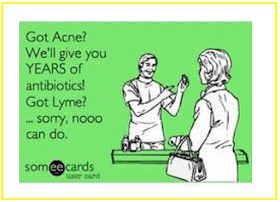
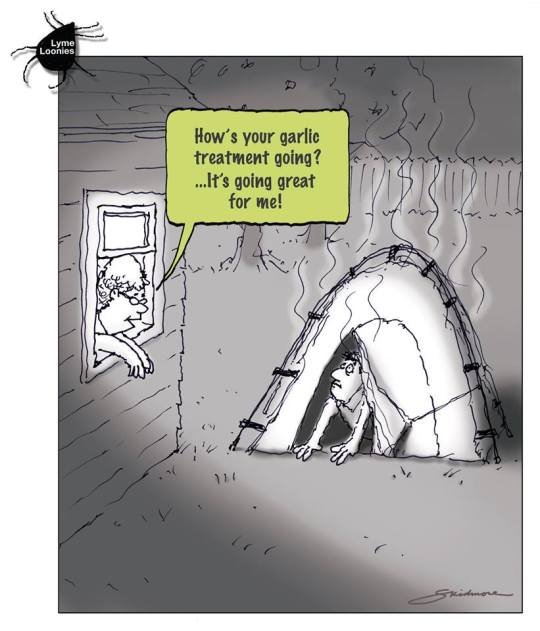
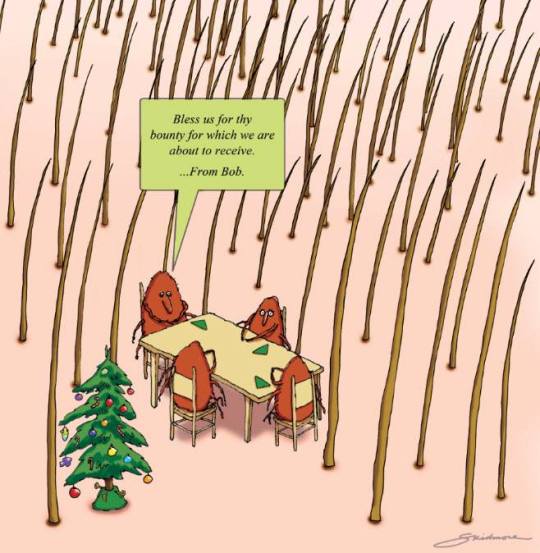
Lyme Humor for December

meme2

Couldn’t resist these…..

meme4

garlic lyme loonies

switch


Bless us

Last 3 created from David Skidmore, creator of Lyme Loonies:  http://www.lymeloonies.com/authordavidskidmore.html

BTW:  Father Christmas may have Lyme:  https://www.independent.co.uk/news/health/santa-claus-health-diagnosis-problems-lyme-disease-gout-alcoholism-whisky-mince-pies-gp-doctor-a8124291.html  He most probably became infected from tick-infested reindeer.  Instead of cookies and milk this year, he’s asking for an apple, some celery, and a glass of water.  No dairy or gluten, please.


TBDWG Reviews over 700 Public Comments – Uses ZERO

https://www.linkedin.com/pulse/breaking-news-tick-borne-diseases-working-group-over-700-jenna/

0

BREAKING NEWS: Tick Borne Diseases Working Group Reviews Over 700 Public Comments and Uses Zero

Published on December 3, 2018

Jenna Luche-Thayer

FRIENDS,

On December 3, 2018, the Tick Borne Diseases Working Group (Working Group) held their final Public Meeting related to their 2018 Congressional Report.

Federal advisory committees like the Working Group routinely ensure public stakeholder engagement by providing a timeframe for public review and response on major Reports, such as the Working Group’s 2018 Congressional Report.

Federal advisory committees routinely ensure public stakeholder engagement by reviewing, integrating and posting public comments. These comments are normally summarized and included in major Reports. These comments often shape recommendations. Federal laws for transparency and requirements for public participation support these practices.

In this case, strong public criticism regarding the Working Group’s lack of transparency, which included their actions regarding public comments, has resulted in a farcical and life-threatening set of responses.

WORKING GROUP RESPONSE TO TRANSPARENCY CRITICISM

During the December 11-12, 2017 Public Meeting the Working Group’s former Designated Federal Officer (DFO) Richard Wolitski promised public comments would be posted on the Health and Human Services (HHS) website.

When the public comments did not materialize on the HHS website, many Lyme advocates sent inquiries asking where one could find the public comments. HHS responses to these public inquiries were polite. They were also vague, elusive and misleading. For example, responses to a number of inquiries appeared to exploit laws to protect the disabled as an excuse and ignored publicly accessible technology available to serve disabled.

On April 28, 2018, Kristen Honey, the Vice Chair of Working Group announced at a Lyme conference in Maine, ‘all comments via email from the public will be considered by the Working Group before the Subcommittees’ Reports are finalized’. She went on to say she had ‘the public comments on her dining room table and she was reviewing them after work hours’.

Honey again claimed she had ‘the public comments on her dining room table and she was reviewing them after work hours’ during the Working Group’s May 15-16, 2018 Public Meeting. There was, however, no evidence ‘all comments via email from the public had been considered by the Working Group before the Subcommittees’ Reports were finalized’.

During the July 24, 2018 Public Meeting, Honey outlined how a new ‘Public Comments Subcommittee’ was established. She said the Subcommittee will provide public comments summaries to the newly reconfigured Working Group responsible for the next Congressional Report due in 2020.

During the December 3, 2018 Public Meeting, Honey announced the Public Comments Subcommittee had reviewed over 700 (of the more than 1000) public comments submitted by email. A PowerPoint slide gave details the thinly summarized the 700 public comments in a few sentences. Honey again noted the public comments summaries will be provided to the newly reconfigured Working Group responsible for the next Congressional Report due in 2020.

WHAT DO THESE ACTIONS MEAN?

According to the Vice Chair, the Working Group has apparently made zero use of more than 1,000 public comments.

This means members of the public—including persons suffering from Lyme and other tickborne diseases—who took the time and energy to draft and submit over 1,000 comments containing information, concerns and solutions were roundly EXCLUDED from this process.

This exclusion by persons who claim to be advocating for Lyme and tickborne disease patients is a travesty.

Does HHS and the Working Group’s leadership really think the public will buy the scam that the majority of public comments—completely ignored in the 2018 process—will be miraculously embraced by the ‘next version’ of the Working Group?

In addition to excluding the majority of the public comments, the opportunity for public review and comment on the draft 2018 Congressional report was almost nonexistent:

  • drafts of Subcommittee reports were provided to the public almost simultaneously to the Working Group review process, thereby eliminating most of the opportunity for considering public input.
  • the earlier draft of the 2018 Congressional report was never posted on the HHS website
  • instead, LymeDisease.org, a Lyme advocacy organization, provided the Lyme community important access to the draft Report via their website.
Does HHS and the Working Group’s leadership really think the public forgives their obstruction to legitimate engagement on the draft 2018 Congressional Report?

The format of the Public Meetings was another obstacle to public engagement. Many federal advisory committees choose to have interactive public exchange during their Public Meetings. For example, dialogue is supported—the public may pose questions to the members and members are expected to provide responses to questions.

HHS and the Working Group instead decided to implement a structure whereby public comments require ZERO response by the Working Group members. Given the many common interactive exchanges utilized by federal advisory committees, their choice to limit any opportunity for exchange indicates intent for a very controlled process and outcome. Their choice is also rather disrespectful, dismissive and commonly found in authoritarian and corrupted practices whereby stakeholder engagement is empty theater.

Altogether, both HHS and the Working Group’s leadership have demonstrated very low commitment to public exchange and collaboration.

Towards the end of the December 3, 2018 Public Meeting, Vice Chair Honey reiterated the importance of TRUST as a key value of the Working Group.

At this point in time, many in the Lyme community TRUST the Working Group will continue to ignore the human right for access to diagnosis and medical care as their 2018 Report makes NO RECOMMENDATIONS to stop:

  • obstruction of access to all existing diagnostic technologies that meet state, national and/or international standards
  • obstruction of access to all existing treatment options from guidelines that meet internationally accepted standards for evidence-based medicine

The 2018 Report mischaracterizes this obstruction as legal issues when it is, in fact, corrupted policy set by federal agencies and the IDSA.

Many in the Lyme community TRUST the Working Group will continue to promote the term Post Treatment Lyme Disease Syndrome (PTLDS) and ignore the fact the term is used to DENY ACCESS TO MEDICAL CARE.

PTLDS was ‘officially introduced’ in the IDSA 2006 Lyme guidelines and by 2008 both PTLDS and chronic Lyme disease were defined as Medically Unexplained Symptoms (MUS). MUS is described as a form of hypochondria or a psychosomatic condition. In 2013, MUS was formally repudiated and deleted from the Diagnostic and Statistical Manual of Mental Disorders, 5th Edition (DSM-5) by American Psychiatric Association.

According to the references on the CDC and NIH websites, medical practitioners are advised against using antimicrobials to treat the MUS-hypochondria of PTLDS and Chronic Lyme Disease (CLD). They recommend treating PTLDS and CLD with palliative care including emotional support and management of pain, fatigue, or other symptoms as required.

The IDSA, CDC, NIH and DOD fraudulently use the repudiated diagnosis of MUS to deny debilitating and disabling Lyme symptoms can be caused by persistent infection.

The Lyme infection is proven to be able to persist after a short course of antibiotics. However, because the CDC, NIH, DOD and IDSA define PTLDS as a form of ‘hypochondria’, private insurers, Veterans Affairs, DOD, Medicare and Medicaid refuse obviously ill persons access to additional medical care after IDSA’s recommended protocol.

Every week, more and more patients are told they have PTLDS because the IDSA short course treatment failed to resolve their debilitating and disabling Lyme symptoms. Veterans suffering from debilitating infection and complications are accused of being malingerers and thrown out of service with all their benefits cruelly removed.

Many in the Lyme community TRUST the Working Group will continue to avoid addressing the fact of persistent Lyme infection and the immunosuppressive nature of the Lyme infection.

Many in the Lyme community TRUST the Working Group will— as stated in their 2018 Congressional Report—continue to ‘take no stand’ regarding the attacks on clinicians who treat these vulnerable patients and the researchers intent on improving diagnostics and treatment options.

Transparency and accountability are foundational to democratic processes. The Working Group has failed these principles in epic manner.

The Working Group has failed to clearly state Lyme infection can persist and is immunosuppressive. This is an epic failure that supports the suppression of science and decades of human rights violations.

Their failure supports decades of unnecessary suffering, the destruction of families, bankruptcy, disability and death by tick borne diseases. Their failure contributes to fattening the bottom line profits of insurance companies, the offloading of medical costs by the DOD, Veterans Affairs, Medicare and Medicaid onto sick and vulnerable persons, and big Pharma profiteering from drugs that treat symptoms rather than the disease.

In other words, the corrupt, inhumane and deadly status quo.

Faithfully,

Jenna

Jenna Luché-Thayer. 30+ years working globally on the rights of the marginalized. Former Senior Advisor to the United Nations and the US Government. Director, Ad Hoc Committee for Health Equity in ICD11 Borreliosis Codes. Founder, Global Network on Institutional Discrimination, Inc. —Holding institutions accountable for political and scientific solutions. Email jennaluche@gmail.com