Archive for the ‘Activism’ Category

TBDWG – Dr. Dixon Stuck in the Year 2001

Lyme patient and advocate Carl Tuttle tuned into the Tick-borne Disease Working Group Meeting on March 3 & 4 and listened with dismay as Chief of the Bacteriology and Mycology Branch NIAID, NIH – Dr. Dixon referenced the unscientific Klempner Trial that has been used for decades against using further treatment for Lyme/MSIDS patients with remaining symptoms. 

He sent the following to Dixon:  https://www.change.org/p/the-us-senate-calling-for-a-congressional-investigation-of-the-cdc-idsa-and-aldf/u/25847056?

700 articles LYME Evidence of Persistence

https://www.dropbox.com/s/n09sk90eo6xz7ua/700%20articles%20LYME%20EvidenceofPersistence-V2.pdf?dl=0

The most disturbing reference for persistent infection originates from the Centers for Disease Control in Fort Collins, Colorado where Borrelia burgdorferi, was grown from the cerebrospinal fluid of Lyme patient Vicki Logan despite prior treatment with intravenous antibiotics.  Her case made the front page of the New York Times Science Times in August of 1993.

Logan’s positive culture and autopsy report were forwarded to past CDC Director Brenda Fitzgerald, MD.

Letter to Brenda Fitzgerald, MD

https://www.dropbox.com/s/xaul84dqmqgbre0/Brenda%20Fitzgerald%20MD%20Director%20CDC.docx?dl=0

In contrast, the Klempner antibiotic trials found no evidence of B. burgdorferi in a total of more than 700 different blood and cerebrospinal fluid samples from 129 patients. That’s not statistically possible Dr. Dixon!

I reached out to Dr. Klempner in 2018 and of course there was no response.

Letter written by Tuttle in 2018 to Dr. Klempner:

Dr. Klempner,

I would like to call attention to the attached study recently identifying chronic Lyme disease in twelve patients from Canada.

Persistent Borrelia Infection in Patients with Ongoing Symptoms of Lyme Disease

http://www.mdpi.com/2227-9032/6/2/33

All of these patients were culture positive for infection (genital secretions, skin “Morgellons” and blood) even after multiple years on antibiotics so there was no relief from current antimicrobials. Some of these patients had taken as many as eleven different types of antibiotics.

In contrast, your 2001 antibiotic treatment study found; “no evidence of B. burgdorferi in a total of more than 700 different blood and cerebrospinal fluid samples from the 129 patients in these studies.”

Two Controlled Trials of Antibiotic Treatment in Patients with Persistent Symptoms and a History of Lyme Disease

http://www.nejm.org/doi/full/10.1056/NEJM200107123450202#article_references#t=references

Not a single positive Dr. Klempner? Doesn’t this statistically prove that your methodology was fatally flawed?

Did you culture skin and genital secretions as the Middelveen paper reports? It would appear that you conveniently stopped looking after your results supported the existing thirty year dogma; chronic Lyme does not exist.

Persistent Lyme disease is not new and has been intentionally/deceitfully suppressed for decades as described in the Vicki Logan case identified in the following letter to past CDC Director Barbara Fitzgerald:

https://www.dropbox.com/s/xaul84dqmqgbre0/Brenda%20Fitzgerald%20MD%20Director%20CDC.docx?dl=0

In 1991 B. burgdorferi had been isolated in culture from Vicki Logan’s CSF (CDC’s laboratory in Fort Collins CO.) despite prior treatment with 21 days of IV cefotaxime and 4 months of oral minocycline.

The dishonest science here in the U.S. has denied chronic Lyme which stifled research to find a curative approach. Now the rest of the world is suffering.

We have lost nearly four decades to this 21st century plague due to the racketeering scheme identified in the RICO lawsuit filed by SHRADER & ASSOCIATES, LLP against the Infectious Disease Society of America, seven IDSA Panelists and eight insurance companies. The U.S. Centers for Disease Control has aligned itself with the seven IDSA Panelists identified in this lawsuit.

https://www.courthousenews.com/wp-content/uploads/2017/11/LymeDisease.pdf

Lyme is an incurable disease when not treated immediately which is spreading across North America and deceitfully misclassified as a low-risk and non-urgent health issue. Patient experience is describing a disease that is destroying lives, ending careers, causing death and disability while leaving victims in financial ruin. Current antimicrobials are ineffective for eradicating all forms of the Borrelia spirochete.

Public outcry has been ignored for decades while the Centers for Disease Control sat on evidence that this infection was not easily treated with a one size fits all treatment approach as dictated by the Infectious Diseases Society of America.

Once again your studies were fatally flawed while supporting the controlling dogma leaving hundreds of thousands if not millions worldwide with a persistent infection and absolutely no relief. We have another AIDS on our hands.

Carl Tuttle

Independent Researcher

Lyme Endemic Hudson, NH

Cc: Michael F. Collins, Chancellor

____________________

**Comment**

Some of you may be wondering about the Klempner trial, which can be found here:  https://www.ncbi.nlm.nih.gov/pubmed/11450676

Countering the Klempner Trial, here is a 2012 Study showing retreatment can be beneficial:  https://www.sciencedirect.com/science/article/pii/S1551714412002030

Article explaining flaws in the Klempner Trial:  https://www.lymedisease.org/lymepolicywonk-new-study-reveals-fatal-flaws-in-nih-klempner-trial-statistical-analysis-is-this-error-human-incompetence-or-worse/

Excerpt:

Clinical trials usually require that patients improve, but not that they return to perfect health.  DeLong found that the Klempner trial set the level for determining treatment success excessively high. For instance, in the seronegative arm of the trial, treatment success required that patients not simply return to the norm for the general population, but instead surpass the norm by essentially one full standard deviation.  That type of success is unheard of in clinical trials.

Many researchers say that small sample size trials are unethical because they can literally steer scientists down the wrong path.  That’s what the Klempner study did.  It was a waste of money, a waste of time, and it has led research down the wrong path for the last 10 years.

Second, the Klempner team could have avoided “overstating” its findings and highlighted the potential for error.  The ethical implications of exaggeration in science are understood by other scientific societies.  For example, the code of conduct for the American Chemical Society states: “Public comments on scientific matters should be made with care and accuracy, without unsubstantiated, exaggerated, or premature statements.”

Instead, the Klempner study concluded flatly that retreatment was ineffective. 

Also, Embers et al. found Persistence of Borrelia burgdorferi in Rhesus Macaques following Antibiotic Treatment of Disseminated Infection:  https://journals.plos.org/plosone/article?id=10.1371/journal.pone.0029914

For fun, I did a little sleuthing on Dr. Klempner (who is behind the new Lyme vaccine)

Klempner was optimistic. “We’ve learned some very important lessons from the LYMErix debacle, as I think some people would categorize it,” he said. “It certainly remains the only safe and effective vaccine that’s been pulled from the market.”

During LYMErix’s brief stint on the market, Clarke was among the recipients. Having had Lyme disease twice, she decided to try the vaccine. Even after receiving the final LYMErix shot, Clarke said she got Lyme disease for a third time.

So Dr. Klempner, a man with rife conflicts of interest, states emphatically that LYMErix was “safe and effective” despite the plethora of people & dogs who developed Lyme-like symptoms.


Corona Virus Common Sense

https://www.somerdelsignore.com/the-lyme-corner/lets-talk-lyme-disease/pans/pandas/somer-delsignore/2020/3/2/corona-virus-common-sense

March 2, 2020

By Somer Delsignore

Corona Virus Common Sense…

The Corona Virus continues to monopolize all forms of media with daily infection and death toll updates to experts voicing their opinions about origins, nature of the virus and prevention, it’s nearly impossible to
escape. Thousands of people across the globe are affected by this virus and most cases concentrated in China.
The Corona Virus appears to be more virulent than the Flu. But why?

Corona Viruses are known to cause the common cold and have existed for thousands of years. The Corona Virus of concern is a novel strain of beta-coronavirus commonly found in bats and birds. It is thought the current strain originating in China was transmitted by bats. The virus is unique in its immune provocation where an aggressive response occurs signaling interferon alpha of the immune system that triggers significant, overwhelming inflammation in the host.

Bats by nature have mechanisms to temper this acute response but a human host lacks the ability to balance this inflammation. Additionally, the virus targets the upper and lower respiratory tracts. The host, if
immunocompromised or with other illnesses may succumb to the inflammatory respiratory effects of the disease  potentially leading to respiratory failure in those most vulnerable. During my travels recently I was appalled by the human habits observed in the airport, a global snapshot of human behaviors if you will and wondered why those numbers weren’t higher.

Many travelers inadequately washed their hands including food establishments or more disturbing, not washing at all.  Flight attendants? Forget about it! I observed attendants handle the bathroom door, collect garbage, touch overhead bins, help passengers with items only to happily return to their food and
beverage cart to dish out refreshments with a generous helping of bacteria.
Healthy appearing folks were wearing surgical face masks only to take them off for a smoke/vaping break.
Many travelers were consuming voluminous amounts of soda, sugary and carbohydrate laden foods. The human body is miraculous in its ability to rejuvenate from such conditions. I’m surprised we still exist as a species!

Airport habits aside, how does one protect themselves? The easiest, least expensive way to decrease your risk of Corona Virus and other illnesses is to wash your hands! Handwashing means soap and water with vigorous friction for 20 seconds. Sing Happy Birthday twice to yourself or out loud, whatever works for you. Avoiding large crowds if possible, can decrease your risk given most viruses and bacteria are spread via droplets, coughing and sneezing. Getting ample rest can help the body reset and recharge by release of
growth hormone during deep sleep cycles thus giving an immune boost. A healthy diet is key. I cannot place enough emphasis upon this! Ensure a diet rich in lean protein sources, high fiber fruits and vegetables and hydrate. Diets high in sugar have been linked to immune suppression making you more vulnerable to
illnesses.

Additionally, supplements may help boost the immune system while supporting detoxification and keeping inflammation at bay. A daily probiotic containing bifidobacterium is known to have antioxidant properties as
well as free radical scavenger abilities while Lactobacillus Rhamnosus is shown to increase interferon-gamma further supporting the immune system.  Transfer factor is another heavy hitter providing key materials that support immunity. Transfer factor is a very small protein (peptide) containing RNA made by activated T-helper cells. Transfer factor can bind to specific antigens on an infected cell signaling T cells to eradicate it. Overall Transfer factor helps to balance the immune system and support the front-line immunity so when exposed the body can effectively mount an attack against a virus or bacteria.

Additionally, ample amounts of vitamins A, C, and D, and the minerals zinc and selenium can support healthy immune function.  (It is important to note that since vitamins A and D are fat soluble, if they are taken for prolonged periods of time, checking blood levels should be considered.)  There are also several specialized supplements that provide additional immune support, which may especially be useful in times of intense immune system challenges, such as what we are experiencing now.  These include immune enhancing
polysaccharides, such as advanced mushroom extract, and IAG larcharabinogalactans, which can complement the immune modulating activities of the peptide transfer factors.  Herbal products such as astragalus, curcumin, and resveratrol, as well as beta-glucans, and olive leaf extract, may also add additional support for the immune system and some may have anti-inflammatory effects as well.

The takeaway here is to support the “vessel” by using common sense practices like good handwashing, rest and proper nutrition. Additionally, immune enhancements during the height of the viral season can also provide support during these challenging times.

https://www.ncbi.nlm.nih.gov/pubmed/29149822

https://www.ncbi.nlm.nih.gov/pubmed/?term=wellmune%20upper%20repiratory%20infection

https://www.globalresearch.ca/three-intravenous-vitamin-c-research-studies-approved-treating-covid-19/5705405

https://www.ncbi.nlm.nih.gov/pubmed/?term=wellmune%20upper%20repiratory%20infection

Dogs With Proteinuria Found to Have Exposure to Rickettsia, Ehrlichia, and Lyme Disease

https://www.ncbi.nlm.nih.gov/pubmed/31916316/

2020 Jan 8. doi: 10.1111/jvim.15610. [Epub ahead of print]

A retrospective study of vector-borne disease prevalence in dogs with proteinuria: Southeastern United States.

Abstract

BACKGROUND:

Proteinuria is a risk factor for progressive kidney injury in dogs. Enhanced understanding of potential associations between canine vector-borne diseases (CVBD) and proteinuria is needed.

OBJECTIVES:

To determine the proportion of evaluated proteinuric dogs exposed to ≥1 CVBD, including Babesia spp., Ehrlichia spp., spotted-fever group Rickettsia, Bartonella spp., Anaplasma spp., hemotropic Mycoplasma spp., Borrelia burgdorferi, and Dirofilaria immitis, and to determine if demographic or clinicopathologic differences exist between proteinuric dogs exposed to CVBD versus proteinuric dogs with no evidence of CVBD exposure.

ANIMALS:

Two-hundred nine proteinuric dogs, concurrently tested for CVBD, which were examined at a single academic veterinary hospital between January 2008 and December 2015.

METHODS:

Retrospective cross-sectional study. Demographic, clinicopathologic, and CVBD test results were extracted from medical records. A multivariable logistic regression model was used to assess associations between CVBD and selected variables.

RESULTS:

Based on serology and polymerase chain reaction testing,

  • 34% of proteinuric dogs (72/209) were exposed to ≥1 CVBD
  • Exposure to Rickettsia spp. (19%)
  • Ehrlichia spp. (12%)
  • B. burgdorferi (9%)

The CVBD exposure was lower in dogs tested in autumn or spring, higher in intact dogs, and higher in dogs with lower serum albumin and higher serum creatinine concentrations.

CONCLUSIONS AND CLINICAL IMPORTANCE:

Exposure to CVBD, particularly exposure to Rickettsia spp., Ehrlichia spp., and B. burgdorferi was found in proteinuric dogs from the southeast United States. Additional controlled prospective studies examining a potential causal relationship between CVBD and proteinuria are warranted.

__________________

**Comment**

The question of course is – does this also happen in humans and to what degree?


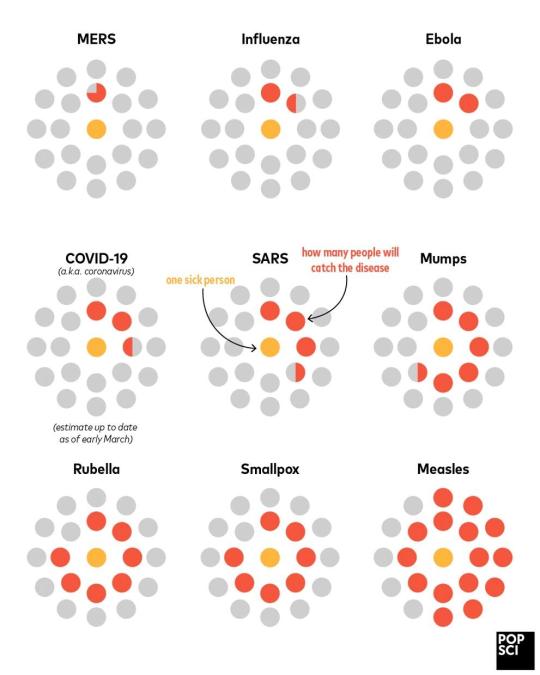
How Contagious is COVID-19?

0-16Coronavirus is on par with SARS in terms of infectiousness.

Infographic by Sara Chodosh

https://www.popsci.com/story/health/how-diseases-spread/

Lobbying For Lyme on Capital Hill

https://globallymealliance.org/lobbying-for-lyme-disease-on-capitol-hill/

LEARNING FIRST-HAND THE POWER OF COMING TOGETHER TO GET THINGS DONE, AS LYME PATIENTS AND ADVOCATES JOINED TOGETHER IN WASHINGTON, D.C. TO LOBBY FOR LYME DISEASE RESEARCH AND AWARENESS

March 9, 2020

by Sara Tyghter, Director of Education and Outreach, GLA (pictured with HHS Deputy Secretary Eric Hargan)

lobby-for-lyme_sara-tyghter_eric-hargan

As I traveled to the Center for Lyme Action’s (CLA) first Washington, D.C. “Fly In” last month, I wasn’t sure what to expect. I knew CLA, a new advocacy group focused on lobbying at the federal level, had organized a two-day program (Feb. 11-12) and that Lyme advocates would be converging on the nation’s capital to make their voices heard. But I had never done any lobbying before.

Any feelings of apprehension quickly disappeared as I joined with 60 advocates from across the country who were in D.C. to tell their Congressional representatives why federal funding to grow Lyme and other tick-borne disease programs is urgently needed. More specifically, we wanted to ensure that they maintain their strong commitment to the Kay Hagan Tick Act. Signed into law in December 2019, the Tick Act represents critical federal support for researchers as well as millions of people suffering from Lyme disease; it still requires funding ($150 million over five years) and there is no guarantee these monies will be appropriated.

lobbying for lyme
Team GLA, L-R: Ambassadors Mark Liberto, Breanna Liberto, Jen Kenley, Melinda Sander, GLA Director of Education and Outreach Sara Tyghter, and GLA Peer Mentor Kiki Penn

It was rewarding meeting with those representing other Lyme organizations, or who were there on their own because they are passionately committed to ensuring Lyme disease research receives the attention it deserves. I was delighted to finally meet with six Global Lyme Alliance volunteers who are committed to raising Lyme disease awareness in their communities; these were GLA Education Ambassadors Mark Liberto and his wife, BreAnna (Pennsylvania), Jen Kenley and her mom Wendy Crane (Tennessee), Melinda Sander (Missouri), and Peer to Peer Mentor Kiki Penn (Florida). In addition, GLA supporters Alex and Lynda Moresco (Illinois) were also there to lobby their local officials.

Rep. Vicky Hartzler's (R-MO) Senior Legislative Asst Bryan McVae, GLA volunteer Alex Moresco, GLA Ambassador Melinda Sander
Rep. Vicky Hartzler’s (R-MO) Senior Legislative Asst Bryan McVae, GLA volunteer Alex Moresco, GLA Ambassador Melinda Sander

After arriving, we all went to the Capitol for training and later to attend an awards dinner honoring Sen. Susan Collins (R-ME) and others who have sponsored and supported legislation for Lyme disease. Others receiving awards were Senator Tina Smith (D-Minnesota), Congressman Chris Smith (R-New Jersey) and Congresswoman Anna Eshoo(D-California).

Sen. Marsha Blackburn (R-TN) with GLA Ambassador Jen Kenley (
Sen. Marsha Blackburn (R-TN) with GLA Ambassador Jen Kenley

The second day was devoted to meeting Senators and Congressional representatives, though most of us met with their staff members. CLA had supplied us with talking points and information packets for distribution. We went to meetings in various Senate office buildings and the Capitol wearing distinctive bright green neck scarfs we all had been given. (I learned that such colored identifiers are being used these days by grassroots lobbying efforts). After two days I looked at my Fitbit and saw I’d walked eight miles.

Sen. Roy Blunt (R-MO) with GLA Ambassador Melinda Sander

I along with another advocate from Connecticut met with three state offices representing our state of Connecticut—the legislative correspondent for Sen. Christopher Murphy, and legislative assistants for Sen. Richard Blumenthal  and Congressman Jim Himes. At all of our meetings I was impressed by the level of knowledge regarding risks associated with contracting Lyme disease as well as the long-term complications that people living with the illness may experience. The representatives were empathetic and truly wanted to understand the overall impact of the disease on patients and their families—not just in terms of physical health, but finances and emotions as well. I walked away from each meeting feeling confident that our lobbying efforts were well received. Our meetings were truly rewarding because every office representative we met with possessed a long-standing commitment to the Lyme community, and knew the importance of allocating the funds to support the Kay Hagan Tick Act and other Lyme-related projects.

After my two days there, I felt energized and more determined than ever to spread the message that federal funds for Lyme and other tick-borne diseases must be fully committed if we are to protect the long-term health of an increasingly vulnerable segment of Americans. It was truly a worthwhile endeavor and I’m proud to have been a part of this effort. As Senator Collins said, “we must knockout these devastating diseases.” Lobbying was new to me, but I am ready to continue the fight!