
https://www.2ndsmartestguyintheworld.com/p/lyme-disease-cure-ivermectin-and?
LYME DISEASE CURE: Ivermectin & Doxycycline Combination Therapy – Testimonials & Research
This article is too long for email and must be opened in a browser.
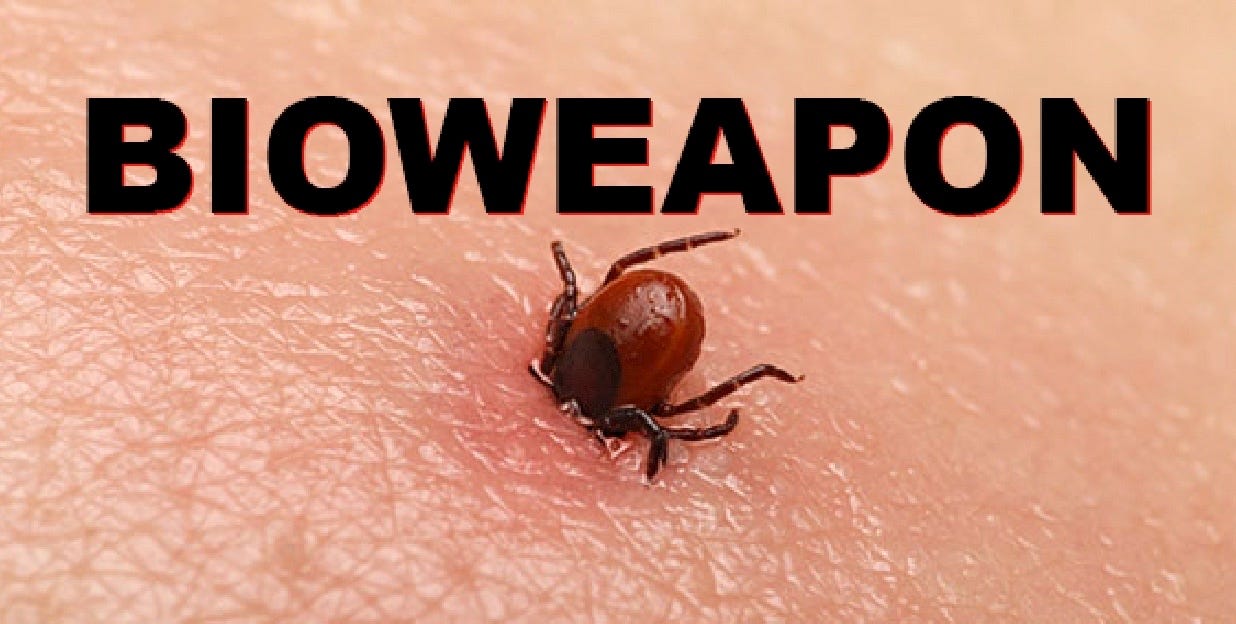
This first account is courtesy of a molecular biologist’s journey in treating their Lyme Disease:
Introduction
Lyme disease, primarily caused by the bacterium Borrelia burgdorferi, has been the subject of much research and debate. Commonly transmitted through the bite of an infected black-legged tick, Lyme Disease can present a complex array of symptoms.
While most focus on the bacterial aspect of the disease, there are also protozoan co-infections, such as Babesiosis caused by Babesia parasites, to consider. Here’s how a personal experience led to some thought-provoking insights into treating Lyme Disease and associated co-infections.
Disclaimer: I am not a healthcare provider. The following narrative reflects personal experience and should not be considered as medical advice. Always consult qualified healthcare professionals for diagnosis and treatment.
The Challenge of Diagnosis and Treatment
After experiencing severe arthritic pain that we initially attributed to ‘long Covid,’ my wife observed a classic ‘bullseye’ rash indicative of a tick bite. With some medical school training, she immediately suspected Lyme Disease. As a molecular biologist, I was aware that Lyme Disease can be accompanied by protozoan co-infections like Babesiosis.
However, the majority of research focuses on the bacterial aspect, with Doxycycline often being the mainstay treatment [1].
Anecdotal Evidence and Off-Label Treatments
During our quest to manage the debilitating symptoms, we came across an anecdotal case that reported benefits from combining Doxycycline and Ivermectin [2]. While Ivermectin is primarily indicated for parasitic infections [3], we questioned whether it could have a role in treating protozoan co-infections like Babesiosis. We consulted specialists who, although hesitant, acknowledged the potential of this combo.
An Unexpected Turnaround
After a week on this unconventional regimen, my wife’s symptoms were entirely alleviated. While this is a single case and should not be generalized, it adds to a growing list of anecdotal evidence supporting a multifaceted approach to treating Lyme Disease.
The State of Lyme Disease Treatment Today
Currently, Ivermectin as part of a combination treatment for Lyme Disease is becoming more widely accepted, although this still remains an area of active research and debate [4].
Conclusion and Caution
Our experience highlights the need for more research into comprehensive treatment options for Lyme Disease, particularly for those with co-infections. While anecdotal evidence can provide valuable insights, clinical trials are necessary to establish efficacy and safety.
Always consult qualified healthcare providers for the most current and personalized medical advice. Self-prescribing medications, even if they seem to have worked in the past, can carry risks.
References
- Wormser, G. P., Nadelman, R. B., Dattwyler, R. J., et al. (2006). “The clinical assessment, treatment, and prevention of Lyme disease, human granulocytic anaplasmosis, and babesiosis: clinical practice guidelines by the Infectious Diseases Society of America.” Clinical infectious diseases, 43(9), 1089-1134. Link
- LymeVlog (2011). “Lyme Disease: Getting better with Ivermectin.” Link
- Omura, S., & Crump, A. (2004). “Ivermectin: enigmatic multifaceted ‘wonder’ drug continues to surprise and exceed expectations.” The Journal of antibiotics, 70(5), 495-505. Link
- Sapi, E. (N.D.) “Ivermectin and its potential role in treating Lyme Disease.” Link
(See link for article)
________________
SUMMARY & Comments:
The article then goes on to give another entry by a patient-turned-Lyme Disease researcher who improved on an ivermectin and Alinia combination after five years of using other antibiotics including Ciprofloxacin and Bactrim. This treatment took away their muscle, arthritis, and heart pain, light and sound sensitivity. It’s important to always dig into what a patient has used over time because they tend to only credit the last thing they took. This would be a mistake as typically numerous drugs are required over time for a majority of patients. To my knowledge there is NO magic bullet to this complex illness. If there was, I’d be the first to tell you, believe me! Most patients are coinfected with multiple pathogens all requiring fairly specific treatment.
Treatment nuances are given in the article – particularly the need to use anti-parasitics for the long-haul once a week or every two weeks to address all stages of the life cycle. Ivermectin has a long half life so taking it too often will create too high of a toxic dose, (although doses vary widely for COVID on the FLCCC website) but even for COVID it is typically higher doses but only for 5 days.
I would also like to remind the reader that in 2016 Dr. Alan MacDonald found three strains of borrelia living in parasitic nematode worms, worm eggs, or larvae in the brain tissue of 19 autopsies.
MacDonald states that both worms and borrelia can cause devastating brain damage and that:
“while patients are wrongly declared free of Lyme and other tick-borne infections, in reality, too often they contract serious neurodegenerative diseases which can kill them.”
MacDonald made his discovery from 10 specimens from the Rocky Mountain Multiple Sclerosis Center Tissue Bank. All 10 showed evidence of borrelia infected nematodes. Five patients who died of Glioblastoma multiforme, a malignant brain tumor, and four patients who died of Lewy Body dementia also showed infected nematodes.
MacDonald used FISH, Fluorescent In Situ Hybridization, which uses molecular beacon DNA probes to identify pieces of borrelia’s genetic material which fluoresce under the microscope with a 100% DNA match.
In other words, this is no mistake.
https://www.youtube.com/watch?v=7ZnY871HZhM&feature=youtu.be YouTube of MacDonald explaining the results
Lyme discoverer, Willy Burgdorfer, wrote of finding nematodes in tick guts way back in 1984 and in 2014 University of New Haven researcher, Eva Sapi, found 22% of nymphs and 30% of adult Ixodes ticks carried nematodes.
Knowing this information makes it obvious why treating patients for worms is prudent.
It’s also important to note; however, that caution must always be used with Lyme/MSIDS patients due to potentially severe herxheimer reactions. Similarly to how dogs treated for heart worm (D. immitis) have trouble due to the heart worm medication causing Wolbachia to be released into the blood and tissues causing severe Inflammation in pulmonary artery endothelium which may form thrombi and interstitial inflammation, it is not a stretch at all to compare this deleterious reaction to a Lyme/MSIDS patient treated for worms who has borrelia hiding in worms, eggs, and larvae. When the worms are killed, borrelia will be released into the body causing sudden widespread inflammation. This is why treatment should most probably include things that kill and disable borrelia as well. The patient should be closely monitored and treatment put on hold or at least have dosages lowered if severe reactions occur. This will be particularly true of patients with central nervous system involvement (which is most of us) due to severe inflammation of the brain, particularly the meninges which can wreak all sorts of havoc including chiari.
Lastly, the author proposes doxycyline.
While doxycycline is a standard front-line drug for Lyme/MSIDS, as it addresses many infections, it also is not a perfect drug in that it does not address the non-cell wall form of borrelia or biofilm. Further, Eva Sapi’s research showed that while doxycycline reduced spirochetal structures ~90%, it increased the number of round body forms (cysts) about twofold. Tigecycline and tinidazole treatment, on the other hand, reduced both spirochetal and round body forms by ~80%–90%. In terms of qualitative effects, only tinidazole reduced viable organisms by ~90%. Following treatment with the other antibiotics, viable organisms were detected in 70%–85% of the biofilm-like colonies.
Persistence of viable organisms in round body forms and biofilm-like colonies may explain treatment failure and persistent symptoms following antibiotic therapy of Lyme disease.
Similarly to needing to address worms at each life cycle, ALL forms of borrelia must be addressed for treatment success.
 Madison Area Lyme Support Group