Archive for July, 2019

Babesiosis Could Be More Common in Sweden Than Previously Thought

https://www.ncbi.nlm.nih.gov/pubmed/31265116/

2019 Jun 28;116. pii: FL4D.

Babesiosis could be more common in Sweden than previously thought

[Article in Swedish]

Abstract

Babesia is a malaria-like, intraerythrocytic parasite with more than 100 different species. It is a zoonosis and some of the species are transmitted to humans by ticks and also as a possible transfusion-transmitted infection. In Sweden the disease has been well known in veterinary medicine for a long time, but only a few but severe cases have been published in humans during the last decades. Common symptoms from human Babesia infections (babesiosis) are fever, chills and myalgia and they vary from subclinical to potentially fatal among those with risk factors such as immunosuppression and splenectomy. In the U.S. more than 2,000 cases of babesiosis are found yearly and it is one of the most frequent fatal infections following blood transfusion. A study from southern Sweden has recently revealed a seroprevalence of 16% of Babesia antibodies among Borrelia-infected persons. These results indicate that there is a need to broaden awareness of Babesia in Sweden.

_________________

**Comment**

This abstract underplays the prevalence of Babesia. Not sure why they state it is a possible transfusion-transmitted infection when the Red Cross recently came out with a test to screen Babesia for blood.  It’s an obvious problem:

https://madisonarealymesupportgroup.com/2019/07/11/characteristics-of-transfusion-transmitted-babesia-microti-american-red-cross-2010-2017/

Here’s an even earlier article going transfusion-transmission:  https://madisonarealymesupportgroup.com/2016/12/15/blood-screening-for-babesia/  of those confirmed to be positive, 20% were PCR-positive, with 13% antibody-negative.

Here we have babies contracting it from blood:  https://madisonarealymesupportgroup.com/2017/09/27/premature-infants-develop-babesia-via-blood-transfusion

Here we have people contracting Babesia from transfusions, even in non-endemic areas.  https://madisonarealymesupportgroup.com/2017/08/08/transfusion-transmitted-babesiosis-in-nonendemic-areas/   Excerpt:

Asymptomatic individuals with Babesia infection are able to donate blood in the United States because of the lack of specific blood donation testing. Blood products collected in Babesia-endemic areas are distributed nationally; thus, clinicians in nonendemic states may fail to include babesiosis in the differential diagnosis of a patient who had a recent transfusion history and a fever of unknown origin.”  

In the abstract, those with Lyme also had a seroprevalence of 16% of Babesia antibodies. In this study,  https://madisonarealymesupportgroup.com/2016/11/19/seroprevalence-of-babesia-in-individuals-with-ld/  it was nearly 29%. To me this demonstrates those with Lyme are at risk for Babesia and other pathogens.

To date, little work has been done on concurrent infections, and has been underplayed for decades.

The most important, recent work demonstrating multiple pathogen involvement:  https://madisonarealymesupportgroup.com/2018/10/30/study-shows-lyme-msids-patients-infected-with-many-pathogens-and-explains-why-we-are-so-sick/  This shows Lyme patients are at risk for not only other tick borne illnesses but opportunistic infections as well.  This is what we experience and see in the real world of Lymeland.

I don’t think mainstream medicine has a clue how important concurrent infection is.

http://www.nejm.org/doi/full/10.1056/NEJM199807163390304  When left untreated, silent babesial infection may persist for months or even years. Although treatment with clindamycin and quinine reduces the duration of parasitemia, infection may still persist and recrudesce and side effects are common. Improved treatments are needed.

Dr. Krause published in the New England Journal of Medicine that when a patient has Lyme and Babesia, Lyme is found three-times more frequently in the blood, proving Babesia suppresses the immune system.  http://danielcameronmd.com/babesia-and-lyme-its-worse-than-you-think/

https://madisonarealymesupportgroup.com/2017/06/28/concurrent-babesiosis-and-lyme-in-patient/   Dr. Horowitz warns that due to this immune suppression,patients with Rheumatoid Arthritis or Lupus and are on immunosuppressant drugs, if they have Babesia, could get much worse. The strain, B. divergens, causes a higher mortality rate and more severe symptoms, and if left untreated, this strain can develop into shock-like symptoms with pulmonary edema and renal failure.

More on Babesia:  https://madisonarealymesupportgroup.com/2016/01/16/babesia-treatment/  Dr. Horowitz, a nationally recognized LLMD, states Babesia is one of the most tenacious coinfections he sees in his patients and that treatment often takes 9 months to a year, particularly with those also infected with Lyme disease (borrelia).  Treatment options for you to discuss with your practitioner in this link.  


Characteristics of Transfusion-Transmitted Babesia Microti, American Red Cross 2010-2017

https://www.ncbi.nlm.nih.gov/pubmed/31250463/

2019 Jun 27. doi: 10.1111/trf.15425. [Epub ahead of print]

Characteristics of transfusion-transmitted Babesia microti, American Red Cross 2010-2017.

Abstract

BACKGROUND:

Babesia microti, a red blood cell (RBC) parasite transmitted naturally to vertebrate hosts by ixodid ticks, is endemic to the northeastern and upper midwestern United States, with the geographic range of infected ticks expanding. B. microti is a blood safety issue with >200 transfusion-transmissions reported.

METHODS:

The American Red Cross’s Hemovigilance program investigated hospital-reported transfusion-transmitted babesiosis (TTB) cases. Follow-up samples from involved donors were tested for B. microti antibodies and parasite DNA, the latter by real-time polymerase chain reaction (PCR). Test-positive donors were permanently deferred from future donations.

RESULTS:

B. microti-positive donors were implicated in 77 of 143 suspect TTB cases investigated from 2010 through 2017. In four cases, two positive donors were identified for a total of 81 positive donors. In three cases, a RBC unit was split and components transfused multiple times to the same pediatric recipient. RBCs were the transmitting product in all cases. At follow-up, all involved donors were antibody positive; 25 donors were also PCR positive. Positive donations were collected throughout the year, peaking in the summer. Most donors (78) were resident of, or traveled to (2), an endemic state. One donor resided in a non-endemic state without relevant travel history. One fatality listed babesia as a contributing factor. No implicated donation was screened by an investigational protocol.

CONCLUSIONS:

Babesiosis remains a blood safety issue. Prior to FDA-licensed screening test availability and final FDA Guidance, blood collectors in endemic states investigationally tested none, a portion, or all collections. Future expanded testing will reduce the frequency of TTB cases.

_________________

**Comment**

This clearly shows there were more than 200 Babesia transfusion-transmissions reported. It also shows you don’t have to reside in an endemic area or travel to an endemic area to get it. The article also clearly points out that the geographic range of ticks is expanding, which means the pathogens they carry will as well.

More on Babesia:  https://madisonarealymesupportgroup.com/2016/01/16/babesia-treatment/

Babesia, as well as Lyme is under reported. Research hardly exists on those with both. We desperately need to know what concurrent infection is doing to patients. It only makes logical sense that their cases are more severe and of greater duration, yet mainstream research and medicine doesn’t blink at this issue:

Going back to 1998, it was known that when a patient has Lyme and Babesia, Lyme is found three-times more frequently in the blood, causing greater symptoms, disease severity, and duration of illness:  https://reference.medscape.com/medline/abstract/8637139

What happens when a patient has Lyme, Babesia, and Bartonella and maybe a few viruses thrown in for good measure?  Nobody’s studied this, yet it is common scenario in Lyme-land:  https://madisonarealymesupportgroup.com/2018/10/30/study-shows-lyme-msids-patients-infected-with-many-pathogens-and-explains-why-we-are-so-sick/

Lyme Q & A With Dr. Ross Tonight at 5 PM CST

https://events.genndi.com/register/169105139238438973/9629589511 Register here


af38f50e-505c-46d0-9e89-43a15953ea5b


Register in link for three events in July

Join Marty Ross MD on Thursdays for a 1.5 hour Lyme disease Q&A webinar. He answers any questions you may have about Lyme.
​​​​​​

Next event starts in…

  • Thursday, 11 July 2019, at 5:00 PM CST
  • Thursday, 18 July 2019, at 6:00 PM CST
  • Thursday, 25 July 2019, at 6:00 PM CST

__________________

**Comment**

Make sure you note the times listed. A mistake was made so for tonight (July 11) it will be at 5PM CST, with future times being at 6PM CST.

This is a great opportunity to ask all your questions and get feedback from an experienced practitioner.

Dr. Ross’ Youtube Channel, where you can listen to previous webinars: https://www.youtube.com/channel/UC2rR9VdwTEuXvrJ5tt7j6yw

Lyme, Alzheimer’s, Enbrel – New Potential Treatment

http://lymemd.blogspot.com/2019/06/lyme-alzheimers-enbrel-new-potential.html

Thursday, June 6, 2019

By Dr. Jaller

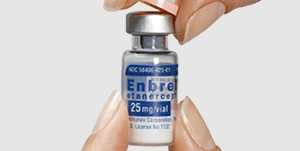
Lyme, Alzheimer’s, Enbrel — New Potential Treatment

iu

I have learned that most people want a simple sound bite answer or conclusion. The edges of medicine always operate in the grey and nuanced.

It has long been dogma in Lyme circles that immune suppressing drugs, e.g. Enbrel are very dangerous and should not be used.  The same is true with prednisone.

I have patients who get the occasional injection by their rheumatologist; joint pain gets better and they are no worse for the wear.

The drug is used for psoriasis amongst other many other conditions. The drug has serious side effects: its use should not be taken lightly.

A study suppressed by Pfizer, brought to light by the Washington Post, was based on insurance company data considering outcomes of  hundreds of thousands of patients and found those taking Enbrel had a 64% decrease in the incidence of Alzheimer’s disease. 

Enbrel impairs the function of TNF alpha, a master cytokine responsible for trafficking immune cells.

Pfizer did not make the disclosure because: a generic version will be  available.  A shiny new, me-too drug promoted heavily by pharm reps costing obscene amounts of money will take its place. Doctors will be given shiny data, along with lunch, proving equivalency? with the old drug.

The myth that generics are poor (dangerous) and lack quality control may be resurrected.

Watch out for first year generic prices: cute trick. For the first year a single company is given a monopoly and only required to reduce the price by 20%.  “See, the generic is almost as cheap as the brand,” the rep will inform a doctor. This is a bad pro big-pharma rule passed by Congress decades ago I’m sure) by the way. Cheap is a relative term.

The pharmaceutical giant, Pizer has excuses, reasons why it withheld the data, for example, they  claimed the data is wrong because of biological plausibility: the molecule is too large to cross the blood brain barrier.

Really? I care if the molecule gets into the brain; maybe it’s an advantage.  The brain has its own immune system which needs to be tweaked lightly. Ask anyone who has had a brain Herxheimer reaction knows. The Cytokine storm which may make you crazy results from peripheral cytokine reactions/overproduction primarily.  And there is no data the molecule cannot get into the brain. Cytokines get in the brain.

Alzheimer’s is in part motivated by inflammation. Other major factors are: production of amyloid beta protein (AB) (plaques and tangles), genetic factors and multiple external factors.

It is thought that AB protein is a naturally occurring antibiotic which responds to inflammation. Discussed elsewhere. Lyme resides in the brain along with many  bacteria, viruses, protozoans. It is true that spirochetes have been reported to aid in the transportation of AB into the brain.  Infection (or colonization) may be omnipresent and therefore not the whole story — or the most critical piece.

The vast majority of my patients present with cognitive complaints. Many or most Lyme patients, at one time or another fit the criteria for a disorder call MCI, minimal cognitive impairment. The mainstream medical community considers this a pre-Alzheimer’s condition, often.

What’s a Lyme patient to do?

First off, if symptoms completely resolve with usual therapy do nothing.

If you are a patient who has had very aggressive therapy, e.g. months of IV antibiotics and cognitive symptoms persist, look up MCI and consider the following:

Get an AB PET. The tests measures metabolic activity in the brain and the presence of early AB protein deposition. IF the test is positive you are at very high risk for developing Alzheimer’s.

Prednisone and Enbrel have largely been seen as dangerous because patients are misdiagnosed and not also treated for Lyme. Enbrel is likely tolerably safe, in many cases, considering benefit to risk ratio.

A lot of money has been spent searching for an Alzheimer’s cure. To no avail. Nothing very promising in the literature.

I for one am very angry with Pfizer. I suppose it is typical behavior in the industry. We still need big pharma. Don’t throw out the baby with bathwater. Hold them accountable. But, do not  conclude big pharma is corrupt therefore all drugs developed through the system are fruit of a poisoned tree and are therefore inherently untrustworthy and dangerous — in addition to being immorally overpriced.

It’s a bad syllogism. Drug companies are a very necessary evil.

Getting back to Enbrel.  Is this a silver bullet?.  More comment, biostatistics and analysis are required as well as prospective RCT medical studies. Since the drug will be generic soon big pharma will not finance the research. Fortunately, Alzheimer’s, a burgeoning epidemic as our population ages, is well funded through private sources.

Ideal prospective studies, which will likely be done make observations moving forward starting with a baseline current population. The process is slow.

Retrospective, population studies, primarily manipulation of data already there will not take long. These studies are never as good as prospective studies but perhaps good enough.

If you want my  bottom line: don’t run out and get Enbrel– YET.

I am not endorsing the use of the drug for any medical condition, including Alzheimer’s. This site is for informational purposes only. Medical care can only be delivered by a certified medical practioner who properly evaluates your particular issues. Please don’t diagnose or treat yourself

http://www.drjaller.com Dr. Jaller’s practice is in Maryland
__________________________
Regarding immune suppressants, many LLMD’s use them IF the patient is also on antimicrobial therapy at the same time. This tandem usage will protect the patient from a worsening infection(s), be it Lyme or any of the coinfections or even a latent infection.
Talk with your doctor about all treatments.

CDC Admits Flu Vaccine Failed 91% of the Time Against Current Flu Strain

https://thefreethoughtproject.com/flu-vaccine-9-percent-effective-cdc/

flu vaccine

CDC Admits Flu Vaccine Failed 91% of the Time Against Current Flu Strain

The latest numbers from the CDC on the flu vaccine show that this year’s shots were only 9% effective against the current strain that popped up mid-season.

Every year, the Centers for Disease Control releases its data on how effective the flu vaccine has been for the previous season, and nearly every year, the numbers are disappointing. Once again, doctors are now expressing their disappointment over the latest flu vaccine with the release of the CDC’s new data.

This year’s flu vaccine “failed miserably” according to the CDC due to a current flu strain that showed up halfway through the season.

As ABC 7 reports, in fact — the agency rated its effectiveness at just 9% against that strain and the overall effectiveness for the entire season at 29%.

And this is the case nearly every year. Despite this terrible track record of not working, every year, the CDC continues to urge everyone to get the flu shot. What’s more, according to ABC News, vaccines against most infectious diseases are not considered successful unless they are at least 90% effective. Due to the flu virus’ ability to change so quickly, vaccine effectiveness usually averages around 40%.

Since the United States has never seen a 90% effective rate, the flu vaccine has never been considered successful.

In spite of this fact, municipalities across the country enact laws to ban children and adults alike from schools and workplaces unless they receive the flu vaccine.

As TFTP reported earlier this year, Connecticut parents were told that if they cannot prove their child received the flu vaccine, they will not be allowed to return to school.

The new state law is simple: comply or your child cannot go to school.

Lawmakers claim that the laws like these are necessary because every year in the US roughly 20,000 children under 5 are hospitalized because of the flu. But historically, the data shows that these numbers are largely skewed.

The CDC has been telling the public for nearly a decade that there are more than 200,000 estimated hospitalizations and 36,000 estimated deaths from influenza in the U.S. every year.

But these estimates count a lot of people hospitalized – not just with influenza but also with pneumonia, respiratory and circulatory illnesses – which they counted as probably associated with influenza.

What’s more is the fact that the flu shot is a crap shoot every year. It was no secret that like this year, last year’s vaccine was all but entirely ineffective. 

Also, despite reassurance from government officials, the flu vaccine has been documented to cause harm.

As TFTP reported in December, Shane Morgan, like millions of other Americans was vaccinated against the flu virus in November. However, within 36 hours of receiving the shot, he began experiencing symptoms of the flu.

“About 36 hours after he got the flu shot he started to get sick,” said Mr. Morgan’s wife, Monique.

After staying in bed for a week at his house, Morgan did not improve. In fact, things got far worse and he had to be admitted to the emergency room ICU.

Morgan spent the next 3 weeks in the ICU, blinded and paralyzed. He is now home with his family but he is far from back to normal as he’s still partially blind and in a wheelchair.

_________________

**Comment**

So much for being “safe.”

More on the flu-vaccine:

https://madisonarealymesupportgroup.com/2018/10/21/woman-undergoes-extensive-arm-surgery-after-flu-shot/

https://madisonarealymesupportgroup.com/2017/03/30/ty-bollinger-the-truth-about-vaccines-series/

Great read on all aspects of the flu-vaccine:  https://www.nvic.org/Vaccines-and-Diseases/Influenza.aspx

The CDC reported in February 2018 that between 2004/2005 and 2017/2018, the influenza vaccine was less than 50 percent effective in ten out of 14 flu seasons. In the 2014-2015 flu season, the influenza vaccine was only 19 percent effective.4

A 2018 Cochrane Collaboration published a review of medical literature on the effects of the influenza vaccination in the elderly and concluded that:

“The available evidence relating to complications is of poor quality, insufficient, or old and provides no clear guidance for public health regarding the safety, efficacy, or effectiveness of influenza vaccines for people aged 65 years or older.”9

The Cochrane review also concluded that recommendations for routine use of influenza vaccine as a routine public health measure was not supported by the published evidence base and stated,

“The results of this review provide no evidence for the utilisation of vaccination against influenza in healthy adults as a routine public health measure. As healthy adults have a low risk of complications due to respiratory disease, the use of the vaccine may only be advised as an individual protective measure.” 13

https://madisonarealymesupportgroup.com/2018/10/23/influenza-vaccines-dengue-like-disease/  Excerpt:

When a person making anti-H3N2 IgE is infected with H3N2, one can expect the course of the flu to be significantly worse. So the “cytokine storm” being observed in severe cases is likely to be an infection concurrent with an allergic reaction. Death is caused by anaphylactic shock but due to the presence of an infection, it is wrongly classified as septic shock.

I post information about vaccines for many reasons – but one of the largest reasons is because they have caused relapses in Lyme/MSIDS patients as well as activated latent infections: https://madisonarealymesupportgroup.com/2017/12/02/scottish-doctor-gives-insight-on-lyme-msids/

https://madisonarealymesupportgroup.com/2016/04/24/gardasil-and-bartonella/Excerpt: 

There is further damning evidence that Gardasil can produce life-threatening reactions in those who have been close to a cat, fleas, or ticks, since many of these animals are infected with Bartonella, Babesia, or Lyme (borrelia). Also, since many MSIDS patients (multi systemic infectious disease syndrome) also struggle with viruses such as Mono or active EBV, a cytokine storm can resultwith mucus being over manufactured in lungs and airways and well as wide-spread inflammation.

Asymptomatic girls after receiving Gardasil activated dormant Bartonella which was confirmed by testing.

“Gardasil contains aluminum adjuvant nano-prticle substrates, bound to HPV16-L1 protein fragments, that appear to have mutated at binding sites, possibly resulting in excessive inflammation. The mutation attaches to the endothelial lining of blood vessels and organs, including the brain, if the host lacks sufficient active glutathione, or similar complimentary attractant, or does not readily clear toxins. Inflammatory HPV16-L1 DNA protein particles were found in autopsy tissue samples from two different teenage girls, six months after receiving her last vaccination, in the case of one deceased girl. Our findings indicate that if the blood brain barrier is open, commonly due to allergies or the common cold, these man-made inflammatory vaccine nano-particles may enter the brain, and cause additional damage, and possible demyelination.”

Statistics indicate that 50% of domestic cats in the US are infected with Bartonella, and humans can contract Bartonella and have no symptoms at all. It can lie dormant until a stressor, such as a vaccine, triggers an active infection.