Archive for February, 2018

LD in the U.S. – Looking for Ways to Cut the Gordian Knot

http://onlinelibrary.wiley.com/doi/10.1111/zph.12448/abstract;jsessionid=4442DBFE52618A3BD9A1C7356CB044C6.f03t03  OPINION

Lyme disease surveillance in the United States: Looking for ways to cut the Gordian knot

Authors:  M. L. Cartter, R. Lynfield, K. A. Feldman, S. A. Hook, A. F. Hinckley
First published: 12 February 2018
DOI: 10.1111/zph.12448

Disclaimer: The findings and conclusions in this report are those of the authors and do not necessarily represent the official position of the Centers for Disease Control and Prevention.

Summary

Current surveillance methods have been useful to document geographic expansion of Lyme disease in the United States and to monitor the increasing incidence of this major public health problem. Nevertheless, these approaches are resource-intensive, generate results that are difficult to compare across jurisdictions, and measure less than the total burden of disease. By adopting more efficient methods, resources could be diverted instead to education of at-risk populations and new approaches to prevention. In this special issue of Zoonoses and Public Health, seven articles are presented that either evaluate traditional Lyme disease surveillance methods or explore alternatives that have the potential to be less costly, more reliable, and sustainable. Twenty-five years have passed since Lyme disease became a notifiable condition – it is time to reevaluate the purpose and goals of national surveillance.

_______________

**Comment**

Yes, please!  Cut the Gordian Knot!  Better yet, take an ax to the thing!

http://www.history.com/news/ask-history/what-was-the-gordian-knot

Thanks to the enduring popularity of the Alexander fable, the phrase “Gordian knot” has entered the lexicon as shorthand for an intricate or intractable obstacle. One of its earliest appearances came in the Shakespeare play Henry V, where the titular character is praised for his ability to “unloose” the Gordian knots of politics. Likewise, the saying “cutting the Gordian knot” is now commonly used to describe a creative or decisive solution to a seemingly insurmountable problem.


Generating 1st Transgenic Ticks to Help Fight Tick-borne Diseases

https://www.unr.edu/nevada-today/news/2018/cabnr-lab-generates-transgenic-ticks

2/21/2018 | By: Robyn Feinberg

Generating first-ever transgenic ticks to help fight tick-borne diseases

College of Agriculture, Biotechnology, and Natural Resources lab receives grant from National Institute of Health for tick research
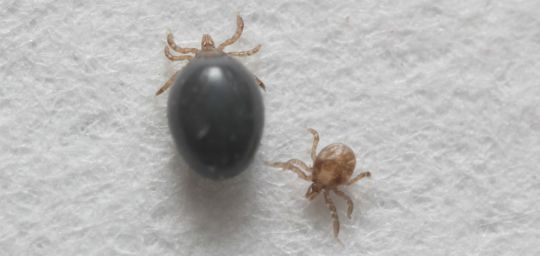
Tick1180x560Unfed and blood fed larvae, an example of the ticks used in Gulia-Nuss’ lab that demonstrate the differences between an unfed and blood fed larvae. Photo taken by Andrew Nuss, assistant professor at the University of Nevada, Reno.

For those who are active hikers, or find themselves outdoors often, the reality of a tick bite is not unusual, nor are its potential consequences. Ticks are known for transmitting many diseases in animals and humans, especially the deer tick, which is a known carrier of diseases such as Lyme disease, babesiosis, and anaplasmosis.

Monika Gulia-Nuss, assistant professor in the Department of Biochemistry and Molecular Biology at the University of Nevada, Reno, is working on generating transgenic ticks in her lab, the first of their kind, in order to explore new targets for vector control. Vector control is any strategic method used to limit organisms that spread disease pathogens.Monika Gulia-Nuss in her lab

Gulia-Nuss’ lab works specifically on the deer tick and has received a $407,000 grant from the National Institute of Health to continue studies.

“Our focus is to be able to manipulate these ticks in the lab so that we can understand the functions of different genes,” Gulia-Nuss said. “This way we can have a better approach for finding new vaccine, drug or insecticide targets.”

“This particular project that we just got awarded from the National Institute of Health is to develop methods for generating transgenic ticks for functional studies,” Gulia-Nuss said.

Transgenic in this sense means deleting or over-expressing a gene in an organism – in this case the tick. Generating transgenic ticks will not only help the Gulia-Nuss lab explore new areas of vector control, but also help in understanding genes involved in tick-pathogen interactions.

“One of the major impediments in tick research is that we do not have any genetic tools to dissect out the functions of their genes,” Gulia-Nuss said.

The lab knows the functions of certain genes in other organisms, but those specific tools are not readily available when studying ticks, so Gulia-Nuss and her team are building tools.

Originally a mosquito biologist, Gulia-Nuss moved into tick research with little experience with the bloodsucking arachnids. Studying ticks has previously proven difficult for many labs and researchers in terms of time.

“I didn’t know that the tick life cycle is two years,” Gulia-Nuss said. “That was a surprise for me, because with mosquitoes, I was used to 10 days of life cycle, and here I had this organism that takes two years, which is another impediment in tick research.”

Gulia-Nuss’ first move in her transgenic research was to shorten the life cycle of the ticks she was working on.

“When I set up my lab here at the University in 2016, my first goal was to cut the life cycle short to a more manageable time,” she said. “We were able to bring it down to five months from two years, which was a big step forward for us.”

The lab was able to do this by placing the ticks in an incubator set to a higher temperature, increasing their metabolism and therefore causing them to molt faster.

The second step for Gulia-Nuss was to inject tick embryos, something that no one else had ever done before.

“We didn’t even know what manipulation we needed to inject embryos,” Gulia-Nuss said.

Gulia-Nuss’ collaborator and the co-investigator on this grant, Robert Harrell, is an expert in transgenic insects and manages the Insect Transformation Facility at the University of Maryland. Together, they used their expertise in mosquito embryo injections and translated it into the tick research.

“We were able to inject tick embryos, so the shortened life cycle and our ability to demonstrate that we could inject tick embryos were the two main steps that really helped us get this grant,” Gulia-Nuss said.

The hypothesis behind the work

The major hypothesis behind the lab’s research lies in disrupting insulin signaling in ticks so as to affect parasite development.

“If we disrupt insulin signaling in ticks, that will influence their physiology and their behavior, and potentially the development of the pathogen they carry,” Gulia-Nuss said.

Insulin signaling is extremely important for nutrient metabolism, which is in turn, important for all organisms including ticks.

“Nutrients are important for a parasite developing inside an organism because the parasite requires all of their nutrients from the host,” Gulia-Nuss said. “To get those nutrients, the insulin signaling of the host should be in perfect order, but if we disturb the insulin signaling in the host, that might affect parasite development.

The lab is planning to use a technology called CRISPR-Cas9, which has the ability to manipulate genes in different organisms without them needing to be a model organism. With this technology, the lab will be able to knock-out genes in the ticks and understand their functions better, such as insulin signaling or other targets.

“It’s easier than the previous generation’s tools,” Gulia-Nuss said. “It’s not easy, but definitely easier.”

Lyme disease and public health

“Lyme disease is one of the most important vector-borne disease in the United States,” Gulia-Nuss said. “CDC reports around 300,000 new cases of Lyme disease annually, mostly in the 14 states in the Northeast and Midwest.”

Lyme disease is a tick-borne disease as the bacteria that causes it is carried by the tick. Ticks are blood-feeding organisms and they must feed on vertebrate blood at every developmental stage.

“Ticks go from eggs to larvae, to nymphs to adults, and at every developmental stage, they have to take a blood meal; it’s the only thing that they eat, they do not feed on anything else,” Gulia-Nuss said.

When ticks take this blood meal, they are likely to become infected with pathogens including the Lyme disease bacteria from an infected vertebrate, and transmit it during their next feed.

While Lyme disease is treatable through an antibiotics course, it can be fatal and lead to neuro-degenerative disorders if left untreated. Though Lyme disease is a serious problem, it is not the sole focus of the lab.

“Lyme disease is not the only disease that these ticks carry,” Gulia-Nuss said. “They also carry a number of different viruses, and understanding the tick-pathogen interaction on a molecular level will allow the research community to find new targets for tick control or blocking pathogen transmission.”

Gulia-Nuss’ lab already has support from the research community and this proposal was supported by researchers working on ticks as well as tick-pathogen interactions through letters of support. Once Gulia-Nuss’ lab have these tools made, they are hoping that it will not only help the tick research community, but also public health in general.

“This grant really puts us on the path forward, we are able to hire more staff for the lab, including a graduate student and a post-doctorate, and it will provide money for the next two years for things such as supplies, related costs to the ongoing project and also travel,” Gulia-Nuss said.

Gulia-Nuss received her bachelor’s, masters and doctorate degrees in biosciences from Maharshi Dayanand University in Rohtak, India. She was a research scientist at Purdue University before moving to the University of Nevada, Reno as an assistant professor in 2016.


Bb in North American Horses: A Consensus Statement

https://www.ncbi.nlm.nih.gov/pubmed/29469222

Borrelia burgdorferi Infection and Lyme Disease in North American Horses: A Consensus Statement.

Divers TJ1, Gardner RB2, Madigan JE3, Witonsky SG4, Bertone JJ5, Swinebroad EL6, Schutzer SE7, Johnson AL8.  J Vet Intern Med. Feb 22 2018 (Epub ahead of print)

Abstract

Borrelia burgdorferi infection is common in horses living in Lyme endemic areas and the geographic range for exposure is increasing. Morbidity after B. burgdorferi infection in horses is unknown. Documented, naturally occurring syndromes attributed to B. burgdorferi infection in horses include neuroborreliosis, uveitis, and cutaneous pseudolymphoma. Although other clinical signs such as lameness and stiffness are reported in horses, these are often not well documented. Diagnosis of Lyme disease is based on exposure to B. burgdorferi, cytology or histopathology of infected fluid or tissue and antigen detection. Treatment of Lyme disease in horses is similar to treatment of humans or small animals but treatment success might not be the same because of species differences in antimicrobial bioavailability and duration of infection before initiation of treatment. There are no approved equine label Lyme vaccines but there is strong evidence that proper vaccination could prevent infection in horses.


March 2018 Support Group – Laser Therapy

Our next support meeting will be Saturday, March 31, from 2:30-4:30 at the Pinney Library.  

The featured speaker will be Raymond Yingling of Madison Laser Therapy http://www.madisonlasertherapy.com. Ray attended Clayton College school and is a certified a naturopath, especially trained in drug induced nutrient depletion. He is former owner of Vita Source a local vitamin store in Madison. Presently, Ray owns Madison Laser Therapy and has been treating people with Class 4 infrared laser for over 7 years.

http://   Approx. 4 Min.

High intensity laser – medical effects

Published on Dec 1, 2015

  • Class IV lasers may offer better therapeutic outcome, based on six characteristics of this new technology:  Class IV lasers can deliver up to 1,500 times more energy than Class III and consequently reduce treatment time because and thus dosages of therapeutic energy.
  • Deeper penetration into the body. Leading Class III lasers only penetrate 0.5-2.0 cm. Class IV can penetrate up to 10 cm.
  • Larger treatment surface area.Class III cover a treatment area of 0.3-5.0 cm2 while Class IV cover up to 77 cm2.
  • Greater power density.Power density indicates the degree of concentration of the power output. This property has been shown to play a major role in therapeutic outcomes.
  • Continuous power supply.In Class III lasers, the power is pulsed or modulated approximately 50 percent of the time. In other words, light is permitted to pass through the probe for only 50 percent of the total operating time. In most cases, Class IV lasers deliver a consistent amount of energy over a given time. Their power can be adjusted for acute and chronic conditions.
  • Superior fiber optic cables. Fiber optic cables transmit laser energy from the laser to the treatment probe (wand) at the end of the cable. Several studies reveal that as much as 50 percent of the light energy generated by a Class III laser may be lost by the time it reaches the end of the probe.

Class IV laser therapy has demonstrated the ability to significantly accelerate and enhance the body’s natural defense and repair components in the presence of injury, inflammation and certain disease processes through the action of photo-stimulation of light reactive biological receptors (chromophores) in the body.  Laser therapy is consistent in providing pain relief, reducing injury damage and loss of function by modifying the effects and limiting the duration of inflammation, as well as enhancing specific repair and healing processes, and facilitating more rapid repair and producing stronger healed tissue structures.

Multiple clinical studies have noted the following results of Laser therapy:
• Increased collagen production
• Enhanced nerve regeneration
• Increased vasodilatation
• Reduced inflammatory duration
• Increased cell metabolism
• Increased pain threshold
• Increased cell membrane potential
• Reduced edema magnitude
• Increased microcirculation
• Increased tissue and bone repair
• Increased lymphatic response

Lasers work when light receptive chromophores are irradiated with coherent laser light.  The transferred energy stimulates increased action in cellular and sub-cellular tissues.  Penetrating much deeper than other incoherent light wave forms, laser light activates increased mitochondrial ATP synthesis, mitigates mast cell inflammation and increases Ca++ ion presence and beneficial reactive oxygen species (ROS) production. Through the action of photo bio-stimulation, oxidative metabolism is increased via cytochrome C oxidase and photosensitization of hemoglobin.  Laser irradiation stimulates increased endorphin release and increased prostaglandin synthesis.  Photon-stimulation leads to both localized and systemic reactions that result in immunomodulation and reduction of inflammation.  Damaged skeletal, connective and neurological tissues and structures react with enhanced healing with lasers.

class_iv_therapy_laser_case_studies_report_2013

I have personally had treatments with the Class IV laser and noticed near immediate improvement in pain and stiffness.

Recommendations for the TBD Working Group

https://www.change.org/p/1120418/u/22432830?utm_medium=email&utm_source=petition_update&utm_

Subcommittee recommendations for the TBD Working Group

Carl Tuttle

Hudson, NH

FEB 25, 2018 — Please see the following letter addressed to the Tick Borne Disease Working Group.

If you support a congressional investigation into the mishandling of Lyme disease as this petition is calling for please consider writing your own letter in support of this request to form a separate subcommittee.

Anyone wishing to contact the Lyme Disease Working Group can send an email to:
tickbornedisease@hhs.gov

Carbon copy to Dr. John Aucott, Chair of the TBD Working Group:
jaucott2@jhmi.edu

Richard Wolitski, Ph.D., Designated Federal Officer:
Richard.Wolitski@hhs.gov

Letter to the Working Group:

To the TBD Working Group,

Let’s not ignore the fact that a crime has been identified here! 

Racketeering lawsuit: https://www.courthousenews.com/wp-content/uploads/2017/11/LymeDisease.pdf

A subcommittee should be appointed to uncover the motivation behind the deliberate suppression of evidence of persistent Borrelia infection so this travesty will never be repeated.

For example:

1. Why did the Centers for Disease Control suppress positive culture evidence of persistent infection (1991) in Lyme patient Vicki Logan as described in the letter to Brenda Fitzgerald, Director of the CDC?

Letter to Fitzgerald: https://www.dropbox.com/s/xaul84dqmqgbre0/Brenda%20Fitzgerald%20MD%20Director%20CDC.docx?dl=0

2. Why was the following 1995 case study out of Stony Brook Lyme Clinic ignored which describes seronegative recurrent Borrelia infection after repeated courses of IV and oral meds?

Seronegative Chronic Relapsing Neuroborreliosis.
https://www.ncbi.nlm.nih.gov/pubmed/7796837

________________

3. Why did the Centers for Disease Control promote Nordin Zeidner who published his study regarding single dose Doxycycline for tick bite?

Zeidner’s conclusion: https://www.ncbi.nlm.nih.gov/pubmed/18349366

“…..single dose doxy stopped Lyme disease not in 87% of mice, but rather, in 20 to 30 percent at most.

Dr Gary Wormser of New York Medical College (who has controlled the Lyme disease narrative for the past three decades) published a study earlier promoting the use of single dose Doxy for tick bite. (See Wormser’s 2001 flawed NEJM article)

Source: http://www.nejm.org/doi/full/10.1056/NEJM200107123450201

I understand that it was Wormser who called Zeidner’s superiors at the CDC to put an end to Zeidner’s work. Zeidner was told to discard the mice sera instead of testing for antibodies as he had promised.

Zeidner’s research was terminated for “lack of industrial support” Paul Mead, and he was promoted, and his email address inactivated.

Wormser’s single dose Doxycycline is still promoted to this day.

Complaint filed with the Office of Special Counsel and Office of Inspector General:

https://www.dropbox.com/s/68fq6cit7ggqhdt/Single%20dose%20Doxy%20Complaint%20filed%20with%20the%20Office%20of%20Special%20Counsel.docx?dl=0

How many other researchers have been intimidated or have had their employment threatened by Wormser or the CDC?

___________________

4. Why have the Centers for Disease Control bankrolled Wormser’s junk science (1.5 million) where he compares Lyme to the “aches and pains of daily living”; essentially downgrading Lyme with its life-altering/life-threatening consequences to a simple “nuisance disease?”

The patient experience with this disease does not resemble the established disease definition (Wormser’s definition) as the destructive nature is seen in histopathologic findings of the autopsy results of Lyme patient Vicki Logan.

Complaint filed with the Office of Research Integrity:

https://www.dropbox.com/s/94jv3w2hb0z9lv7/Email%20sent%20to%20the%20Office%20of%20Research%20Integrity.docx?dl=0

Complaint filed with the U.S. Department of Justice, Criminal Division:

https://www.dropbox.com/s/8ts9v51pr2fn65b/Complaint%20filed%20with%20the%20U.S.%20Department%20of%20Justice%20Criminal%20Division.docx?dl=0

Scientific misconduct to support one’s bias is fraud which has had an impact on public health and clinical treatment. Wormser’s 1.5 million grant should be reclaimed from New York Medical College to support honest research.

________________

5. Why did the Centers for Disease Control end all communication with Dr. Sin Lee after he published his study identifying persistent Borrelia infection from the blind coded serum samples provided by the CDC’s Lyme Disease Clinical Sample Repository? A FOIA request identified Wormser’s lab which collected and categorized these samples. Dr. Lee’s laboratory used molecular diagnostics with sequencing confirmation.

Dr. Lee’s publication identifying chronic Lyme:

DNA sequencing diagnosis of off-season spirochetemia with low bacterial density in Borrelia burgdorferi and Borrelia miyamotoi infections.
https://www.ncbi.nlm.nih.gov/pubmed/24968274

Dr. Lee’s 57 million dollar claim against the CDC for suppression of an early detection test for Lyme disease: 
https://www.change.org/p/the-us-senate-calling-for-a-congressional-investigation-of-the-cdc-idsa-and-aldf/u/20864023

____________________

6. How many other laboratory tests for Lyme disease are sitting on the shelf?

Quantification of Borrelia burgdorferi membrane proteins in human serum is a new concept for detection of bacterial infection
Crystal S. F. Cheung, Kyle W. Anderson, Kenia Y. Villatoro Benitez, Mark J. Soloski, John N. Aucott, Karen W. Phinney, and Illarion V. Turko,
https://www.ncbi.nlm.nih.gov/pubmed/26491962

Perhaps Dr. Aucott could shed some light on the subject since he is a co-author of this 2015 paper?

7. For the past three decades, the patient experience with Lyme disease describes an illness producing horrific disability and financial ruin but those who control the narrative through editorial censorship have painted an entirely different picture. Why?

Here is a small sample of the published books on the subject of Lyme disease: (I listed these seven books for a reason!)

1. Cure Unknown: Inside the Lyme Epidemic by Pamela Weintraub

“Instead of just swollen knees and a rash, patients can experience exhaustion, disabling pain, and a “Lyme fog” that leaves them dazed and confused.”

2. In the Crucible of Chronic Lyme Disease: Collected Writings & Associated Materials
by Kenneth B. Liegner

“Documentational in nature and not written as a narrative, the materials, nonetheless, convey the intensity of the struggle to characterize the nature of Lyme disease and the desperate fight for proper diagnosis and treatment upon the outcome of which patients’ very lives depended.”

3. Lyme Madness: Rescuing My Son Down The Rabbit Hole of Chronic Lyme Disease by Lori Dennis

Chronic Lyme disease is a complicated, confusing, and terrifying abyss—a black hole of human suffering, conflicting views, widespread corruption, and unrelenting medical navigation. Lyme Madness chronicles the author’s and adult son’s medical odyssey while capturing the current landscape of immeasurable suffering,

4. Confronting Lyme Disease: What Patient Stories Teach Us by Rita L. Stanley, Karen P. Yerges

“In this book, fourteen patients reveal how their lives were changed by the debilitating effects of Lyme disease and its co-infections, and by unanticipated medical obstacles.”

5. “It’s All In Your Head,” Patient Stories From the Front Lines: Intimate Aspects of Chronic and Neuropsychiatric Lyme Disease by PJ Langhoff

“Imagine inaccurate diagnostic tests…Physicians ignoring patient symptoms…Insurance denying coverage…patients are told their illness is “fake”…Academic societies denying an epidemic…People are suffering needlessly…Sound like science fiction? It’s real and it’s happening right now…”

6. Believe Me: My Battle with the Invisible Disability of Lyme Disease By Yolanda Hadid

“She suffered from severe debilitating fatigue, migraines, joint pain, anxiety, insomnia, Bell’s palsy, tremors, muscle weakness, severe brain fog, word retrieval difficulty, memory loss and intermittent loss of eyesight.”

7. Bite Me: How Lyme Disease Stole My Childhood, Made Me Crazy, and Almost Killed Me by Ally Hilfiger, Tommy Hilfiger (Foreword by)

“Ally was at a breaking point when she woke up in a psych ward at the age of eighteen. She couldn’t put a sentence together, let alone take a shower, eat a meal, or pick up a phone.”

______________

There is evidence to suggest that the rush to create a vaccine for Lyme led to the mishandling of the disease. The Principle Investigators of the two previous Lyme vaccines: Allen C. Steere for SmithKlineBeecham’s LymeRix and Gary Wormser for Connaught’s vaccine (which never made it to market) have conceptualized a disease that would enable vaccine development.

A chronic relapsing seronegative disease does not fit the vaccine model.

The one-size-fits-all Lyme treatment guideline (lead author: Gary Wormser) matches the conceptualized disease. (Nuisance disease) This is a flagrant conflict of interest. Post-treatment Lyme disease syndrome is simply a fabricated medical condition disguising treatment failure.

Lyme disease testing parameters were manipulated at the 1994 Dearborn Conference in order to facilitate vaccine development. Outer surface proteins A and B of the Borellia spirochete were eliminated so the vaccinated would test seronegative. Removing Bands 31 and 34 from the commercial Western blot is the crime that should be exposed.

Letter to the World Health Organization regarding faulty/misleading antibody tests:

https://www.dropbox.com/s/olby3eb9276oj3r/11th%20email%20to%20the%20World%20Health%20Organization.docx?dl=0

8. Why did CDC Director Thomas Frieden refuse to answer Dr. David Volkman’s letter regarding the strict DEARBORN testing criteria?

Dr. Volkman’s letter to Frieden:

https://www.dropbox.com/s/sl5x3gzguowpj6n/Volkman%20letter%20to%20Frieden.doc?dl=0
_________________________

Might I remind everyone that this process of collecting data and recommending changes for how we diagnose and treat Lyme disease was previously completed in 2001 by the Institute of Medicine. What has changed since then? NOTHING!

IDSA Ignores IOM Recommendations in Lyme Disease Treatment Guidelines’ Development, According to the Lyme Disease Association & LymeDisease.org
May 06, 2015, 13:40 ET from Lyme Disease Association, Inc.
https://www.prnewswire.com/news-releases/idsa-ignores-iom-recommendations-in-lyme-disease-treatment-guidelines-development-according-to-the-lyme-disease-association–lymediseaseorg-300078777.html?tc=eml_cleartime

Excerpt:

“Unfortunately for 300,000 people who contract Lyme annually in the US, the last 25 years of research has not improved patient care. Instead, a small group of researchers have built their careers around a biased view of the disease that brings us no closer to cure. They have disregarded patients while pursuing dead- end research using tax payer funded grants.”

___________

What is the solution here?

The TBD Working Group subcommittee should recommend a congressional investigation (with subpoena power) into the deliberate mishandling of Lyme disease and present all of the evidence collected by the subcommittee members with the intent to prosecute those responsible for this crime against humanity as it would appear that the Centers for Disease Control is allowed to police themselves while answering to no one.

The disabled Lyme community believes that this TBD Working Group is little more than a pacifier while those in control march along with current agendas supporting the status quo.

For example:

Once again we see the CDC promoting antibody testing for Lyme even though it is well known that Lyme patients may not produce detectable antibodies for 4-6 weeks after a tick bite.

A multiplex serologic platform for diagnosis of tick-borne diseases
Published online: 16 February 2018
https://www.nature.com/articles/s41598-018-21349-2
Rafal Tokarz, Nischay Mishra, Teresa Tagliafierro, Stephen Sameroff, Adrian Caciula, Lokendrasingh Chauhan, Jigar Patel, Eric Sullivan, Azad Gucwa, Brian Fallon, Marc Golightly, Claudia Molins, Martin Schriefer, Adriana Marques, Thomas Briese & W. Ian Lipkin

Until the CDC, IDSA and all those named in the racketeering lawsuit have been removed from positions of authority and influence we will have another three decades of unimaginable pain and suffering.

A response to this inquiry is requested.

Respectfully submitted,

Carl Tuttle
Independent Researcher
Lyme Endemic Hudson, NH