Nutritionist Kate Hope of the Greater New York City Area is collecting data on Lyme/MSIDS and insomnia. Let’s all help her out. Information in link above.
As my mom always said, “If you want something done right. Do it yourself!”
She hopes to make the results known. I will post when available.
Lyme encephalopathy, characterized by non-specific neurobehavioral symptoms including mild cognitive difficulties, may occur in patients with systemic Lyme disease and is often mistakenly attributed to CNS infection. Identical symptoms occur in innumerable other inflammatory states and may reflect the effect of systemic immune mediators on the CNS.
Methods
Multiplex immunoassays were used to characterize the inflammatory profile in serum and CSF from Lyme and non-Lyme patients with a range of symptoms to determine if there are specific markers of active CNS infection (neuroborreliosis), or systemic inflammatory mediators associated with neurobehavioral syndromes.
Results
CSF CXCL13 was elevated dramatically in confirmed neuroborreliosis (n=8) and to a lesser extent in possible neuroborreliosis (n=11) and other neuroinflammatory conditions (n=44). Patients with Lyme (n=63) or non-Lyme (n=8) encephalopathy had normal CSF findings, but had elevated serum levels of IL-7, TSLP, IL-17A, IL-17F, and MIP-1α/CCL3.
Conclusions
CSF CXCL13 is a sensitive and specific marker of neuroborreliosis in individuals with Borrelia-specific intrathecal antibody (ITAb) production. However, CXCL13 does not distinguish individuals strongly suspected of having neuroborreliosis, but lacking confirmatory ITAb, from those with other neuroinflammatory conditions. Patients with mild cognitive symptoms occurring during acute Lyme disease, and/or following appropriate treatment, have normal CSF but elevated serum levels of T-helper 17 markers and T-cell growth factors. These markers are also elevated in non-Lyme disease patients experiencing similar symptoms. Our results support that in the absence of CSF abnormalities, neurobehavioral symptoms are associated with systemic inflammation, not CNS infection or inflammation, and are not specific to Lyme disease.
________________
**Comment**
There is no question that inflammation plays a large role in Lyme/MSIDS. What is important to point out; however, is that persistence of infection is the issue that needs to be tackled.
Here’s some articles pointing to persistent infection:
https://madisonarealymesupportgroup.com/2018/01/03/diagnosis-and-management-of-lyme-neuroborreliosis/ The persisting infection/aberrant inflammation issue is not over just because Halperin reviews old Cabal manuscripts and claims there is a “wide body of evidence.” As they say, “Garbage in, garbage out.” A quick search reveals Halperin commonly serves as an “expert” witness in medical malpractice cases defending physicians accused of failing to diagnose Lyme.
Here’s a lengthy article Article Kicking and LLMDs Personal View coauthored by Halperin which states, “Advocacy for LD has become an increasingly important part of an anti science movement that denies both the viral cause of AIDS and the benefits of vaccines and that supports unproven (sometimes dangerous) alternative medical treatments.”
Oh, and somehow patients, advocates, and their doctors pose a threat to public health.
Here’s a few telling Halperin quotes:
QUOTE- “When physicians who diagnose chronic Lyme disease obtain laboratory tests to provide support for their diagnoses, they often rely heavily on “Lyme specialty laboratories.” Such laboratories may perform unvalidated in-house tests that are not regulated by the Food and Drug Administration, or they may perform standard serologic tests interpreted with the use of criteria that are not evidence-based.1” Source
QUOTE- “Antibiotic therapy can cause considerable harm to patients treated for chronic Lyme disease or post–Lyme disease symptoms.” Source
QUOTE- “Although anecdotal evidence and findings from uncontrolled studies have been used to provide support for long-term treatment of chronic Lyme disease,18-20 a response to treatment alone is neither a reliable indicator that the diagnosis is accurate nor proof of an antimicrobial effect of treatment.” Source
QUOTE- “It is highly unlikely that post–Lyme disease syndrome is a consequence of occult infection of the central nervous system.” Source
In Autoimmune disease a combination of infection, genetic and environmental factorscauses an autoimmune response to the thyroid gland (characterized by lymphocytic infiltrations), thyroid stimulating hormone receptor (TSHR) and different thyroid antigens. Graves’ and Hashimoto disease are autoimmune disorders with genetic predisposition. CD40 that stimulates the proliferation and differentiation of lymphocytes is an essential immunomodulatory component for follicular cells in the thyroid and the cell that present the antigen. CD40, PTPN22 and thyroid-specific genes are immunomodulating genes for the TSH receptor and thyroglobulin. CD40 used to be associated with Graves’s disease as positional candidate on the basis of Graves’ disease linkage study connecting with 20q11 genome chromosomal region.
The PTPN22 gene gives rise to a substantial risk of specific autoimmune phenotypes and frequent disease mechanisms. Infections have been implicated in the pathogenesis of AITD including Coxsackie virus, Yersinia enterocolitica, Borrelia burgdorferi, Helicobacter pylori and retroviruses (HTLV-1, HFV, HIV and SV40). Infectious hepatitis C agents are the strongest proof supporting an affiliation with AITD.
The essential environmental triggers of AITD are iodine, drugs, infection, smoking and perhaps stress. Autoimmune disease provide important facts on genetic mechanisms that influence the prognosis and treatment of the disease and by recent molecular techniques through gene expression study by quantitative Real Time-PCR and microarray, we can identify novel genes which are responsible for Graves’ and Hashimoto disease.
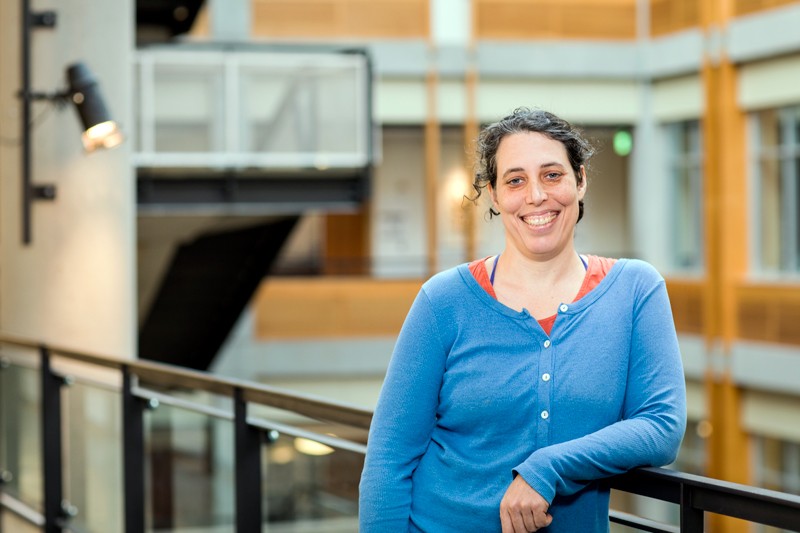
Jennifer Mankoff, who experiences extreme fatigue, studies technologies for people with disabilities.Credit: Dennis Wise/Univ. Washington
Jennifer Mankoff was a mid-career researcher in 2006 when she started to experience extreme fatigue. Her condition worsened during the following year with frequent flu-like attacks, a frozen jaw, hearing loss, memory trouble and problems with fine motor control.
In 2007, Mankoff was diagnosed with Lyme disease — a tick-borne illness that can be difficult to manage, thanks to disagreements in the medical community about how to test for, diagnose and treat it. She struggled to find medical solutions, but continued to publish, teach and win grants and tenure. But it took her a while to come to terms with her physical limitations.
“My image of who I could or should be didn’t match up with reality in terms of my productivity,” she says. “I would go back and forth between frustration and pride over what I had accomplished.”
Today, as an endowed professor at the University of Washington in Seattle, she studies human–computer interactions and accessible technology for those with chronic illnesses or disabilities.
Mankoff is one of many scientists worldwide who face emotional and practical challenges in their work as a result of long-lasting or recurrent medical conditions. Working as a scientist can be physically and mentally demanding, in the laboratory and in the field. It can be even harder for those with physical limitations, who might need extra rest or days off work.
Researchers who are chronically but not terminally ill might also fear bias and stigma (see ‘Know your rights’ for a summary of protections available under the law) if they leave work early or ask for extra help. This is particularly true if they have an illness that’s ‘invisible’ to others, such as arthritis or diabetes.
KNOW YOUR RIGHTS
Legal protections exist in the workplace for people with chronic conditions, and support is available, although details vary from country to country.
Selective disclosure about a condition can help to foster understanding, and an acceptance of the need to accommodate physical fatigue or weakness, or additional time away from the lab, say some who have chronic maladies. They add that it can also be useful to focus on crucial tasks — such as completing a manuscript — when energy levels are highest. Ultimately, say scientists with long-standing medical conditions, perseverance is essential to success. Sticking with a research programme also signals to superiors and colleagues, and to others with chronic illnesses, that a diagnosis need not stymie a research career.
No firm statistics are available on how many scientists worldwide have chronic illnesses, syndromes, conditions or diseases; and definitions of these differ from nation to nation. The US Centers for Disease Control and Prevention estimates that around half of all adults in the United States have at least one chronic condition. Although it does not define such conditions, it lists diabetes and arthritis as examples. The World Health Organization defines chronic conditions as being “of long duration and generally slow progression”; its examples include cardiovascular diseases, cancers, chronic pain and diabetes.
A neglected problem
The experience of balancing an academic career with a chronic health condition has been under-studied and its effects under-estimated, says Kate Sang, a sociologist at Heriot-Watt University in Edinburgh, UK, who has been working on a study on illness and disability in academia.
Sang, who has degenerative nerve damage in her arm, was told that she would have trouble finding even 10 or 15 subjects, but since launching the study, she has communicated with more than 70 researchers.
In interviews, a number of those scientists said that their chronic conditions make it difficult to write enough grants and publish often enough to advance their careers. Some scientists reported that they had switched fields to reduce the load on their bodies. Attending conferences was physically difficult for many: those who use wheelchairs said that meeting rooms and other facilities were often hard to access. One study subject could not get into a room to give her own talk.
Many subjects thanked Sang for listening to them. “I found that quite upsetting, to think that this is a very articulate, very privileged group of people — academics, people with PhDs — who still felt they didn’t have a voice in academia,” Sang says.
Geologist Stephanie Zihms, who has multiple sclerosis, urges researchers to keep copies of all their medical records, especially if moving internationally.Credit: Heriot-Watt University
Getting accurate diagnoses can be difficult for scientists, who often need to move from lab to lab and nation to nation, and so have to continually find new physicians. For years, geoscientist Stephanie Zihms was told that her tingly limbs, blurry vision, fatigue and other symptoms were caused by benign cysts, carpal tunnel syndrome or stress. She has moved from Germany to Scotland to England, and is now back in Scotland, at Heriot-Watt University (where she knows Sang), but her health records haven’t always been transferred. At some point, they went missing altogether. Short appointments with new doctors in each new location hadn’t given her enough time to explain her history.
She finally learnt from a doctor that she might have multiple sclerosis, but it was another ten months before she got a definitive diagnosis, in autumn 2016. Zihms says that she received no advice on where to seek support or more information, and she wept in her car for 15 minutes before she could drive home. “I think having the same doctor would have led to an earlier re-check,” she says. She recommends keeping a copy of all medical records, including communications from providers, hospitals and other facilities, even if that means requesting them under freedom-of-information laws.
To tell, or not to tell
Many scientists grapple with the question of whether to disclose their condition and, if so, when and to whom. The timing of a condition’s onset can influence those decisions. Madison Snider, a master’s student in environmental science, was diagnosed aged two with juvenile rheumatoid arthritis. As an undergraduate, she found it best to tell professors early on about her illness, to avoid having to explain it to them when she most needed help.
She adopted the same strategy in 2016 while being interviewed for her current programme during a two-day visit to North Dakota State University in Fargo. She learnt that she would need to move, fill and drain large tanks of water. Snider told her potential superior that she experiences pain daily and that on some days she cannot walk. He told her that he would make sure that assistants were available to help her with the tanks. “It’s an awkward conversation because when you look at me you don’t necessarily see my arthritis,” she says. “It was really nice that he was willing to work with me. It made me feel he had confidence in me.”
Yet some opt to conceal their condition for fear of damaging their career. There’s a fine line, Mankoff adds, between advocating for oneself and coming across as a problem, and staying on the right side of that line requires constant vigilance. Even now, she is willing to ask for a classroom close to her office or a chair to sit on during lectures, but she hesitates to request extra staff, for example, because she doesn’t want to argue about whether the funding should come out of her research budget.
Zihms opted to disclose her condition to her supervisor, who was sympathetic and told her to e-mail any time she needed to stay at home. But she didn’t tell her colleagues at first, and worried that they would think she was lazy on days when she could barely move and didn’t come in.
Ultimately, she says, she decided to be open, mentioning her illness in tweets and in a blog, and she has received much support. During a weekend when she guest-tweeted for Shift.ms, a UK-based social network for people with multiple sclerosis, a college student expressed gratitude on learning from her that a research career was still possible. “Younger scientists told me it took someone to be open about their disabilities for them to become suddenly aware that there was a career out there for them,” she says.
Focus on the essentials
Navigating a research career along with a chronic illness, say many researchers, requires zeroing in on what is most essential. Leonard Jason, a psychologist who was diagnosed in 1989 with myalgic encephalopathy/chronic fatigue syndrome (ME/CFS), realized that he needed to be strategic about his work and careful not to overtax himself. His approach has led to recognition, including awards for excellence in research and, at one point, a position on a US federal panel advising about research on ME/CFS. He recommends that scientists pursue the work that matters most to them. “The reality is that you can’t do it all,” says Jason, of DePaul University in Chicago, Illinois. “Prioritization is absolutely critical when one is in a diminished state. If it’s trivial and you don’t care about it, let it go.”
Leonard Jason.Credit: DePaul University/Jamie Moncrief
Overdoing it on good days can end up backfiring. Zihms was recently laid low with exhaustion for two days after spending six hours outside on a cold, windy day doing fieldwork in Brazil. She now prepares carefully before doing fieldwork in the depths of winter and sets aside time to recover afterwards. At conferences, she saves energy by resting between sessions and staying in a hotel nearby. And because her diet affects her fatigue levels, she makes her own breakfasts and lunches.
Mankoff finds it useful to break down large tasks into smaller ones of varying lengths so that if she has, say, two good hours or ten good minutes in a day, she can accomplish at least something that day. She honed that skill in her first year as a computer-science PhD student in 1996, when she developed a repetitive strain injury after using a poorly designed keyboard. She switched to voice-recognition software, but that led to a vocal-cord injury.
Although frustrated, she realized that she had learned how to prioritize tasks and to focus on her work when she was feeling well. Today, she limits Facebook and other social-media time to avoid distraction. She also recommends a blog community called Chronically Academic.
Therapy can be useful, Zihms adds. And self-care is important, too, says Snider. Adopting a kitten has helped to fend off the anxiety and depression that are common companions to arthritis. “No matter how down I get or how much my knees hurt,” Snider says, the kitten relies on her, and caring for it is not too strenuous a task.
Coping with a chronic illness requires planning for the unexpected, and could require a job change. Julia Hubbard, a biophysicist who has type 1 diabetes and the autoimmune disease lupus, packs suitcases two weeks before trips in case she lacks the energy to pack nearer the time.
Shifting the focus of her work has also helped her to accommodate her condition. When she first became ill in the early 1990s, frequent hospital appointments and sick days made it hard for her to conduct protein-chemistry experiments as part of her job at a pharmaceutical company. She switched to a data-focused position that allowed her to work remotely when she needed to. In 2001, she retrained as a protein crystallographer and is now a research scientist at the Francis Crick Institute in London, where her manager is sympathetic to her needs, and where working remotely is an option if she needs it.
Looking back, she says, she wishes that she had been gentler with herself when she first got sick. “You’ve got to adapt to it. It’s a loss and there’s a grief cycle.”
Learning to adapt can build confidence in a researcher’s ability to handle setbacks, Mankoff adds. In the past couple of years, she has been feeling well enough to increase her publication rate and to feel excited about the work ahead. But she also knows that she could relapse at any time. Still, with a battery of well-honed coping skills, she feels optimistic about the future.
“Even though I’m a full professor, I feel like I’m just getting started in an exciting way,” she says. “I’ll accept it if I relapse or go back to doing less. I’m just having fun digging in and solving problems.”
______________
**Comment**
For more reading on whether to disclose your illness:
ALERT-HELP NEEDED! The patient society The Right To Be Cured(“Le Droit de Guérir” in French) announced that, Dr Bransten, a renowned Lyme doctor, is threatened by his medical board, they want to strike him off. He’s a leading LLMD in France and Europe, and many patients could be left without treatment soon.
A presentation of the case is accessible here: https://goo.gl/w1kvP8
One of his patients published a petition: https://goo.gl/ZFvV3W
Would you please sign the petition and share with as many people as possible?
If you could also kindly share with other patient societies, mailing lists, newsletters, blogs and forums? That would help too.
The Right To Be Cured, “We need to protect the few doctors that dare to treat us in spite of the threats.”



 Madison Area Lyme Support Group