Archive for the ‘Uncategorized’ Category

Shocking New Study Finds That 137 Million Americans Suffered “Medical Financial Hardship in the Past Year”

http://endoftheamericandream.com/archives/shocking-new-study-finds-that-137-million-americans-suffered-medical-financial-hardship-in-the-past-year

Shocking New Study Finds That 137 Million Americans Suffered “Medical Financial Hardship In The Past Year”

The healthcare system in the United States is deeply broken, and it is causing massive financial pain for millions of American families.  Previously, I have published articles where I talked about how medical bills are the primary factor in two-thirds of all personal bankruptcies in the United States, and that Americans had to borrow a whopping 88 billion dollars last year to cover medical costs.  This is happening even though more than 90 percent of all Americans have some form of health coverage.  Thanks to soaring deductibles and health insurance policies that are absolutely riddled with loopholes, more Americans than ever are being wiped out by medical bills.  And now a brand new study that was conducted by researchers from the American Cancer Society has discovered that 137.1 million Americans suffered “medical financial hardship in the past year”.  The following comes directly from the study

Approximately 137.1 million (95% CI 132.7–141.5) adults reported any medical financial hardship in the past year. Hardship is more common for material, psychological and behavioral domains in adults aged 18–64 years (28.9%, 46.9%, and 21.2%, respectively) than in adults aged ≥ 65 years (15.3%, 28.4%, and 12.7%, respectively; all p < .001). Lower educational attainment and more health conditions were strongly associated with hardship intensity in multivariable analyses in both age groups (p < .001). In the younger group, the uninsured were more likely to report multiple domains of hardship (52.8%), compared to those with some public (26.5%) or private insurance (23.2%) (p < .001). In the older group, individuals with Medicare only were more likely to report hardship in multiple domains (17.1%) compared to those with Medicare and public (12.1%) or Medicare and private coverage (10.1%) (p < .001).

We are the wealthiest nation on the entire planet, and we should have the greatest healthcare system.

This shouldn’t be happening.

And the conclusion that the study ultimately reached is that things are likely to get even worse as we move into the future

Medical financial hardship is common in the USA, especially in adults aged 18–64 years and those without health insurance coverage. With trends towards higher patient cost-sharing and increasing health care costs, risks of hardship may increase in the future.

When I ran for Congress, I strongly stressed the need for a complete and total overhaul of our healthcare system, but unfortunately our current representatives in Washington don’t seem too interested in that.

Today, many Americans try to avoid our healthcare system as much as possible because they are afraid of being hit with absolutely ridiculous bills.

Just consider the case of 9-year-old Oakley Yoder.  She went for a hike in the woods at summer camp, and a snake bite forced her to go to the hospital

It was dusk as Oakley Yoder and the other summer camp kids hiked back to their tents at Illinois’ Jackson Falls last July. As the group approached a mound of boulders blocking the path, Oakley, then 9, didn’t see the lurking snake — until it bit a toe on her right foot.

“I was really scared,” Oakley said. “I thought that I could either get paralyzed or could actually die.”

So how much do you think her treatment cost?

A few hundred dollars?

A few thousand dollars?

Actually, the total bill was $142,938

Total bill: $142,938, including $67,957 for four vials of antivenin ($55,577.64 was charged for air ambulance transport). The balance included a ground ambulance charge and additional hospital and physician charges, according to the family’s insurer, IU Health Plans.

This is yet another example that shows that our current system needs to be totally dismantled and rebuilt from scratch.

You could buy an entire house for $142,938.

Here are some more facts from a previous article that show just how dramatically the U.S. healthcare system has failed…

3.7 trillion dollars was spent on health care in the United States in 2018.  That breaks down to $10,739 per person.

-If our health care system was a country, it would have the fifth largest GDP on the entire planet.

76 percent of Americans believe that they pay too much for the quality of health care that they receive.

-Out of the 36 counties in the OECD, the U.S. ranks 31st in infant mortality.

-Prescription drugs are the fourth leading cause of death in the United States today.

-Pharmaceutical companies spend approximately 30 billion dollars a year to market their drugs to all of us.

Nearly half of all U.S. doctors are considering leaving the field of medicine, and health insurance companies are the primary reason.

-The median charge for visiting an emergency room in the United States is well over a thousand dollars.

I could go on and on all day, but let me give you just one more example of how flawed our healthcare system has become.

John Kapoor, the billionaire founder of Insys Theraputics, was just found guilty of bribing doctors to prescribe high doses of a painkiller called Subsys

Kapoor oversaw a marketing strategy at Insys that hired doctors as speakers at educational seminars as cover to pay them more than $1m to prescribe high doses of Subsys to patients who did not need it. Prosecutors said the seminars were no more than social gatherings at expensive New York restaurants followed by company sales reps taking the physicians to strip clubs and bars.

Prosecutors showed the jury spreadsheets of payments to doctors and how much the company profited from each bribe. In one instance, the company paid nearly $260,000 to two New York doctors who wrote more than $6m worth of Subsys prescriptions in 2014. Insys employees also posed as doctors to give insurance companies invented diagnoses to get approval for payments for the drug.

In this case justice was done, but the truth is that this sort of stuff happens in the medical world constantly.

Our entire healthcare system is now completely dominated by the pharmaceutical giants, the big health insurance companies and greedy corporate interests.

They don’t care about us.  All they really care about is making as much money as possible, and if people get hurt in the process they are willing to live with that.

Get Prepared NowAbout the author: Michael Snyder is a nationally-syndicated writer, media personality and political activist. He is the author of four books including Get Prepared Now, The Beginning Of The End and Living A Life That Really Matters. His articles are originally published on The Economic Collapse Blog, End Of The American Dreamand The Most Important News. From there, his articles are republished on dozens of other prominent websites. If you would like to republish his articles, please feel free to do so. The more people that see this information the better, and we need to wake more people up while there is still time.

**Comment**

To put medical insurance into perspective…..

My 96 year old doctor told me he remembered when medical insurance first started.  It began only to bridge the gap from when farmers harvested crops and had to wait for payment after they went to market to be able to pay their medical bills.

We’ve come a long way, baby.

Rickettsiales in Ticks Removed From Outdoor Workers From Georgia & Florida

https://wwwnc.cdc.gov/eid/article/25/5/18-0438_article

Volume 25, Number 5—May 2019

Research Letter

Rickettsiales in Ticks Removed from Outdoor Workers, Southwest Georgia and Northwest Florida, USA

Elizabeth R. Gleim1Comments to Author , L. Mike Conner, Galina E. Zemtsova, Michael L. Levin, Pamela Wong, Madeleine A. Pfaff, and Michael J. Yabsley  DOI: 10.3201/eid2505.180438

The southeastern United States has multiple tick species that can transmit pathogens to humans. The most common tick species, Amblyomma americanum, is the vector for the causative agents of human ehrlichioses and southern tick-associated rash illness, among others (1). Dermacentor variabilis ticks can transmit the causative agent of Rocky Mountain spotted fever, and Ixodes scapularis ticks can transmit the causative agents of Lyme disease, babesiosis, and human granulocytic anaplasmosis (1). Although less common in the region, A. maculatum ticks are dominant in specific habitats and can transmit the causative agent of Rickettsia parkeri rickettsiosis (1).

Persons who have occupations that require them to be outside on a regular basis might have a greater risk for acquiring a tickborne disease (2). Although numerous studies have been conducted regarding risks for tickborne diseases among forestry workers in Europe, few studies have been performed in the United States (2,3). The studies that have been conducted in the United States have focused on forestry workers in the northeastern region (2). However, because of variable phenology and densities of ticks, it is useful to evaluate tick activity and pathogen prevalence in various regions and ecosystems.

Burn-tolerant and burn-dependent ecosystems, such as pine (Pinus spp.) and mixed pine forests commonly found in the southeastern United States, have unique tick dynamics compared with those of other habitats (4). The objective of this study was to determine the tick bite risk and tickborne pathogen prevalence in ticks removed from forestry workers working in pine and mixed pine forests in southwest Georgia and northwest Florida, USA.

During June 2009–December 2011, forestry workers in southwestern Georgia (7 counties) and northwestern Florida (1 county) submitted ticks crawling on or attached to them. We identified ticks and tested them for selected pathogens (Appendix). Immature forms of the same species from the same day and person were pooled (<5 nymphs and <20 larvae) for testing.

A total of 53 persons submitted 362 ticks (Table). Excluding larvae, the most common tick species submitted was A. maculatum, followed by A. americanum, I. scapularis, and D. variabilis. On 4 occasions, 1 person submitted A. tuberculatum ticks (3 batches of larvae and 1 batch of nymphs) from a longleaf pine site in Baker County, Georgia. Average submissions per persons were 2.6 ticks (median 1 tick), but 1 person submitted 100 ticks. A total of 24 persons submitted ticks more than once, and they submitted an average of 0.08–6.5 ticks/month (overall average submission rate of 1.1 ticks/month). Three ticks were engorged (1 D. variabilis adult, 1 A. americanum nymph, and 1 Amblyomma sp. nymph); only the Amblyomma sp. nymph was positive for a pathogen (R. amblyommatis).

  • Rickettsia spp. prevalence was 36.4% in adult, 27.9% in nymphal, and 20% in larval A. americanum ticks; R. amblyommatis was the only species identified (Table).
  • Rickettsia spp. were detected in 23% of A. maculatum adults; R. amblyommatis was most common (6.0%), followed by R. parkeri (4.8%).
  • A previously detected novel Rickettsia sp. was identified in 10 of 11 A. tuberculatum larval pools and was reported by Zemtsova et al. (6). An additional pool of A. tuberculatum nymphs was tested in this study and also was positive for the novel Rickettsia sp.
  • E. chaffeensis was detected in 1 A. maculatum adult (prevalence 1.2%), and Panola mountain Ehrlichia sp. was detected in 2 A. maculatum adults (prevalence 2.4%) and 1 D. variabilis adult (prevalence 10%).
  • No ticks were positive for Borrelia spp., E. ewingii, or Anaplasma phagocytophilum.

Thus, forestry workers were found to encounter ticks on a regular basis, and peak encounter rates reflected previously reported tick seasonality in this region (4). Only 3 (0.8%) of the ticks submitted were engorged, indicating prompt removal of most ticks and thus low risk for pathogen transmission. A. maculatum, a fairly uncommon tick in the southeastern United States, was the most commonly submitted tick. However, A. maculatum ticks dominate in regularly burned pine ecosystems (4), which is where most of these workers spent their time.

We observed several unique findings related to pathogens during this study. Larvae and nymphs of A. tuberculatum ticks were submitted on multiple occasions, a tick rarely reported on humans (7). These findings in conjunction with the identification of a novel Rickettsia sp. (6), suggest that additional research is warranted. This study also identified E. chaffeensis and Panola Mountain Ehrlichia in A. maculatum ticks. Although A. americanum ticks are considered the primary vector of Ehrlichia spp., these pathogens have been occasionally reported in questing A. maculatum ticks, suggesting that this tick might be involved in their transmission cycles (5,8). We also detected Panola Mountain Ehrlichia in 1 D. variabilis tick. Thus, further research regarding these alternative tick species as potential vectors of these pathogens is warranted, particularly in the case of A. maculatum ticks, which were a common species on forestry workers and are widespread in this region (4).

At the time of this study, Dr. Gleim was a research scientist at the University of Georgia, Athens, GA. She is currently a disease ecologist at Hollins University, Roanoke, VA. Her research interests include wildlife and zoonotic diseases with a particular emphasis on tickborne diseases.

Acknowledgments

We thank the persons whom submitted ticks for this study and members of the Yabsley and Levin laboratories for providing laboratory assistance.

This study was supported by the Centers for Disease Control and Prevention/University of Georgia (UGA) collaborative grant (#8212, Ecosystem Health and Human Health: Understanding the Ecological Effects of Prescribed Fire Regimes on the Distribution and Population Dynamics of Tick-Borne Zoonoses); the Oxford Research Scholars Program at Oxford College of Emory University; the Joseph W. Jones Ecological Research Center, the Warnell School of Forestry and Natural Resources (UGA); the Southeastern Cooperative Wildlife Disease Study (UGA) through the Federal Aid to Wildlife Restoration Act (50 Statute 917); and Southeastern Cooperative Wildlife Disease Study sponsorship from fish and wildlife agencies of member states.

References

  1. Stromdahl  EY, Hickling  GJ. Beyond Lyme: aetiology of tick-borne human diseases with emphasis on the south-eastern United States. Zoonoses Public Health. 2012;59(Suppl 2):4864. DOIPubMed
  2. Covert  DJ, Langley  RL. Infectious disease occurrence in forestry workers: a systematic review. J Agromed. 2002;8:95111. DOIPubMed
  3. Lee  S, Kakumanu  ML, Ponnusamy  L, Vaughn  M, Funkhouser  S, Thornton  H, et al. Prevalence of Rickettsiales in ticks removed from the skin of outdoor workers in North Carolina. Parasit Vectors. 2014;7:607. DOIPubMed
  4. Gleim  ER, Conner  LM, Berghaus  RD, Levin  ML, Zemtsova  GE, Yabsley  MJ. The phenology of ticks and the effects of long-term prescribed burning on tick population dynamics in southwestern Georgia and northwestern Florida. PLoS One. 2014;9:e112174. DOIPubMed
  5. Loftis  AD, Kelly  PJ, Paddock  CD, Blount  K, Johnson  JW, Gleim  ER, et al. Panola Mountain Ehrlichia in Amblyomma maculatum From the United States and Amblyomma variegatum (Acari: Ixodidae) From the Caribbean and Africa. J Med Entomol. 2016;53:6968. DOIPubMed
  6. Zemtsova  GE, Gleim  E, Yabsley  MJ, Conner  LM, Mann  T, Brown  MD, et al. Detection of a novel spotted fever group Rickettsia in the gophertortoise tick. J Med Entomol. 2012;49:7836. DOIPubMed
  7. Goddard  J. A ten-year study of tick biting in Mississippi: implications for human disease transmission. J Agromed. 2002;8:2532. DOIPubMed
  8. Allerdice  ME, Hecht  JA, Karpathy  SE, Paddock  CD. Evaluation of Gulf Coast ticks (Acari: Ixodidae) for Ehrlichia and Anaplasma species. J Med Entomol. 2017;54:4814.https://www.ncbi.nlm.nih.gov/entrez/query.fcgi?cmd=Retrieve&db=PubMed&list_uids=28031351&dopt=Abstract

Table

_____________________

**Comment**

Again, folks down South should be taken seriously when they present with symptoms.  BTW: Southern advocates tell me that STARI looks, smells, and feels just like Lyme disease.  

Lyme IS in the South:  https://madisonarealymesupportgroup.com/2016/10/25/hope-for-southerners/

The take home: Clark is finding borrelia (Lyme) strains in the South that the current CDC two-tier testing will never pick up in a thousand years.

https://www.researchgate.net/publication/285584725_Isolation_of_live_Borrelia_burgdorferi_sensu_lato_spirochetes_from_patients_with_undefined_disorders_and_symptoms_not_typical_for_Lyme_diseases

The take home: Clark found live Bbsl (bissettii-like strain) in people from the Southeast who had undefined disorders not typical of LD, and were treated for LD even though they were seronegative, proving that B. bissetti is responsible for worldwide human infection.

He also showed DNA of Bbsl in Lone Star ticks which might be a bridge vector of transmission to humans.

Dr. Clark was the first to report finding LD spirochetes in animals and ticks in South Carolina, as well as in wild lizards in South Carolina and Florida. He has documented the presence of LD Borrelia species, Babesia microti, Anaplasma phagocytophilum, Rickettsia species, and other tick-borne pathogens in wild animals, ticks, dogs, and humans in Florida and other southern states.

Clark is infected.  Surprised?  This is why he’s finding answers – it’s much more than a job to him.

https://madisonarealymesupportgroup.com/2018/05/31/no-lyme-in-the-south-guess-again/

https://madisonarealymesupportgroup.com/2019/03/19/jacksonville-family-shares-daughters-9-month-diagnosis-of-rare-disease-which-isnt-rare-lyme/

Time to start believing people!

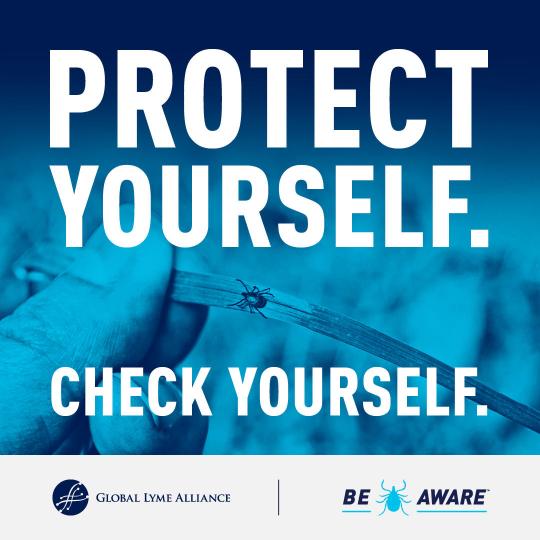
Protect Yourself. Check Yourself For Ticks

0-7

More on prevention:  https://madisonarealymesupportgroup.com/2019/04/12/tick-prevention-2019/

Image

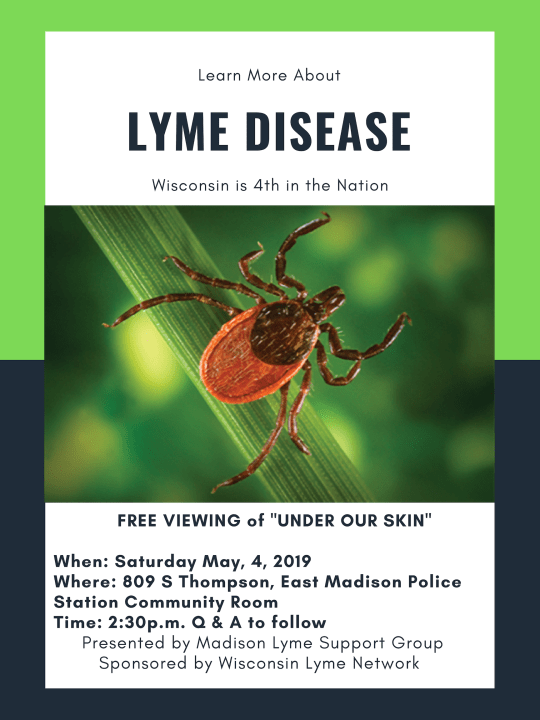
Reminder: Lyme Awareness Event in Madison, Wisconsin

Mark Jason Lim

Terminix Launches New Tick Defend System As Tick-Borne Diseases Intensify

https://globallymealliance.org/news/terminix-launches-new-tick-defend-system-tick-borne-diseases-intensify/?

Terminix partners with Genevieve Gorder and will donate 10 percent of new tick product sales to Global Lyme Alliance

MEMPHIS, Tenn.–(BUSINESS WIRE)–Terminix, a leading provider of termite and pest control services and a ServiceMaster (NYSE: SERV) company, today announced its launch of the Terminix Tick Defend System™, an integrated pest management system that helps protect yards and homes from tick infestations.

The launch comes in partnership with Genevieve Gorder (Trading Spaces), the acclaimed celebrity designer who lives with Lyme disease. In recognition of Lyme Disease Awareness Month in May, Terminix will donate 10 percent of proceeds from its new Tick Defend System™ during the months of May, June and July to the Global Lyme Alliance to help raise awareness of the tick-borne illness and how to guard against it.

Available now, the Terminix Tick Defend System™ combines leading technology with technician expertise to help guard against all seven common tick species found across the country. The new service offering builds on the company’s strong track record of providing differentiated value to its customer base. The treatment is available as a one-time service, or as a monthly package for long-term protection. Customers are also able to combine the system with other Terminix pest and mosquito services, such as the Terminix Quick Guard® Mosquito Service, for the ultimate home defense against annoying and dangerous pests.

“We are committed to providing cleaner, healthier and safer environments to our customers. We fully understand our customers’ concerns about keeping their families protected from ticks and the diseases they can carry,” said Matthew Stevenson, president of Terminix Residential. “We have seen tick-borne disease cases increase and have strengthened our efforts to bring effective solutions to our customers. As a leader in the termite and pest industry, we are proud to partner with Genevieve Gorder and bring the Terminix Tick Defend System™ to market to provide peace of mind and offer our customers a new and innovative line of defense against these dangerous pests.”

“I know firsthand how devastating the impacts of Lyme disease can be,” said Genevieve Gorder. “I’m excited to be working with Terminix on the launch of their Tick Defend System™ which underscores the importance of tick protection while supporting the critical education and research made possible by Global Lyme Alliance.”

The partnership and product launch come as incidence rates for Lyme disease continue to rise. In the past two decades, the reported number of Lyme disease cases in the United States has tripled. Reports from the Centers for Disease Control and Prevention (CDC) suggest the disease is more common than reported, infecting approximately 300,000 Americans nationally each year. Victims often mistake early-stage Lyme disease as a flu-like illness, overexertion or sleep deprivation. Late-stage Lyme disease can affect multiple organs, including joints, heart, brain, and other parts of the central nervous system. About 75 percent of Lyme disease cases are associated with activities around the home such as play, yard or garden work.

In addition to preventative products, such as the Terminix Tick Defend System™, follow these tips to help guard against ticks:

  • Avoid areas with tall grass or leaf litter, as these are common places for ticks to hide. When hiking, stick to the center of trails to avoid brushing against vegetation.
  • Apply EPA-approved tick repellents, both on-skin and on-clothing.
  • After spending time outdoors, bathe as soon as possible (preferably within two hours) to wash off any ticks crawling on the skin and conduct a full-body check for ticks, paying close attention to the head, hair, in and around the ears, under the arms and behind the knees. If you’ve been bitten, remove ticks right away.
  • To remove a tick embedded in the skin, do not grasp it by the abdomen and pull. You may squeeze its fluids into the skin, increasing the chance for infection. Use fine-tipped tweezers to grasp the head of the tick and slowly pull backwards. Once the tick has been removed, cleanse the area well with soap and water.
  • Because pets, such as dogs or cats, are particularly susceptible to ticks, talk with your veterinarian about appropriate tick prevention products.

For more information or to schedule your Terminix Tick Defend System™ service, visit Terminix.com or call 1-800-Terminix.

About Terminix

Terminix is the leading provider of termite and pest control services in the United States. Headquartered in Memphis, Tenn., Terminix services approximately 2.8 million residential and commercial customers in 47 states and 18 countries. Terminix provides pest control services and protection against termites, rodents and other pests. Terminix is a business unit of ServiceMaster Global Holdings, Inc. (SERV), a leading provider of essential residential and commercial services. Terminix is the Official Pest Control Partner of Minor League Baseball™. To learn more about Terminix, visit www.Terminix.com.

About ServiceMaster

ServiceMaster (NYSE: SERV) solves the homeowner’s dilemma. Every day, we visit tens of thousands of homes and businesses through our extensive service network of expert professionals. Our well-recognized brands include AmeriSpec (home inspections), Copesan (commercial national accounts pest management), Furniture Medic (furniture and cabinet repair), Merry Maids (residential cleaning), ServiceMaster Clean (janitorial and residential floor cleaning), ServiceMaster Restore (disaster restoration), Terminix (termite and pest control) and Terminix Commercial (commercial termite and pest control). Like, follow or visit us at facebook.com/ServiceMasterlinkedin.com/ServiceMaster, twitter.com/ServiceMaster, or servicemaster.com. ServiceMaster is the Official Home Services Provider of Minor League Baseball™.

About Genevieve Gorder

Genevieve Gorder’s soulful style and genuine enthusiasm have made her one of America’s favorite interior designers for many years. She is the founder and director of the Genevieve Gorder brand, a television host and producer, home product designer, contributing author, and global ambassador for home and human rights.

Gorder has appeared and been featured in over 20 lifestyle shows around the world. You can find her work on Netflix, TLC, HGTV, Sony Channel Asia, The Design Network, and as a regular contributor on The Rachael Ray Show.

A two-time Emmy nominee and design host at the Obama White House, Genevieve has built multiple lifestyle collections for home—from rugs, textiles, wallpaper and stationery to a full line of furniture and décor for children with partner Crate & Barrel.

Off air and the internet, Genevieve designs for a diverse group of clients and companies. She has guided many hotels, restaurants, cruise lines, cities and private clients toward their design fantasies. She travels the globe with Oxfam as a Sister on the Planet ambassador, using her influence to fight global poverty, hunger and injustice, and using her platform of home to empower women and girls worldwide.

Gorder’s work has been featured in numerous publications both nationally and internationally. Currently, you can watch her latest Netflix series “Stay Here”, the TLC revival series Trading Spaces, and a new Bravo series airing spring of 2019.

About Global Lyme Alliance

Global Lyme Alliance is the leading 501(c)(3) dedicated to conquering Lyme and other tick-borne diseases through research, education and awareness. GLA has gained national prominence for funding some of the most urgent and promising research in the field, while expanding education and awareness programs for the general public and physicians. We support those around the globe in need of information about tick-borne diseases. Learn more at GLA.org.

Contacts

Valerie Middleton | 901.487.3749 | vmiddleton@terminix.com
Emma Mazour | 612.244.2104 | emma.mazour@icfnext.com

__________________

More on Tick Prevention:  https://madisonarealymesupportgroup.com/2019/04/12/tick-prevention-2019/