Archive for the ‘Prevention’ Category

Tickology Video Series – Everything You Want to Know About Ticks & Prevention

Entomologist Larry Dapsis, Deer Tick Project Coordinator, of Cape Cod Cooperative Extension presents information about numerous types of ticks and the diseases they carry in the following Tickology video series.

Tickology

 Approx. 9 Min

Tick Identification & Ecology

Take aways:

  1. Female American Dog Tick is easy to spot as she has a creamy white wide spot up by the head.
  2. Female Lone Star tick has a bright white spot in the center of her back.
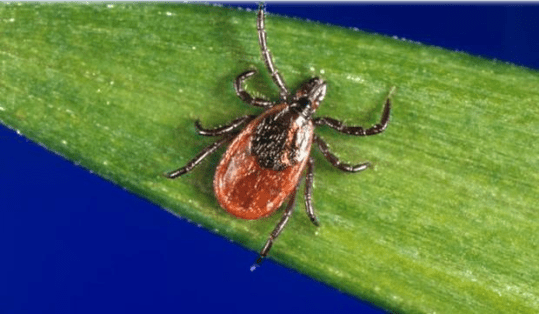
  3. Female Deer Tick has a bright red abdomen.
  4. A lot of this info is shared again in part 3 below where I have more notes.

 Approx. 12:30 Min.

Tick Borne Diseases

Take aways:

  1. He considers the American Dog Tick more of a nuisance than a threat.  I disagree.  Just ask anyone who’s ever had RMSF or Tularemia, both of which can kill you.
  2. The Deer Tick (Black legged tick) is endemic in 80 countries and has been here for thousands of years.
  3. Lyme is found in 49 out of 50 states in the U.S. (absent only in Hawaii)
  4. In 2016 the CDC adjusted Lyme prevalence to 300,000 new cases of Lyme a year.
  5. Martha’s Vineyard has more cases than anywhere in the universe.
  6. Risk of infection is year round.
  7. Largest risk is from the nymph as they are smaller and the bite is difficult to detect.   He is finding about 25% to be infected with Lyme.  50% of adults are infected.
  8. In Massachusetts, children ages 5-9 have the highest rates of infection.  Adults aged 50-70 has a surge of infection as well.
  9. Babesiosis, similar to Malaria, can be passed via blood transfusion with 50% of Massachusetts cases found in the south eastern part of the state and virtually found in some degree in every county in the state.
  10. Anaplasmosis (HGA) can look similar to Lyme and is more broadly distributed in Mass.
  11. All these diseases are steadily increasing.  95% of cases are aged 65 and older.
  12. Borrelia miyamotoi, related to Lyme, is a relapsing fever.  3% of Cape Cod ticks have it but is expected to increase.
  13. Powassan can put you in the hospital with brain swelling.  They did surveillance and found Powassan in 4 out of 6 site sites with infection rates as high as 10% in the tick population.  In reading the literature, he feels it has been on Cape Cod for thousands of years but it hasn’t been on medical radar.

  Approx. 8 Min.

Lone Star Tick – The New Tick in Town

Part 3 of the Tickology video project.

Take aways:

  1. The Lone Star Tick, normally considered a Southern tick, is in Cape Cod, and has moved North, and yes, is in Wisconsin.
  2. The adult female has a white dot on her back
  3. These ticks can run and are aggressive, fast & will actually chase you.  
  4. While he mentions a warming climate, independent Canadian tick researcher, John Scott, states emphatically temperature has nothing to do with tick expansion:  https://madisonarealymesupportgroup.com/2018/08/13/study-shows-lyme-not-propelled-by-climate-change/
  5. He claims Lone Star ticks have been established in Sandy Neck Beach Park and Shining Sea Bike Trail for a long time – it’s just nobody was looking for them.  I suspect this to be true for many other areas as well.
  6. He claims these areas are “perfect flyways” for migratory birds for transporting ticks.
  7. Lone Star ticks prefer intermediate size hosts.  He put out video surveillance and picked up wild turkeys in areas where these ticks were established.  Rabbits & coyotes are good hosts as well
  8. The adult female lays a cluster of 4,000-5,000 eggs,  which leaves a high concentration of larvae in late summer.  He claims when you find one, it could be a matter of minutes and you could have 200-300 bites.
  9. He claims Lone Star tick larvae do not transmit pathogens.
  10. The adults; however, can transmit Erlichiosis, STARI, Tularemia and Alpha Gal or meat allergy (all animal products).
  11. He claims you will not find deer ticks in an open lawn.  I was told otherwise by Susan Paskewitz, chair of the Department of Entomology at UW–Madison, whose crew is finding them in fields where kids are playing sports, and it’s here as well: https://newyork.cbslocal.com/2018/05/07/ticks-lyme-disease-cdc-putnam-county/
  12. He is finding Lone Star ticks in open spaces.  They don’t mind the heat.  Deer ticks will seek out leaf litter and/or snow when conditions are harsh.

 Approx. 13:22 Min

Permethrin Treated Clothing & Footwear

Take aways:

  1. Natural Pyrethrum is from the Aster Family, & is an extract from a type of chrysanthemum.  It has quick knockdown against insects but no residual control.  Breaks down in sunlight quickly.
  2. They manipulated it so now it has 4 weeks of residual control.
  3. You only use it on clothing and footwear.  He feels treating footwear to be crucial.  If a tick is on a treated surface with permethrin for 60 seconds it will die.  He feels strongly that using this product will reduce your exposure tick bites by upwards of 90%.  It is active thru 6 washings or 45 days which ever comes first.
  4. Pre-treated tick repellent clothing is also available.  EPA testing has shown it is active through 70 washings.  You can also send your clothing to “Insect Shield,” and they will treat your clothing and send it back with the 70 washing claim.  He says it’s about $10 per clothing item.
  5. It’s not the molecule that makes the poison, it’s the dosage.  As far as permethrin goes, there is low mammal toxicity except for cats.  It is 2,250 times more toxic to ticks than to humans.  According to the EPA, permethrin-treated clothing poses no harm to infants, children, pregnant women, or nursing mothers.
  6. Permethrin has low skin absorption and is metabolized quickly.
  7. National Research Council looked at long term exposure on the military wearing permethrin saturated clothing from head to foot for 18 hours a day for 10 years and found no reason for an adverse effect.
  8. The active ingredient is the same ingredient used for treating scabies and head lice and parents smear it on their kids from head to toe.
  9. He demonstrates how to apply it onto clothing and footwear.  Scroll to 10:00.  Make sure to wash these treated cloths away from other clothes.  Remember sunlight breaks it down so it lasts through 6 washings for 45 days, which ever comes first.
  10. He sprays the inside of the legs in case a tick gets underneath.  I tuck my pants into my white sprayed socks so ticks can not get inside.

 Approx. 6 Min

Skin Repellents

Take aways:

  1. The big distinction between repellents is the EPA registration.  Deet, Picaridan, IR 3535, and Oil of Lemon Eucalyptus have EPA registration with data on file for any claim being made.
  2. Go here for the EPA selection guide:  https://www.epa.gov/insect-repellents/find-repellent-right-you  (Fill in the questionnaire)
  3. Go to www.npic.orst.edu for pesticide information.
  4. Go to capecodextension.org for short factual answers on products.
  5. Naturals are not EPA registered so there is no data proving effectiveness.  Not all repel ticks.  Buyer beware.

__________________

For more on tick prevention:  https://madisonarealymesupportgroup.com/2017/05/11/tick-prevention-and-removal-2017/

https://madisonarealymesupportgroup.com/2018/06/06/mc-bugg-z/

https://madisonarealymesupportgroup.com/2018/05/27/study-conforms-permethrin-causes-ticks-to-drop-off-clothing/  “All tested tick species and life stages experienced the ‘hot-foot’ effect after coming into contact with permethrin-treated clothing,” Eisen said. 

https://madisonarealymesupportgroup.com/2018/04/03/fire-good-news-for-tick-reduction/  Study found a 78-98% reduction in ticks.
http://journals.plos.org/plosone/article?id=10.1371/journal.pone.0112174 These data indicate that regular prescribed burning is an effective tool for reducing tick populations and ultimately may reduce risk of tick-borne disease.


Connection Between ALS & Lyme?

http://www.digitaljournal.com/life/health/is-there-a-connection-between-als-and-lyme-disease/article/527874#ixzz5MNIwrXs6

Is there a connection between ALS and Lyme Disease?

Listen (Audio here)
By Tim Sandle     Jul 25, 2018 in Health
In the U.S. cases of Lyme Disease appear to be rising. Some researchers have drawn a link between the tick-transmitted bacterial infection and the neurodegenerative condition ALS. Jo Ann Simon explains more.
Screenshot_2018-09-21 Deer tick - Image - Digital Journal
Black legged Deer Tick – Jim Gathnany/CDC
According to the Center for Disease Control and Prevention, 376,000 cases of reported Lyme disease occur in the U.S. Lyme disease is a bacterial illness that can cause serious neurological problems. First discovered in the 1970s, Lyme disease draws its name from the Connecticut area, including the towns of Lyme and Old Lyme (see the Digital Journal article “Discoverer of Lyme disease dies”).

Lyme disease is difficult to detect until the symptoms, which arise in a person following the transfer of the pathogenic bacteria into the human blood stream as the result of a tick bite, appear.

The condition of amyotrophic lateral sclerosis (ALS), also known as motor neurone disease, received considerable attention a couple of years ago through the awareness campaign ‘Ice Bucket Challenge’. There are 20,000 people living with ALS at a given time, with 6,000 more being diagnosed in the U.S. every year.

Jo Ann Simon has been examining the connection between ALS and Lyme Disease based on her medical experiences and relevant statistics.

According to Simon,

“ALS, or amyotrophic lateral sclerosis, is a progressive neurodegenerative disease that affects nerve cells in the brain and the spinal cord. A-myo-trophic comes from the Greek language. “A” means no. “Myo” refers to muscle, and “Trophic” means nourishment – “No muscle nourishment.”

She explains further:
“When a muscle has no nourishment, it “atrophies” or wastes away. “Lateral” identifies the areas in a person’s spinal cord where portions of the nerve cells that signal and control the muscles are located. As this area degenerates, it leads to scarring or hardening (“sclerosis”) in the region.”
Digital Journal: Is there a connection between Lyme Disease and ALS?

Jo Ann Simon: The culprit can be the spirochete borrelia burgodorferi bacteria of Lyme Disease or the unnamed foreign invader of ALS in the brain that triggers motor neuron disease, or are they the same?”

Our research, testing and discovery brought us through a maze of doctors, hospitals, treatments and various results. We celebrated when we thought it might be MMN Multi Focal Motor Neurothopy or Guilliane Barre, both treatable motor neuron diseases, but further testing eliminated that glimmer of hope.

DJ: What are the research highlights?

Simon: There are five little known facts about ALS and Lyme Disease, which research draws out. First, ALS and Lyme Disease have common ground with the auto immune and the central nervous systems. Second, common symptoms range from fatigue, numbness, muscle weakness and twitches, speech impairment, and cramping.

Third, recent studies that show that a significant percentage of ALS diagnosed patients test positive for Lyme Disease. Fourth, in some cases, patients diagnosed with ALS actually had Lyme Disease instead. And fifth, Lou Gehrig, the namesake of ALS lived very close to Lyme, Connecticut, where the disease was born.

DJ: What can people do to reduce the chance of infection?

Simon: The most important take away from this experience is that everyone needs to protect themselves, their family, friends and pets from ticks. Prevention of a tick bite could save your life! Prevention is the best medicine.

Also, use bug spray that has DEET (Off or Repel products) or Picaridin (Sawyer, Fisherman, Skin So Soft products). These are effective to deter ticks and can be found online, or at your local pharmacy, or department store.

If you are walking in grassy wooded areas, tuck in your pants to socks and wear long sleeve shirts so that your skin is not exposed. They might still jump on you for a ride, but you can eliminate them by running your clothes in a hot dryer for 10 minutes so they turn into harmless toast.

DJ: Is there anything else?

Simon: Yes, you can treat your shoes and clothes with Permithrin, a synthetic pesticide that repels ticks from 5 to 70 washes, depending on the product. Insect Shield in North Carolina will treat your clothes for up to 70 washes, or you can treat yourself with different products such as Sawyer insect repellent which can be purchased on line or at your local pharmacy, grocery or department store. L.L. Bean and Cabela’s sell pretreated clothes and camping gear.

Protect your pet. If you stopped your pet’s tick preventive over the winter, get it started again now. Outdoor dogs and cats will likely be the first family members to find a tick and bring it home to you. There are two types of products to use. Products that kill ticks on contact – quick tick gone or kill ticks after their lunch – bite to die. Talk to your vet to decide the best product for your pet.

Also, get professional treatment for your property to eliminate the threat of ticks in your outside living areas. This does not stop the threat elsewhere, but at least you can sleep at night not worrying about the ticks on your doorstep. Do a tick check every day. This is especially important for your children and pets since they normally spend the most time outside.

___________________

For More:  https://madisonarealymesupportgroup.com/2017/10/14/lost-link-als-lyme/    She found that Lyme was likely the cause of her deterioration in health, got treated for it and stopped the progression of the ‘ALS’. She’s still alive now, although hardly after the damage the original documentary had done to her care plan.

http://www.caregivershome.com/news/article.cfm?UID=1151after years of medical observations that some people with amyotrophic lateral sclerosis — better known as Lou Gehrig’s disease, or ALS — also suffer from a form of dementia. Conversely, some patients with dementia also have been observed developing crippling symptoms similar to those in ALS, where patients gradually lose control of their muscles.  This latest common protein discovery in a way adds another link in the chain of research into the major neurodegenerative diseases. Now, a faulty protein has been uncovered in Alzheimer’s, Parkinson’s and Huntington’s diseases, among others. Each of these diseases remains incurable, but scientists believe discoveries such as this represent a major step forward in finding a cure.

A relationship between ALS / MND (motor neuron disease) and Lyme makes sense, looking at the findings of the 1990 research that was published in the article ‘Immunological Reactivity against in Borrelia burgdorferi in Patients with Motor Neuron Disease’ by Halperin et al.  This study showed that in almost 50% of the 19 people diagnosed with ALS, Lyme was the cause. Once treated, several of these patients improved. In that same year, 1990, the CDC published its first definition about Lyme and described the complex, systemic, multi-symptom and sometimes devastating chronic disease experienced by many Lyme patients – then and still today.

Did anyone ever do a follow-up on this promising research? No. It was simply hidden away and Halperin chose to become a co-author of the 2006 IDSA Lyme Guidelines instead, which maintain that ‘Lyme is a mild disease that is hard to get, easy to treat and hardly ever becomes a chronic condition’. Any possible connection with ALS or any other of the serious and previously acknowledged debilitating or even deadly conditions was no longer mentioned. Any long-term health issues are reasoned away, using semantics rather than ‘evidence based’ science.

https://madisonarealymesupportgroup.com/2017/05/11/dr-al-miller-lyme-disease-series/  Watch parts 1 & 4 to see how Lyme can masquerade as other neurodegenerative illnesses.

And lastly, if you want to see first-hand a doctor (Dr. Martz) diagnosed with ALS who got his life back after Lyme was discovered & treated, watch the excellent documentary, “Under Our Skin.”  Story here:  https://www.lymedisease.org/372/

You can also read about Dr. Martz in “Cure Unknown: Inside the Lyme Epidemic,” by Pamela Weintraub.