Fancy ergonomic chair or not, spend any length of time at your desk—or slumped on the sofa with your laptop or phone—and you’ll start to feel the effects. Tension between the shoulder blades, tightness in the upper back and shoulders, and pain radiating along the neck are all symptoms of sitting for too long. Not to mention, you may notice other side effects like bad posture, neck strain, circulation issues, and even shallow breathing. And you’re not alone: The American Chiropractic Association reports that half of all working Americans experience back pain symptoms, and as much as 80% of the population will deal with back problems at some point in their lives. Factor in our largely sedentary lifestyles, and it starts to make sense.
Here’s the good news. In addition to keeping our muscles flexible and strong, stretching can help alleviate pain and tension so you can get on with your life. We spoke with Lynelle McSweeney, D.C., a holistic chiropractor in Reno, Nevada, for her input on the value of stretching and the most effective stretches for upper-back pain. (See link for article)
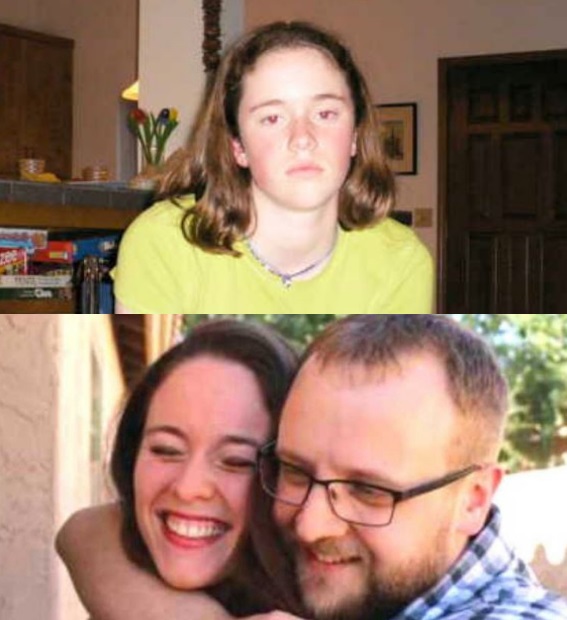
Looking back on her teen years of Lyme-related pain. (Life’s better now!)
By Resiliently Rachel
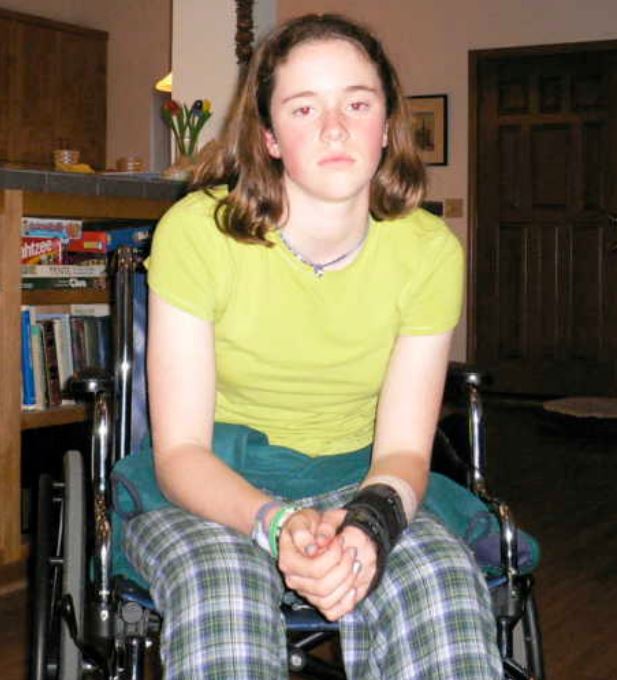
I sit in my wheelchair at the front office of my junior high. Tears sting my eyes as I explain to the school receptionist I need my mom to pick me up. She doesn’t understand. She asks why I need to go home.
Why? My feet and legs are on fire. It feels like pins and needles stabbing me everywhere at every second. I’m hanging on by a thread, using up everything I’ve got just to tell her I need my mom. As I start to panic, my friend steps in and repeats we need the phone so we can call my mom. I’m not well.
We don’t yet have words for what’s wrong with me. That answer won’t come for another six months. I watch as my friend reaches over me to bring the phone closer so I can dial the number. I feel the receptionist judging me, but I avoid eye contact and dial my home phone. My mom picks up on the first ring and before I can get a word out, I burst into tears. My mom says she’s on her way.
No one knew why I was in pain
This was my new reality. I went from being a healthy, athletic 13-year-old soccer player, to a girl who could barely sit up in a wheelchair. My knees hurt so bad, and my back felt like I was being stabbed in my spine, over and over again. It was constant.
Rachel age 13
We went to what felt like every doctor in California. Each week, it seemed I saw a new specialist who would take more blood, more x-rays, more scans… only to find out no new information. No one knew why I was in pain. And no one knew why the pain was spreading.
It started with my knees. Then my back, and my neck. Soon my shoulders were so hypersensitive even a feather-light touch could send me screaming in agony.
I described it to my family and friends as ‘being stung by a thousand bees’ but it wasn’t even that. There was no word in our language to describe what it felt like when someone touched the skin on my shoulders or upper back.
I learned to be on the lookout constantly, protecting myself from simple things such as a gentle pat by a well-meaning stranger.
This new and unforgiving symptom was especially hard, because at a time when I could have really used a hug… I could not receive one. It would be more than three years until my parents could hug me again.
Finally, a diagnosis
After six months of doctors’ visits, hospitalization, and no concrete answers, we finally found our first bit of hope. I was diagnosed with Lyme disease. After months of uncertainty, we had found the root cause of my pain. But it was still a long road ahead.
I began the prescribed antibiotic treatment, and within days, I felt worse than I ever had before. The pain was excruciating, the fatigue was overwhelming, and suddenly, I struggled to breathe when I was sitting up straight or lying down flat.
We tried propping me up with pillows and found being at a reclined angle made it easier to breathe, so we rented an adjustable bed from a medical supply company. The bed helped somewhat, but I still got sicker and sicker.
There was no way I could continue the eighth grade, and at this point, the pain wasn’t even the only issue anymore. I could no longer focus. I couldn’t think properly. I struggled to remember simple things that had happened hours earlier. A home health teacher came to my house twice to attempt some sort of education, but that was not in the cards for me.
The longest year ever
The year 2006 was the longest year ever. Although my own life seemed to have stopped, somehow the rest of the world kept going. Each day while my friends were at school, I would count down the hours until someone would be able to sign on to our instant messaging chat room.
I spent my time adding new movies to my Netflix queue, pondering life’s big question of which movie I wanted to arrive in the mail first. My family bumped up our plan to five DVDs at a time, so we had a constant rotation of movies coming to the house via snail mail. There were no video streaming services back then. Kids these days won’t ever understand the satisfaction of seeing those bright red envelopes in the mail.
I spent my days either watching TV, looking at the TV guide to find more shows to watch, or watching DVDs from Netflix. I spent all of my nights awake in bed, listening to infomercials through a 10-foot long headphone cord attached to my TV. I listened to the Home Shopping Network—or that guy selling barbecue grills—while playing solitaire on my mom’s laptop.
For a large portion of 2006, I got only a few hours of sleep at best each night. It was a constant nightmare I couldn’t get away from until we finally found a sleeping pill that worked for me. I didn’t care for infomercials, but I also didn’t want to be alone while the rest of the world was asleep without me. Each night, I listened to the voices of people trying to sell me gadgets I didn’t need, while I passed the hours until dawn.
I longed for connection to someone outside our house. When my friends were busy living their own lives, in their own homes, instant messaging was it for us. This was way back before we had all the social media sites so many of us now find so addicting. I couldn’t mindlessly scroll through Facebook, Instagram, or Pinterest to fill my time. I didn’t even have a cell phone, so texting wasn’t an option.
I was stuck in bed for eight months. My lowest point was when I hadn’t seen my own kitchen or living room for 30 days—since my last medical appointment. A combination of terrible insomnia, constant pain, and gripping depression controlled my mind and thoughts and made my life unbearable. I was exhausted, encompassed with despair, and had no hope for a bright future.
One shining light
But there was one shining light that kept coming back each day. That light was my neighborhood group of friends. I had grown up with these kids. Together we had climbed redwood trees, played tag until it was too dark to see, and spent hours picking cherries from the orchard by my house. My world was very different now. There were no more trees to climb or games of tag.
Instead, my friends came over—sometimes alone, and sometimes in twos or threes—and sat by my bed to keep me company after school or on the weekends. We rarely left my room. My standard wheelchair required me to stay in an excruciatingly painful position, so I used it as little as possible.
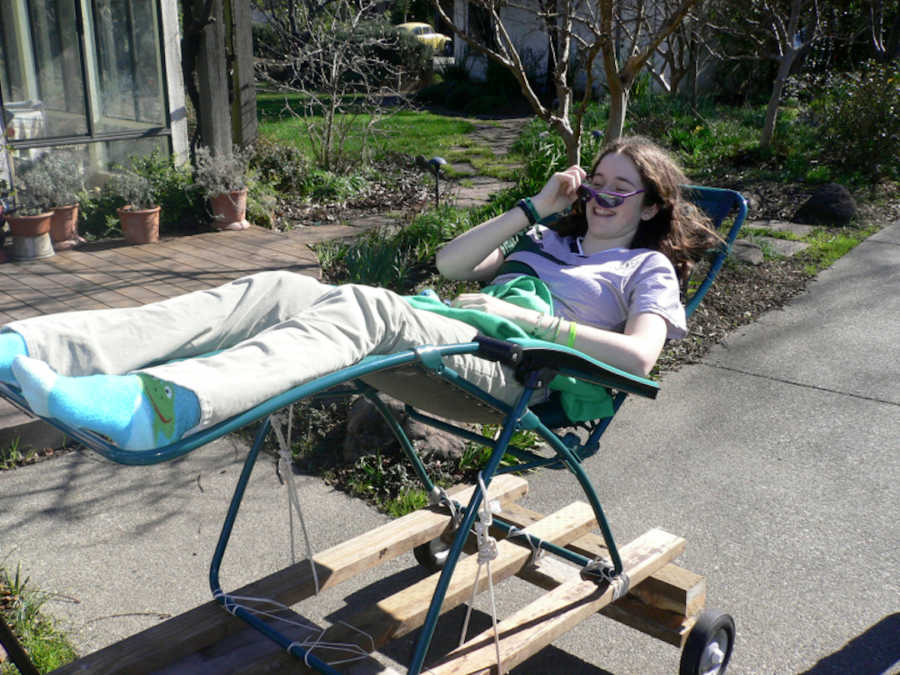
My neighborhood buddies found a partial solution to that problem. One day, my friends Julianne and Tenaya showed up with a reclining patio chair strapped to a wheeled platform. My chariot had arrived!
It was eccentric looking, to say the least, but it was also my passport to the outside world. After months of seeing nothing but the four bright green walls of my bedroom, I was escorted around the neighborhood, feeling the sun on my face and breathing fresh air. I couldn’t stop smiling.
The last time I had seen the trees outside, they had been barren from winter. Now they were budding with bright green leaves, bursting with color in early spring. I enjoyed seeing all the green as I sat with a fuzzy blanket on my lap, being pulled through the streets of my neighborhood by friends who were only slightly grunting at the combined weight of me and this cumbersome contraption. Eventually, my family procured a reclining wheelchair, which made forays into the outside world even more attainable.
A beauty makeover
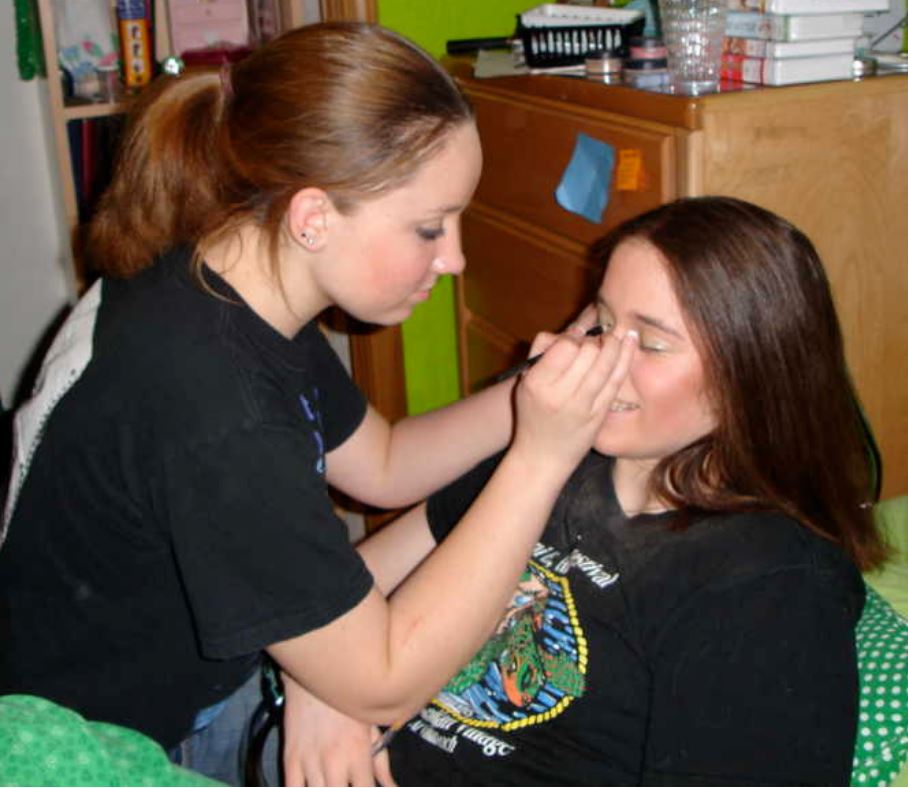
On another day, my friends gave me a makeover, doing my hair and makeup in bed, followed by a photo shoot.
I could only sit up straight in a chair for a minute at a time, so we did the photo shoot in short bursts: one minute of rapid-fire picture taking, followed by a rest back in bed. Then repeat. It was moments like these that brought life back into my room. Back into me.
Alternative reality
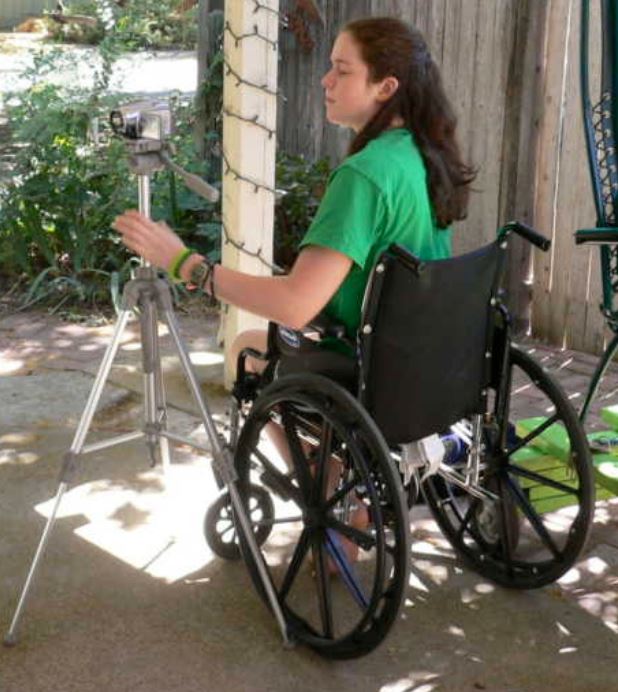
Another thing that brought me joy was learning to shoot and edit videos. Working on my videos pulled me into a blessed alternative reality where I could somehow get away from my pain.
We used a hospital bed table—the kind that swings over the bed—to hold my computer and put a wireless mouse and keyboard on my lap.
I spent hours editing. I filmed music videos of me lip-syncing in bed. I filmed myself taking pills. Getting my PICC line dressing changed by a home health nurse. Playing games with my friends on the PlayStation. I filmed everything.
I was always in need of more footage because while everyone else was spending eight hours a day at school, I needed to cling to something that gave me a reason to keep fighting. That something became my passion for film making.
Then things shifted
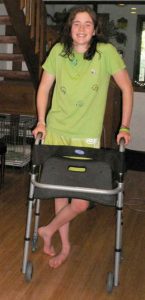
Three years later, my reality changed again when I stood up and walked for the first time.
After recent work with a specialized upper cervical chiropractor, I had noticed a big decrease in pain. Almost like a switch had been turned off after years of malfunctioning.
Just a week prior, we had been able to adjust my wheelchair to sit up straighter. I could once again breathe in different positions. Now here I was, alone in my bedroom, standing up on crutches.
I stood there for a moment, looking at myself in my full-length mirror. I felt the hardwood floor under my bare feet, and I watched my reflection as I called down the hall for my parents to grab the video camera. I knew we would want this on film.
It took me 15 minutes to graduate from walking on crutches to a walker to just holding on to my mother’s arm for support. In 20 minutes, I was walking on my own, unaided, giving myself a tour of the house.
Everything felt different now. I was used to looking at the world from the vantage point of my wheelchair. Now, I stood taller than I ever had before, since I’d grown an inch and a half over the past three years.
To my surprise, I had to bend down to wash my hands in the bathroom sink. To my delight, I could see inside the microwave oven and easily retrieve a water glass from the kitchen cupboard. As I explored my new world that whole magical night, I kept ducking as I passed through doorways, afraid I might hit my head as I went through!
My journey wasn’t over…
Rachel and Bryan
I had a long journey ahead of gaining back strength in my legs and body, but I wasn’t wasting any more time. Three days after I was on my feet, I got my driver’s permit. I was turning 17 and I wanted to finally have a normal life!
I wouldn’t necessarily say it turned out normal—but I graduated from an independent study high school. From there I went to community college while I continued health treatment at home.
Two years later, we packed up the car and drove to Portland State University, in Oregon, where I transferred as a junior. While I was moving into the dorm that day, a guy on my floor remembers looking out his window and seeing me walk into the building. We didn’t know it then, but five years later, that man would be my husband.
My health challenges have no doubt helped shape me into who I am today. For most of my teenage years, I felt I was being dragged through life. I didn’t know how to imagine a future where I could be healthy. I didn’t want to hold hope for anything, in fear it would never be realized, and I’d be stuck where I was forever.
But something changed in me after I began walking again. I had done what I thought would never be possible, and it forever altered my outlook. Even with the wheelchair gone from my life, I would still face struggles with my health, but I now knew about resilience, a gift silently bestowed upon me during those many long years in bed.
Resiliency
Resiliency became my motto. After a difficult battle with toxic mold exposure in college, ‘Resiliently Rachel’ became part of my identity as well, as I launched a blog to create a space for me to share my journey with Lyme and mold.
Over the next few years, I dealt with new and scary health challenges, which brought me into the world of neuroplasticity and learning about the power the brain has over the physical body.After countless hours of brain retraining work, I overcame the last of my symptoms that had been lingering from mold and Lyme treatment, specifically food allergies and chemical sensitivities.
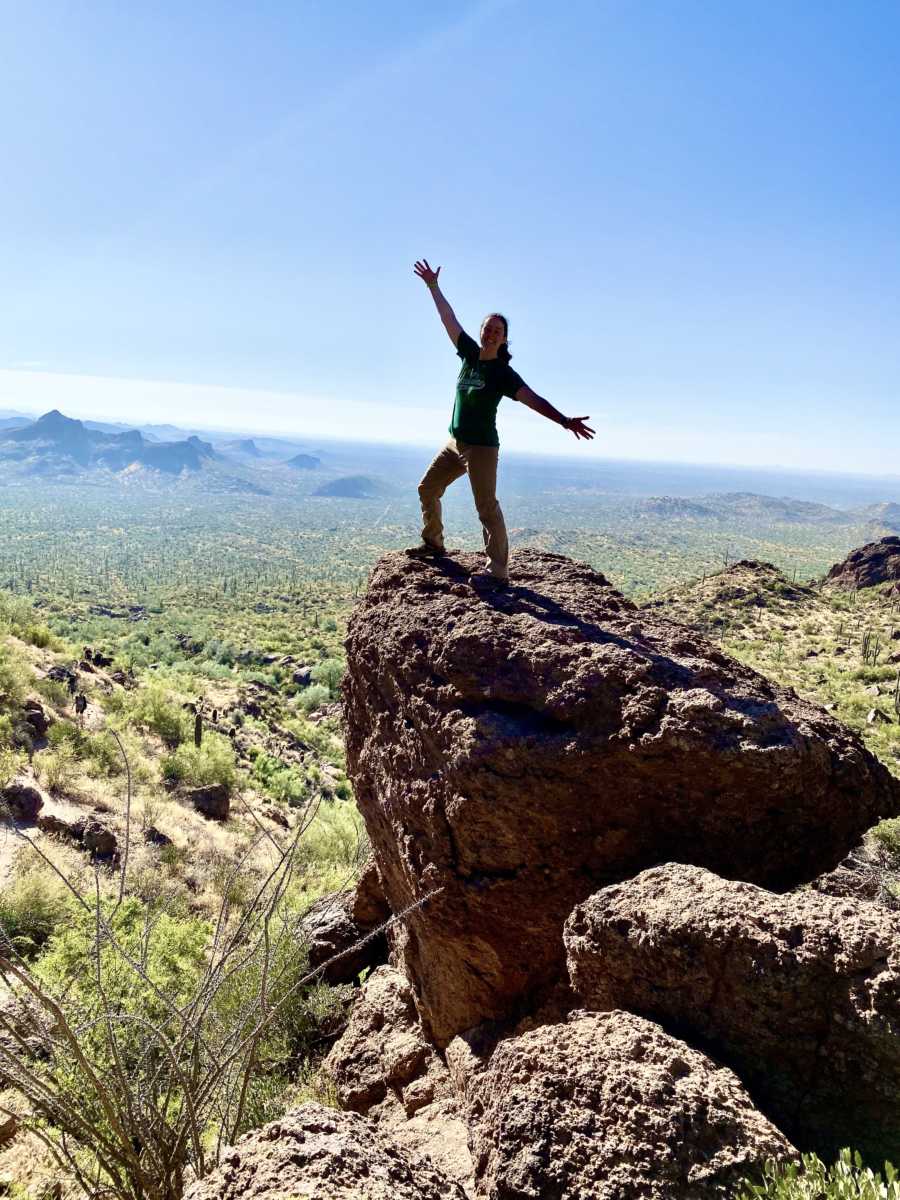
I now live in Arizona with my husband and dog. I work in an elementary school doing speech therapy, and in my free time, I enjoy hiking, as well as filming and editing videos—an activity that still brings me happiness and peace. I wouldn’t change any part of my story growing up with Lyme disease. It made me who I am, and it allows me to give back to others by sharing my story and hopefully inspiring those facing similar challenges to keep holding on a little while longer.
Every August 8, my family celebrates what we call “Walking Day.” Here’s a video I put together about it.
Since Lyme/MSIDS patients can experience pretty much everywhere, chiropractors need to be educated about tick-borne illness as they will often be sought out first by patients.
Dr. Eileen Isom, owner of Madison Chiropractic-Monona, will be speaking at our next support group meeting Sat. April 9, 2016 from 2:30-4:30.
A summa cum laude graduate of Palmer College of Chiropractic, receiving Bachelor of Science and Doctor of Chiropractic degrees, she was the first woman to practice chiropractic in Dane County, and has been in practice for 41 years. She practices Specific Upper Cervical chiropractic and is also certified in Chiropractic Spinal Trauma (CCSP).
Several of her family members have been diagnosed with Lyme/MSIDS (multi systemic infectious disease syndrome or Lyme with friends), and she has also treated many people with that diagnosis. She will explain how chiropractic care can be an integral part of a whole body approach to chronic illness.
As one of her favorite topics is “Self-Help for the Spine,” she will be providing practical, everyday suggestions for keeping the spine and nerve system functioning properly, since the nerve system controls the function of all other systems in the body, including the immune system.
Chiropractic correction assists the body’s immune system to function at its most efficient level, and when that happens, all other treatment modalities that a person is using increases in effectiveness. In addition, many persons with MSIDS report relief of pain and improved function after chiropractic corrections.
Those suffering from MSIDS (multi systemic infectious disease syndrome – or Lyme with friends) quickly discover that successful treatment is holistic. Killing pathogens is certainly an important arm of treatment, but so is detoxing those dead pathogens, as well as improving immune system function.
According to Frank M. Painter, D.C., studies demonstrate an accumulation of evidence that indicates spinal manipulation may influence the immune system‘s response to various stimuli and reduces production of pro-inflammatory mediators associated with tissue damage and pain. Some studies also give evidence that manipulation may induce and enhance production of the immunoregulatory cytokine IL-2 as well as the production of immunoglobulins. http://www.chiro.org/research/ABSTRACTS/Effects_of_Chiropractic.shtmlOther results show manipulative treatment may influence T and B lymphocyte numbers, NK cell numbers, antibody levels, phagocytic activity, and plasma beta endorphin levels.
Chiropractic care has been vilified since the 60’s with a “persistent tendency to suppress physicians from referring patients to chiropractors — so much so that Dr. Chester Wilk ended up filing an antitrust suit against the American Medical Association (AMA) in 1976.” Wilk eventually won and in 1987, the court ruled that the AMA had engaged in an unlawful conspiracy in restraint of trade to contain and eliminate the chiropractic profession.
According to chiropractors, chiropractic care is similar to seeing a dentist and needs to be done on a regular basis to maintain the health of your spine, because even regular activities can contribute to a less than optimal functioning.
One of the best ways to find a good wellness chiropractor is by word of mouth. You may also want to find out if he or she is trained in any other treatment modalities, such as muscle testing, applied kinesiology, or neuroemotional technique (NET). There are literally dozens of different techniques that can have a profound impact on addressing the bioenergetic component of disease, not just the structural.
Tips for Choosing a Wellness Chiropractor: Meet the doctor. Many chiropractors will agree to a no-cost consultation to determine whether you are a good match. To make this visit as productive as possible, here are a few things to consider: Does the practice focus on vertebral subluxation and wellness? Physical, biochemical, and psychological stress may result in spinal subluxations that disrupt nerve function and compromise your health.
Does the doctor “walk the talk”? If he or she is overweight, looks unhealthy, or does not live a healthy lifestyle, this speaks volumes regarding their commitment to wellness. Do the two of you “click”? Do you like each other? Do you communicate well? Avoid a doctor who seems rushed, talks down to you, or seems disinterested in listening to your concerns.
Does the doctor use objective assessments of nerve function? Since your care is not based just on addressing pain, your chiropractor should be using some form of objective assessment of your nerve function, as spinal subluxations can sometimes be asymptomatic. Non-invasive instruments that measure the electrical activity in your muscles, and/or a thermal scanner that evaluates the function of your autonomic nervous system can be used, for example.
What treatment techniques are used? Chiropractic techniques include low-force adjustments by hand, and more forceful adjustments using instruments. Ask which technique would be used on you, and if you have a preference, make sure the doctor is willing to use it.
On Saturday, April 9, from 2:30pm-4:45pm, Dr. Eileen Isom DC, CCST, Certified Spinal Trauma Specialist, of Madison Chiropractic, will be speaking at the Madison Lyme Support Group. Dr. Isom uses NUCCA technique which is unique because it frees the nervous system of interference by using a precise, non-invasive, gentle touch technique.
The NUCCA technique brings several generations of clinical research to correcting the serious problem of the Atlas (the bone your head sets on) Subluxation Complex. By using precise and objective x-ray views of the head and neck, mathematical measurement and analysis are made of the misalignment. There is no twisting, popping, or cracking with this gentle, yet effective procedure.
Some of the many symptoms that can be relieved by correction of the Atlas Subluxation Complex include but are not limited to:
Neck and back pain
Headaches and Migraines
Hypertension
Chronic pain or stress
Leg and arm numbness
Scoliosis
TMJ
Fibromyalgia
Sinus and allergy problems
Herniated disc
Seizures
Depression
Attention Deficit Disorder
Hormonal Imbalance
Athletic and auto injuries
Bed wetting
Cerebral Palsy
Multiple Sclerosis
Arthritis
Chiropractic care may be something you need to investigate further in your MSIDS journey as it can alleviate pain, help you structurally, as well as optimize your immune system.

 prescribed antibiotic treatment, and within days, I felt worse than I ever had before. The pain was excruciating, the fatigue was overwhelming, and suddenly, I struggled to breathe when I was sitting up straight or lying down flat.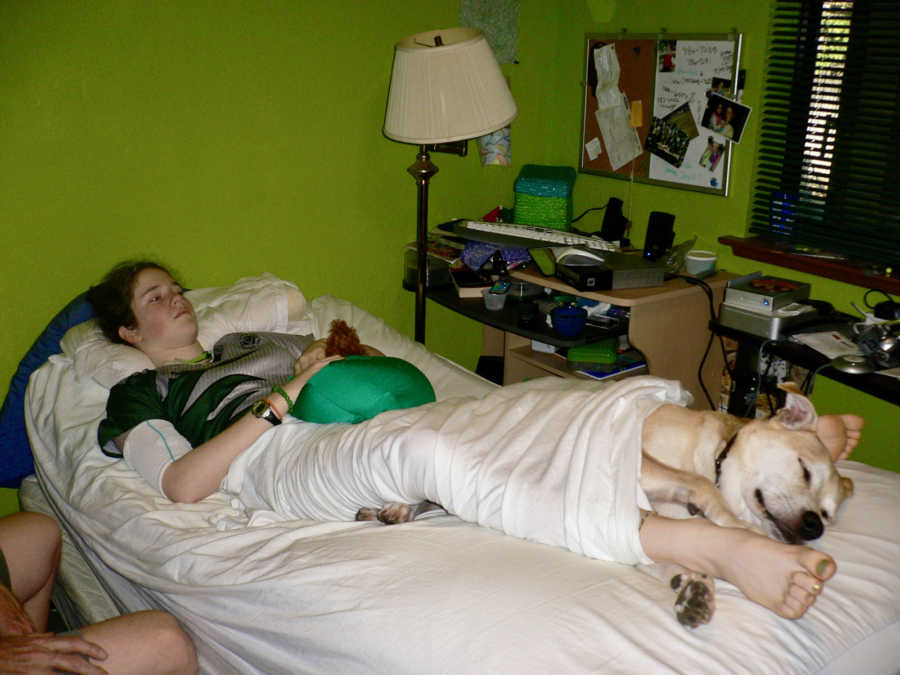
 Three years later, my reality changed again when I stood up and walked for the first time.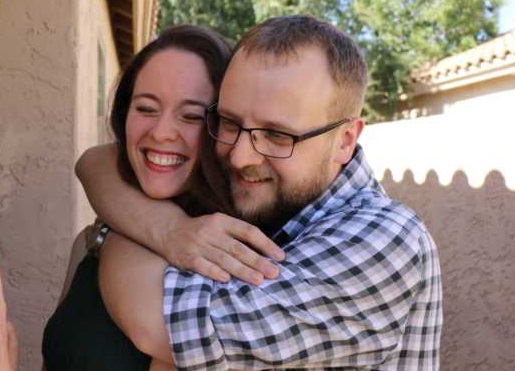

 Madison Area Lyme Support Group